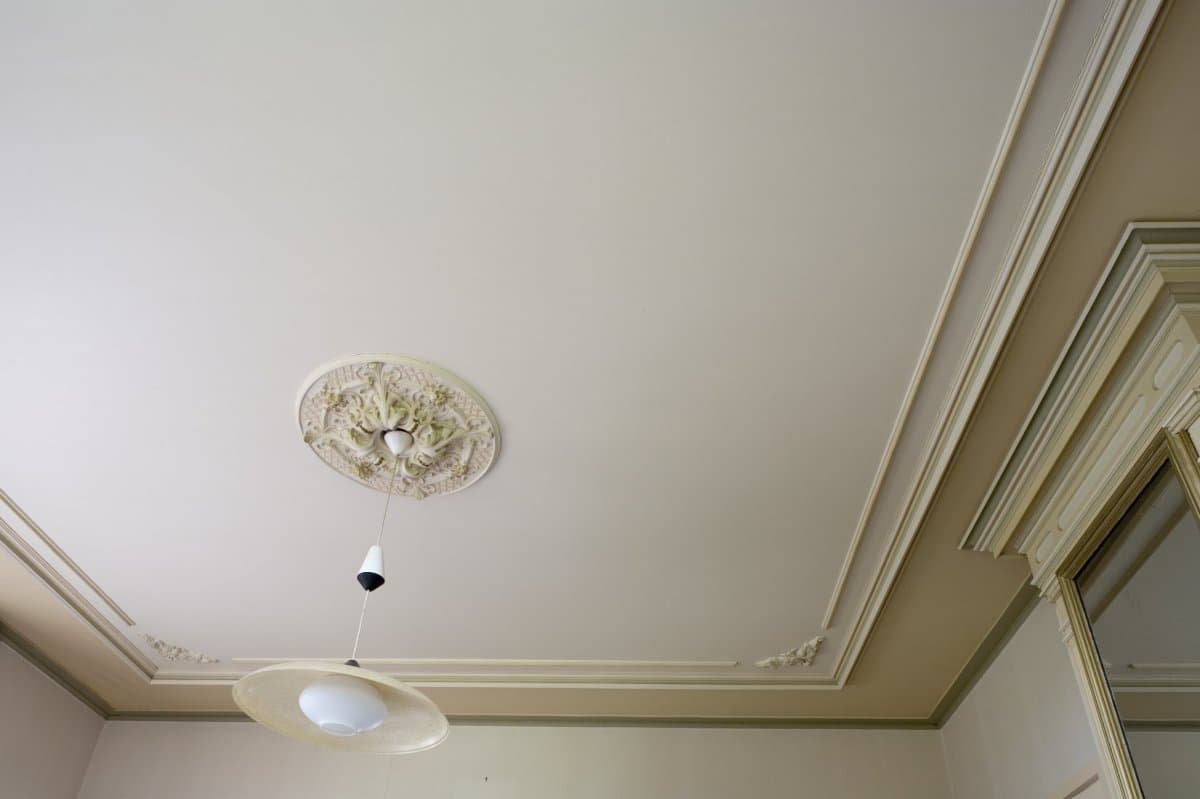
Anyone who has taken on the task of painting a ceiling knows how hard it can be... Frustration can continue until the very end of the process when you finally take a look at the finished job and realize that marks or light spots appear on your ceiling.
Here are 5 tips to follow to paint your ceiling like a pro!

How to paint a ceiling like a pro
1- Clean your ceiling and fill in holes
Can't wait to get to work? Wait a little longer and take care to clean your ceiling to remove any particles that may be on its surface. To do this, use a multi-purpose cleaner and rinse afterward. In a second step, make sure that no cracks or holes remain on your ceiling: fill them in then sand them down to flatten the surface. Following this, remove the excess joint compound. Before you start painting, make sure the surface is completely dry and that there are no imperfections left on the ceiling surface.
2- Don’t forget the primer
There’s no doubt that forgetting to use a coat of primer will end up costing you dearly in the long run. It’s useful in the way that its application makes it possible to seal the surface and to prevent your top coat from being completely absorbed. If you decide to skip this step, the absorption of the topcoat will cause marks to appear due to the lack of paint in some areas. Preferably choose a matte finish. If necessary, apply two coats of primer.

3- Paint at the right temperature
Unfortunately, you cannot paint at all temperatures. To prevent your ceiling from drying out too quickly, we’d recommend that you avoid painting at a temperature above 20 degrees. Also, never paint when the temperature is below 10 degrees, as this will cause the paint to dry too slowly.
4- Don’t open windows or doors while painting
The idea of opening doors and windows while painting may seem logical at first, either to facilitate drying or to free the room from the smell of paint, as the latter isn’t always pleasant. However, this is one mistake you should avoid. Keeping windows and doors closed will allow water that naturally evaporates from the paint to stay in the air and keep the ceiling from drying out too quickly. You will then avoid traces of paint caused by precipitated drying.
5- Use the right technique for painting a ceiling
First, we should mention that the correct technique to approach this is to use is to apply the right amount of paint. Easier said than done? To be sure that there’s enough paint on your roller, only soak it halfway and then wring it out on the grid, and avoid placing too much pressure.
Always work in sections, and this means no more than one square meter. As you progress, always go back to the previous border and each time you approach a new section, be sure to overlap with the previous one.
Another tip to follow to use the right technique is to always paint in the same direction on your entire ceiling. In addition, you should avoid exerting pressure on the roller to avoid lines from appearing on your ceiling.

6- Don't put too much weight on the roller
Don’t be too sparse with paint and apply the right amount on your roller (as suggested previously). Otherwise, you’ll need to apply pressure to the roller, which will, unfortunately, leave demarcation marks on the surface of the ceiling. If you think the traces will disappear, you should be aware that this will not be the case.
7- Choose a matte finish paint
Since glossy paint lets defects appear easily, choosing paint with a matte finish will reduce the appearance of small imperfections that may remain on the surface.
8- Don’t roll on a semi-dry surface
After the priming as well as your first coat of paint, wait at least 20 minutes for it to dry completely. Then, you can do another coat on your ceiling. If you don’t respect this rule, and instead roll on a semi-dry surface.
Get 3 renovation quotes for your ceiling painting project
RenoQuotes.com will put you in contact with 3 reliable contractors for your living room painting project. Fill in the form on our homepage (it only takes a few minutes), and you will receive quotes from trusted professionals.
Dial 1-844 828-1588 to speak with one of our customer service representatives
Looking for something else?
Related articles
The latest industry news, interviews, technologies, and resources.
Amanda Harvey
•12 Apr 2024
Have you ever heard of reversible air conditioning? While this term is often seen in articles about general air conditioning facts, few can explain its true meaning.
Editorial Team
•14 Nov 2024
There's no way around it, keeping your house hot through harsh Canadian winters can be expensive! As a homeowner, it is important to know the most cost-effective and efficient ways to keep the air of your home comfortable without breaking the bank.

Léa Plourde-Archer
•08 Nov 2023
As the saying says, an ounce of prevention is worth a pound of cure. Investing in the installation, maintenance or replacement of a French drain (or foundation drain) will save you a lot of trouble. In the long run, water infiltrations due to weather, broken recreational equipment or sewers can turn into a real nightmare for your wallet and your health.
Editorial Team
•08 Nov 2023
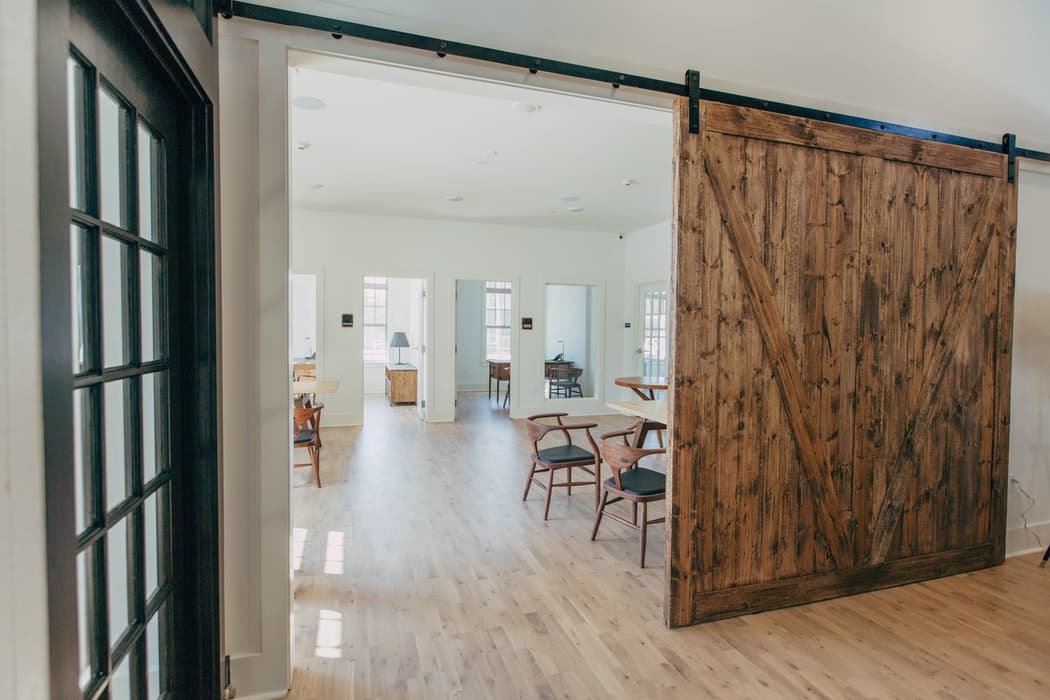
Hinged interior doors continue to be particularly popular, as is evident by their widespread presence in our homes. Despite their popularity, other types of doors attract attention for their aesthetic as well as functional advantages.

Équipe éditoriale
•18 Dec 2024
It’s possible that we spend as much time, if not more, in our offices than our homes. Hence the importance that the office environment is pleasant. Indeed, the layout and development of an office can have a serious impact on satisfaction and in turn, employee productivity. When a workspace is poorly laid out, it can affect many aspects of daily office life. With this in mind, a transformation project can be an improvement for your environment, both practically and aesthetically-speaking.