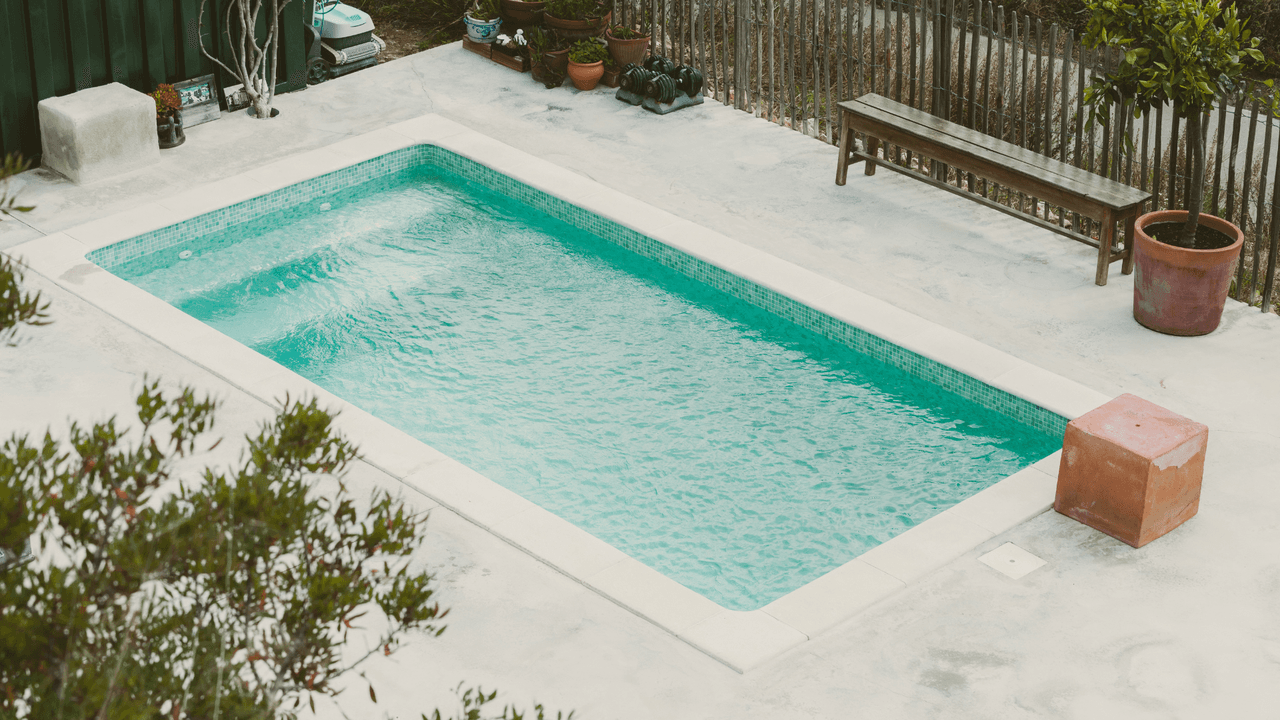
Are you thinking about putting in a saltwater pool? Doing so is actually an increasingly sought-after option with a plethora of upsides. Besides lessening skin irritation and bypassing the smell of chlorine, saltwater is generator-made, which simplifies maintenance. However, one has to consider certain drawbacks, such as the initial investment.
From installation costs to maintenance, learn everything there is to know about using a saltwater pool system.
How do saltwater pool systems work?
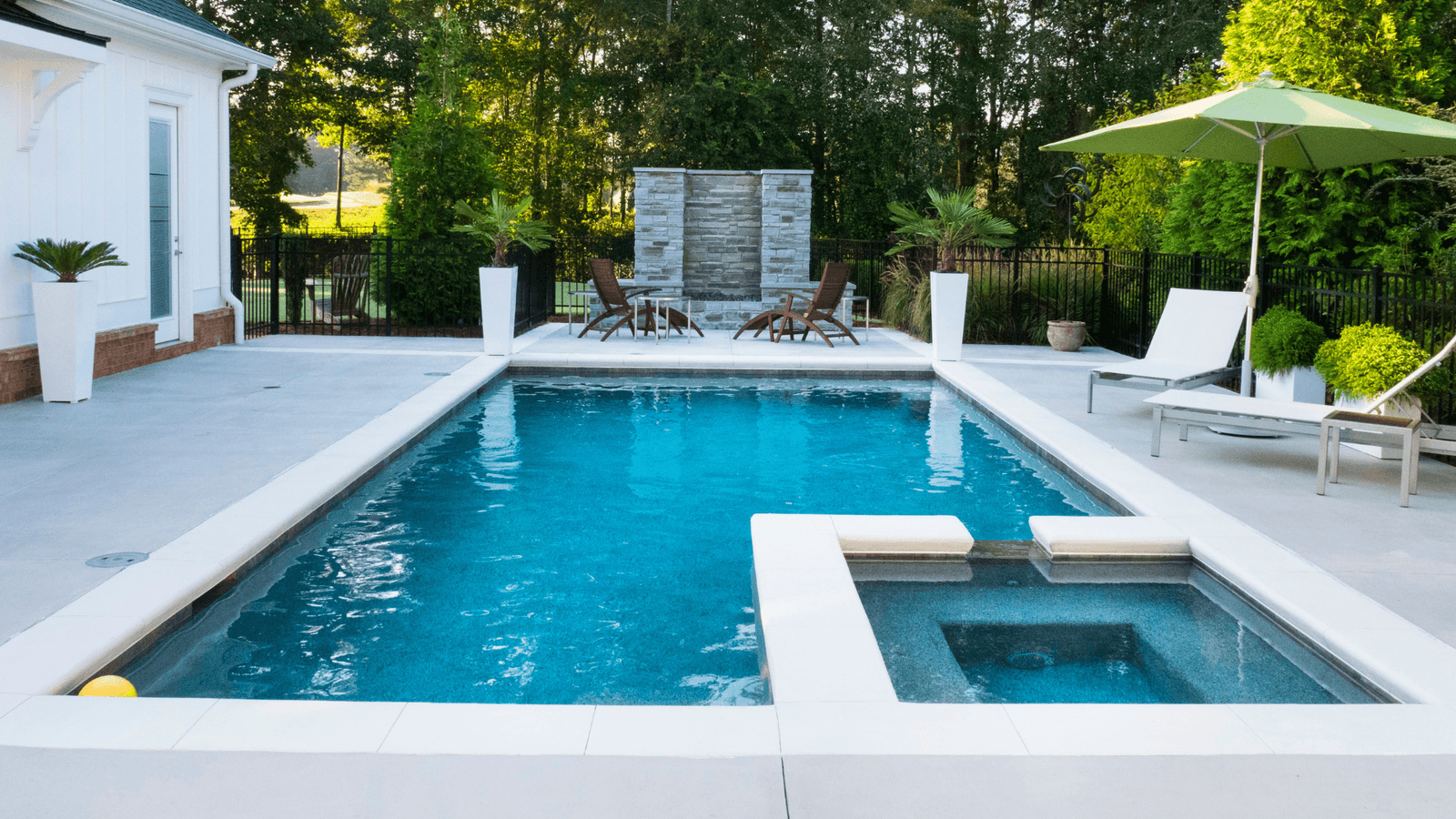
The Purpose of a Saltwater Pool Filter and Salt Generator Cell
Salt, which naturally contains chlorine, disinfects pool water, preventing algae and bacteria growth. In fact, chlorine concentrations of 1 to 2.4 mg/l can disrupt cellular development, killing the bacteria present. This is because, to function according to plan, the chlorine found in salt must be separated from the sodium it’s naturally bound to. This breakdown is done through electrolysis. Once freed, the chlorine is released into the pool, disinfecting the water. Once in the water, it reunites with the sodium molecule to form salt again.
As a result, water is channelled through a filter system already in place and then tags onto the electrolysis cell.
What are the pros and cons of a saltwater pool system?
Starting with the benefits:
Easy maintenance
It’s a system free of hazardous products
No skin and eye irritation
Fabrics are preserved (bathing suits, etc.)
Salt is more eco-friendly compared to chlorine
However, there are some drawbacks:
Spike in energy bills (salt chlorine generator runs 18-24 hours a day)
Significant investment in the first year
Saltwater causes rusting
Can salt cause steel items to rust?
Some manufacturers state that steel inground pools are more compatible with the system, asserting that rust is, first and foremost, a result of an unbalanced pH level.
Indeed, the salt level will increase the pool’s pH, to the point where it’s important to add a pH regulator or specially-designed chemical products.
With that in mind, what’s the real effect of salt on metal? Note that galvanic corrosion happens when two different metals come into contact, while both of these are submerged in an electrolyte, such as saltwater.
What about the material used to make steel pools? Most pools are made with either one of these two types of steel:
304L stainless steel
316L stainless steel
According to the International Molybdenum Association (IMOA), stainless steels still oxidize in saltwater. To resist the level of salt present in pools, the metal must contain at least 6% molybdenum. The latter is a chemical element that ensures 316L stainless steel, which contains 2-3% Mo, has better corrosion resistance. A level of 6% would render pools not only more expensive but also more difficult to produce by manufacturers.
Therefore, one can only deduce that saltwater pool systems aren’t best for stainless steel shells.
Saltwater vs. Chlorine Pools: Side-by-Side Assessment
Saltwater Pool | Chlorine Pool | |
Hygiene | Very good | Very good |
Chlorine odour | No | Yes |
Irritation | No | Yes |
Fabric damage | No | Yes |
Environmental effects | Less | More |
Salt or pH level testing | Weekly | Daily |
How to Switch to a Saltwater Pool System
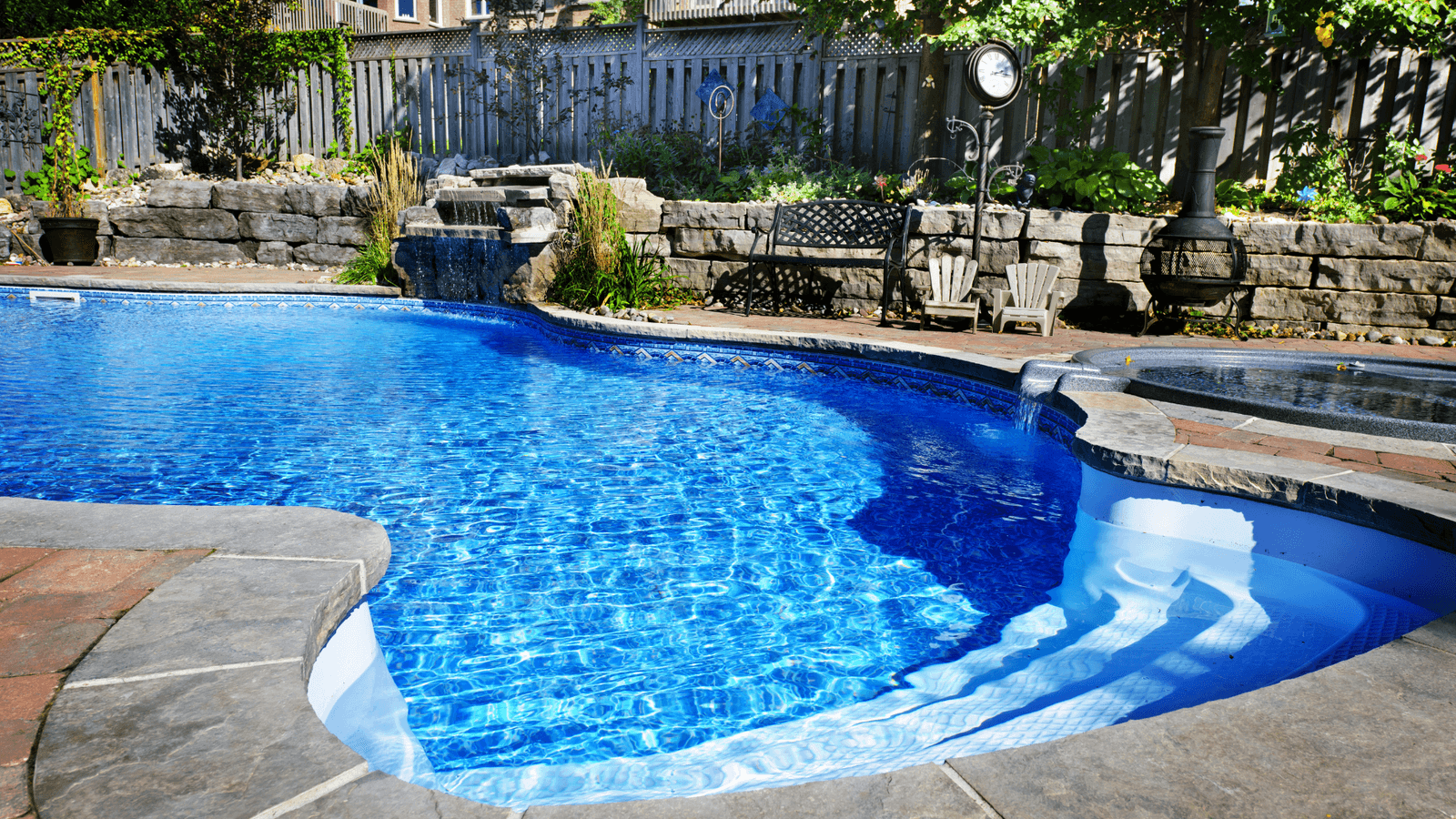
System Installation
Step 1: Drain the pool
This is the first step. If you’re looking to convert your chlorine pool into a saltwater pool system, you have to first drain your pool completely. Clean the sides and bottom with a pool brush to remove all traces of algae or potential contaminants.
Step 2: Understand the system’s design
A saltwater pool treatment system is pretty straightforward, especially since it consists of only two parts:
Casing (Hayward system)
Salt cell
Step 3: Install adapter
Your pool is already equipped with a flexible hose, positioned next to the water return. Unscrew the water return fitting to remove the hose, and replace it with the adapter included in the manufacturer-supplied installation kit. It should be an elbow fitting (90-degree pool hose adapter fitting).
Step 4: Install the salt cell
Install the salt cell onto the 90-degree adapter fitting. To ensure proper functioning, make sure the salt cell is positioned vertically beneath the water return. Next, use the fittings provided to reconnect the bottom part of the salt cell to the hose.
Make sure the union nuts are screwed on by hand tightly while ensuring everything is sealed.
Step 5: Install the salt system control panel (Hayward system)
The salt system control panel must be secured to a flat surface. Position the box so the connected wires are on the bottom, and be sure not to obstruct the casing’s four sides.
Before installing the system outdoors, make sure it’s waterproof. To do so, refer to the manufacturer’s instruction manual.
Step 6: Check installation safety
To limit the risks of accidents, make sure the system’s control panel is at least 2 m (6.56 feet) away from the pool.
Next, before plugging in everything to your electric power system, remember to cut the power where necessary in your fuse box. The saltwater pool control panel should be plugged into a 120 VAC GFCI (volts of alternating current, ground fault circuit interrupter).
Then, ground the device by connecting the grounding lug to a copper cable. You can use a 6 AWG cable.
Then, connect the cell’s cable to the system’s control panel.
Step 7: Add salt
Refer to the table below to add the right amount of salt, and stick to the 50 gallons of salt for every 2,000 gallons of water rule.
Size (ft) | Above-Ground Pool/Amt Salt |
12 feet | 2,500/237.5 gallons |
18 feet | 7,900/197.5 gallons |
21 feet | 10,500/262.5 gallons |
24 feet | 14,000/350 gallons |
27 feet | 17,700/442.5 gallons |
Given that these are conventional figures, it’s important to test the water’s salinity level using a saltwater test kit or strip.
What is the required saltwater pool maintenance procedure?
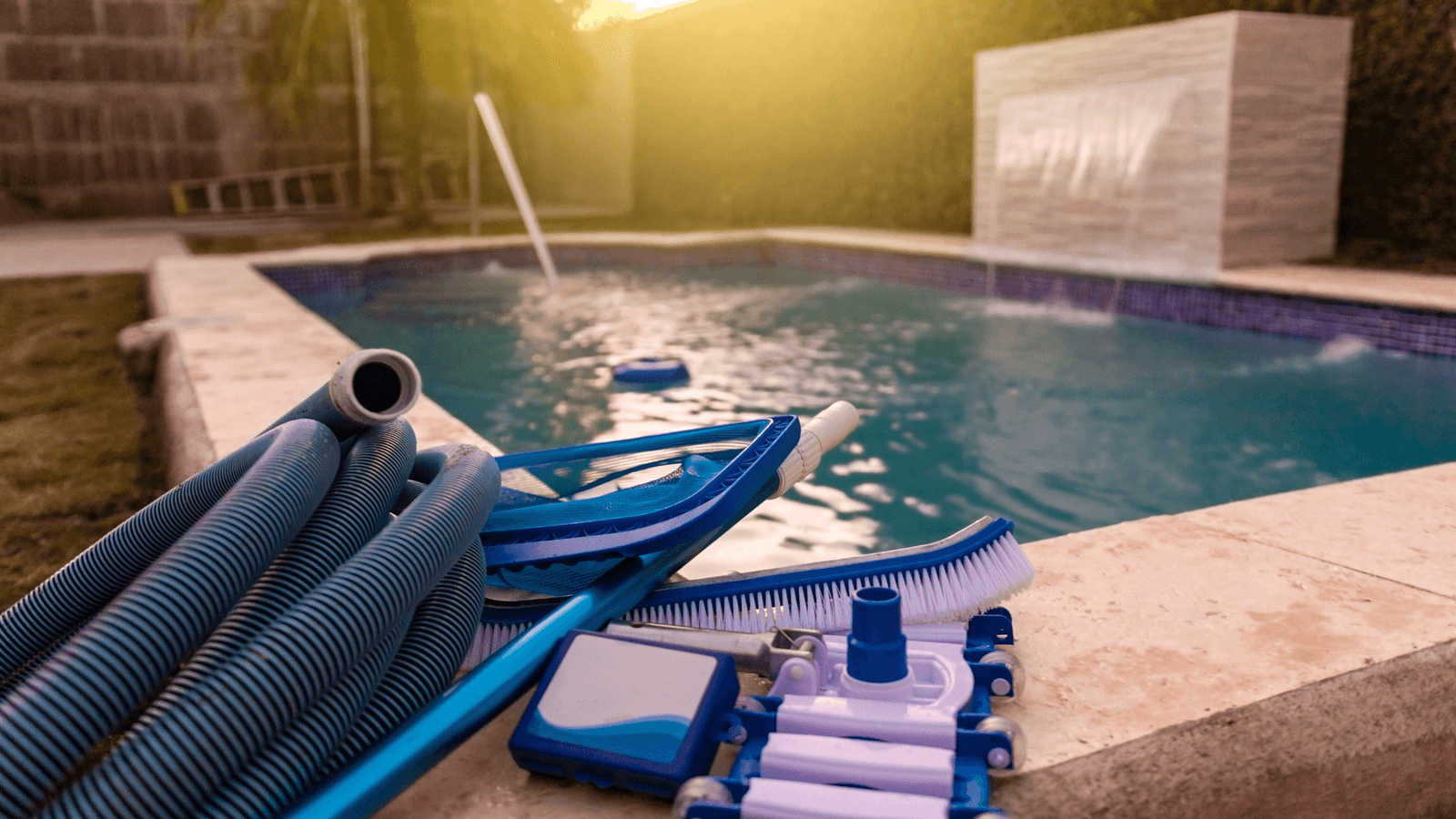
Managing Cloudy Water in a Saltwater Pool
Cloudy pool water results from a lack of chlorine in the water. To benefit from clean, quality water, you should always check that the chlorine level is between 1 and 3 ppm.
If your pool water is still cloudy, yet you’re doing everything right, the problem might stem from the water temperature. In fact, water temperatures at 26°C (80°F) compared to 21°C (70°F), necessitate twice as much chlorine.
For clear water, you have to carry out a chlorine shock treatment, which may inch up to 10 ppm of chlorine in your pool for a short amount of time. To do so, saltwater pool systems have a ready-made solution for you: superchlorination.
If you’re worried it won’t suffice, you can always add a liquid clarifier to the mix, to preserve your clear water over time.
Pool Opening and Winterizing
Post-off-season, when opening your pool, you may need to add pounds of salt to your pool water. It’s all based on the size of your pool. You can also add UV Defence sticks in your pool.
If you aren’t sure how much salt to add based on your pool’s capacity, keep in mind the 50 gallons of salt per 2,000 gallons of water rule.
Once you’ve added the salt, don’t forget the test the water’s salinity.
Winterizing is a bit more complex since you have to remove the following:
Control panel
Salt cell
Should you overlook this step, these components risk being damaged during the winter. We’ll circle back to this aspect in the next section, but just based on the sheer price of the salt cell, for your sake, best not to skip this step.
How much should you budget for saltwater pool maintenance?
The average cost of purchasing a saltwater pool system is around $800 to $1,500, based on the options. To that, add maintenance costs, which are about $50 a year, instead of the $150 you’d pay for a chlorine pool.
But there’s at least one drawback: the salt cell’s service life. It will need to be replaced three to seven years after purchase. And, as it so happens, it’s the most expensive system component; budget about $300 to purchase and $1,500 for top-performing devices.
The Pros and Cons of a Saltwater Pool: An In-Depth Look
In a nutshell, what can be surmised from delving into all the significant advantages of saltwater pools is a more enjoyable swim and lower maintenance costs. However, one must consider the potential downsides too, such as corrosion and steeper start-up costs. In the end, what it really comes down to is choosing between a saltwater pool and other options is individual preferences in terms of maintenance, budget, and environmental concerns.
Get 3 quotes for your saltwater pool project project
RenoQuotes.com can help you get quotes for your pool-building project. If you submit your project, we’ll put you in contact with top-rated contractors. Fill in the form on the homepage (it only takes a few minutes) and receive quotes from companies specializing in home renovations.
Dial 1-844 828-1588 to speak with one of our customer service representatives.
Looking for something else?
Related articles
The latest industry news, interviews, technologies, and resources.

Editorial Team
•16 Mar 2026
Quebecers have a strong and unwavering love when it comes to swimming, and an inground pool is definitely a backyard MVP and must-have.

Amanda Harvey
•23 Jul 2025
As the spring approaches, homeowners are beginning to consider inventive ways to update the outdoor features of their property. As the entrance to your home, the driveway is an important facet as the introduction of your humble abode: it sets the mood, welcomes guests and, following a long day at work, grants you access to all your favourite things.

Editorial Team
•09 Feb 2026
In a home, plumbing is like the circulatory system of the human body—mostly hidden, but essential for daily life. Yet too often, we only pay attention to pipes, faucets, or water heaters when something goes wrong—like a leak or, worse, a flood. Waiting for a plumbing emergency doesn’t just add stress—it also hits your wallet much harder.
Cynthia Pigeon
•09 Sep 2024
For the majority of people, embarking on a renovation project is synonymous with substantial financial implications. While the level of financial investment often ensures that the end result will be satisfactory, it is nevertheless possible to achieve the desired results on a smaller budget, without having to compromise in terms of quality and aesthetic value.

Amanda Harvey
•08 Nov 2023
If you find an infiltration of water through the roof of your home, then it may raise some concerns about the consequences. In the same regard, this situation should raise questions about the measures that need to be taken to avoid this unpleasant occurrence.