Basement Renovation Guide: Starting Point
By Cynthia Pigeon
Updated on November 8, 2023

Being able to enjoy a cozy basement free of cold floors is probably something you have been dreaming of. If not, should you happen to have an unfinished basement, the possibility of converting this area into a livable space is probably at the forefront of your mind.
In any case, properly carrying out the first steps of your basement renovation will ensure the durability of the work that will be undertaken, which is why it is always a good idea to be well-informed beforehand! Here are 5 key points to consider when renovating your basement.
Basement Renovations: 5 Key Points
1) Waterproofing the foundations
First things first, make sure that there is no water ingress that could lead to mould growth. Therefore, it is highly recommended to perform a waterproofing inspection to ensure that the foundations are properly sealed. Thus, ensuring that your French drain is properly functioning is essential to prevent any basement water infiltration. Should it be faulty, have it repaired before starting any renovation work. Also, click here to learn more about installing a French drain.
Any cracks will also need to be carefully repaired to prevent any water seepage in the basement. Note that a vertical crack less than 3.2 millimetres wide can be fixed by homeowners using hydraulic cement, which is a product that is available in most hardware stores. However, a horizontal crack or a crack larger than 3.2 millimetres requires the assistance of a contractor to be properly repaired.
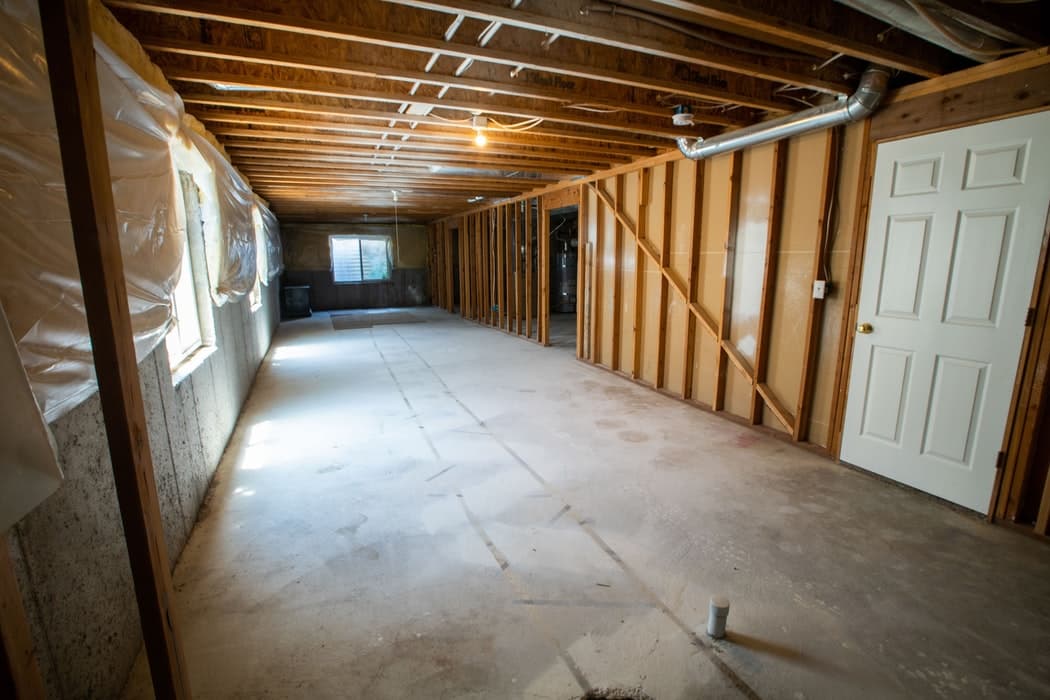
2) Basement wall insulation
While both fibreglass and rock fibre insulation were commonly used quite some years ago, these are no longer recommended. Instead, opt for extruded polystyrene insulation panels or spray-applied polyurethane foam, both of which are mould resistant.
Note that ceiling insulation can be left by the wayside, after all, numerous devices within the ceiling act as a barrier against heat loss. Therefore, prioritize wall and floor insulation. A well-insulated floor requires a subfloor, regardless of the flooring material selected.
Remember to insulate your hot and cold water pipes. And, speaking of which, note that insulating the water heater considerably increases its energy efficiency (by about 20%). Also, insulating cold water pipes should not be overlooked as it prevents condensation from damaging the structural materials located near the pipes.
Are you planning on renovating your basement in the near future? Check out our article Checklist of the Steps to Follow: Basement Renovation Project.
Are you planning on renovating your basement?
Fill out our form to receive quotes from certified contractors!
3) Radon gas
As defined by the Government of Canada, radon is “a radioactive gas that comes from the breakdown of uranium in soil and rock. It is invisible, odourless and tasteless.” Given that your renovation project has yet to be underway and that any air infiltration points in contact with the ground have not yet been sealed, radon may have insidiously entered your basement.
To ensure that the radon gas levels do not exceed 200 becquerels per square foot (maximum acceptable level), Health Canada recommends purchasing a DIY radon test kit or seeking professional help in testing radon levels.
For more information, check out our article about radon and the appropriate measures to rectify elevated radon gas levels in your basement.
4) Check valve maintenance
The check valve is a round trap located in the basement, and it is designed to prevent municipal sewers from backflowing into your home's drainage system. This device should be cleaned on a regular basis, but especially before starting any work, as it could be damaged in the event of a liquid/gas backup. Thus, it is essential to clean the flap gate and thoroughly check the gasket for leaks.
5) Ceiling height
For a basement to be considered livable space, ceilings must be at least 6 feet high. Note that some municipalities may require ceilings to be 6.8 feet to issue a building permit.
Also, note that a forced-air ventilation system is highly recommended for basement use. This ventilation method releases clean, preheated air into the basement, thus limiting the need for space heating.
For more information about the subject matter, check out our article: Standard Basement Ceiling Height.
Are you looking for more information in regard to your basement? Check out these articles:
Get 3 renovation quotes for your basement renovation project
RenoQuotes.com can help you get quotes for your basement renovation project. By submitting your project, we’ll put you in contact with top-rated contractors. Fill in the form on the homepage (it only takes a few minutes), and you will get estimates from trusted professionals.
Dial 1-844 828-1588 to speak with one of our customer service representatives.
Looking for something else?
Related articles
The latest industry news, interviews, technologies, and resources.

Amanda Harvey
•08 Nov 2023
Does your porcelain bathtub bear the marks of time? Showing its wear through every nick, scratch and stain from years of bathing. Does it need a quick update from it's 1970's bright green or heart-shaped, baby pink facade?

Editorial Team
•08 Nov 2023
Bathroom renovations are always an excellent investment, as they tend to offer the best return. Not to mention, the bathroom is a fairly integral room in the home. This space is used on a daily basis for many essential activities, and this includes washing up in the morning as well as before bed, getting ready for work, taking care of overall hygiene and so forth. Even though it’s a small space, storage is essential.

Editorial Team
•23 Feb 2026
Although the most skilled and patient of people will be able to attach and seal drywall joints together successfully, it’s important to recognize that this project can’t be taken on by everyone.
Léa Plourde-Archer
•25 Feb 2026
Far from simply being a place where one parks their car, the garage is a unique space within the house. This area is used for storage, for practicing certain hobbies and even sometimes as an extension of the house.
Editorial Team
•08 Oct 2025
Is your work experience deemed non-construction, yet are hoping to leverage your know-how, log hours in your apprentice record book, and break into the industry? Come along as we take a deep dive into this subject matter, detailing how best to shoot your shot while showcasing your relevant work experience.