How to Control the Humidity in Your Bathroom | Renovation Quotes
By Editorial Team
Updated on November 8, 2023

In the middle of winter or even the early days of spring, who doesn't enjoy a long, hot shower to warm up before heading out the door? Even though a hot shower feels great, unfortunately, your bathroom doesn't share the sentiment.
An overly humid bathroom is a problem, and if not controlled, can lead to several issues with bath finishes, including bubbling drywall and ceiling damage, as well as growing mould and mildew.
There are plenty of effective ways that you can control the humidity in your bathroom, so act if you see that paint peeling or that ceiling ballooning.
Ways to control the humidity in your bathroom
Obviously, the steam produced by taking a hot shower or bath is the most common way that moisture collects in the room. As a homeowner, you want this moisture to have a way to escape so that it sticks to surfaces for the least amount of time possible.

Bathroom ventilation to evacuate the humidity
To keep moisture levels at bay, as a homeowner you're looking for ways to allow moisture to drain out of the building rather than inwards. A common solution to this issue is to install a bathroom fan. Before 1980, bathroom fans would blow moisture and heat into the attic of homes, trapping the hot air and leading to mould and mildew problems.
Thankfully, modern codes now insist that bathroom vents point outside! Having the vents properly sealed, blowing air out into the world, will reduce moisture, and in turn, damage to your bathroom surfaces.
There are a few options when installing a bathroom fan. The traditional fan, or exhaust fan, has a simple on/off switch, which you can utilize at any time. As this is manually controlled, there is no real way to tell how much moisture is in the air. Make sure to run the fan while you are taking a shower and for some time after, as it will work to collect and ventilate as much moisture as possible.

Timer-operated bathroom fans
A step up from the traditional fan is installing a bathroom fan with a timer. This allows the homeowner to choose how long the fan is operating for: before, during and following a shower. The fan will simply turn itself off at whichever interval you set. This is an excellent option for those running to work in the morning who want moisture to drain but aren't too keen on leaving the bathroom fan on for a full day.
A newer concept for the cautious homeowner is the dehumidistat. The dehumidistat's goal is to maintain humidity levels in a preferred range, working in tandem with the bathroom fan, and measuring the humidity in the air. When the humidity in a room increases, the dehumidistat works to lessen the room's humidity by removing it from the air. It shuts the fan off when the humidity has dropped below a certain level, which is 40-50% for the normal bathroom.
No Bathroom Fan? No Problem!

Though we highly recommend the installation of a bathroom fan, if you can't install one for whatever reason, there are a few ways to control the moisture. The simplest way to achieve this is to keep doors and windows open during or following a hot shower. If you're lacking in privacy and want to keep the door closed, try to have the window remain open at least part way. Any form of airflow towards outside spaces will benefit your bathroom greatly.
If you don't have a window in your bathroom, it is recommended that you leave your door open, even just slightly, while showering. Bathrooms that lack both fans, as well as windows, have a high probability of material damage as well as the potential for mould growth.
One way to manually control the buildup of moisture is to grab a shower squeegee from your local hardware store. The squeegee is a cheap way to collect and push excess water down into the tub so you don’t have to worry about the water hanging around on surfaces following that hot bath.
Also, if you happen to have a shower mat in your tub, make sure to dry it after taking a shower. Water often becomes trapped underneath, and cannot drain unless the mat is removed. Following your shower, lift the mat from the bottom of the tub and let water flow towards the drain. Setting up a de-humidifier in the bathroom and turning it on after a hot shower is also a good way to control humidity. All in all, even these quick tricks allow for moisture to escape, helping to improve longevity in bathroom surfaces and materials.
Make sure to regularly check to see if faucets are dripping or the toilet is not running on a continuous basis, as these issues could point to internal plumbing problems and lead to further moisture buildup.
Get 3 renovation quotes to solve your bathroom humidity problem
RenoQuotes.com will put you in contact with 3 reliable contractors for your bathroom humidity problem. Fill in the form on our homepage (it only takes a few minutes), and you will receive quotes from trusted professionals.
Dial 1-844 828-1588 to speak with one of our customer service representatives
Looking for something else?
Related articles
The latest industry news, interviews, technologies, and resources.
Editorial Team
•15 Nov 2024
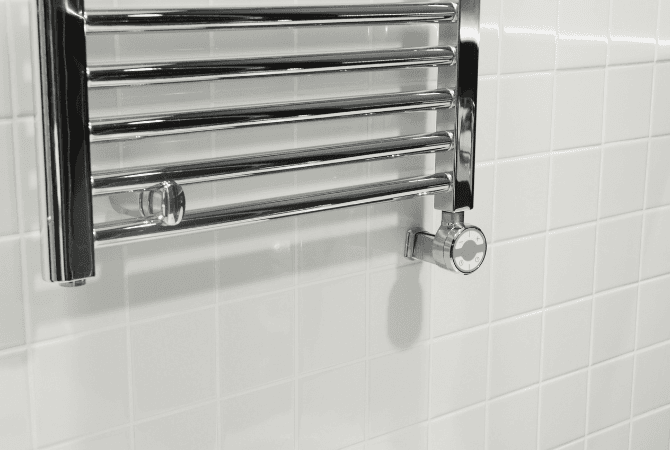
Getting undressed in a bathroom should always be a treat. However, it often turns into an ordeal. And, as it turns out, the secret lies within the heating system, from which we expect an immediate, cozy warmth. What more could you ask for from a bathroom heater? So, why not get one that’s programmable and doubles as a towel warmer?

Cynthia Pigeon
•18 Dec 2024
With the new year ahead, major developments are being ushered into the renovation industry.

Editorial Team
•04 Nov 2025
A roof in good condition is essential to protect your home from the elements. Over the years, however, several problems can develop, causing leaks, energy loss, and costly damage. This article lists the most common roofing issues and explains how to detect and repair them.

Editorial Team
•08 Nov 2023
When it comes to saving the environment, there are plenty of ways that you can contribute. Especially as a homeowner, you should consider the multitude of methods you can adopt to reduce your carbon footprint and create a healthier home and outdoor environment.

Cynthia Pigeon
•12 Jul 2024
Is your kitchen clad with melamine cabinets and looking duller than ever? Have you forgotten the last time you redecorated your kitchen? Either way, your cabinets are robbing you of your love of cooking and you sure don't want to miss out on new storage ergonomics. So it's about time you give your kitchen some pizzazz!