Bathroom Renovation Cost in 2026: Quebec vs. Toronto
By Cynthia Pigeon
Updated on October 6, 2026
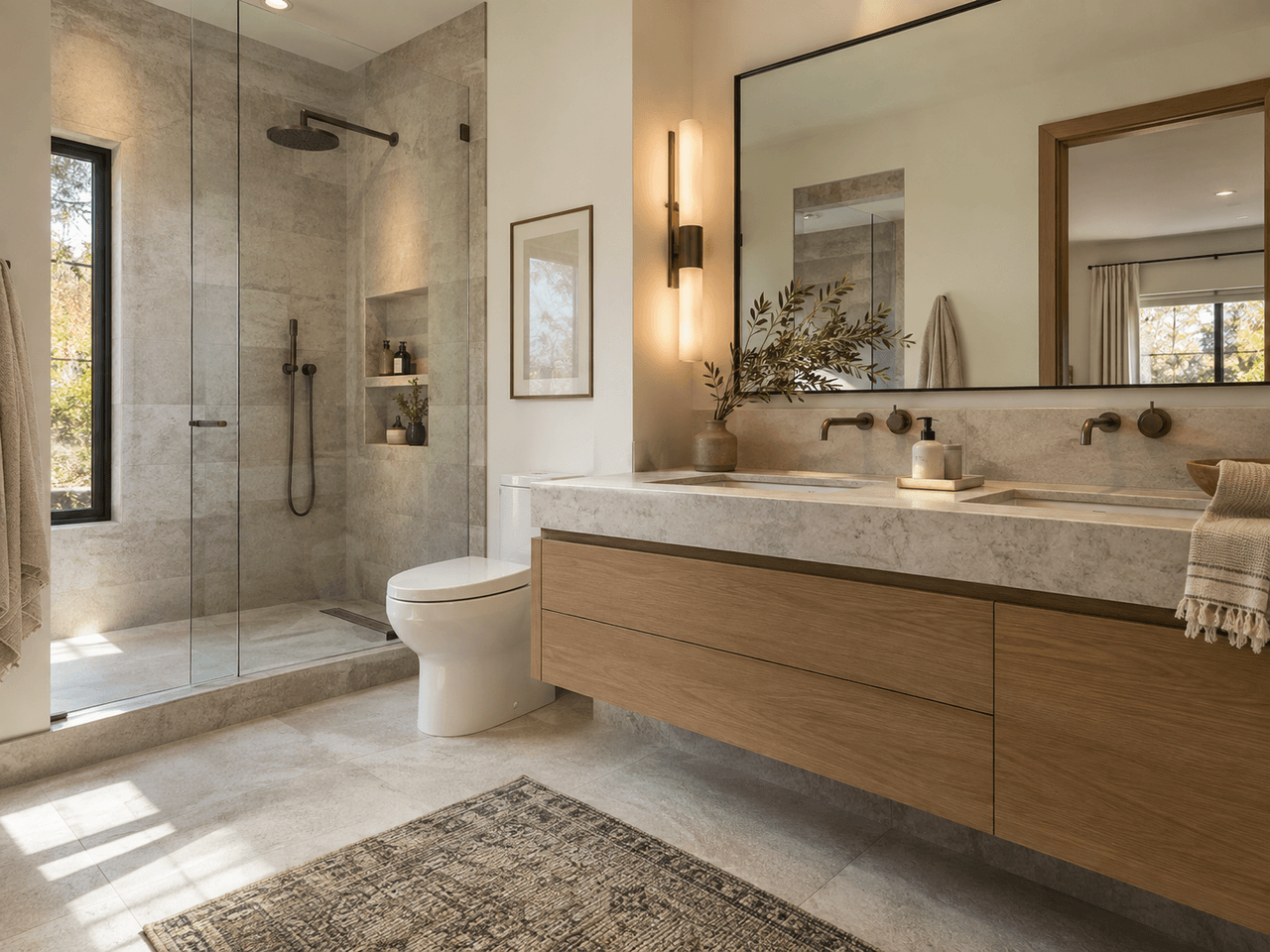
In 2026, the cost of a bathroom renovation can vary considerably between Quebec and Toronto. These differences result from labour costs, contractor availability, regulatory requirements, required permits and project complexity.
In Quebec, a bathroom renovation can start at around $19,000 for a cosmetic update and exceed $55,000 for a high-end project involving major plumbing changes. In Toronto, a typical full bathroom renovation generally costs between $20,000 and $30,000. In comparison, larger or high-end projects can reach $30,000 to $45,000 or more, depending on the room size, the materials selected, and the scope of work.
In this guide, we compare bathroom renovation costs in Quebec and Toronto in 2026, from cosmetic updates to full renovations, including labour, materials, plumbing, electrical work, permits and the main factors that influence the final budget.
How Much Does a Bathroom Renovation Cost in Quebec and Toronto in 2026?
A bathroom renovation budget varies depending on the scope of work, material quality, and project complexity. The ranges below provide an overview of the costs generally observed in Quebec and Toronto in 2026, from a simple cosmetic update to a high-end renovation.
Project Type | Quebec | Toronto |
Cosmetic update, existing layout retained | $18,000 to $24,000 | $15,000 to $22,000 |
Standard renovation | $25,000 to $38,000 | $22,000 to $30,000 |
Full mid-range renovation | $26,000 to $35,000+ | $30,000 to $50,000 |
High-end / custom renovation | $45,000 to $55,000+ | $45,000 to $55,000+ |
* These ranges are indicative. Definitions of standard, full and high-end renovations vary by source and contractor. The final price depends on factors such as room size, materials, plumbing, electrical work, layout changes and unforeseen issues.
Bathroom Renovation Cost in Quebec
Source: Atelier-JFD inc.
Renovating a bathroom is one of the most worthwhile investments for a Quebec homeowner. In addition to improving everyday comfort, the project can deliver an excellent return on investment (ROI), often estimated at 60% to 80% of the cost of the work at resale.
However, the construction market has changed considerably. In 2026, with material inflation and a shortage of skilled labour, basing your budget on current figures rather than estimates from several years ago is essential. This guide breaks down each expense category to help you plan your renovation without unpleasant surprises.
1. Cosmetic Update (Budget-Friendly): $18,000 to $24,000
This budget applies if you keep the existing layout and do not relocate any plumbing.
Includes: Replacing the vanity, new faucets, replacing the toilet, painting and replacing the ceramic tile floor.
Materials: Mid-range products from big-box retailers.
2. Standard Renovation (Mid-Range): $25,000 to $38,000
This is the most common type of project in Montreal and Quebec City. It often involves replacing a tub-shower combination with a glass shower featuring an acrylic or ceramic base.
Includes: Complete demolition, electrical upgrades, moisture-resistant drywall, recessed lighting and higher-quality materials.
Labour: Use of a licensed general contractor.
3. Luxury Bathroom (High-End): $45,000 and Up
This type of project focuses on luxury and complete customization.
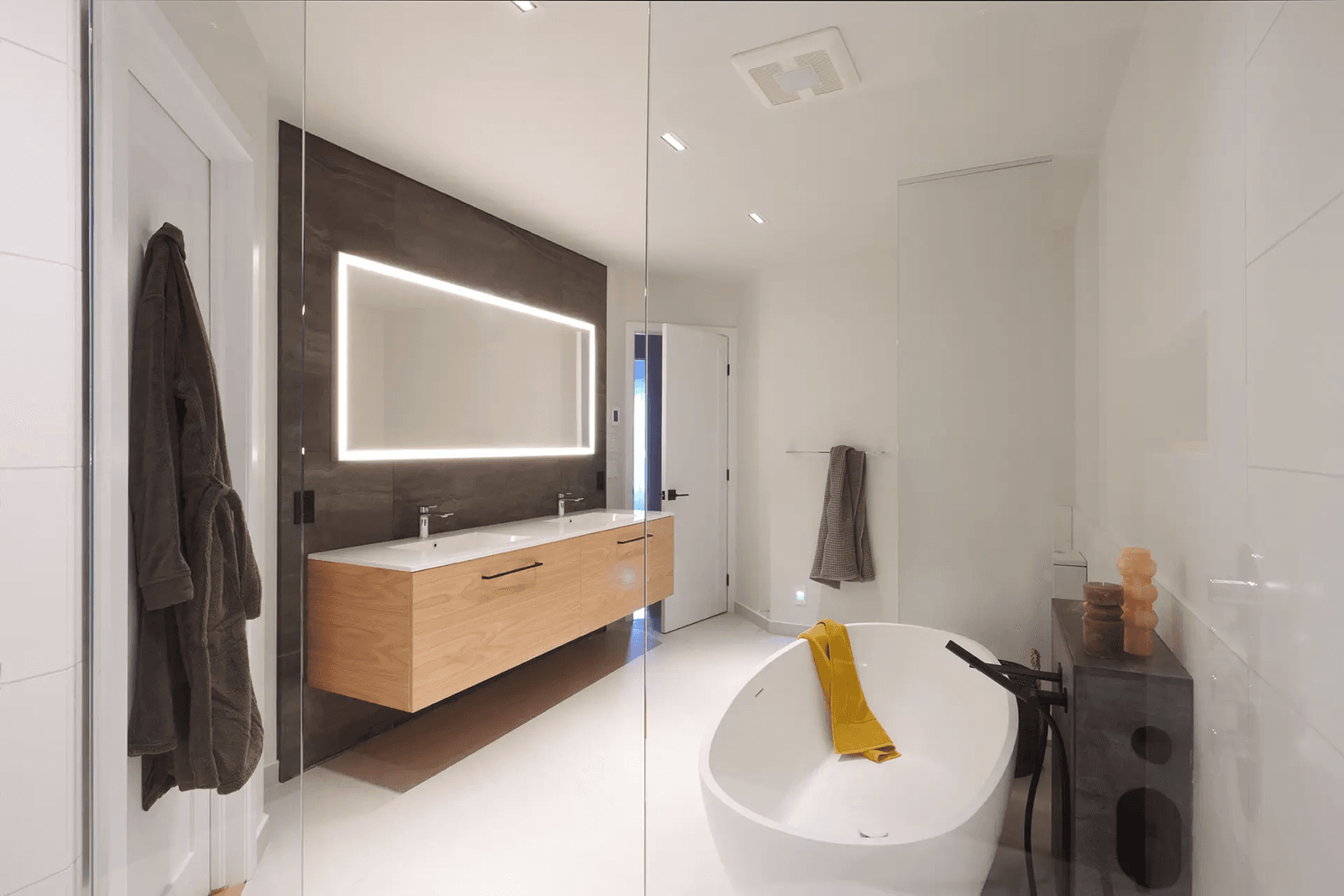
Includes: Heated flooring, curbless shower with a linear drain, freestanding tub, high-end faucets in finishes such as matte black or brushed brass, quartz or granite countertops and home automation.
Complexity: This budget often includes enlarging the room or relocating major plumbing fixtures.
Bathroom Renovation Cost in Toronto
Source: M.A. Structures inc.
Not unlike in Quebec, the cost of a bathroom renovation in Toronto primarily depends on the scope of work, the quality of the materials and any changes made to the existing layout. In 2026, a full renovation generally costs between $15,000 and $40,000, while higher-end projects can exceed $55,000.
1. Cosmetic Update: $15,000 to $22,000
This budget generally applies to projects that retain the existing bathroom layout and do not require major plumbing relocation.
Includes: Replacing the vanity, faucets and toilet, new flooring or ceramic tile, painting, lighting and other cosmetic improvements.
Materials: Standard or mid-range products, with little or no modification to the existing systems.
2. Standard Renovation: $22,000 to $30,000
This type of project involves a more substantial bathroom transformation while generally retaining the main layout of the plumbing fixtures.
Includes: New ceramic tile, an upgraded or custom shower, new vanity, plumbing fixtures, lighting, waterproofing and higher-quality finishes.
Labour: Several trades may be required, including plumbing, electrical work, tile installation and waterproofing.
3. High-End Bathroom: $55,000 and Up
High-end projects focus on premium materials, custom features and a greater degree of personalization.
Includes: Heated flooring, walk-in shower, frameless glass panels, high-end faucets, custom vanity, stone countertop, integrated lighting and other personalized elements.
Complexity: Layout changes, relocating plumbing fixtures, custom plumbing, and constraints associated with condos or older homes can significantly increase the final cost.
Why Do Prices Differ Between Quebec and Toronto?
Source: Maconnerie Briquart inc
The price differences between Quebec and Toronto are mainly explained by labour costs, demand for specialized contractors, permit requirements and property type. In Toronto, labour can account for approximately 40% to 60% of the total budget, while older homes and condos can involve additional costs related to plumbing, electrical work, condo board approvals or job-site restrictions.
Labour Costs
Labour Category | Quebec | Toronto |
Estimated share of total budget | 50% to 60% | 40% to 60% |
General contractor | $45 to $80/h | $75 to $120/h |
Plumber | $100/h and up | $80 to $150/h |
Electrician | $100/h and up | $90 to $140/h |
Availability of specialized trades | Varies by region and time of year | High demand can increase timelines and costs |
Coordination of multiple trades | Can increase the total cost | Can quickly increase the cost of full renovations |
Material Costs
Material costs are generally fairly comparable between Quebec and Toronto when the same products are sold by major retailers or suppliers operating in both markets. Differences are mainly related to the choice of supplier, product range and local availability.
A standard vanity, ceramic tile or plumbing fixture can be similarly priced in both regions. However, high-end, custom-made or special-order products can quickly increase the overall price, particularly because of delivery costs and longer lead times.
In Toronto, delivery and access constraints on certain urban or condo job sites can add costs, while in Quebec, availability can vary more by region. In both markets, the installed cost is often more meaningful than the material price alone, since installation complexity and labour rates have a major impact on the final budget.
Permits and Regulations
Regulatory requirements differ in Quebec and Toronto. In Quebec, the Régie du bâtiment du Québec (RBQ) regulates renovation work, while plumbing and electrical work must be handled by qualified professionals. In Toronto, requirements instead fall under the City of Toronto, the Ontario Building Code and the Electrical Safety Authority (ESA), depending on the type of work. Required permits also vary based on project scope, especially when plumbing, drainage, partitions or electrical systems are modified.
Property Type
Property type does not affect the budget in the same way in Quebec and Toronto. In Toronto, condos can involve additional job-site constraints, including condo rules, restricted work hours, elevator reservations and access to shared plumbing stacks. Semi-detached homes and older houses may also require more adaptation when plumbing, electrical systems or wall configurations need to be modernized.
In Quebec, detached homes often provide more flexibility when changing the bathroom layout, which can simplify certain work. However, condos may impose constraints similar to those found in Toronto, while older buildings, particularly in Montreal, may reveal aging systems or existing conditions that increase renovation costs.
In short, Toronto stands out mainly for constraints related to condos and urban density, while in Quebec, cost differences are more closely tied to the type and age of the building and the region where the property is located.
Plumbing, Electrical Work and Other Expense Categories
Source: Plomberie OG
Plumbing and electrical work account for a significant portion of a bathroom renovation budget, especially when the project involves relocating plumbing fixtures, adding heated flooring or upgrading existing systems. These costs are in addition to finishing materials, construction materials, general labour and unforeseen expenses.
In Quebec
In Quebec, labour generally accounts for approximately 50% to 60% of the total cost of a bathroom renovation. A complete project often involves several professionals, including a general contractor, plumber, electrician and tile installer.
For plumbing, rates can range from $110 to $150/h, depending on the region, the complexity of the work and the timing of the service. Costs increase especially when a toilet, shower or water lines need to be relocated. Electrical work, such as installing heated flooring, new lighting or a fan, must also be included in the budget.
As a guideline, the budget breakdown may look like this:
Expense Category | Approximate Share of Budget |
Labour | 50% to 60% |
Finishing materials | 25% to 30% |
Construction materials and rough plumbing | 10% to 15% |
Permits and unforeseen expenses | 5% to 10% |
Finishing materials include ceramic tile, the vanity, plumbing fixtures and faucets. Their cost varies primarily according to the product range selected and the level of customization.
In Toronto
In Toronto, labour is also one of the main expense categories and can account for approximately 40% to 60% of the total budget. Rates vary by trade, but a plumber generally charges between $95 and $150/h, while an electrician often charges between $90 and $140/h.
Relocating plumbing can significantly impact the final cost. Relocating a toilet, shower, drain, or water supply lines can add approximately $2,000 to $5,000 or more to the project. Keeping the existing layout is therefore one of the most effective ways to limit expenses.
In Toronto, a typical budget breakdown may look like this:
Expense Category | Approximate Share of Budget |
Labour | 40% to 60% |
Finishing materials | 25% to 35% |
Construction materials | 10% to 15% |
Permits and unforeseen expenses | 5% to 10% |
What Factors Increase the Cost of a Bathroom Renovation?
Source: Céramique Concept DG
Even for two bathrooms of similar size, the final cost can vary considerably depending on the scope of work and the choices made during the renovation. Certain elements have a particularly significant impact on the budget.
Relocating Plumbing
Relocating a toilet, shower, bathtub, or sink generally requires changes to the water supply lines and drains. This type of work can quickly add several thousand dollars to the project, especially when the pipes are difficult to access or the floor needs to be opened. Keeping plumbing fixtures in their current locations is therefore one of the most effective ways to reduce costs.
Bathroom Size
A large bathroom requires more ceramic tile, flooring, paint and sometimes more cabinetry. However, certain costs, such as plumbing or electrical work, do not necessarily decrease in a smaller room. A small bathroom can therefore be relatively expensive on a per-square-foot basis.
Custom Shower
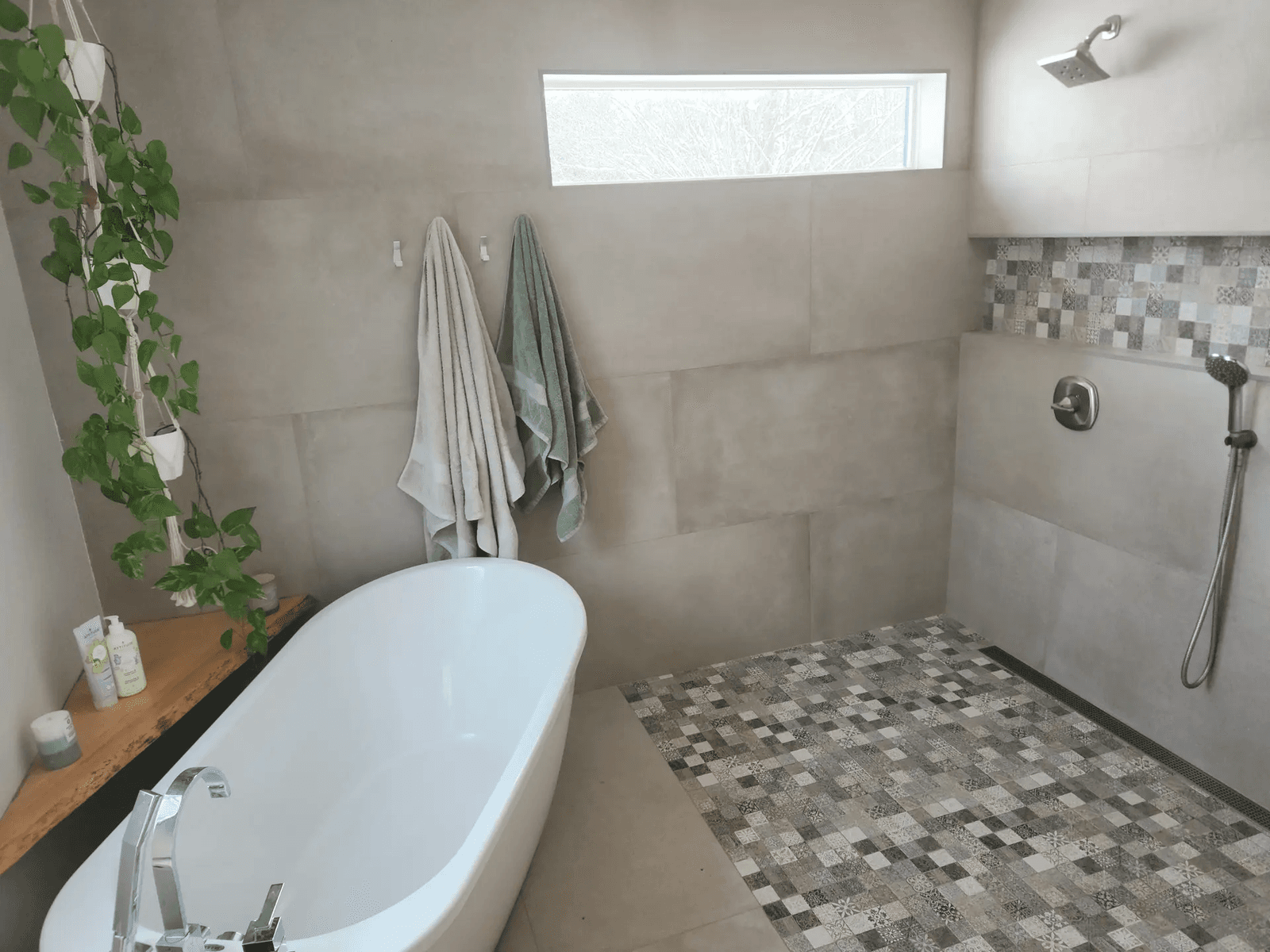
A walk-in shower or fully customized shower generally costs more than a prefabricated unit. Waterproofing, ceramic tile, custom glass panels, built-in niches and linear drains all increase both material and installation costs.
Structural Condition
Demolition can reveal problems that were not visible beforehand, such as water damage, mould, damaged wood or outdated systems that need to be replaced. These repairs can add several thousand dollars and extend the project timeline.
High-End Materials
Choosing premium materials can quickly increase the budget. A custom vanity, stone countertop, high-end faucets, specialty ceramic tile or freestanding bathtub can cost several times more than standard products.
Layout Changes
Completely changing the bathroom layout is generally more expensive than a renovation that retains the existing configuration. Moving walls, enlarging the room or changing the location of plumbing fixtures can require additional plumbing, electrical, finishing and sometimes structural work.
Permits and Contractors: Quebec vs. Toronto

Source: RenoQuotes
In Quebec
In Quebec, requirements vary depending on the type of work. When a homeowner hires someone else to perform plumbing work, it must generally be carried out by a specialized contractor who is a member of the CMMTQ and holds the appropriate licence. Plumbing work must also comply with the Quebec Construction Code and applicable standards.
For a complete renovation, it is also important to check whether a municipal permit is required, particularly when the project affects plumbing, the structure or the room layout. Rules may vary from one municipality to another.
In Toronto
In Toronto, a permit may be required when the renovation includes major interior alterations or plumbing or drainage work. The City of Toronto issues permits for interior alterations, including certain plumbing and drainage work.
For electrical work, a homeowner who hires a professional must use an electrical contractor authorized by the Electrical Safety Authority (ESA). In Ontario, only contractors holding the appropriate licence can legally be hired to perform residential electrical work.
Special Considerations for Condos
Condo renovations can add an extra step in both Quebec and Toronto. In Toronto, the homeowner generally needs to review the condo corporation’s rules and may need to get approval from the board before beginning work. Some condo corporations also impose approved contractors, specific working hours or other job-site conditions.
In Quebec, it is also recommended to review the declaration of co-ownership and the building’s rules before modifying a bathroom, particularly when the work affects common elements, plumbing or other shared systems. In both markets, these constraints can affect the schedule, contractor selection and final project cost.
How to Cut Down on Renovation Costs
Source: Plomberie OG
Reducing the cost of a bathroom renovation does not necessarily mean choosing the cheapest materials. Good planning can often generate significant savings without compromising the quality or durability of the work.
Keep the Existing Layout
Avoid relocating the toilet, shower, bathtub or sink whenever possible. Changing their locations often requires moving water supply lines and drains, which can add several thousand dollars to the project. Keeping the current layout generally reduces plumbing, demolition and reconstruction costs.
Compare Several Quotes
Request several detailed quotes before choosing a contractor. Compare not only the total price, but also the included work, proposed materials, timelines, warranties and exclusions. A much lower quote may sometimes leave out work that will be billed later.
Choose Materials Strategically
You do not need to use high-end products everywhere. You can invest more in heavily used elements such as faucets, the shower or flooring while choosing more affordable options for certain decorative elements. Standard or ready-to-install products generally cost less than custom-made models.
Allow for Unexpected Expenses
A renovation can reveal problems that were not visible before demolition, such as water damage, mould or aging systems. Ideally, allow 10% to 15% of the budget to cover these unforeseen expenses without having to modify the project once work is underway.
Budgeting Properly for Your Bathroom Renovation in 2026
The cost of a bathroom renovation varies according to both the scope of the project and the market where the property is located. In both Quebec and Toronto, the best way to control your budget is to keep the existing layout whenever possible, choose materials carefully and compare several detailed quotes. Allowing for unexpected expenses also makes it easier to plan realistic work and avoid cost overruns.
Bathroom Renovation FAQ
How much does a full bathroom renovation cost in Quebec in 2026?
For a full standard-quality renovation, you should generally budget between $26,000 and $35,000 in Quebec. A simpler project may cost less, while a high-end renovation involving major plumbing changes can cost between $45,000 and $55,000.
How much does a bathroom renovation cost in Toronto in 2026?
In Toronto, a standard or full renovation often costs between $20,000 and $30,000, while a more elaborate project can reach $30,000 to $50,000. High-end renovations can exceed $55,000 depending on the materials, layout and complexity of the work.
Is it more expensive to renovate a bathroom in Toronto than in Quebec?
Not necessarily in every case. The differences depend mainly on labour, property type, materials selected and the extent of the changes. Toronto can nevertheless involve additional costs related to strong demand for certain specialized trades, urban job-site constraints and condo-specific rules.
What increases the cost of a bathroom renovation the most?
The main factors are plumbing relocation, layout changes, room size, custom showers, high-end materials and problems discovered during demolition, such as water damage or aging systems.
Is it cheaper to keep the plumbing in the same location?
Yes. Keeping the toilet, shower, bathtub and sink in their current locations generally helps reduce costs considerably. Relocating drains and water supply lines can add several thousand dollars to the project.
Do you need a permit to renovate a bathroom?
It depends on the type of work and the municipality. A simple cosmetic renovation does not always require a permit, but major changes to plumbing, the structure or the layout may require one. In both Toronto and Quebec, it is recommended to check local requirements before beginning the work.
How much should you set aside for unexpected expenses?
A contingency of 10% to 15% of the total budget is generally prudent. It can cover problems discovered during the work, such as water damage, mould or plumbing and electrical systems that need to be replaced.
Looking for something else?
Related articles
The latest industry news, interviews, technologies, and resources.
Editorial Team
•27 Apr 2026
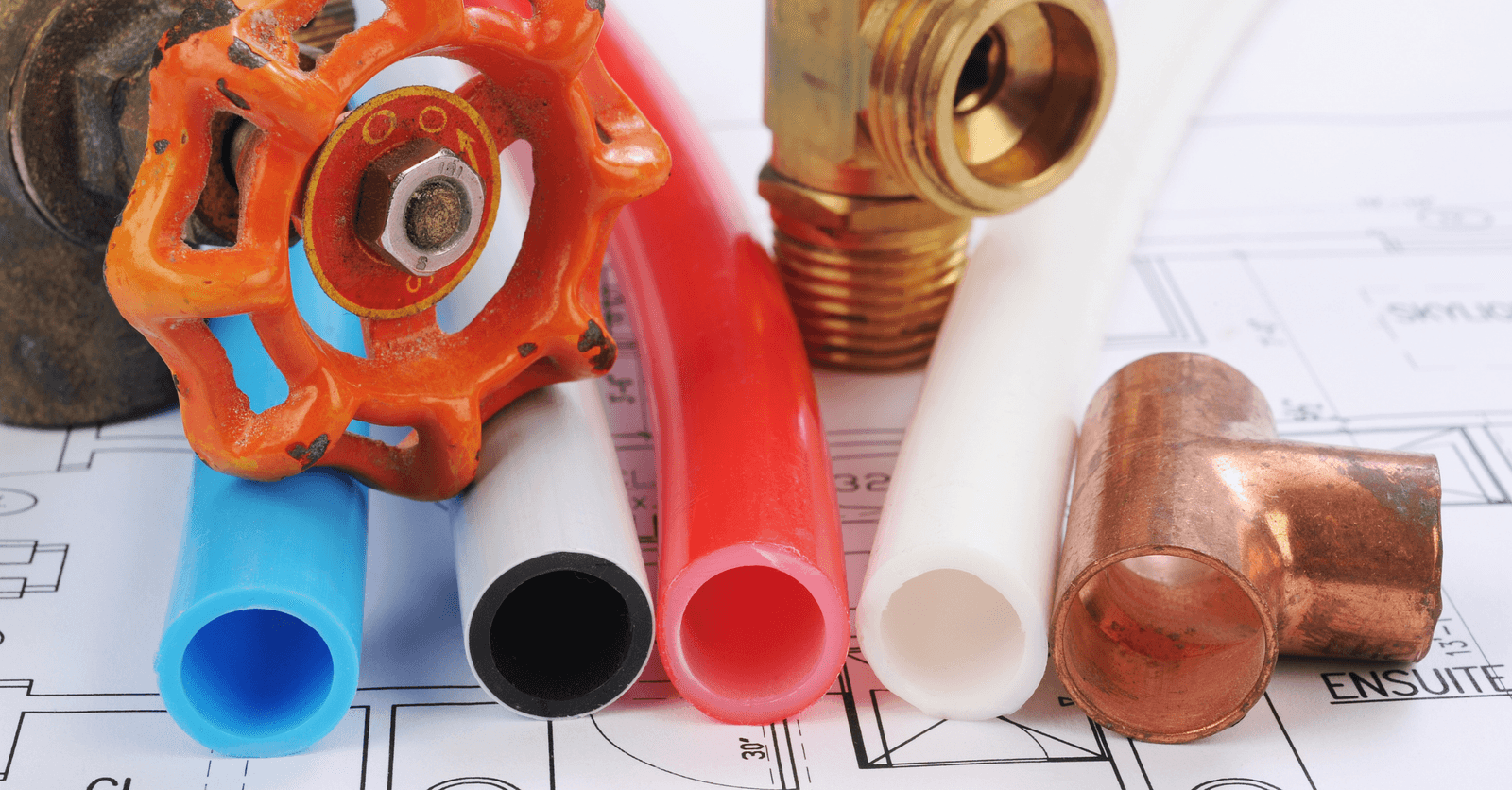
Are you carrying out a home renovation or building project? Installing PEX plumbing pipes is a great option. Reputed for its flexibility and durability, PEX pipes are increasingly sought after. It’s a remarkable system given its reliability, resistance, and versatility. What are the upsides? How much does it cost? What are the proper guidelines for installation success? All this and more detailed below.
Editorial Team
•23 Jul 2025
Given that your kitchen floor is exposed to it all, from dirt, grime, and wear and tear from heavy foot traffic, boiling and oily spills from falling pots and pans, flooring has to be as tough and resilient as they come. Yet, it still has to look good, stylish even, blending seamlessly with the overall decor.

Editorial Team
•28 Jan 2026
Interior decoration trends are taking a turn for "the sustainable," shaped by consumer preference for newfound, innovative materials. While design trends are a revolving door of change, one that has kept coming back over these last few years is one that’s closely linked to environmental awareness in consumers.
Editorial Team
•03 Jul 2025
Close your eyes and picture your dream bathroom; the one that meets all your needs and best aligns with your personal preferences. If a modern bathroom is what you had in mind, and you’d really enjoy undertaking such a short- to medium-term project, you’ve come to the right place!
Cynthia Pigeon
•29 Sep 2026
How much does a turnkey basement renovation cost in Montréal in 2026? Depending on the level of finishing, expect to pay $60 to $ 125+ per square foot. For a 1,000-square-foot basement, a complete renovation with standard finishes can cost between $65,000 and $95,000. Explore renovation costs based on square footage, the work involved, and the unique characteristics of Montreal homes and multiplexes.