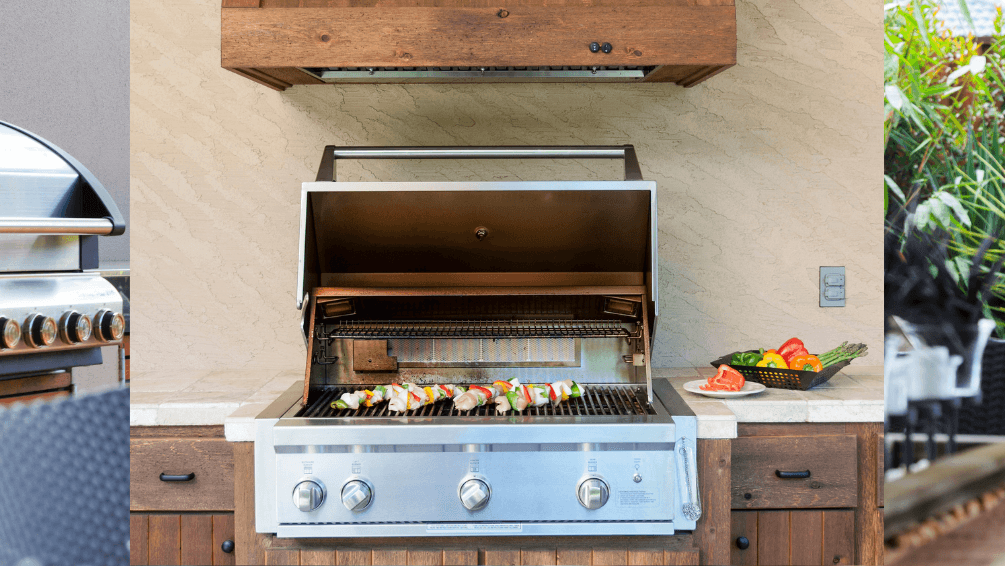
Many of us appreciate the great outdoors, soaking up the summer or cozying up in the fall outside on the patio. Hosting a backyard barbeque is a favourite spring, summer and fall pastime (sometimes even winter) but running back and forth between inside and out can get exhausting and take your mind out of the party.
For those who love to host and cook in the great outdoors, there is no greater appeal than the outdoor kitchen!
With an outdoor kitchen, preparing meals around family and friends means spending more time with them. This might seem like an expensive project, but there are plenty of ways to go about this on a budget and come out with beautiful results. Of course, there is plenty to consider, including space, durability and electricity. We’ve covered it all below, so read on to find the ins and outs of building an outdoor kitchen.
To consider before building your outdoor kitchen
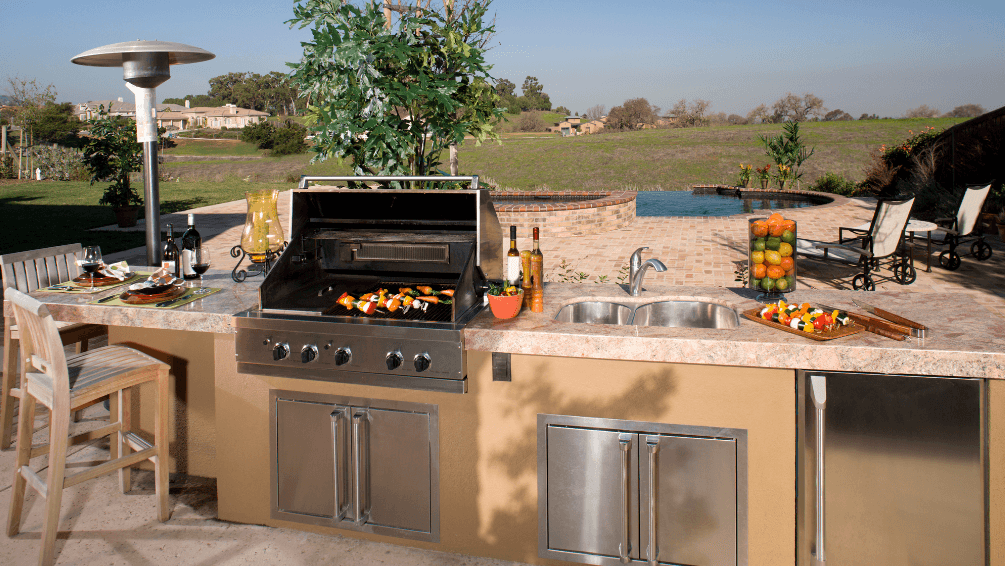
Source: Canva
Since your outdoor kitchen is going to be set outside, it will need both a durable foundation and a sturdy body. Of course, there is also the question of safety. If you are building the kitchen on your own, it is important to make sure that the electricity is wired correctly and that it can support all your outdoor kitchen appliances.
Other things to consider are how to keep combustible materials safe and insulated, as well as making sure to properly ventilate your outdoor kitchen. Both aspects are necessary to plan, as you don’t want to risk your outdoor kitchen going up in smoke. Further, if you are purchasing new appliances, be certain that they are rated for the outdoors. This will ensure the longevity as well as the safety of using them outside. It is important to remember that indoor appliances may not stand up against outdoor weather.
Getting started
There should be a fair amount of planning involved in your outdoor kitchen project. A good plan will make the difference between an organized outcome and a messy outcome. Your planning process should include the exact dimensions of all pieces you plan on using in your kitchen, including doors, grills, sink, and storage.
All hardware and appliances should be purchased before the building process begins, as this will help you to determine exactly how much space is required. If you’re ordering online, the suppliers should list dimensions of all items, so jot these down. Make sure to leave plenty of room between appliances. Obviously, you don’t want your outdoor kitchen to be cramped or uncomfortable to use.
Construction: stainless steel
Traditionally, an outdoor kitchen is built with a steel frame and cement boarding. This is the safest route, and although there may be other methods, this is the one we are recommending you follow. Make sure that your kitchen is supported by a solid surface, and this should be at least 4” thick. You should choose concrete to be safe, and avoid using pavers or anything that will sink into the soft ground below. Once a base has been constructed, start by welding a frame for your kitchen, using 304 stainless steel and aluminum studs.
You can also join aluminum pieces using screws. Following the frame construction, you’ll attach cement boards over all open spaces, except for the top. The top should be reserved for a counter, made of a durable and weather-proof material. For your counter material, granite is recommended. Following the installation of the counter, hardware can be installed. This includes any grills, doors, drawers, sinks and so on. Next, cover over the cement boards with a weather-proof veneer. The veneer can be stucco, stone, tile or a combination of your choice.
Construction: concrete panels
Recently, manufacturers and homeowners alike are experimenting with concrete panels. Concrete panels are now made lightweight while remaining durable, so they are an excellent option for building your outdoor kitchen. If you choose this method, manufacturers will cut pieces according to your measurements, and they will be shipped to you in panels that are ready to be assembled. The benefit of this method is that the cost is cheaper than the stainless-steel method, and concrete can withstand fire, rot and mould.
Of course, although this method is cheaper, it will be significantly heavier, and therefore, the frame you build will need to support the weight of the concrete. Further, when it comes to building the frame itself if pieces break or are installed incorrectly, you’ll have to rely on the manufacturer for any repairs. All of this is important to bear in mind when making a decision regarding your outdoor kitchen structural materials.
Additional features to consider for your outdoor kitchen
Source: Canva
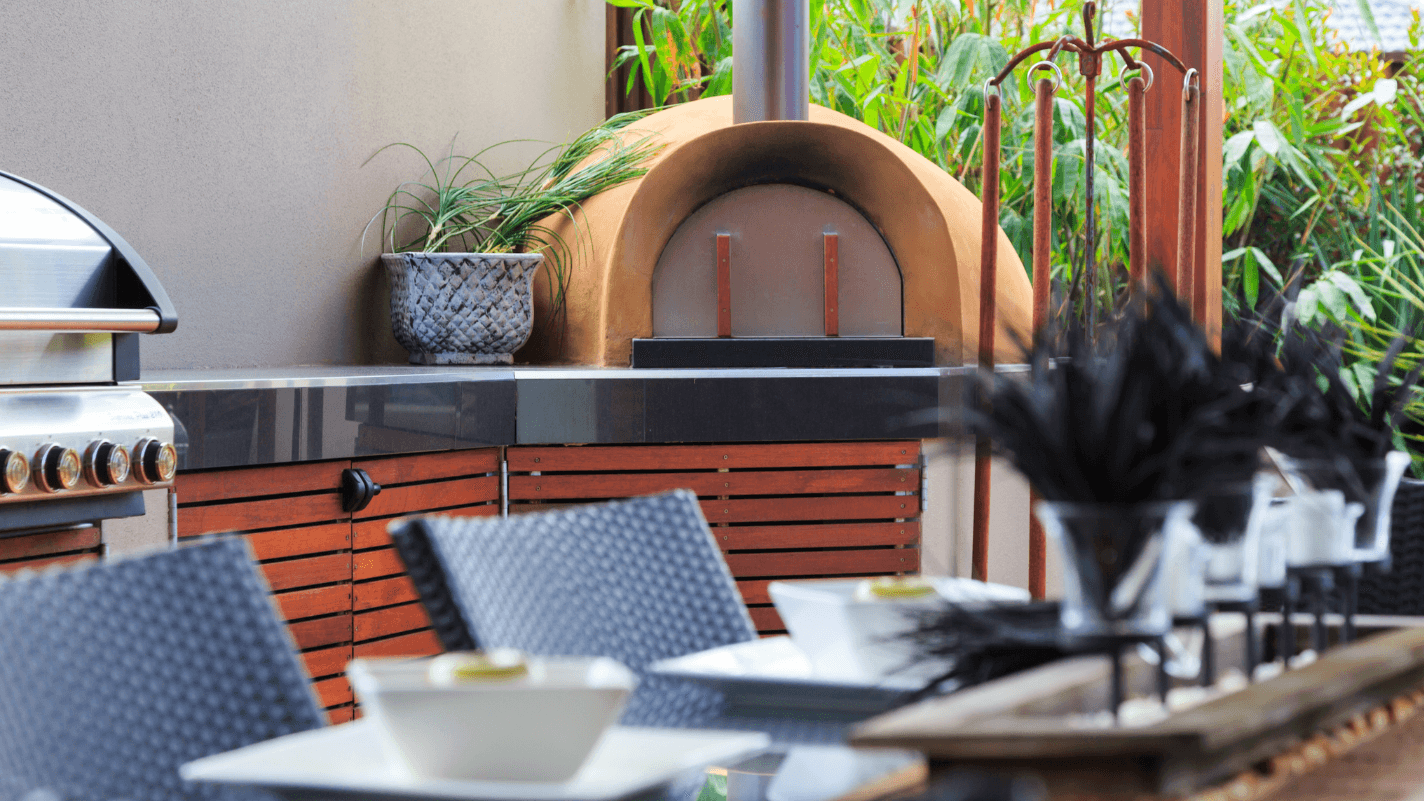
Of course, building an outdoor kitchen doesn’t have to follow a specific framework, aside from the frame itself. Your outdoor kitchen can feature almost anything you like, including a wood oven for cooking pizzas or whatever else your heart desires. Make sure if you choose to install a wood-burning oven that it is supported by a cinderblock or concrete base.
An outdoor fireplace is another excellent option for your backyard kitchen, and plenty can be done with one! These are great year-round; you can warm up by the fire during colder months or after a dip in a nearby lake or pool. A smoker is another option, especially for the chef at home!
Of course, the set up will require knowledge of how a smoker works, but if you’ve got it then go for it! Remember, since the kitchen is outside, you can pretty much do anything you like.
Get quotes for your outdoor kitchen renovation project
RenoQuotes.com can help you get quotes for your backyard kitchen renovation. If you submit your project to us, we’ll put you in contact with top-rated contractors. Fill in the form on the homepage (it only takes a few minutes), and you will receive quotes from companies that are specialized in home renovations.
Dial 1-844 828-1588 to speak with one of our customer service representatives.
Looking for something else?
Related articles
The latest industry news, interviews, technologies, and resources.

Editorial Team
•08 Nov 2023
Are you finally ready to tackle your landscaping project and the idea of planting a fruit tree beckons? After all, there is nothing better than enjoying fresh fruit harvested right in your backyard!
Amanda Harvey
•09 Sep 2024
Are you looking at your kitchen cabinets thinking about how they're old and outdated but still intact? Maybe you aren’t quite ready to replace them because the frames and doors are structurally sound, or a whole new cabinet renovation just isn't in your budget. Whatever the case, for a quick kitchen update, all that cabinets require is a fresh coat of paint!
Editorial Team
•08 Nov 2023
Thinking of replacing your shower to offer your bathroom a little extra flair? There are plenty of options! Here are some of the possibilities available for you to carry out a new renovation project.
Editorial Team
•30 Aug 2024
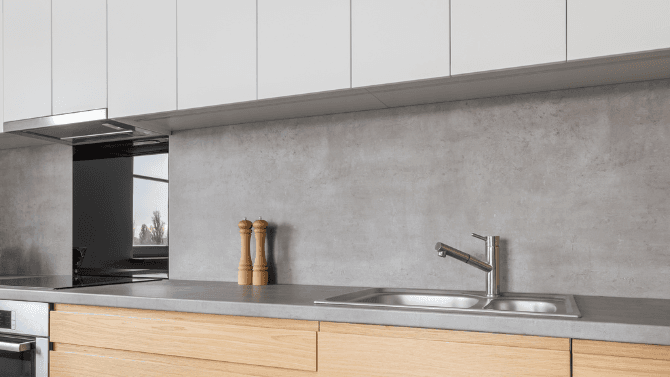
A concrete countertop can help transform the space it's in. Many see concrete as an industrial material. However, if used well, it can adapt to any decor style. A mundane kitchen can undergo a major transformation with the addition of a new concrete countertop covering.
Karine Dutemple
•08 Nov 2023
Although materials like ceramic, wood, porcelain or natural stone are still going strong, the arrival of new ones on the market could easily create new competition for them.