
Carpenter-joiners are as important as ever on construction sites, given that building and erecting wood-made structures are, to this day, an integral part of all new construction projects, whether for commercial or residential projects. If this trade has piqued your interest, you no doubt want to know more about it! Keep reading to learn everything that could be of interest about becoming a carpenter-joiner in Canada.
Exploring the Role of a Carpenter-Joiner
Firstly, note that the trade name “carpenter-joiner” is a general term used to group together 3 construction industry specializations:
Concrete formworker
Deep foundation installer
Flooring-layer-sander
Any good carpenter-joiner will be tasked with the following duties:
Installing doors, moulding, windows, stairs, and wood flooring
Creating formwork
Installing cabinetry, countertops, or storage spaces
Installing exterior siding and insulation
Renovating or repairing wooden structures
Assembling chipboard or wooden components
Preparing quotes
Reading plans provided
Building timber framing (roofs, walls, floors)
Laying deep foundations
Essential Skills for Becoming a Carpenter-Joiner
As with any process used to determine one's future profession, you first need to acquaint yourself with trade-specific skills or qualities. Besides having an interest in manual work and woodworking, let's just say that math skills are paramount, given that you will need to take accurate measurements—using both metric and imperial systems—and read and understand quotes and plans, as well as provide off-the-cuff calculations.
Also, this line of work happens to coincide with other trades, therefore, teamwork is a given. Also, you have to be comfortable with the idea of carrying out physically demanding work and climbing scaffolding. Since structural strength and stability hinge on precise measurements and accurately cut timber, we want to highlight the need for rigorous attention to detail, day in and day out, throughout an entire project.
How to Become a Carpenter-Joiner

Source: Canva
Training and Certification Across Canada
Note that the training required to obtain carpenter-joiner credentials varies from one province to the next. Generally speaking, your way into the trade starts with completing a specialized carpentry program.
This program typically lasts 4 years and includes a minimum of 5,440 hours of field training, on top of 32 weeks of technical training, and is divided into four distinct periods. After completing these two steps, you can take the certificate of qualification exam. Once all these steps are completed, you’ll be able to obtain an official journeyperson certificate.
Note that if you already have field experience or have previously taken related courses, the above-mentioned requirements may differ. Moreover, if you already have racked up over 4 years of hands-on experience with one or more companies, you can qualify to receive trade certification. Hence the importance of a bit of research before diving in, headfirst.
Carpenter-Joiner Training and Certification in Quebec
In Quebec, the process of obtaining a carpenter-joiner certification has quite a few hoops to jump through. Indeed, you have to complete a DVS Carpentry (1,350 hours) followed by 150 hours of guaranteed hands-on experience with an industry-specific employer for a period of 12 weeks. Your training contract must be submitted to the CCQ in due form. Subsequently, you may request an apprentice status.
Afterwards, you must complete three separate work periods of 2,000 hours to take the provincial qualification exam. If completed successfully, you’ll be granted a companion status. Note that two-thirds of the 6,000 work hours have to be focused on one of the three aforementioned specialties (deep foundation installer, flooring-layer-sander, or concrete formworker). Following these 4,000 hours, you can pursue the same line of work or opt for more generalized training in the same trade.
Most importantly, note that obtaining a certification of qualification is only required in the Province of Quebec. While highly recommended elsewhere in Canada, it’s still not a prerequisite. We should also mention that having this certification can streamline your efforts to find a job in the industry. In addition, obtaining this certification allows you to take the standard interprovincial exam. Successfully completing the latter grants you a Red Seal, which allows you to work as a carpenter-joiner across Canada.
To work as a carpenter-joiner in Quebec, obtaining the following RBQ licences is mandatory:
General contractor: subclasses 1.2 and 1.3
Contractor subclass 6.1 – Wood structures
New residential buildings covered by a guarantee plan: subclasses 1.1.1 and 1.1.2.
Bear in mind that if the contractor you work for doesn’t hold the aforementioned licences, you’re unlikely to obtain any sort of compensation in the event of an injury.
Job Prospects and Salary in Canada

Source: Canva
Based on the information gathered from Job Bank, along with the outlook for the 2022-2031 period, the carpenter-joiner trade is likely to hit a nationwide labour shortage. However, bear in mind that said trade heavily relies on the construction industry, especially the residential, institutional, and commercial side of the operation.
In terms of salary, the data indicates that the median wage of a carpenter-joiner is $30 an hour.
Note that there is a discrepancy in salary between various regions and between different branches of the industry: industrial, institutional/commercial, and civil engineering/road maintenance. The first two sectors offer their workers a higher wage compared to civil engineering/road maintenance.
Find a job in the renovation industry
RenoQuotes.com can guide you in your job search in the renovation industry. Tell us about your career prospects, and we'll help you get in touch with contractors who are likely to be interested in your skills, free of charge. Simply fill in our form (it'll only take a few minutes) and we'll take care of sending your candidate application to employers.
Dial 1-844 828-1588 to speak with one of our customer service representatives.
Looking for something else?
Related articles
The latest industry news, interviews, technologies, and resources.

Editorial Team
•28 Jan 2026
In 2026, the landscaping industry in Quebec is booming. With increasing demand for sustainable outdoor spaces and creative landscape design, residents across the province are turning to qualified landscapers to transform their properties. Whether you're looking to improve your curb appeal or completely revamp your backyard, understanding the role of a landscaper is crucial to a successful project.
Editorial Team
•29 Aug 2025
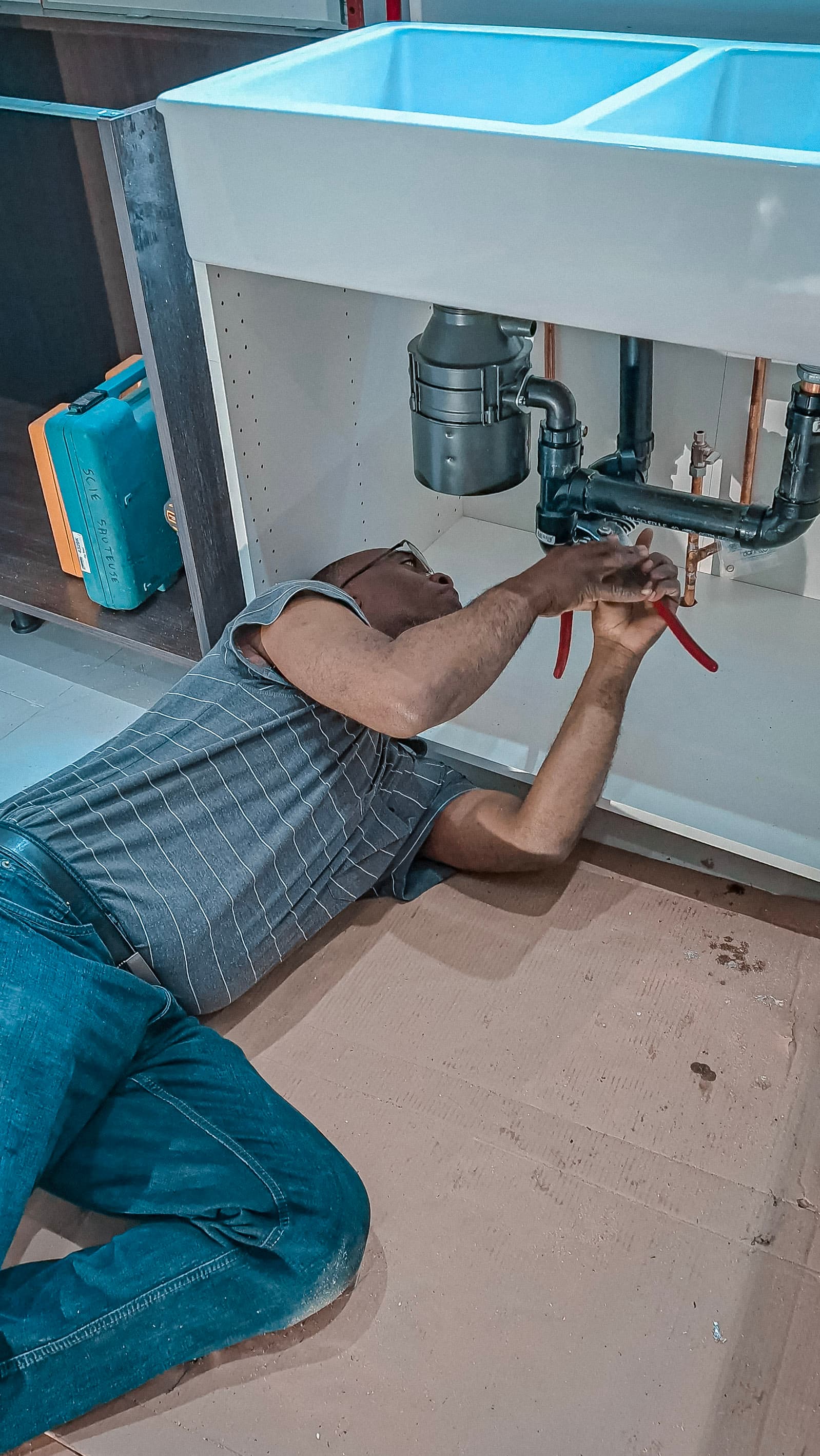
Do you like getting your hands dirty while pursuing a well paid and interesting trade? Becoming a plumber might be what you are looking for. Becoming a plumber in Ontario is a rewarding career path that offers a blend of technical skills, hands-on experience, and job stability. The journey to becoming a licensed plumber involves several key steps and requirements, which are designed to ensure that individuals are well-prepared for the demands of the profession.
Editorial Team
•27 Apr 2026
Plumbing renovations aren’t exactly gripping. As much as you’d like to put it off, at times, whether you like it or not, the right time is right now. This is all the more likely during a kitchen, bathroom, or basement renovation.

Editorial Team
•08 Nov 2023
The bedroom is the definite haven of the home. Depending on your living arrangements, this room may be the only space offering you a little bit of peace, quiet and privacy. Of course, you’ll need it to be as organized as possible if you’re spending endless hours tucked away in your bed.
Cynthia Pigeon
•08 Nov 2023
Did you know that windows and glass doors are majorly responsible for heat loss in homes? Therefore, energy efficiency is a determining factor when it comes to changing your windows to maximize energy savings.