Building a Tiny House: Permits and Municipal Regulations
By Editorial Team
Updated on June 16, 2026
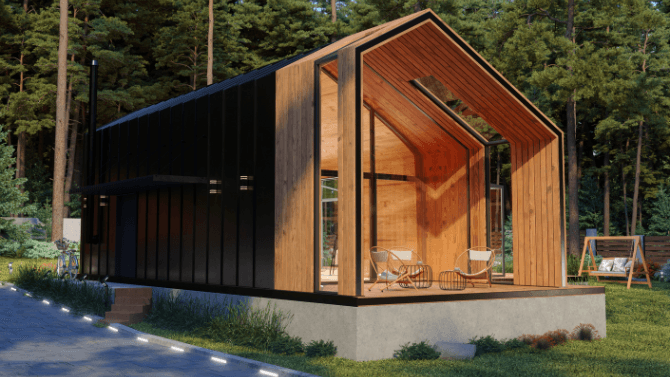
More affordable and eco-friendly than traditional homes, tiny houses are transforming real estate by making homeownership more accessible to families with modest incomes. With significantly lower costs than conventional houses, they offer a path to property ownership without a lifetime of debt.
The rise of tiny house living has been so impressive that most municipalities have yet to establish the necessary changes and adjustments to their regulations. However, other municipalities have been proactive in their urban planning efforts, focusing on this new phenomenon.
Tiny houses appeal to a myriad of individuals seeking greener and innovative builds, encompassing simply a sufficient amount of livable space. However, municipal regulations can become a real hurdle, preventing this project from progressing.
Tiny Houses in Quebec: Key Insight into Municipal Regulations
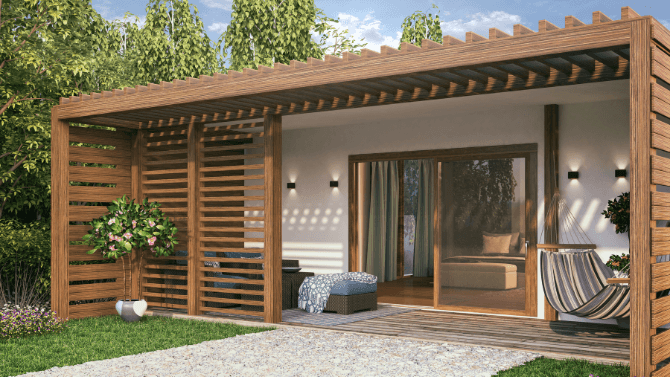
Source: Canva
What Is a Tiny House?
The tiny house concept has been highly popular in Canada and the United States since the early 2000s. This type of housing requires living with only about 10% of what is featured in a regular house.
However, the advantages are undeniable: reduced water and electricity consumption, fewer repairs needed, fewer maintenance and cleaning efforts, and more time to devote to rest, hobbies, and family bonding.
Tiny houses are rather worthwhile for nature-loving couples, young families seeking a countryside retreat, and independent seniors who prefer a cozy, low-maintenance home.
Check out these articles to spark your thoughts:
Tiny Home ft. the Building Code
Bear in mind that the construction of tiny houses is regulated by the Building Code, municipal regulations, and zoning by-laws. In that regard, note the following:
The Quebec Construction Code doesn’t cover homes smaller than 700 square feet.
Quebec’s provincial construction and building transformation regulations prohibit building housing structures smaller than 275 square feet (studios) and under 320 square feet (one-bedroom, single-family homes).
Municipal zoning by-laws typically establish the minimal house dimensions per sector, which often means requesting an administrative override.
Tiny homes are banned as residential annexes in Quebec.
As a matter of fact, each municipality has the right to assert its own regulations to manage new housing on its territory. Some will adjust their by-laws to meet tiny home criteria, while others are more reluctant in light of this new phenomenon and fail to adapt their regulations accordingly.
Why Are Some Cities Reluctant to Allow Tiny Homes?
While some might be led to believe that tiny homes are rather easy to deal with, it’s quite the opposite, actually. If such houses are built in a neighbourhood, the municipality may worry that this type of housing could decrease the property values of nearby homes. Likewise, local residents might share this concern, fearing a decline in their own property’s worth.
From a sociocultural perspective, tiny homes are often associated with urban planning and radical environmentalism. This can pose a challenge for municipalities, as their lower property values result in reduced tax revenue compared to traditional houses.
Which Municipalities Are Open to Tiny Houses?
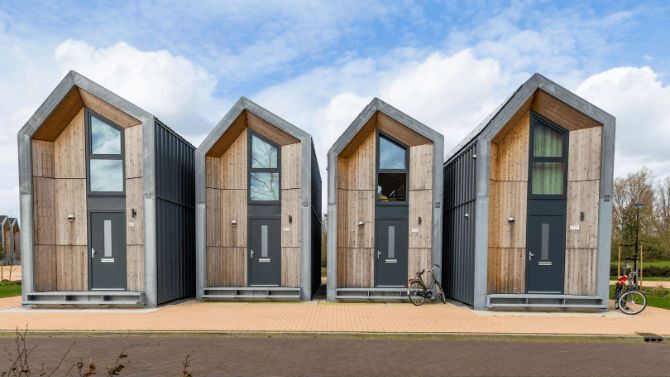
Source: Canva
Groundbreaking Municipalities:
In 2015, Lantier, in the Laurentides, authorized an “ecoregion” that can accommodate a hundred or so tiny homes.
The municipality had to revise its by-laws and restrict the building of tiny homes smaller than 355 sq. ft. in this sector.
Stunning Projects:
The Petit Quartier in Sherbrooke: A housing co-operative, featuring 16 ft. by 30 ft. tiny homes with 21 ft. tall ceilings. Prices start at $100,000.
Domaine Nature sur le Lac in Ste-Marguerite-du-Lac-Masson: Features tiny homes and single-family modular houses on a 13 million square foot, river-front property. Real estate prices range from $99,900 to $165,000.
Dixville Habitation Durable: A Dixville-based program serves to promote eco-friendly and energy-efficient builds. Offers $3,000–$8,000 in subsidies.
Other Great Locations for Tiny Houses:
Domaine du Lac Champlain (40 parcels)
Farnham in the Eastern Townships (54 parcels on Welch St)
Saint-Étienne-de-Bolton (Domaines des Cantons for seniors)
Gore (Domaine de la Vallée)
Saint-Nicéphore (Eco-friendly project with 30 tiny homes)
Eco-friendly project: Au pied du Mont-Ham (eco-friendly tiny home community)
Au pied du mont Adstock (Domaine Escapad, eco-friendly resort project)
Chertsey (34 parcels)
Ferme-Neuve (Comprehensive tiny home project)
La Minerve (Domaine du Chérubin estate)
St-Donat (Refuge Éconature sanctuary, 22 parcels)
St-Côme (Domaine du Manoir, 15 parcels)
Sainte-Émélie-de-l'Énergie (Energy-efficient tiny home project)
This list isn’t all-encompassing. For more information, the MQMM (Mouvement Québécois des Mini-Maisons) website features a broad geographic map, showcasing neighbourhoods dedicated to tiny homes, all municipalities authorizing such builds, tiny home housing co-operatives, tiny homes on wheels authorizations, and ongoing proposed regulatory amendments.
How Much Does a Tiny House Cost in Canada?
Tiny self-builds go for about $40,000; manufactured designs can sell for $60,000 to $75,000; and high-end models can cost hundreds of thousands of dollars, depending on the add-on items, finishes, gadgets, eco-friendly and smart features, etc.
For more information about tiny homes, check out our article How Much Does a Tiny House Cost?
Is a Tiny House Legal in Ontario, Canada?
Yes, these mini dwellings are completely legal in Ontario. To be considered legal, tiny homes built within provincial lines must meet the following criteria:
have a minimum surface area of 188 square feet;
include a living/sleeping space, a bathroom with a shower or bath, and a cooking area with running water;
comply with the Ontario Building Code, which requires, among other things, that sleeping lofts have a minimum height of 6’10” and are accessible by a staircase, not a ladder, and that the home meets standards for fire safety and insulation; and
a mandatory building permit issued by the local municipality in question. The municipality will review the house plans to ensure compliance with the Ontario Building Code and adherence to local by-laws.
Laws and regulations can differ between municipalities, as demonstrated in Quebec, so it’s important to contact your local municipal government to ensure you’re following all the proper procedures.
Looking for something else?
Related articles
The latest industry news, interviews, technologies, and resources.
Cynthia Pigeon
•08 May 2026
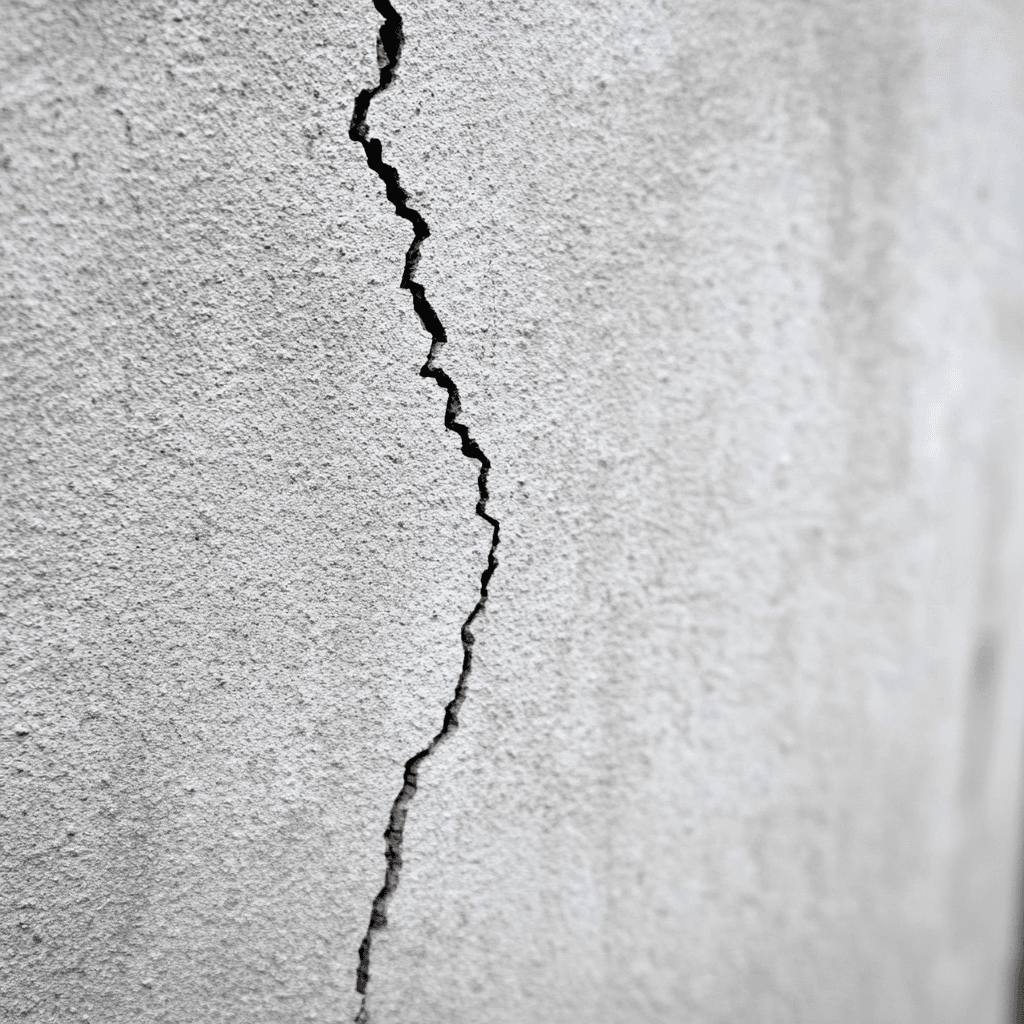
In Canada, the cost to repair a foundation crack generally ranges from $500 to $1,500 for an interior polyurethane or epoxy injection. If the situation requires exterior work, including excavation and waterproofing membrane installation, the cost is usually closer to $3,000 to $5,500 per crack. Prices vary depending on the depth and severity of the crack, site accessibility, soil conditions, and how urgent the repair is before freeze-thaw cycles worsen the damage.
Collaboration
•11 Feb 2026
Modern civil engineering requires the precise redirection of liquid volumes to maintain the structural integrity of developed land. When construction projects replace permeable soil with non-porous surfaces like asphalt or concrete, the earth's natural capacity for moisture absorption is eliminated. This transformation forces precipitation to accumulate into a high-velocity lateral surge that gains kinetic energy as it follows the site's grading.
Editorial Team
•07 May 2026
A fibreglass balcony is a popular choice in Canada because it can resist moisture, weather exposure, and freeze-thaw conditions. Over time, however, the surface may lose its shine, crack, fade, or show signs of wear. In many cases, a small repair or resurfacing job can extend the life of the balcony without replacing the entire structure.
Editorial Team
•27 Jan 2026
In Canada, winters are often long and harsh, so choosing the right heating system is important. On average, homeowners spend 64% of their household energy expenditures on heating, with bills skyrocketing to $1,200 for an average-sized home.

Editorial Team
•26 Jun 2026
A portable air conditioner can be a practical way to cool one room without installing central air, a ductless heat pump, or a permanent window unit. For many Canadian homeowners and renters, it is especially useful in bedrooms, home offices, apartments, condos, and older homes where permanent cooling is not simple.