How to Improve Your Construction Company's Marketing Strategy
By Editorial Team
Updated on January 16, 2026
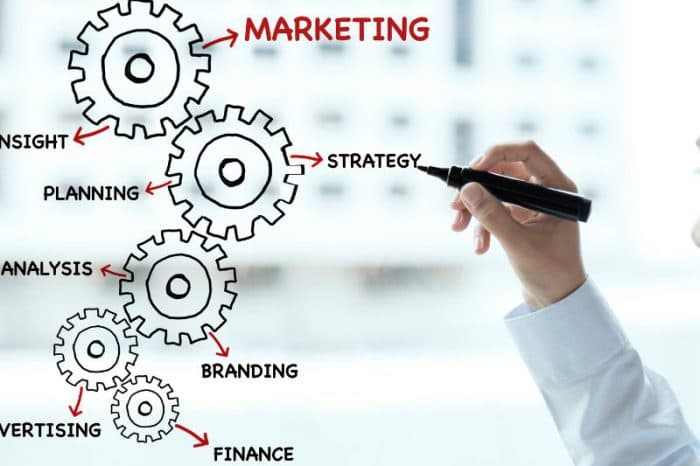
Do you think it’s complex to put together a construction company’s marketing strategy? Think again. Marketing in the construction industry follows the same fundamental principles as any other field.
Early spring is a key planning period for homeowners, as many are already lining up renovation projects and booking contractors weeks—or even months—in advance. Advertising isn’t the only tool at your disposal, nor is online marketing alone. Here are the core concepts you can use as a contractor to position your business early in the season and secure projects before schedules fill up.
Join Our Network and Receive Real Leads!
Do you want to start getting some real leads with serious customers?
How to Market a Construction Company

A construction company’s marketing strategy isn’t all too different than that of any other business. The end goal is the same: your services must reach your client base.
With that in mind, there are 7 basic marketing strategies you can use to make it happen:
1. Create a Website
A website is like a roadside shop. It can be located in an industrial zone or a pedestrian area in a big city. The benefit of a website is that, with time, you can take it from the former to the latter, and that, is solely with the power of search engines.
As such, you’ll be able to attract new visitors, therefore, potential clients. We’ll delve into that in point 2.
First, though, let’s take a look at the 2 ways you can create a website dedicated to your construction company:
Go through a paid platform
Use a free CMS (Content Management System)
The most common paid platforms are Wix and Shopify. They are designed to simplify your stock management as much as possible, as well as provide your clients with a variety of payment options.
However, if your website is, first and foremost, a showcase website, free and open-source CMSs, like Wordpress.org (for beginners) or Drupal.org (for programmers), will work just fine.
Then, to find clients, one has to know how to position themselves and evolve from a brownfield land to a major urban centre.
2. Content Marketing

Content marketing demands a strong emphasis on search engines, especially Google, which holds 91% of the market share, followed by Bing at 3.19%. This process is known as SEO (Search Engine Optimization).
Why is optimization important? Because search rankings are determined by algorithms, and achieving visibility is free. To succeed, you need to develop content based on keywords (words and phrases) that have these qualities:
Relevant to your business
Low competition
You can identify such keywords using paid software or Google Ads' Keyword Planner. Google Ads also allows you to create advertising campaigns, which will be discussed in point 6.
Alternatively, you can use Google’s search engine to choose your keywords. For example, type “Construction company marketing” into the search bar. Scroll down to the “Related searches” section to discover the questions people are asking:
“Construction company marketing strategy examples”
“What is construction marketing”
“Marketing plan for construction company example”
etc.
Once you have these topics, you just need to create content around them, either by writing or outsourcing blog articles.
3. Social Media
Kill two birds with one stone! Once the articles are uploaded onto the company’s website, share them on your social media, whether on your professional or personal pages.
Dalia Ceron Gonzalez, of Image Marketing, said that “There are a lot of social media platforms that are useful marketing tools [LinkedIn, Facebook, and Instagram, Ed.].
At first, try them all, then focus on the one that brings the most traffic to your website. Online marketing is driven by these platforms, which attract a large percentage of Internet users, including your clients.
Don't forget that social networks also contribute to your company's image, since they reflect your clients' opinions. Social proof is key to success.
4. Direct Marketing

Danger, Will Robinson! Direct marketing is the act of using emails as a method of communication, but solely directed at those who have authorized the reception of said emails, and who can unsubscribe.
Why? Because, otherwise, sending emails to lists of thousands of email addresses, purchased on the Internet, would consider you a spammer, and therefore you’ll be penalized.
If you want to take a stab at sending emails as part of your marketing campaign, bear in mind all the measures put in place by CASL (Canada's anti-spam legislation) since it became effective in 2014.
It's worth looking into, as Dalia Ceron Gonzalez rightly said, "If the contractor already has a good database, a newsletter is both useful and necessary."
5. Communicate Locally
You're a construction company, operating in a certain geographical area. As a result, your first clients are likely to be located near you. To connect with them, you have several options:
Sponsor a sports team (buy jerseys)
Finance an event (a run, annual party)
Hand out flyers
Reach out to journalists and the local press
Advertise at your job sites and on vehicles
Rent a billboard
6. Collaboration and Partnerships
Building strong partnerships can make a real difference in how you market your construction business. Teaming up with other companies—like subcontractors, suppliers, or industry groups—helps you reach more people and open the door to new opportunities. For instance, working with trusted local suppliers or specialized trades can lead to simple but effective cross-promotion, shared advertising, or service packages that are more attractive to potential clients.
Collaboration also matters inside your company. Some of the best marketing happens when your marketing team works closely with your technical staff. Your on-site experts know the details—how projects are built, which materials perform best, and what sets your work apart. When that knowledge is shared, marketers can turn it into clear, convincing messages, proposals, and project showcases that truly reflect your expertise.
To get the most out of these relationships, think about hosting events together, running joint marketing campaigns, or even just referring clients to one another. Over time, these efforts build trust, strengthen your reputation, and generate more referrals. In the long run, embracing collaboration—both within your team and with external partners—is a smart, sustainable way to grow your business.
7. Customer Engagement and Relationship Management
Building strong relationships with clients and prospects is essential for any construction company that wants to grow and keep a steady flow of work. Customer engagement goes beyond simply finishing a project—it’s about building trust, creating lasting relationships, and encouraging referrals that support long-term success.
One simple and effective way to connect with clients is by gathering and sharing testimonials. After completing a project, invite clients to talk about their experience. Positive reviews on your website or social media act as social proof and help potential clients feel confident about choosing your company.
Strong relationships don’t end when the job is finished. Stay in touch with past clients through occasional newsletters, project updates, or practical tips on home maintenance and renovations. These small touchpoints help keep your business top of mind and show that you genuinely care about their satisfaction, even after the work is done.
Finally, make it easy for clients to reach out whenever they have questions or need additional services. Respond promptly, listen carefully, and show real interest in their needs. By prioritizing client engagement and relationship management, you’ll build loyalty, encourage repeat business, and generate referrals that help your construction company stand out.
How to Develop a Marketing Plan

To develop your marketing plan, you'll need to assess your company and its environment, and meet the following criteria:
Use SWOT analysis
Describe your persona
Establish your goals
Apply the 4 Ps of marketing
Set a budget
Advertise
1. What’s SWOT?
SWOT stands for strengths, weaknesses, opportunities, and threats.
Your strengths and weaknesses are internal to your company. It's all about your employees' skills and abilities, but their limitations too.
Opportunities and threats are external to your company. They’re the market opportunities on which your construction company operates, and the threats that you face from competitors, labour shortages, or the state of the economy.
2. What’s your online persona?

The indispensable element to any successful marketing strategy is the client. Who’s this “person,” this “persona”? To find out, answer the following questions:
To which socio-professional category are you affiliated?
What’s their financial means?
What’s their gender?
Are they tenants or homeowners?
Do they own a house or condo?
How did they hear about you?
etc.
As you’ve gathered, there isn’t one persona, but many. Which is what’s referred to as customer segmentation. By doing so, you’ll notice a certain type of client who prefers to buy your products or services rather than another.
The key to successful online marketing is knowing your customers/clients.
3. Define Your Goals
To ensure a clear and concise marketing strategy, you first need to define your goals:
More job offers?
More social media subscribers?
Expand into new markets?
The choice is yours, prior to moving on to the 4 Ps.
4. What Are the 4 Ps?

Product
Price
Place
Promotion
In one sentence, it means finding the ideal product or service for your targeted customer group, at the best price, right place, and right way.
5. Set a Budget
Everything has a price. If it’s not directly through hiring labourers or outsourcing to freelancers, you still have to pay for the time you would otherwise have dedicated to one said task. The more serious your campaigns, the more you’ll need efficient tools, like CRM (Customer Relationship Management). This is a tool used to manage a company’s relationship with customers.
Dalia Ceron Gonzalez offered the following insight during our interview with her: "When it comes to marketing, we recommend having a budget that accounts for a small percentage of the company's sales [10% of sales, Ed.]."
6. Advertise

Here’s the fastest marketing technique to get more job offers when one has a construction company. There are numerous advertising channels:
Google Ads
Facebook Ads and Instagram
Pinterest Ads
LinkedIn Ads
Twitter Ads
etc.
There are numerous platforms and they all depend on one thing: your persona. There’s a different demographic that uses, for example, TikTok and Facebook. As such, you have to target the right audience to render your ads profitable.
Most importantly, note that not all keywords are created equal. Some are more expensive than others. Google Ads campaigns are very useful in this respect.
Strategy Examples to Promote Your Construction Company

A paid marketing strategy employs a combination of campaign techniques. The first one is Ads campaigns on Google, the most widely consulted search engine. It’s the first technique because it’s the fastest, but unfortunately, also the least sustainable over time.
When you halt your publicity campaigns, you halt your income as well. For this reason, you also need to rely on SEO. Although it's useless short-term, it's highly effective over long-term use.
When marketing a construction company online, you need to add a company page to your Google Business Profile. It's where your local clients will find you.
Be original with video marketing. Want an example? Film your teams on job sites and post these clips on YouTube as tutorials. They’re also on Google.
Who Develops the Marketing Plan?
It all depends on the size of your company. It can be:
You
Your marketing director
A specialized company
Either way, it's you, as the company's CEO, who approves the proposed marketing strategy.
What Apps Can You Use to Market a Construction Company?
Good news! All of these marketing tools are most likely already standard in your business:
Client databases for newsletters
Standard communication tools between you and clients
Social media to generate a buzz around your company
So now that you've mastered the basics of construction marketing, the only thing left for you to do is get started.
Looking for something else?
Related articles
The latest industry news, interviews, technologies, and resources.

Editorial Team
•17 Apr 2026
More and more women are stepping onto jobsites and reshaping this traditionally male-dominated industry—bringing new perspectives, strengthening teams, and helping companies meet growing demand. In 2023, a record was set: nearly 7,500 women were employed on Quebec jobsites, representing 3.8% of the workforce. That’s a 50% increase since 2020. These numbers point to more than progress—they signal a critical opportunity for construction businesses to build stronger, more balanced teams ahead of the busy summer season.

Amanda Harvey
•08 Nov 2023
Gaining clients for your renovation business is one thing, but sealing the deal with them is another. Business deals and discussions surrounding money or possessions are often uncomfortable and awkward, but they don't have to be!

Editorial Team
•08 Nov 2023
If you’re lucky enough to have a balcony on the facade of your home, it can be guaranteed that you’ll be spending a significant amount of time enjoying it. As beautiful as a balcony is, it likely sits high in the air and therefore, involves a risk of danger. If you have small children in your household or are simply looking for some extra support, we would recommend installing a balcony guardrail.

Cynthia Pigeon
•30 Sep 2026
What movie lover hasn’t dreamed of having their own home theatre? Enjoying the atmosphere of a real movie theatre while benefiting from the comfort of your own home is an appealing prospect for many film enthusiasts.

Editorial Team
•08 Nov 2023
You may be of the mind that renovation is renovation. When considering the end result, this is the case but when it comes to the process itself, there are many different factors that weigh in. If you’re currently living in a condo and wanting to renovate, you’ll face certain limitations, possibilities and strategies for approaching it. In this article, we’re going to look at a condo kitchen renovation and all of what you should consider when renovating this space. This will help you to avoid unwanted surprises during the process.