Design: The Best Practices for a Small Space
By Editorial Team
Updated on November 8, 2023
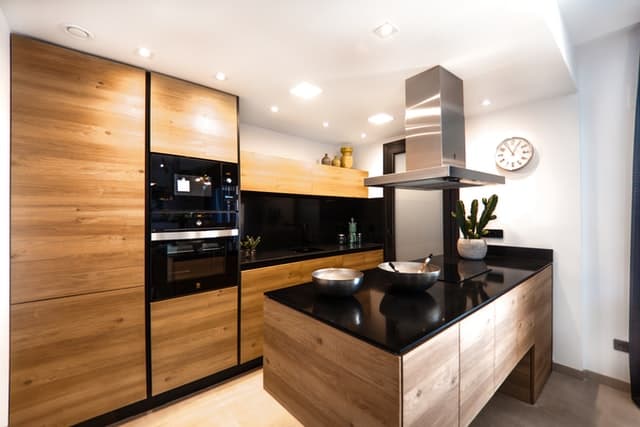
When working with a small living space, it’s possible you’ve already explored the tried and true practices tested out by interior designs: hang multiple mirrors, use furniture that has several functions, find ways to maximize every square inch.
Of course, as we spend more and more time indoors, it’s crucial for our spaces to feel both chic and comfortable, and thus, we need to reach beyond trying to make the most of the space just for the sake of it. What are truly the best design practices for a small apartment?
Well, we’d guess, one size doesn’t necessarily fit all. However, we’re here to offer some creative and inspirational ways you can approach a small apartment, or even a tiny home, to make the most of what you’re working with while keeping things stylish.
The best design practices for a small space
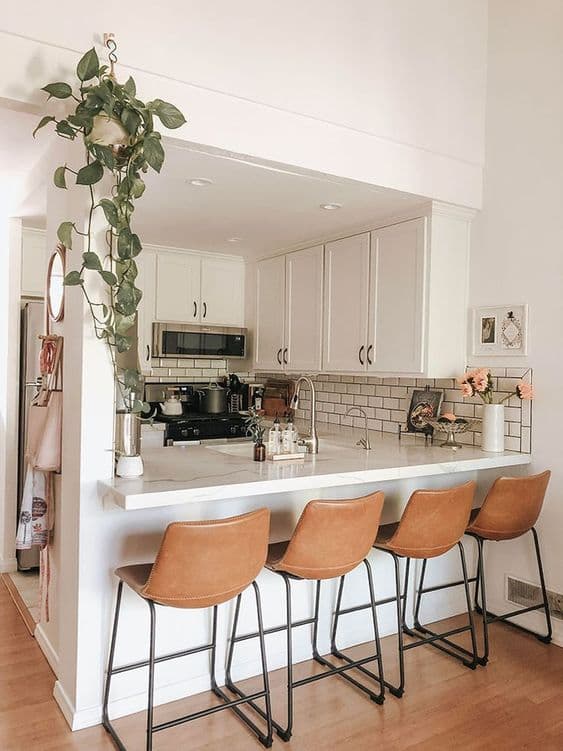
source: sisoo sarah
1- Purge
This may seem like a strange place to start from, but when living in a small apartment, tiny home or space, having fewer things tends to go a long way. Moving around generally means accumulating a lot of stuff that we wish to hold onto, but that may no longer serve us.
Further, if we’re trying to level up, it’s important to get rid of some of the pieces we’ve been carrying with us and choose furniture and objects that we can carry with us into later stages of life. This often means opting for better quality, timeless pieces. Consider what you own, what can stay and what can go. Be brutally honest with yourself and let go of any worn or tired items. Another important note is that when living in a smaller space, it’s likely that you’ll spend a lot of time looking at all of the things you’re surrounded by, so make sure to keep only the pieces you really love.
2- Centre your daily routine or favourite pieces
It’s important to think practically about your daily routines and consider how to best optimize your space to coincide with these. Making the most efficient use of each room, or organizing furniture in a way to divide up space into functional sections will take some thought and consideration. Before you start rearranging your furniture, begin the floorplanning process in your head, ask yourself what your priorities are and how you can accommodate them.
For example, if you’re working from home, maybe the most important thing is an office nook, or perhaps your bed is your sanctuary, and you want to focus all your attention on keeping it as such. Thus, try and find a way to arrange pieces so they work in harmony with the most important factors.
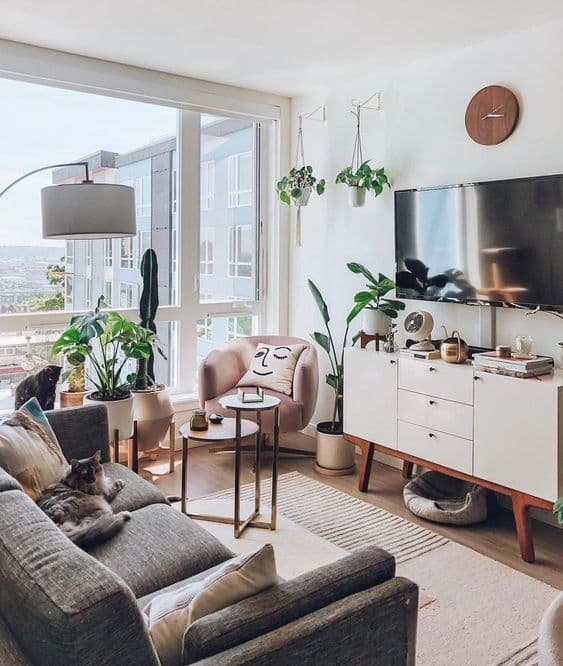
source: Birds of a Feather
3- Find the right fit
We’re all guilty of falling in love with a piece of furniture before really considering how it fits into our space. As mentioned, when it comes to living in a small apartment or a tiny home, it’s crucial to be intentional about the pieces you’re choosing. Purchasing furniture that is the correct scale for the size of the apartment will really make all the difference. Of course, this will mean taking careful measurements of your space as well as some very careful planning to really craft a beautiful flow between rooms or various sections.
4- Divide the space with colour and furniture
When working with a small home or apartment, it can be difficult to make the distinction between rooms. For many tiny places, you may not have a separate living or dining room, or even a separate bedroom if living in a studio. Thus, you can work with your colour scheme and your furniture to create different zones within the space.
If you’re working with some larger pieces of furniture, like a couch or shelving unit, these can be used as a wall to divide one large room into separate areas. An open-concept shelving unit makes for a beautiful room divider, placing plants or small knick-knacks in the openings for a chic and kitschy feel.
When working with colour, you may consider breaking up your space by painting various walls in different shades of one or two colours. Begin with a specific colour scheme, and then work from section to section, finding a way to make each space feel distinct while keeping things cohesive.
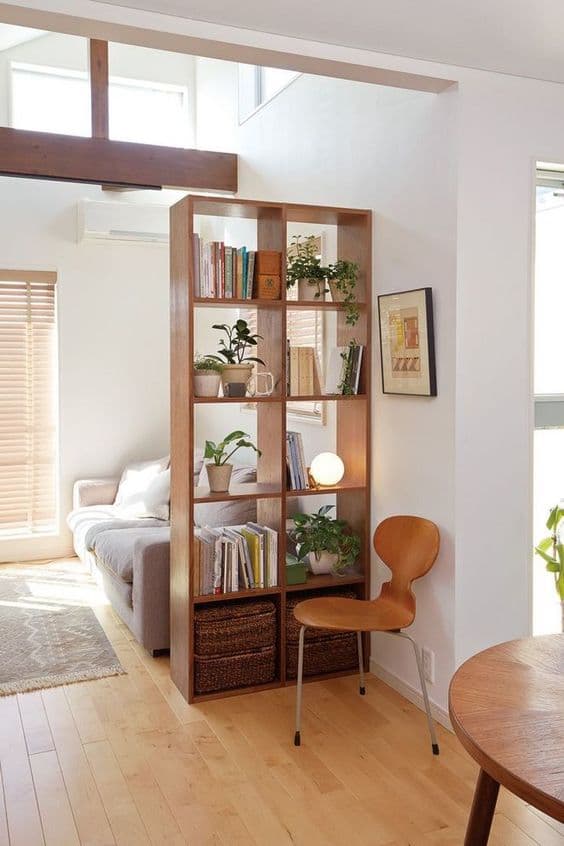
source: Pecantshomedecor
5- Multi-functional piece, building upwards
Ah yes, we’ve come to the most common piece of advice offered to those living in small spaces: invest in multi-purpose furniture. As mentioned in our introduction, this is a tried and true solution for those looking to maximize every square inch of their interior. Now, if you’re not looking to invest in new pieces, there are a few ways to make furniture serve multiple needs.
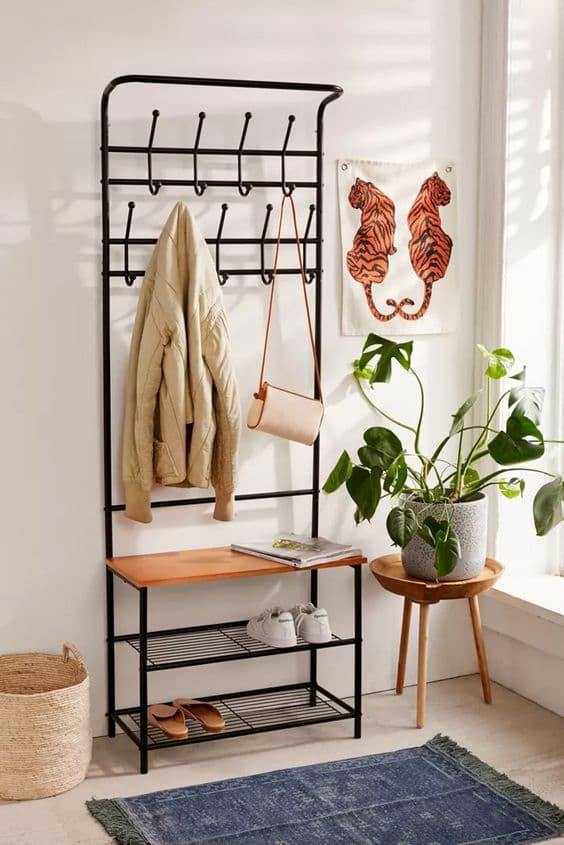
Consider working with the available vertical space in your home; how can you build upwards? Mount things on the walls, including lighting, small shelves and plants. Whenever possible, hang things from the ceiling. This may even include a decorative piece of fabric or curtain to further divide the space. If you’re running out of room on your floor, why not stack multiple shelves atop one another? Be playful when it comes to the structural design of your interior, but also remember to think practically!
source: urban outfitters
Get 3 renovation quotes for your home renovation project
RenoQuotes.com can help you get quotes for your home renovation project. If you submit your project to us, we’ll put you in contact with the best contractors in our network. Fill in the form on the homepage (it only takes a few minutes), and you will receive quotes from home renovation companies.
Dial 1-844 828-1588 to speak with one of our customer service representatives.
Looking for something else?
Related articles
The latest industry news, interviews, technologies, and resources.

Léa Plourde-Archer
•08 Nov 2023
If you've clicked on this article, we imagine that you are a fellow home design, decor and renovation enthusiast. We share this passion with you and thought it would be fun to create a monthly article where we share the most interesting articles we've found on the internet that cover this type of subject.
Editorial Team
•08 Nov 2023
It’s sweater weather, the temperature has taken a turn for the crisp, and the leaves are changing. That's right, it’s about time to start thinking about your Halloween decorations.
Amanda Harvey
•09 Sep 2024
Are you looking at your kitchen cabinets thinking about how they're old and outdated but still intact? Maybe you aren’t quite ready to replace them because the frames and doors are structurally sound, or a whole new cabinet renovation just isn't in your budget. Whatever the case, for a quick kitchen update, all that cabinets require is a fresh coat of paint!
Editorial Team
•23 Jun 2025
If you have a large yard, and therefore, perform a significant amount of yard maintenance, chances are you know a thing or two about dragging electrical wires along your lawn. Now, did you know that outlets can be mounted on soil-planted posts and wires can be buried beneath your feet? You can save yourself the hassle and frustration of pulling cords across the grass by running power underground!
Editorial Team
•08 Nov 2023
Small rooms in the home require ample planning in order to set the right tone. Lighting is an integral part of this process, as excellently designed and placed lighting and fixtures can help a space to really shine.