Fuses and Circuit Breakers: What's The Difference?
By Équipe éditoriale
Updated on August 28, 2024
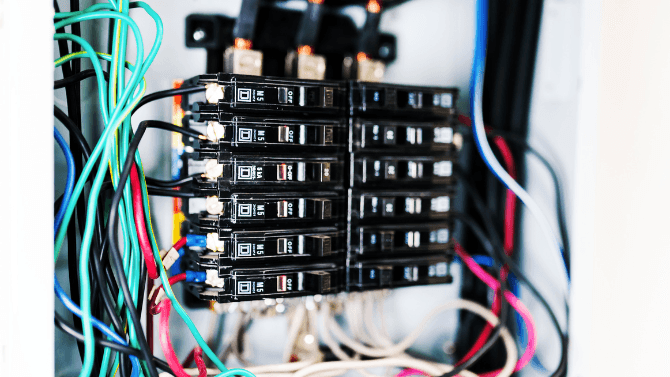
Although hidden behind the scenes, both fuses and circuit breakers run the central electrical operations while they serve to protect your home as well as your family. Both work to defend against an overloaded electrical circuit by interrupting the flow of electricity.
However, their interpretations vary greatly, and understanding their main differences for interrupting power is fundamental to know the advantages and disadvantages of having either in your home.
What's the Difference Between Circuit Breakers and Fuses?
Source : Canva
Fuses
A fuse is made up of a piece of metal that melts when overheated and works on the electrical and thermal properties of the conducting material. Fuses are quicker at interpreting the flow of power than a circuit breaker. However, while circuit breaks can simply be reset, fuses are one-time-use and need to be replaced after they melt.
The type of fuse used will depend on whether the fuse is being used in a residential or commercial environment. The most common fuse consists of a piece of metal or wire filament enclosed in a glass or ceramic and metal casing. In your home, fuses can be found in the central fuse box.
When all is well with your home's electricity flow, the fuse allows power to pass unobstructed, moving across its filament and between circuits. If there is too much power heading towards a source, the filament will melt to stop electricity from flowing. Unfortunately, the filaments in common fuses melt very easily so any surge in power is quickly halted. Luckily, there are different types of voltages and ratings that can take on different capacities of electricity.
Circuit Breakers
A circuit breaker is a multiple-use device working on the electromechanical principles and has two methods of operation. It either operates with an electromagnet (solenoid) or a bi-metal strip. In both cases, the design is the same: when turned on, electrical currents pass through the breaker from a bottom to an upper terminal across the solenoid or strip. When a current is too strong, reaching levels that are unsafe, the magnetic force of the solenoid activates the metal lever within the switch mechanism, breaking the electrical current.
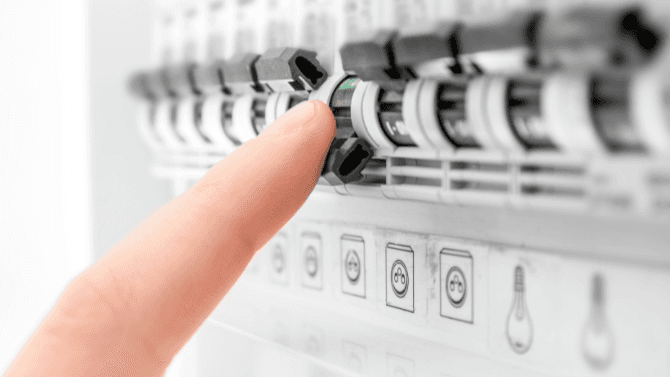
Unlike fuses, which melt and must be replaced, the circuit breaker can be reconnected by turning the switch back on. This switch action is also convenient if you're planning to work on wiring and need to isolate a part of the home's electricity as a result.
A circuit breaker can also perform a ground fault circuit interrupter (GFCI) which is a function that can prevent electric shock and is particularly useful in rooms such as the bathroom or kitchen where electrocution can be risky.
Advantages: Fuses VS Circuit Breakers

Source : Canva
Deciding When and Why to Use One Instead of the Other
The advantages and disadvantages of choosing between a fuse and a circuit breaker are wholly dependent on how they will be used.
Fuses are initially the inexpensive method and can be found at your local hardware store. They are very quick to react, and thus, offer protection to delicate electronic devices. However, if a circuit is prone to surges, fuses will blow regularly and this will lead to frequent replacement.
Replacing a fuse can be challenging, as it needs to be performed immediately and this is not always possible. Also, replacing a fuse yourself needs to be done carefully, including paying special attention to the correct voltage or current rating required. Additionally, any exposed electrical connections can be a danger to someone not trained in wiring electronics.
The circuit breaker's most important advantage is how easily it can be reset, as it is usually initially clear which switch has been tripped. Obviously, flicking a switch doesn't require someone with an electrical engineering background to complete, so this option is safer for this reason.
A further reason why a circuit breaker is much safer for the homeowner is that there is little possibility of choosing the incorrect fuse rating. The disadvantages to using a circuit breaker include both size and cost.
They are far larger and more expensive than fuses to install, maintain and repair. Further, circuit breakers do not react as quickly as fuses, and thus, can damage appliances and electronics.
Keep in mind when weighing out the pros and cons of these two that they are not always interchangeable! If you're considering installing one or the other, it is recommended that you get a qualified electrician's opinion regarding which one might be right for your home.
Disclaimer: All tasks that touch on electricity are very risky and should be completed under the safest conditions. Additionally, in certain parts of Canada, only certified electricians are allowed to do this type of work. Please check before you do any electrical work yourself.
Read our article to know how to reduce electricity consumption.
Looking for something else?
Related articles
The latest industry news, interviews, technologies, and resources.

Léa Plourde-Archer
•14 Jun 2024
Installing drywall panels (also known as gypsum boards) is a project that can seem complicated and tedious for people that don’t have the expertise of renovation specialists.

Editorial Team
•08 Nov 2023
Wood varnishes are in place to protect the natural textures and colour of the hardwood while adding an additional attractive shine and finish. However, it is only natural for your hardwood floor varnish to wear over time, as floors come up against constant movement leading to the potential for scuffing and stains. Of course, a hardwood floor can easily be re-stained with a little bit of time and a fair amount of elbow grease.

Editorial Team
•06 Dec 2025
Pretty much all renovation projects consume a significant amount of time, money and patience. Of course, the reason most homeowners take on a renovation is to improve their quality of life as well as their home resale value.
Editorial Team
•03 Jun 2024
Every few years, the exterior walls of your house may need a fresh coat of paint to give the house a new look. Learn more about the ins and outs of exterior wall painting with RenoQuotes.com's easy-to-follow advice and instructions.

Editorial Team
•08 Nov 2023
When thinking of renovating or improving your home, it’s natural to consider spaces such as the kitchen or bathroom. When it comes to devoting part of your budget to landscaping, there may be a bit of hesitation.