Everything About an Acrylic Coating
By Editorial Team
Updated on February 10, 2024
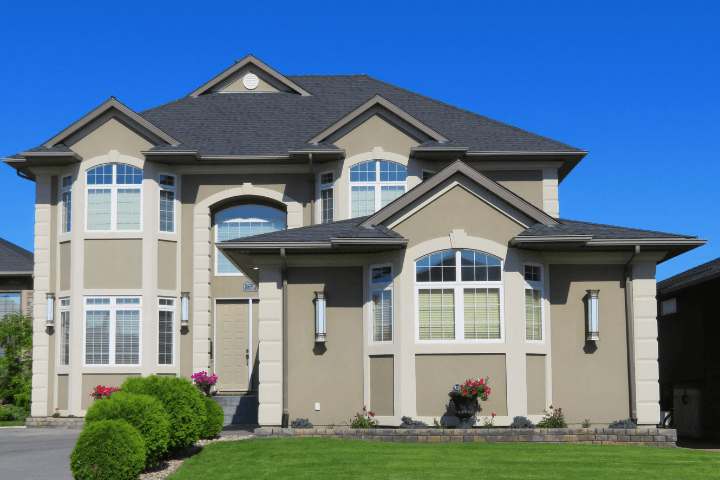
Did an acrylic coating seem like a good idea initially, but on second thought, not so much? A lot of Quebec residents used it for new constructions before the turn of the century, yet swiftly felt its let down. Between promises of energy savings and unparalleled durability, what's an acrylic coating really about?
Exterior Acrylic Coating: Available Textures and Finishes
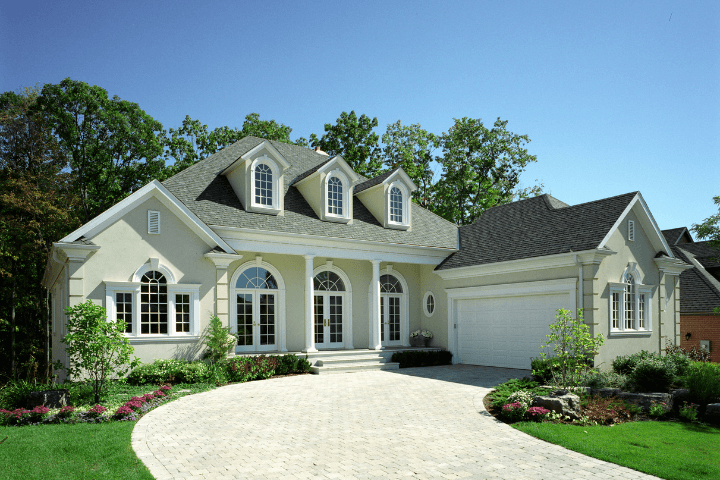
An acrylic coating can be applied to various parts of a building, including, but not limited to, the following:
Foundations
Façades
Decorative mouldings
Interior walls
Bricks
And others
Acrylic coatings aren’t solely multi-service, they’re also textured. Albeit every manufacturer decides on a commercial name for each texture in question, we can at least describe the main two:
Sanded
Rough (with grooves)
Between these two main surface types, there are other acrylic coating textures. They’re more or less grooved or more or less smooth based on the client’s choice.
All types of finishes, or the majority at least, are possible. Beyond the wide array of colours available, acrylic coatings are perfectly suited to cover commercial building façades. Why, you ask? Because such a coating can be used to recreate a company logo or any other type of design. In other words, prospective and loyal clients can easily spot your building from afar.
How to Apply an Acrylic Coating to Exterior House Walls
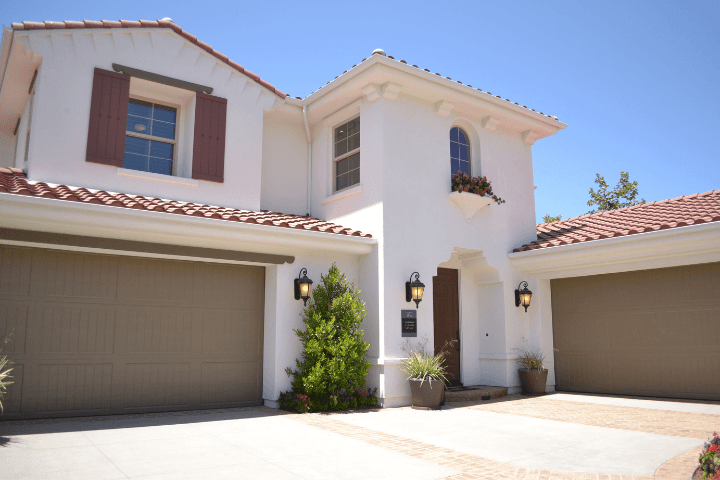
You may have a negative standpoint on acrylic exterior coatings, and rightly so, since it was responsible for a lot of setbacks before the 2000s. Hence the reason why this material is still not especially sought-after in Quebec.
As it turns out, the problem stemmed from its installation. Before the 2000s, installers applied the acrylic coating and its polystyrene insulation directly on the building's air barrier and siding.
This system, which claimed to be waterproof, didn’t require an air space or drainage gap behind the siding. As such, in the case of water seepage, moisture couldn’t seep out via capillaries found in the material, nor could it via the flashings or weep holes, which were simply non-existent. Therefore, everything found under the acrylic coating rotted, hence the material’s unfavourable standing.
Nowadays, such errors don’t happen anymore. Architects and building professionals came to understand that there might have been some flaws, possibly even errors, in the construction process:
The envelope doesn’t align with the construction details
Details are poorly executed
The joints aren’t perfectly covering openings
The cladding cracked over time
Among others
Therefore, when installing an acrylic coating, you’re basically proceeding as you would a standard wall, meaning by implementing an air space, cavities, flashings, and weep holes. That way, you’re avoiding wreaking havoc.
The Cost of an Acrylic Concrete Coating: Is it a Worthwhile Investment?
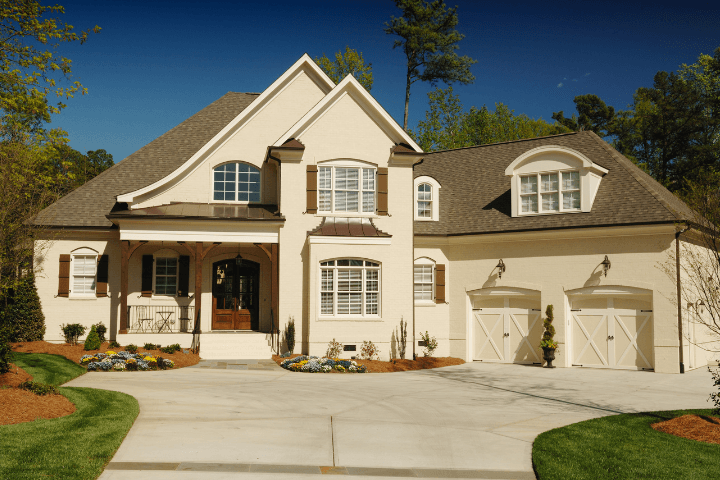
Would you deem paying $10 to $15 per square foot, installation included, a worthwhile investment? Yes, but conditions do apply. For one, hiring professional coating installers is a must, and ensuring they abide by new EIFS (exterior insulation and finish systems) installation rules is another.
This means that they must create a drainage cavity and, therefore an air space. However, doing so negatively affects the whole house's insulation value, maybe even negating it. However, such a practice is already mandatory for timber-framed houses in Quebec.
While the estimated cost provided by contractors may be cost-effective, they might not be planning on carrying out the installation according to new mandatory practices. Should that be the case, it may be best that you choose a different path.
Weighing Acrylic vs. Stucco vs. Parging
Acrylic (EIFS) | Stucco | Parging | |
Characteristics | - Wire mesh framework - Expanded polystyrene insulation - Adhesive - Polymer concrete with a fibreglass membrane | - Slaked lime - Fillers (brick powder, marble, or sand) | - Sand - Binder (cement, lime, or plaster) |
Pros | - Multi-surface (polystyrene, concrete, etc.) - Insulator - Numerous textures and colours - Weatherproof - Shock-resistant - More resilient than parging and paint | - Multi-surface - Ideal for textures and patterns - Paint-ready - Washable - Easy to repair | - Protects structural components from cracking - Aesthetic - Resilient - Waterproof - Cost-effective |
Cons | - May crack - Rots the building’s framework if poorly done - Meticulous installation (therefore expensive) | - Vulnerable to changing temperatures - Fragile - May crumble | - High maintenance (façade restoration) - Hard to paint - Nearly impossible to clean - Steep removal costs |
Lifespan | 25 years | 25 years | 30-50 years |
Innovation and Durability: The Pillars of an Acrylic Coating
An acrylic coating, when applied correctly, provides an innovative and durable solution to protect and elevate façades. Applying an acrylic coating not only revamps a building’s exterior aesthetics, but also contributes to its long-term preservation, instoring a protective shield against the elements. Furthermore, its low maintenance and eco-friendly compatibility meet the requirements of eco-conscious and sustainability-minded owners.
Get 3 renovation quotes for your exterior siding project
RenoQuotes.com can help you get quotes for your exterior siding project. By submitting your project, we’ll put you in contact with top-rated contractors. Fill in the form on the homepage (it only takes a few minutes), and you will get estimates from trusted professionals.
Dial 1-844 828-1588 to speak with one of our customer service representatives.
Looking for something else?
Related articles
The latest industry news, interviews, technologies, and resources.
Editorial Team
•08 Nov 2023
Are you thinking about setting up your backyard? Consider adding a compost bin! Not only will it reduce the volume of junk that you throw out in the garbage, but you'll also be posing a gesture that is friendly to the environment. If you decide to opt for this choice, there are several ways you can hide your compost bin so it doesn't pop out too much. Here are a few ideas that you can borrow when planning out the setup of your backyard:
Editorial Team
•08 Nov 2023
Constructing your dream home from the ground up is an exciting project to take on! Although exciting, building a new home is a huge responsibility that requires you to oversee many different roles, from the planning and budgeting all the way down to electricity and plumbing.
Editorial Team
•08 Nov 2023
Rail-mounted light systems are a wonderful and versatile fixture made to suit the needs and décor of any home. This style of light consists of an electrical track that mounts to the wall or ceiling, with individual lamps attached at various points along the track.

Amanda Harvey
•08 Nov 2023
Hygge, pronounced phonetically as "hoo-gah," is a concept that originated in Denmark but has made its' way to the renovation and interior design networks of North America. Hygge roughly translates to "coziness," but is often described as a mindset for fostering positivity and togetherness in negative aspects of life; an attempt to enjoy the smallest and most insignificant moments.

Editorial Team
•03 Sep 2025
Between Bricks and Binders is the podcast that bridges the gap between construction entrepreneurs and the business world. In this introduction episode, Frédérique from RenoQuotes and Ronaldo share why this podcast was created and what you can expect from future episodes.