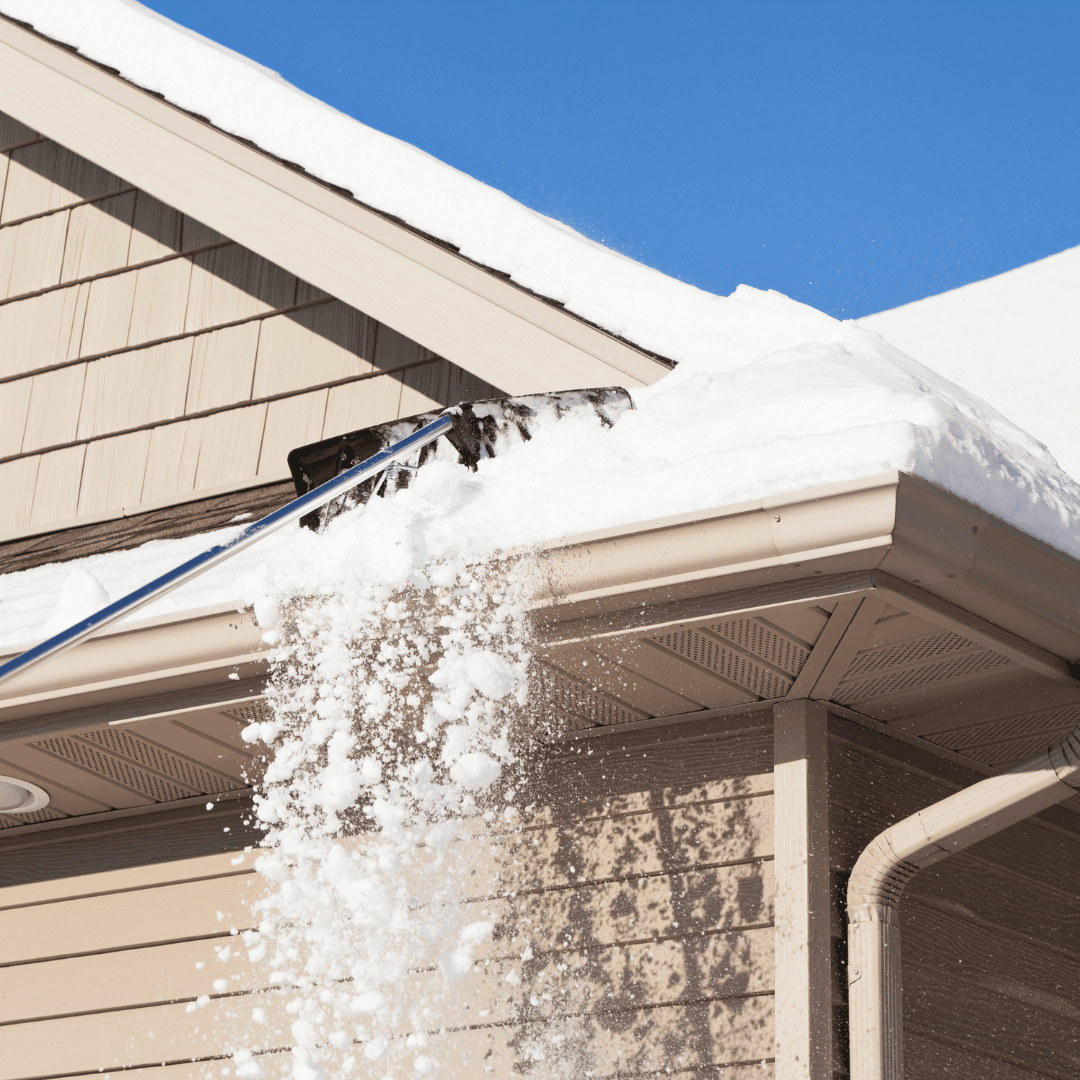
Whether you call them snow guards, snow barriers, snow deflectors, or snow stoppers, these devices prove helpful when it comes to preventing snow-related damages and injuries during the winter months.
As a matter of fact, if you have a pitched roof, you neither want ice or snowfall to injure passers-by nor do you want it to damage surrounding structures, especially if it’s that of your business! So, in addition to clearing your roof on a regular basis, consider installing snow guards to reduce potentially dangerous snow avalanches.
What Are Snow Guards For?
Source: Flickr
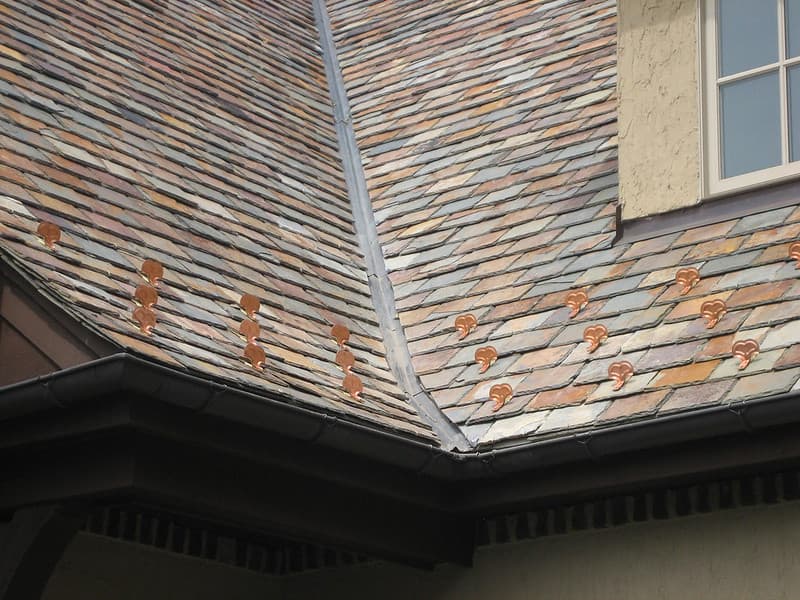
Given their name, it’s not surprising that these devices fitted on sloped roofs are used to retain, deflect, or even out the weight of accumulated snow throughout the numerous snowfalls that occur in regions like Quebec. And, they’re usually suited to most roof coverings (metal, shingles, tiles, etc.).
Aside from protecting pedestrians and whatever else is nearby (cars, gutters, shrubs, skylights, plumbing, stairs, etc.), snow guards can spare you the hassle of a lawsuit and a whole lot of remorse. Furthermore, these devices will allow you to save money by extending your roof's durability, thus delaying premature wear and tear, especially in the case of leaks.
Different Types of Snow Guards
Nowadays, due to technological innovations in the construction and design industry, there are endless roof colours and shapes. Fortunately, snow or icefall guards are keeping up with the trends. They’re available in a variety of materials such as stainless steel, polycarbonate, zinc, copper, and aluminum, and you can match their colour to your roof or even to your desired style with patterns or mouldings.
There are two main snow guard styles:
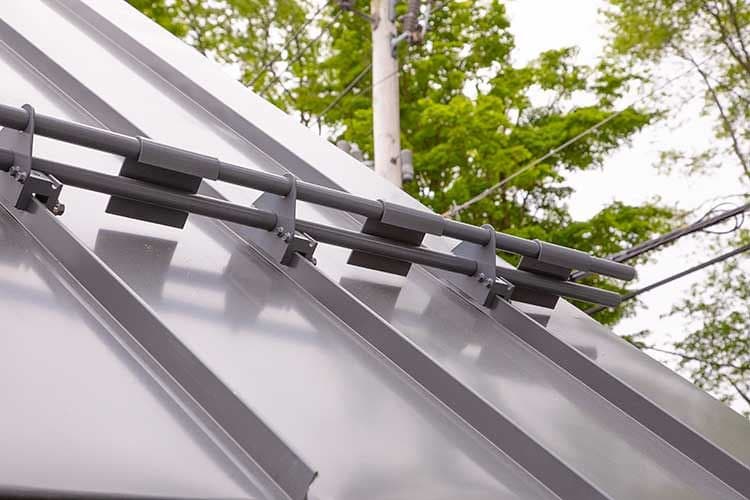
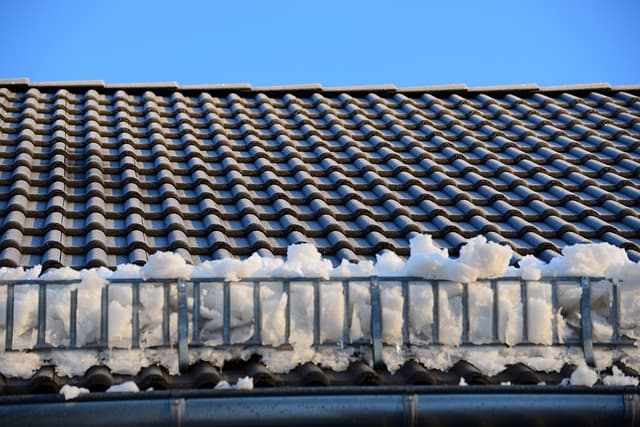
Pipe-style snow guards
Flickr
Made up of vertical joints and rails (or pipes), they give off a fence-like look. Depending on the model chosen, these pipes (or rails) can hold an enormous amount of snow and are perfectly suited for residential buildings/houses as well as large buildings (businesses, institutions, industries, etc.). Although not very subtle apparatus, some people may find them rather charming and rustic-looking.
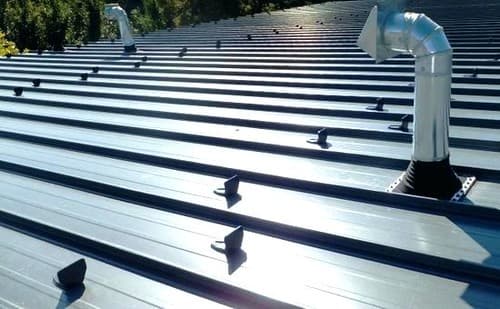
Individual snow guards
Flickr
Mostly used on residential buildings, these little aesthetically pleasing devices are fitted according to a strategic pattern designed by a specialist.
Unlike the previous model, this one isn’t only found on the edge of the roof to contain heavy loads of snow but rather installed in problematic and hazardous areas to evenly distribute the amount of snow. This ensures the snow will melt more gradually and will not break off in massive, dangerous clumps.
These units are also used to prevent ice from accumulating in corners, such as along the edges of skylights or chimneys.
Installing Snow Guards
Source: Flickr
Above all, consult with a professional before shopping around and installing any snow guard mechanism. The type, quantity, and method of installation must be tailored to your situation (roof pitch, type of roof covering, the load-bearing capacity of the structure, regional weather conditions, etc.).
Also, if your roof has gutters, a heating system, solar panels, and so on, the engineer will have to adapt the installation pattern accordingly. They’ll also have to consider areas where snowfalls might be particularly dangerous, such as above front doors and sidewalks.
Bottom line: These devices cannot be installed haphazardly. By doing so, you risk blowing your money by aggravating snow build-ups or assuming that you’re well protected when that isn’t the case. The safety of others hangs in the balance, especially if we’re talking about the roof of your business, and heavy heavy foot traffic is a commonality. Not to mention if you have young children…
Interestingly, installing snow guards won’t puncture your roof as they’re fastened between two panels or on the sides, and anchored to the structure instead of the sheathing. The ideal number of snow guards is determined according to the surface area to be covered and the areas where elevation changes are more significant. Secured with corrosion-resistant metal screws and made of high-performance alloys, they have a good warranty and are quite durable.
How to Install Pipe-Style Snow Guards (DIY)
Pipe- or rail-type snow guards are simpler and less risky to install yourself, as they simply run along the edges of your roof. They usually come in 3 sizes and have 1 to 3 tubes that fit into shark fin-shaped plates. They’re typically spaced 15 to 20 inches apart and have up to 5 anchor points.
You’ll need:
Measuring tape
Chalk
Sealing tape
Hacksaw
Hex-shank drill bits
First, mark a perpendicular spot at about 1.5 feet from the roof’s edge.
Line sealing tape along where you’ll be screwing in the clamps (or brackets that hold the pipes).
Secure the clamps (or brackets) by screwing in the screws wherever necessary, then insert the pipes while making sure the plastic protectors are in place.
Cut any excess pipe when fixing the last bracket or clamp.
Now we’d say you’re ready to face the next winter season with peace of mind!
Looking for something else?
Related articles
The latest industry news, interviews, technologies, and resources.
Editorial Team
•18 Aug 2025
Are you building a house or hoping to replace your existing roof? Choosing just the right type of roof is super important. That goes without saying, I mean, it’s the part of the structure that protects against humidity and regulates heat transfer, while also limiting convection between the air and the rooftop. Although there are a lot of choices, three elements will help you narrow down your options:
Editorial Team
•01 Jun 2026
We’re all grateful to have a roof over our heads, as the expression goes. The roof is one of the essential parts of a home, ensuring comfort for its occupants by providing protection from the elements and keeping the interior watertight. However, most people are unfamiliar with the various components that make up a roof, the roles they play, and how they affect the overall cost of a roofing project. Indeed, the cost of repairing or installing a roof largely depends on its components.
Cynthia Pigeon
•12 May 2026
Replacing a bathtub with a shower in Canada is a strategic renovation that generally costs between $5,000 and $12,000, depending on the materials, the existing plumbing, and the complexity of the work. This upgrade can improve the functionality, comfort, and perceived value of a home, especially when it supports accessibility, aging in place, or a more modern bathroom layout. Given that this type of project may involve plumbing, drainage, waterproofing, ventilation, and sometimes floor preparation, it is important to plan carefully. Depending on the province or municipality, plumbing work may need to be completed by a licensed plumber or qualified contractor. In many bathtub-to-shower conversions, the existing drain may also need to be assessed or upgraded to meet the requirements of the new shower installation.

Editorial Team
•25 Apr 2024
In terms of stylish décors and interior design, trends come and go, year after year. Some are timeless, like wood for example. Whereas, other decorative aspects or faux pas can quickly make a room look outdated, and go as far as lowering the resale value of your home.

Editorial Team
•13 Jun 2025
Sliding doors, or patio doors, are a wonder. They offer a beautiful view of the outdoors and easy access to your backyard, yard, or patio. Glass sliding doors can transform even the darkest and dullest of spaces. But how difficult is the installation process? If you have some experience under your belt with renovation projects, we’re confident you can complete this one in a day or over a weekend.