Flux-Cored Arc Welding: What You Need to Know
By Editorial Team
Updated on September 24, 2024
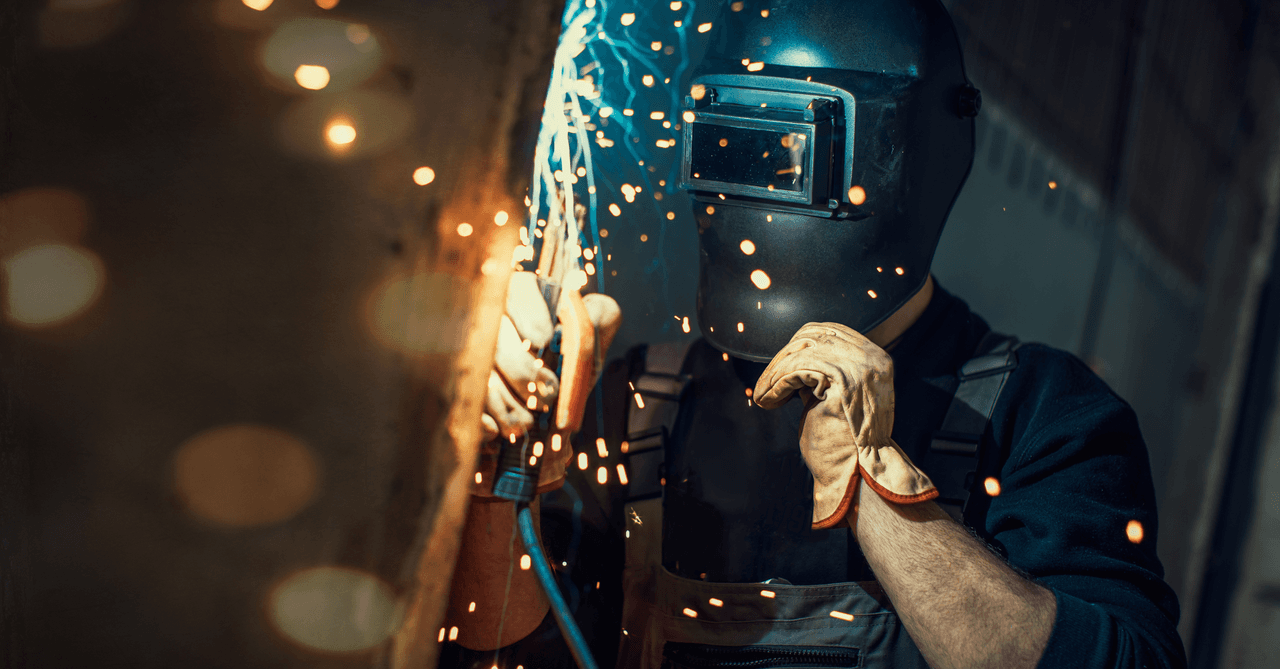
Flux-cored arc welding is a well-known method used among DIYers, it rarely requires gas, and appeals to most for its numerous advantages. However, note that it isn’t suitable for all types of work.
How Flux-Cored Arc Welding (FCAW) Works: The Definitions and Basics
Source: Canva
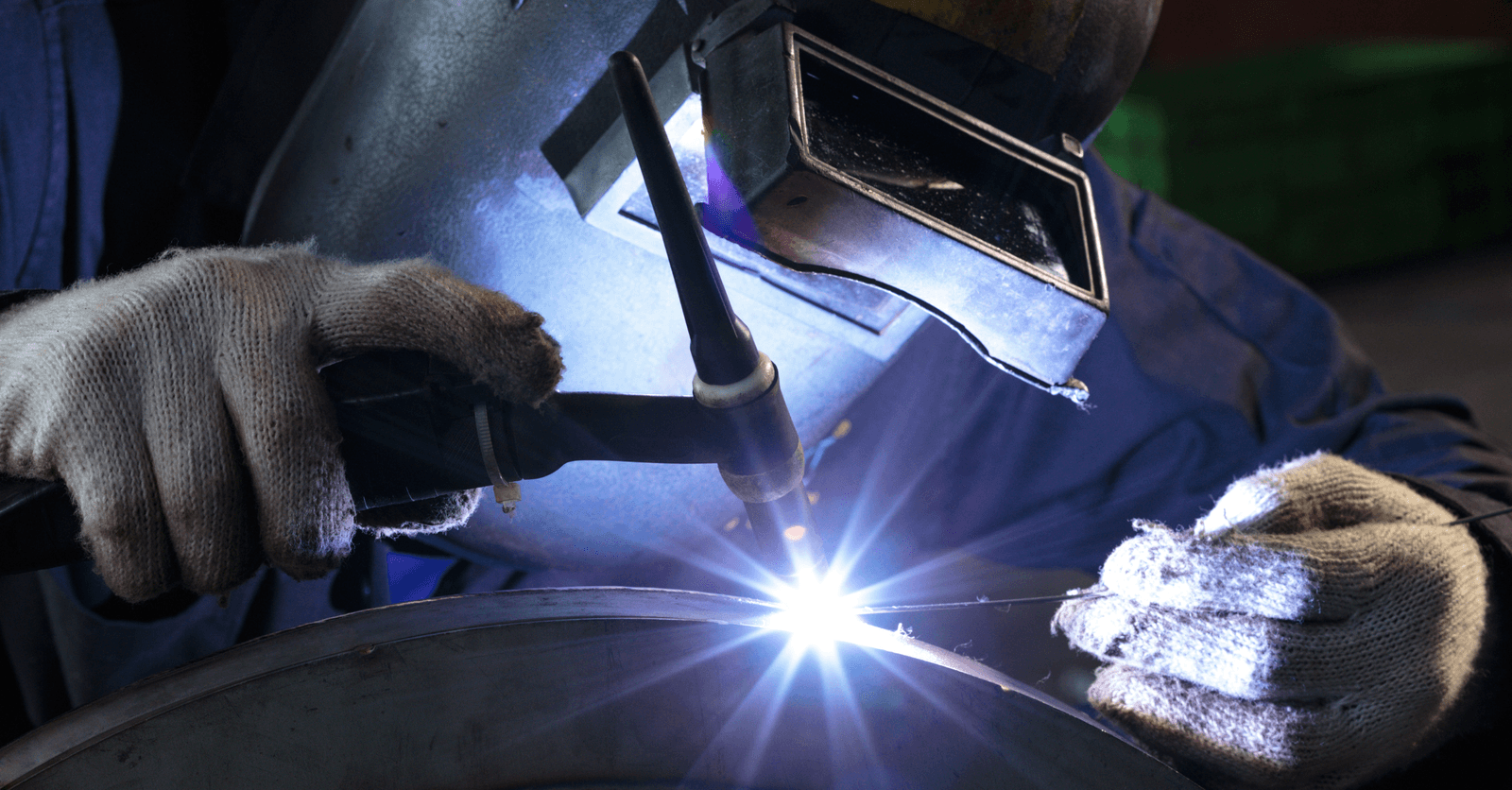
Flux-cored arc welding (FCAW), also known as dual-shield welding, is a type of welding method that:
uses a flux-cored wire,
an electric arc,
is gasless, and
can be used in windy conditions (self-shielded).
Flux-cored arc welding machines are single-phase devices into which a spool is inserted.
1. Flux-Cored Wire
When using a flux-cored arc welding device, the spooled wire used isn’t solid, unlike the one employed in MCAW (Metal-Cored Arc Welding). Instead, it’s a tubular electrode wire filled with powder.
This powder serves as the flux, acting as the bonding agent between the pieces that will be welded together. The flux-cored wire is:
wrapped in a metal sheath (0.8 mm to 3.2 mm wide),
continuously spooled,
and fed at a constant speed (up to 3.28 ft [1m] per minute).
The flux-cored wire is placed on a spool and passes through a wire feeder that guides it to the welding torch’s nozzle. The faster the wire unwinds, the higher the welding intensity.
But that’s not all; to adequately weld using a flux-cored wire, the stick-out is of crucial importance.
The Stick-Out
The stick-out refers to the appropriate length between the contact tip and the piece to be welded. Typically, it’s 0.6 inches to 1 inch (15 to 25 mm) depending on usage, with a maximum tolerance of 0.11 inches (3 mm).
Why is that important? Because if the stick-out is too short, the welding wire will end up being too close to the contact tip, resulting in overheating and creating blowholes in the metal piece. On the other hand, if it’s too long, the wire itself overheats, causing an increase in slag, which is the substance that shields the weld.
2. Electric Arc
An electric arc is formed between the welding machine’s contact tip and the metal piece (object to be welded). Its purpose is to generate intense heat, melting the piece to be welded and flux-cored wire resulting in the creation of a “molten pool.”
The electric arc is generated by a variable direct current, with an intensity ranging from 40 to 700 amps, depending on the following factors:
Welding position.
Size of the metal pieces.
Size of the flux-cored wire.
Bonding.
The higher the amperage, the smoother and more stable the electric arc will be, making it easier to handle and forming a well-defined molten pool.
3. Gasless Process
The term “gasless” for flux-cored arc welding isn’t entirely accurate for two reasons:
Firstly, a shielding gas is naturally generated during the welding process. As the flux-cored wire disintegrates and the parts melt, carbon dioxide is produced. This gas forms a shield around the weld during the welding process.
Secondly, while a shielding gas can be added to the welding process, it isn’t mandatory. Welders have the option to save on gas consumption by using a specially formulated aluminum flux-cored wire for welding.
4. Self-Shielded
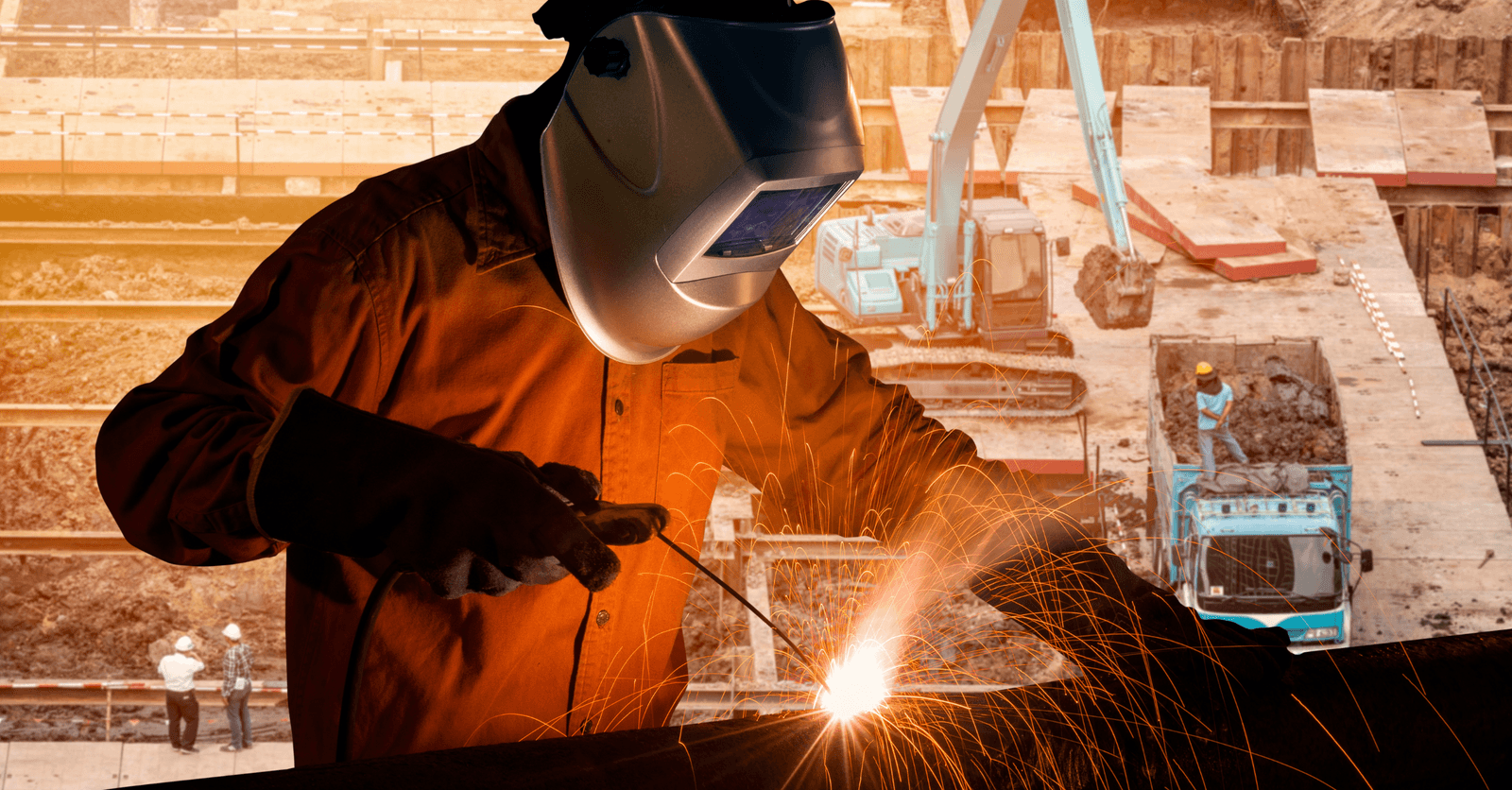
Flux-cored wire welding is an ideal outdoor welding method used on worksites because it typically doesn’t require an external gas supply.
Since there’s no external shielding gas, windy conditions don't blow it away, making the process more practical and often used on large worksites, such as when constructing bridges.
The Applications of a Flux-Cored Arc Welder: What's It Used For?
According to the American Welding Society (AWS), flux-cored arc welding is suitable for the following materials:
Carbon steel
Stainless steel
Low-alloy steel
Nickel alloys
Cast iron
Hardfacing alloys
However, certain materials aren’t suitable, including titanium, zirconium, magnesium, and copper alloys. And the list doesn’t end here.
The depth of flux-cored arc welding is rather impressive. However, it can cause metal parts and supports to warp or distort, making it unsuitable for thin sheet metal, such as 0.6 mm sheets.
Therefore, the bodywork of a vehicle can’t be welded with flux-cored welding machines. Attempting to do so would result in blowholes, distortions, and a shoddy end result.
Why Use This Method to Weld?
Source: Canva
Flux-cored arc welding often competes with 3 other types of welding:
Shielded Metal Arc Welding (SMAW);
Gas Metal Arc Welding (GMAW);
Submerged Arc Welding (SAW).
If one welding method can replace another in numerous circumstances, the question is, why choose flux-cored arc welding? The answer lies in its cost-effectiveness compared to gas welding methods.
While some DIYers just want to stick with flux-cored welding, it’s essential to note that this method isn’t always suitable.
Advantages and Disadvantages
Source: Canva
Advantages
High and variable deposition rate based on the flux-cored wire used.
Deposits a larger amount of metal compared to arc welding.
Possibility of working in windy conditions.
Faster work compared to using TIG or shielded metal arc welding (SMAW) methods.
Fewer welding repairs.
Welding can be done in all directions since the flux-cored wire is small in size.
Good welding penetration; better than SMAW.
Gasless welding is a possibility depending on the flux-cored wire used.
Very good mechanical properties.
Disadvantages
Its electrode produces more slag than others.
Its tubular electrode is more expensive than a solid wire electrode.
Flux disintegration produces a high level of toxic fumes.
Changing the filler material can be time-consuming since it comes on a spool.
As the metal cools and hardens, gases trapped in the weld zone can create holes.
FAQ
What Is the Difference Between FCAW and GMAW?
Flux-cored arc welding (FCAW) and gas metal arc welding (GMAW), also known as MIG/MAG welding, both protect the weld pool with shielding and use a continuous wire electrode. FCAW uses a flux-cored electrode that emits a shielding layer during welding, advantageous for welding ferrous metals with minimal pre-cleaning. It may also use additional shielding gas for better weld quality.
GMAW, as opposed to MIG/MAG welding, uses a solid wire electrode with external shielding gas to prevent contamination, though it produces more spatter and offers less penetration than FCAW. Other than the shielding, both are very similar to one another.
Is Flux-Cored Welding as Good as MIG Welding? FCAW vs. MIG
Ultimately, no. As previously mentioned, both FCAW and MIG/MAG welding, also called GMAW, are very, very similar. Which one is best will come down to a matter of personal preference.
Want to learn more about the world of welding? Check out our other articles:
Looking for something else?
Related articles
The latest industry news, interviews, technologies, and resources.
Editorial Team
•17 Feb 2025
Are you planning on undertaking a kitchen renovation project? Are you looking for information about building a kitchen in your new house? A custom-designed kitchen might just be your best option, especially if you’re dreaming of a functional, aesthetic and personalized space.
Équipe éditoriale
•05 Dec 2025
A bathtub can be a serious luxury and a beautiful addition to any bathroom. But when a bathroom is outfitted with an older bathtub and you’d rather have a modern, walk-in shower, it can be an eyesore. In this case, you may be looking to transform your bathtub into a shower and wondering if this is possible.

Editorial Team
•23 Nov 2024
Is your staircase showing signs of wear and tear? Should you repair or completely replace it? What steps are essential to ensure a safe and stylish renovation? A deteriorating staircase is not only an eyesore but can also pose serious safety risks. Whether you’re looking to address structural damage or simply refresh the design, renovating your staircase is key to maintaining a safe and attractive home.

Editorial Team
•03 Jun 2024
Every few years, the exterior walls of your house may need a fresh coat of paint to give the house a new look. Learn more about the ins and outs of exterior wall painting with RenoQuotes.com's easy-to-follow advice and instructions.
Editorial Team
•05 Mar 2024
Installing a garage door opener can be a rather technical endeavour, but investing in one is more than worth it. Especially so when you know exactly what type of opener to choose.