Heat Pump Rebates in Quebec 2026: LogisVert Amounts and Savings
By Cynthia Pigeon
Updated on September 18, 2026
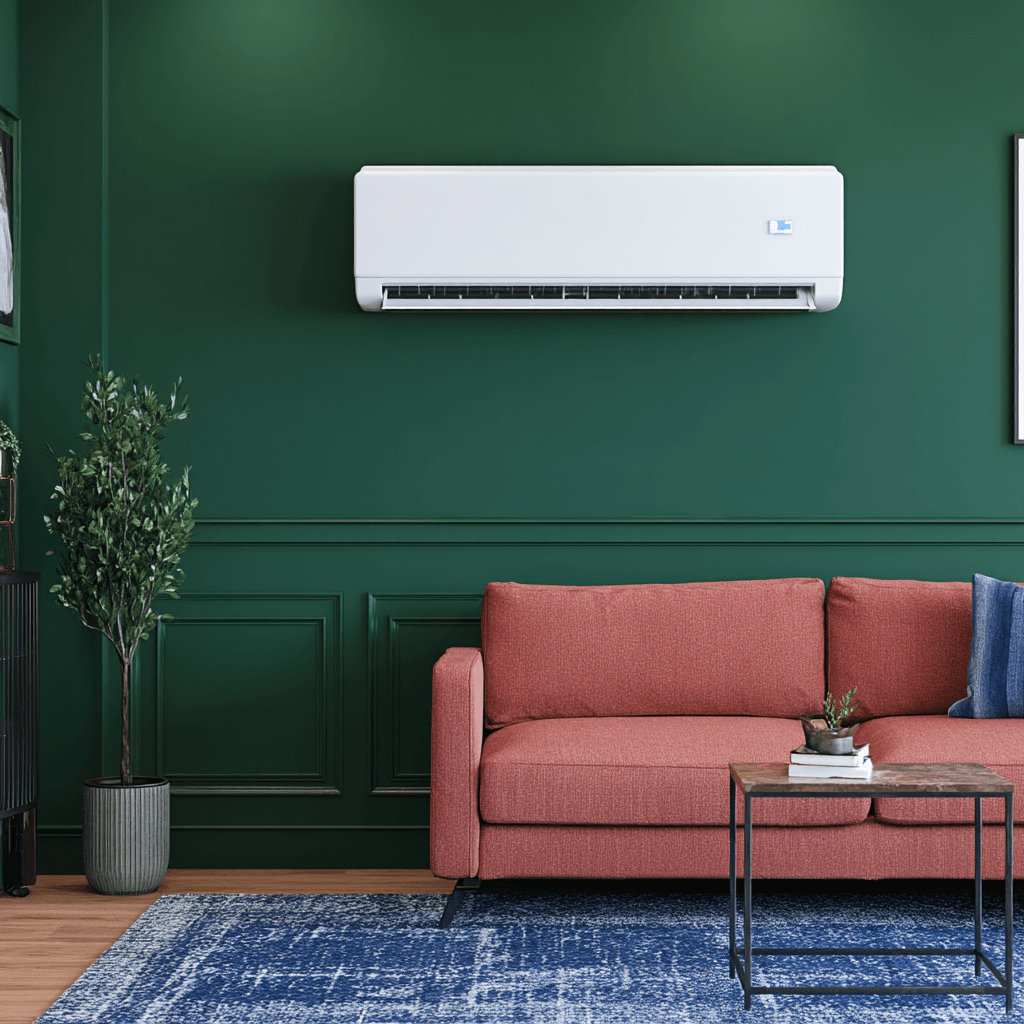
In 2026, installing a heat pump in Canada is more accessible than ever, thanks to robust local and provincial incentives. By leveraging provincial utility rebates and home retrofit grants—as well as federal programs for those converting from oil heating—homeowners can, in some cases, cover a significant portion of purchase and installation costs, often estimated between 30% and 50% depending on eligibility. For a high-performance central heat pump, these incentives represent meaningful savings. In addition, select regions offer rebates of up to $600 for the purchase and installation of a residential EV charging station.
Heat Pump Rebates in Canada: Complete Guide for 2026
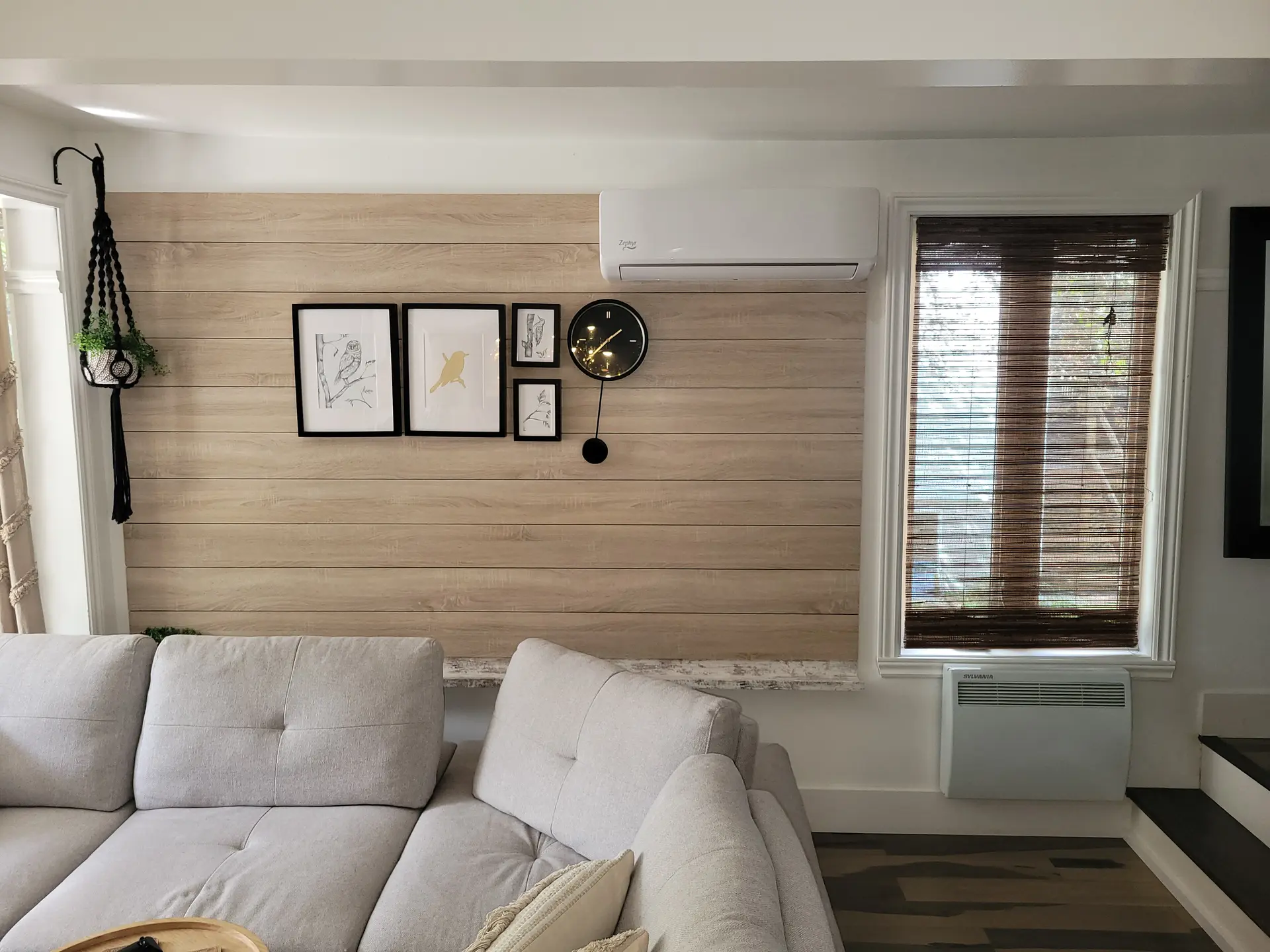
Source: Noroit CVC inc.
With rising energy costs and Canada’s decarbonization goals, heat pumps have become a leading solution for heating and cooling needs. Not only do these systems reduce annual energy bills, but they also help balance electricity demand across provincial grids.
In 2026, financial assistance programs will have been streamlined to encourage electrification, particularly for homeowners transitioning away from oil or natural gas. Here’s how to navigate available incentives to maximize your return on investment.
Top Federal and Provincial Financial Aid Programs in 2026
Across Canada, heat pump incentives are primarily driven by provincial governments and local utility companies, with targeted federal support focusing on low-to-moderate-income families and oil-to-electric conversions. Unlike older initiatives, today's rebates are directly tied to how well a system performs in freezing temperatures.
Note regarding Hydro-Québec's LogisVert: The rebate calculations below apply to the regular LogisVert program (accessible to all homeowners). If you are looking for the 100% financial assistance stream (free heat pumps for low-income households), please note that new applications for this specific stream are currently suspended by Hydro-Québec due to high volume. The regular rebate stream remains fully active.
Incentive amounts: Hydro-Québec calculates your rebate based on the system's heating capacity at -8°C. For standard ENERGY STAR certified systems, the rebate sits at $50 per 1,000 BTU/h, which jumps to $120 per 1,000 BTU/h for ultra-efficient cold-climate models. In the Rest of Canada, most other provinces (such as British Columbia, Ontario, and the Maritimes) skip the complex math and offer generous flat-rate rebates (typically ranging from $1,500 to $4,000+) based simply on the type of system you install.
Example: For a certified 30,000 BTU/h central heat pump, in Quebec, you would receive a $1,500 rebate (which can reach up to $3,600 for a designated cold-climate model). In other parts of the country, provincial programs will yield a flat rebate of $1,500 to $4,000 for the same central system.
Ease of access: While we all love a discount at the register, payout rules vary. For Quebec’s LogisVert and several other provincial programs, you must pay your contractor in full and submit your claim online afterward. However, in some provinces (like BC and Nova Scotia), certain certified contractors are authorized to apply the rebate directly to your invoice at the point of sale.
EnerGuide Evaluations and Whole-Home Approach
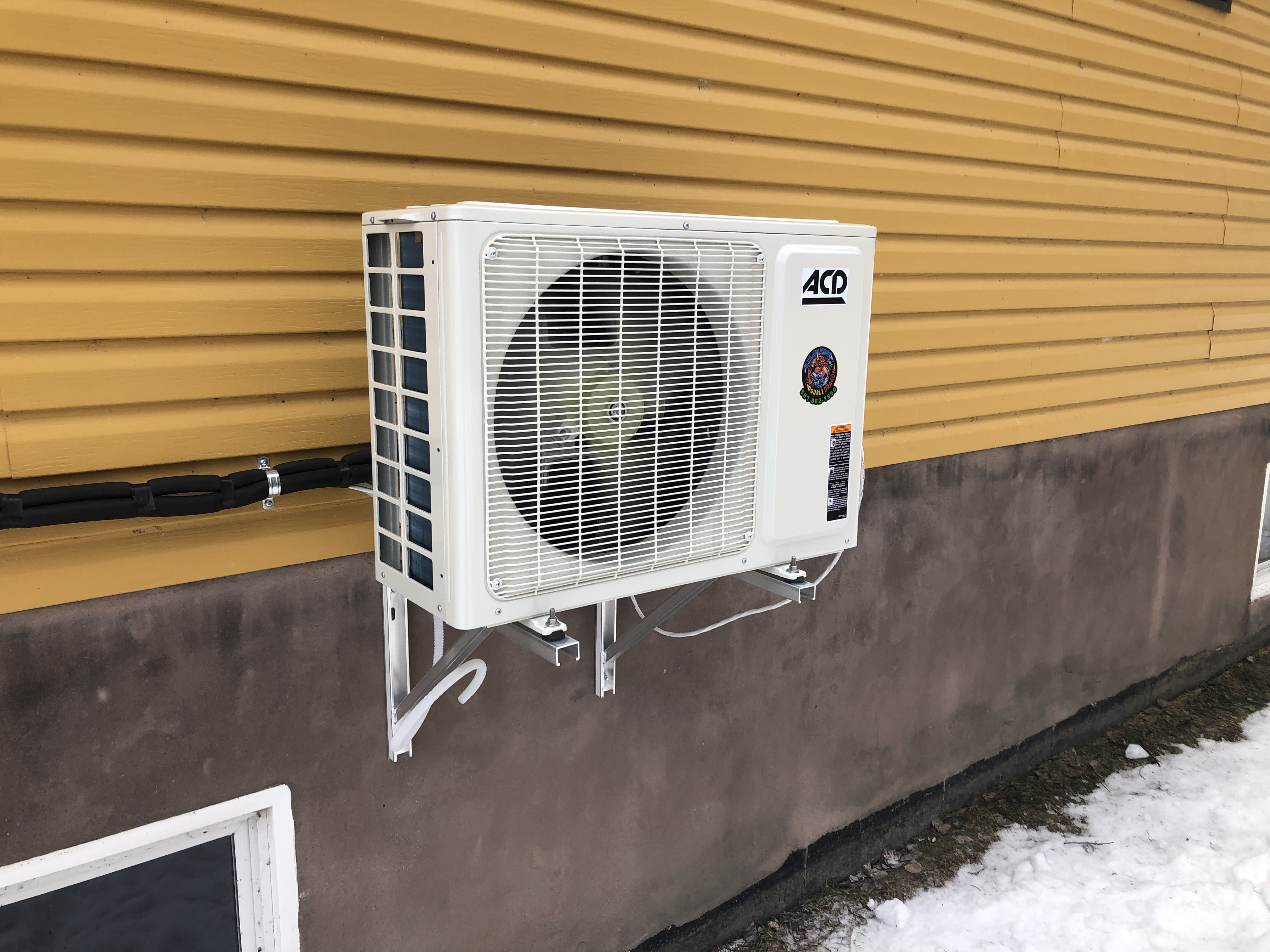
Source: Climatisation double dragon
One of the most common points of confusion in 2026 is whether you need a home energy evaluation (like an EnerGuide assessment or Quebec's Rénoclimat audit) to qualify for a rebate. The answer depends entirely on your project scope:
The Heat Pump-Only Path (No Audit Needed): If your only goal is to install a heat pump, you can skip the energy assessment entirely. Under programs like Quebec's LogisVert, Ontario's Home Renovation Savings Program (Single Path), and CleanBC, you can install your system and apply for your rebate directly.
The Whole-Home Bundled Path (Audit Required): If you are taking a comprehensive approach—combining your heat pump with major insulation upgrades, airtightness sealing, or new windows—then a pre-retrofit and post-retrofit energy evaluation is mandatory.
The Synergy Bonus (Attic & Foundation): By pairing attic insulation and foundation sealing with your new heat pump, you create the ultimate efficiency synergy. Boosting your attic's thermal barrier traps heat, while sealing drafts around your foundation stops cold basement air from sneaking in. Because your home is now wrapped tight, its heating load drops drastically—meaning you can install a smaller, less expensive heat pump while unlocking thousands of dollars in stacked provincial insulation rebates.
Beyond Heat Pumps: Additional Energy Transition Incentives

Source: RenoQuotes
The energy transition goes beyond heating systems. Other high-impact upgrades are heavily encouraged across Canada in 2026 to optimize your home's overall efficiency.
Oil-to-Electric Conversion Programs
Oil-to-Electric Conversion Programs (Urgent Deadline): If you still heat your home with oil, you have a very narrow window to act. The federal Oil to Heat Pump Affordability (OHPA) program—offering up to $10,000 to transition to an electric heat pump—is permanently closing to new applicants on July 31, 2026 in most provinces. While some provincial programs (like Quebec's Chauffez vert) have already wrapped up, taking advantage of the remaining federal funding before the deadline is the single best way to offset the cost of oil tank removal and electrical panel upgrades.
EV Charging Incentives
EV Charging Incentives: As part of the shift toward modern, energy-efficient homes, provincial utility and government programs continue to support EV drivers. While there is no federal rebate for charging hardware, local programs offer significant help. For instance, Quebec's new Écorecharge program provides $600 for the purchase and professional installation of a certified smart Level 2 home charging station, while other provinces offer rebates ranging from $350 to $1,500.
Eligibility Criteria: Is Your System Qualified?
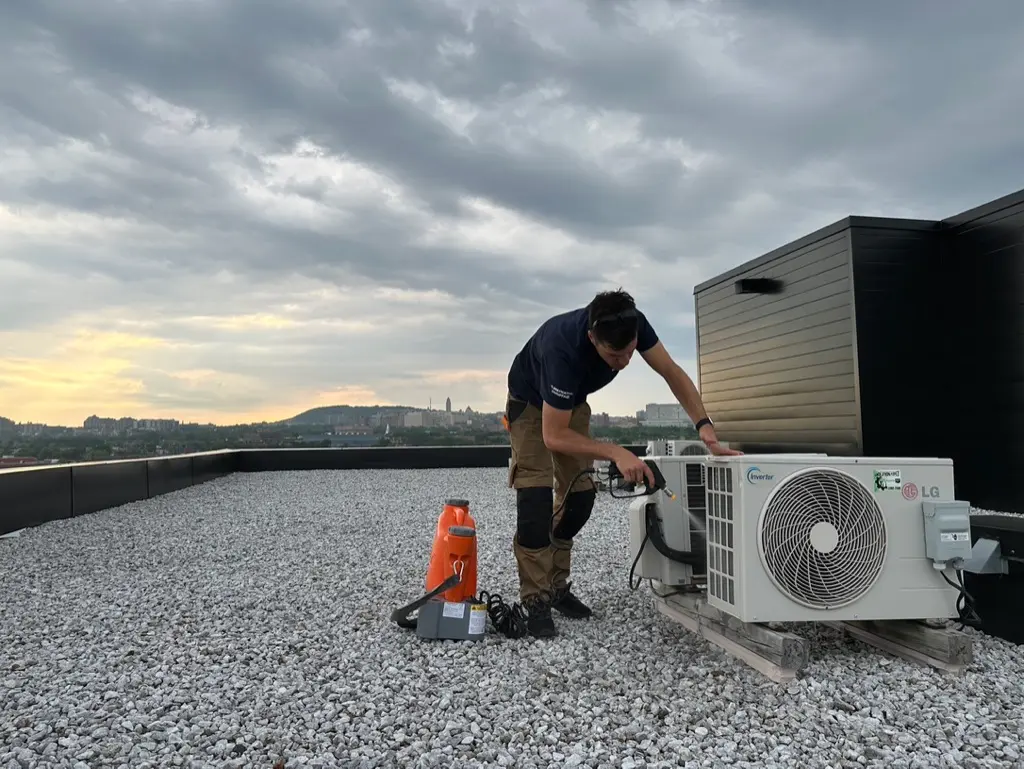
Source: HVAC MTL
Not all heat pumps qualify for incentives. To be eligible, systems must typically appear on approved product lists:
ENERGY STAR: The baseline certification for energy efficiency in Canada.
Cold-climate performance listings (e.g., NEEP): To qualify for cold-climate bonuses, many utilities require the system to be registered with the Northeast Energy Efficiency Partnerships (NEEP), proving it can heat reliably down to -15°C or -20°C.
Proper sizing: Most rebate programs require a minimum capacity of 12,000 BTU/h (1 ton). Additionally, the system must be professionally sized to your home's layout to prevent "short cycling" (turning on and off too quickly), which wastes energy and wears out the compressor.
How to Combine Incentives for Maximum Savings
The most effective strategy in 2026 is to combine multiple upgrades. Here is how to navigate the process depending on your goals:
Step 1: Book a pre-retrofit home energy evaluation (EnerGuide or provincial equivalent) before any work begins.
Step 2: Complete your attic insulation and foundation sealing upgrades as recommended by your energy advisor.
Step 3: Install a correctly sized, high-efficiency heat pump (which can now be smaller and cheaper because your home is insulated and air sealed).
Result: Submit your final post-retrofit evaluation to collect your stacked insulation, air sealing, and equipment rebates. By tightening your home's envelope and upgrading to a heat pump, you can slash your monthly heating bills by up to 30%. With stacked incentives covering 30% to 50% of the upfront costs, the entire project can pay for itself in around five years, depending on your local energy rates and home conditions.
Steps for a Successful Rebate Application

Source: RenoQuotes
To avoid having your application rejected, follow this checklist:
Vet your contractor: Your system must be installed by a licensed professional. In Quebec, the contractor must hold a valid RBQ licence and be a member of the CMMTQ or CMEQ. DIY installations or unlicensed labor will result in an automatic rejection.
Save documentation: Ensure you have your detailed invoice (showing the contractor's license number, business number, and taxes), the AHRI reference number or certificate for your system, and your most recent property tax bill (required by most programs as proof of homeownership).
Take photos: While some programs ask for proof of your old heating system, almost all of them require a crystal-clear, close-up photo of the rating plate (sticker showing model and serial numbers) on your newly installed outdoor unit. Tip: Take this photo before the unit is mounted close to the wall!
Respect deadlines: Do not wait to submit. For Quebec's LogisVert, you must apply within 9 months of your installation date. If you are applying for the federal Oil to Heat Pump Affordability (OHPA) grant, keep in mind that the application portal closes permanently on July 31, 2026 in most provinces.
To find qualified installers and competitive pricing, you can consult networks such as RenoQuotes, which connects homeowners with professionals familiar with energy rebate requirements.
Heat Pump Incentives: Maximize Savings Without Overcomplicating Your Project
In 2026, incentives will make heat pumps more accessible across Canada, especially when combining multiple programs. Savings can be substantial, but vary depending on eligibility and project specifics. To get the most out of available rebates, the approach remains straightforward: plan carefully, meet program requirements, and work with qualified professionals.
Looking for something else?
Related articles
The latest industry news, interviews, technologies, and resources.

Cynthia Pigeon
•14 Apr 2026
Indoor air quality in Canadian homes is contingent on a delicate balance between airtight construction and proper ventilation. To maintain healthy air, it’s essential to keep humidity levels between 30% and 50% (depending on the season), test your basement for radon, and ensure your heat recovery ventilator (HRV) is regularly maintained. Clean indoor air helps prevent mould growth and reduces the risk of asthma and serious respiratory conditions linked to household pollutants.

Editorial Team
•08 Nov 2023
Are you considering renovating your kitchen this year? With all the available material and decor options, at first, it can be difficult to navigate. To offer some inspiration for this large-scale project, take a look at the kitchen decor trends that are sure to steal the show in 2021!

Editorial Team
•21 Aug 2024
The mere thought of adding wood accents to your new bathroom design is enough to bring a big smile to your face, but are you still a bit skeptical about it? Note that the use of wood in bathrooms has been a growing trend over the last few years. Not only is it aesthetically pleasing, but it’s also a durable choice. Courtesy of wood, your bathroom exudes warmth, and that’s here to stay.
Cynthia Pigeon
•18 Sep 2026
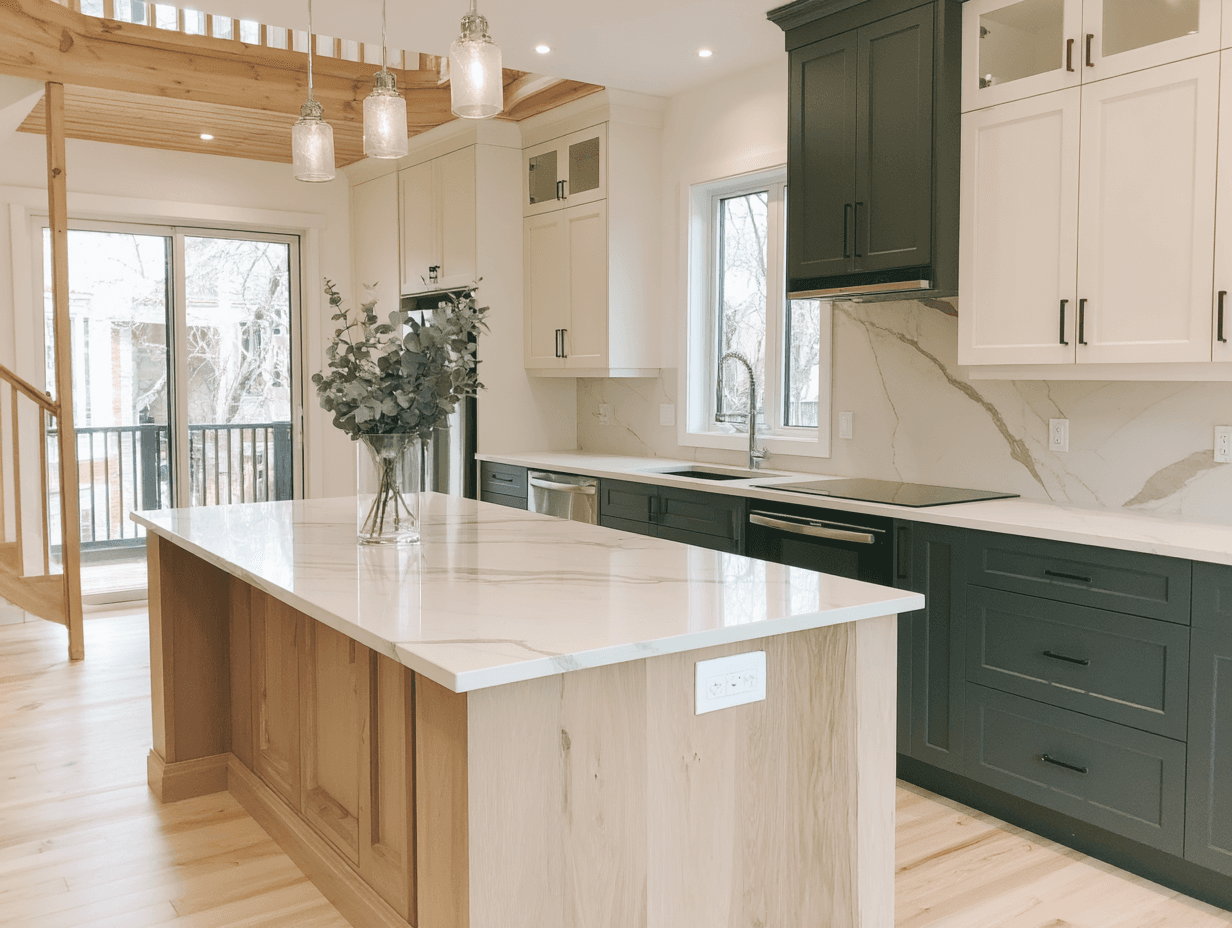
Kitchen cabinet refacing can save you up to 50% compared with a full cabinet replacement. In 2026, homeowners in Quebec can generally expect to pay $5,000 to $9,000 to reface the cabinets in a standard kitchen, compared with approximately $15,000 to $25,000 or more for a complete replacement.

Amanda Harvey
•02 Nov 2024
Regardless of the time of year, it’s always interesting to make note of current decoration and design trends. Maybe you’re looking for a fun summer makeover project, or you’re just curious about what’s hot in the realm of home décor!