Assembling Safe and Compliant Scaffolding for Yourself and Your Team
By Editorial Team
Updated on November 8, 2023
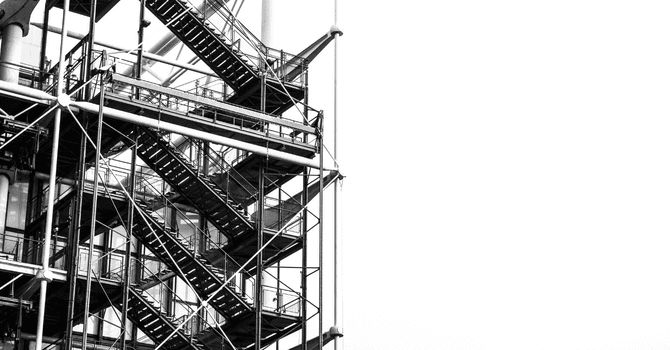
As a contractor, it’s your duty to inform your employees regarding the best workplace health and safety practices, if not put together a hazard prevention plan. Naturally, all lines of work have their risks, but if you can avoid catastrophes thanks to the right training and information, why go without?
In this article, we’ll discuss specifically scaffolding and its safety aspects. Using these, for one, reduces the risks of falls and facilitates transporting tools at great heights, but solely if they’re assembled correctly. As such, there are a few basic rules to follow to ensure that the scaffolds don’t tip over.
How to Safely Assemble Scaffolding: Steps to Follow

Source: Canva
The most common factors causing scaffolds to collapse are due a weak work platform, a lack of fasteners when it was first erected, excess weight or strong winds against the protective tarpaulins. To ensure you’re not exposed to potential injuries, bone fractures, brain injuries, or death, you’ll need to follow a few guidelines:
1- Know the rules and your obligations
As an employer, you must be able to supply materials that are in good working order, a safe workplace, with uncluttered access, devoid of any obstacles. The latter involves clearing the snow and ice off any work platforms, ladders, and access areas.
If you happen to work near power lines, different safety distances must be respected according to voltage:
125 kV or less = 3 metres (about 10 feet)
125 to 250 kV = 5 metres (about 16 feet)
250 to 550 kV = 8 metres (about 26 feet)
550 kV or more = 12 metres (about 40 feet)
The platform must be at least 18 inches wide and the borders must be no more than 14 inches away from the structure. A guardrail is mandatory if the workers are exposed to potential falls from more than 3 metres high (10 feet).
Note that, if a scaffold over 18 metres (60 feet) high is required to proceed with the work at hand, you must submit signed and sealed plans by an engineer to the CNESST prior to erecting the platform. The netting and the fasteners must comply with the audit plan.
For more information or to validate your procedures, check out:
Critères pour un échafaudage sécuritaire de la CNESST (French only)
Guide d’installation et mode d’emploi d’échafaudages mobiles (French only)
2- Assess the area and dataset to choose the right scaffold

Source: Canva
Ask yourself this question: Is this a small- or large-scale project? For complex and extensive constructions, it’s best to choose, for example, scaffolding that’s secured to the ground rather than mobile towers.
For work that requires constant upward and downward movements, favour suspended scaffolding. And, there are scaffolds for stair use.
Doing minor work over a short period of time? Why not opt for a folding or rolling structure to save a bit of money and time when it comes to setting it up and taking it apart…
Long story short, all jobs have a scaffold match.
Note that, the higher you climb, the more your setup has to be stable. The more your equipment is heavy, the more it’ll need to be sturdy.
3- Check the equipment
Regular inspections, repairs, and maintenance according to the manufacturer’s standards and instructions are key to construction worksite safety.
As such, when using scaffolding, make sure that:
the base and the transversal platforms are levelled and properly fitted;
the footings are solid and rightly balanced;
the casters on a mobile scaffold are fitted with brakes;
the bracing is in position;
the locking devices and ties are secured;
the planks and materials used are of sound quality and devoid of cracks, mould, or other signs of deterioration;
the guardrails, netting, lifelines, and planks are sturdy;
safety and maintenance documentation has been updated.
4- Assembly guideline
Source: Canva
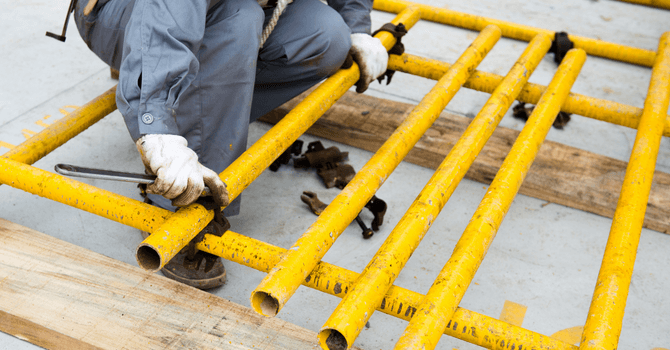
To rightly secure your scaffold, you have to anchor it to the building, another structure, or at ground level with the help of braces and wires.
Make sure that the support footing is sturdy and that every single component was rightfully installed, meaning that the ground or whatever supporting structure involved can easily withstand the maximum load anticipated. Also, the steel studs must be set up against plates and beams.
Don’t overlook any component or material provided during the assembly (locks, crosspieces, plates, clamps, etc.).
The platform and its components can’t slip off or tip over. The platform must withstand a weight that largely exceeds what is to be anticipated. Scaffolding planks without any cracks between putlogs are often recommended. As for the open sides and ends, guardrails, mid-rails, and toe boards must be installed.
If your scaffolding is really high, plan for a rest platform near a ladder every 10 metres (30 feet).
If your workspace is covered by, for example, tarps, make sure that there’s adequate ventilation allowing workers to breathe safely without the fear of inhaling toxic fumes from chemical products.
A Few Precautionary Measures!
At the risk of infantilizing your staff, it’s still really important to remind them of some of the basic rules for the adequate use of scaffolding and to ensure a safe work environment. Often, accidents are caused by someone attempting a dangerous manoeuvre to save time or when co-workers are goofing around to cheer each other up.
Climb up using the ladder or steps set up for that purpose instead of via the frame.
Never jump on the platform or the planks.
The crosspieces and guardrails aren’t designed to be ascended to or hold tools.
Carefully calculate the loads and check the wind force prior to undertaking any work.
If the braces aren’t easily set up, re-position the scaffold (level it) instead of forcing the braces in place.
Always wear a hard hat and any required personal safety gear.
If the frame or guard posts appear to be bent, don’t try to fix or reshape them: replace them.
Keep in mind that taking a bit more time to comply with these mandatory steps will spare you a lot of grievances, like a fine, shutdown, injuries, and soiling your reputation as a contractor and employer.
Get new contracts for your construction or renovation company
RenoQuotes.com can help you get new contracts. We get new project proposals from clients seeking top-rated and trustworthy renovation professionals like yourself. To get started, simply fill in the form on our homepage (it only takes a few minutes) and receive information regarding potential clients by way of our services.
Dial 1-844 828-1588 to speak with one of our customer service representatives.
Looking for something else?
Related articles
The latest industry news, interviews, technologies, and resources.
Editorial Team
•19 Nov 2024
Noise exposure is one of the leading workplace-related hazards, and construction sites are no exception. Excessive noise is ever-present on worksites, stemming from a myriad of equipment, such as jackhammers, chainsaws, and heavy machinery. If noise isn’t managed, it can lead to severe health-related repercussions on workers. To ensure their safety, the CNESST (Commission des normes, de l’équité, de la santé et de la sécurité du travail) established strict regulations, effective since June 16, 2023.

Editorial Team
•08 Nov 2023
Over the past few years, the Canadian economy has experienced highs and lows that have affected many sectors. Regarding the construction industry specifically, constraints and changes have occurred as a result of the Covid-19 pandemic, a dip in available skilled labour, as well as the rise of material costs. With the pandemic still looming, what trends can the industry expect in 2022?
Editorial Team
•14 May 2026
No matter what, as a homeowner, there always seems to be something in need of repair, replacement, or renovation. While some projects necessitate time and money, others will simply take up a few hours, a weekend tops.

Christine Simard
•08 Nov 2023
You might have noticed a steady stream in paint colour trends in 2020 and 2021. Like we talked about in our article Design trend 2021: curves, shapes and squiggles, the past 2 years had their fair share of ups and downs, with a lot of us stuck at home, probably stuck staring at the same home decor.

Editorial Team
•16 Jun 2025
It goes without saying that no one likes to feel cold inside their home, especially when winter knocks on our doors. As insulation in the attic is critical to the preservation of a comfortable indoor temperature, it is important to understand which materials and techniques need to be used to ensure that it is optimal.