How to Style a Renovated Bedroom Like an Interior Designer
By Editorial Team
Updated on May 21, 2026
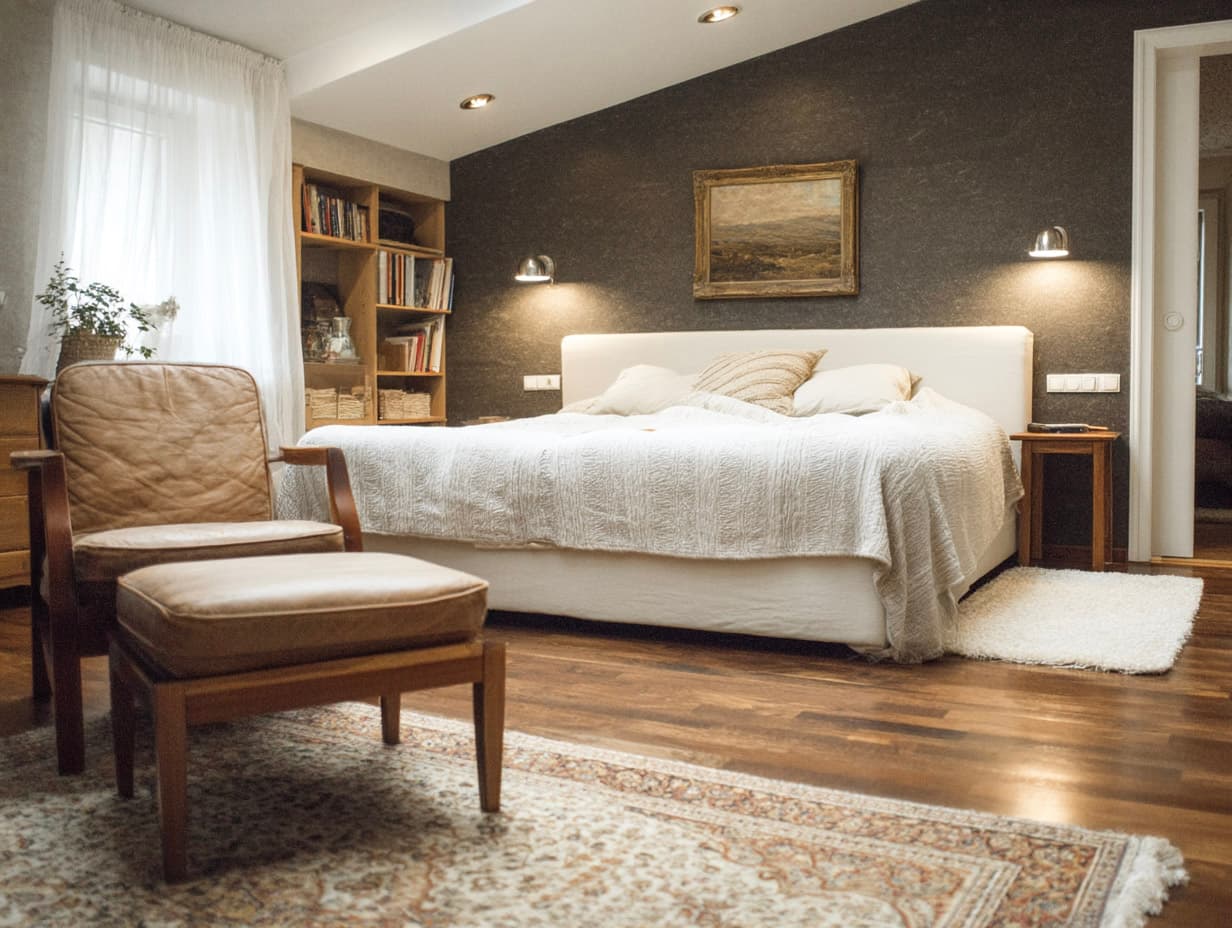
A bedroom renovation gives you a blank canvas that most rooms never offer. Fresh walls, new flooring, a clean ceiling - everything stripped back and ready to be considered from the beginning. The challenge is that a renovated room can look startlingly bare, revealing just how much work good styling actually does. The furniture goes in, the bed gets made, and something still feels unfinished. What is usually missing is the layering and intentionality that interior designers apply almost instinctively.
This guide walks through that thinking step by step, from how to anchor the room with colour to the small details that shift a space from furnished to designed. Bedding is often where the visual identity of a bedroom is most clearly expressed: something like burgundy quilt covers and fitted sheets can set the whole tone of a room in a way that no piece of furniture can. Understanding how to build around that anchor is where designer-level bedroom styling begins.
Anchor the Room With a Colour Decision
Source : Soumission Rénovation
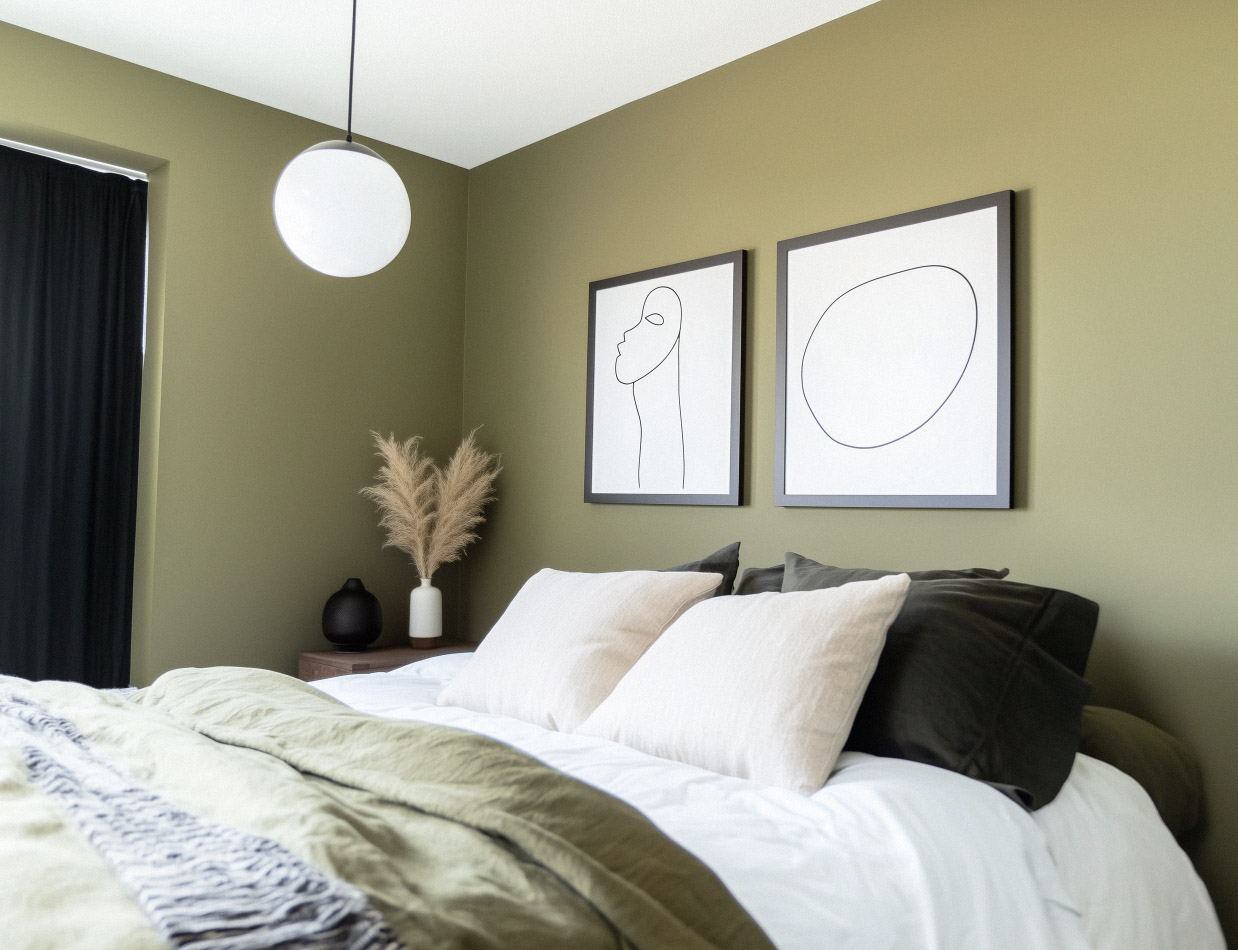
The first thing an interior designer does when styling a bedroom is decide on the dominant colour and commit to it. This is not the same as choosing a wall colour, though they are related. The dominant colour of a bedroom is usually the colour that appears most in the soft furnishings: the bedding, the cushions, the throw. The wall and floor are the background against which this colour performs.
Deep, saturated tones - burgundy, forest green, midnight navy, terracotta - are having a significant moment in bedroom design because they create the sense of enclosure and warmth that a bedroom is supposed to provide. A bedroom anchored by deep burgundy bedding will feel intimate and considered in a way that a beige bedroom rarely does. The key is to let one colour dominate and use everything else to support it rather than compete with it.
A practical starting point: choose the bedding colour first, then work outward. The walls can be a warm neutral that echoes the bedding's undertone. The timber in the furniture can be warm or cool, complementing rather than clashing. The rug can pick up one of the secondary tones. When everything is oriented toward the same colour temperature, the room reads as designed even if the individual pieces are relatively simple.
The Bed Is the Architecture of the Room
Source : Soumission Rénovation
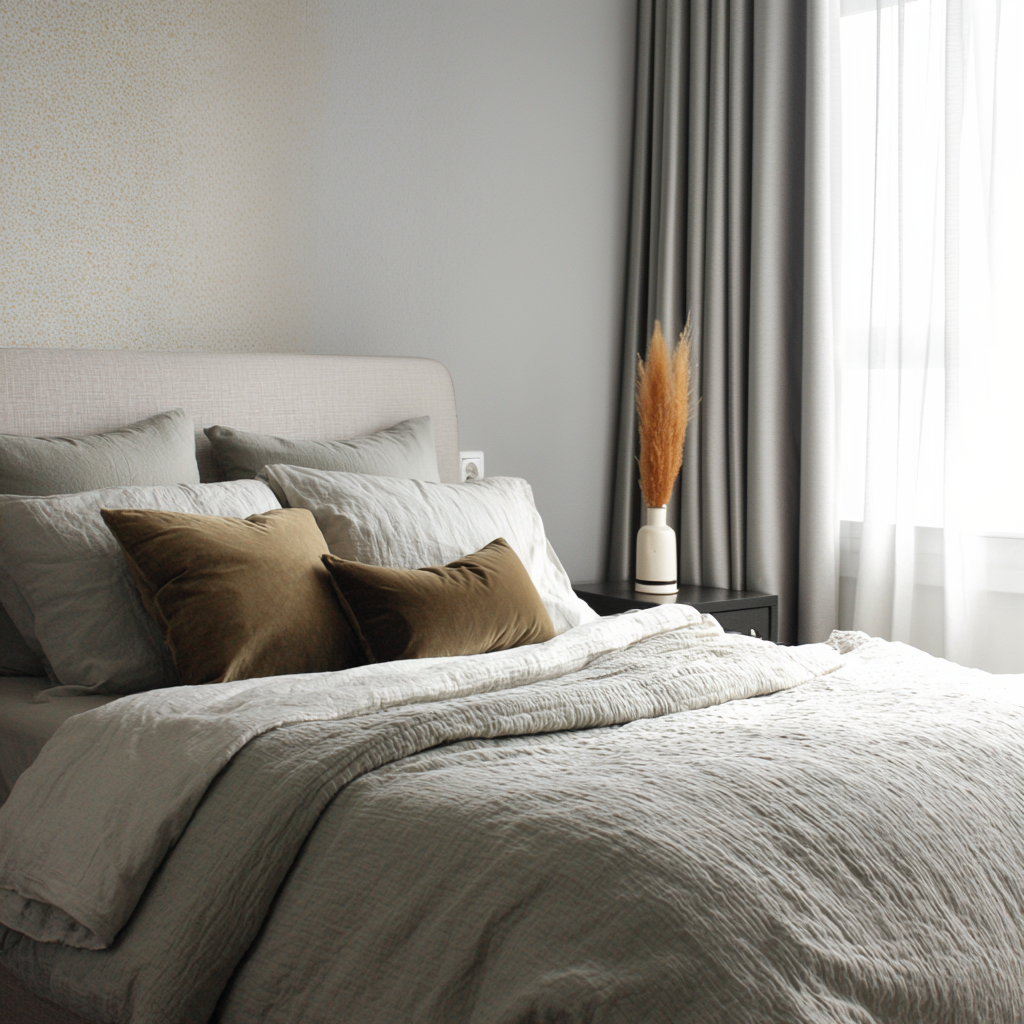
In almost every bedroom, the bed is the largest single visual element. Designers treat it accordingly - not just as furniture but as an architectural focal point that determines the proportions and energy of everything else. Getting the bed right is more important than any other single decision in the room.
Layering is the technique that makes a bed look designed rather than merely made. A base sheet, a quilt or duvet, a folded throw at the foot, and two or three carefully chosen cushions in front of the sleeping pillows creates a composition with depth and texture. The layers should relate to each other in colour and material: a linen duvet cover in a complementary neutral, a wool or velvet throw in the dominant colour, cushions that introduce texture or a subtle pattern.
European pillows layered behind standard sleeping pillows add height and abundance to the bed that two sleeping pillows alone cannot achieve. Styling euro pillows in matching cases, then placing standard pillows in front with one or two smaller cushions in front, creates the graduated depth that designer bed styling consistently shows.
Texture Is What Makes a Room Feel Expensive
Source : Pammax Design Interieur Inc.
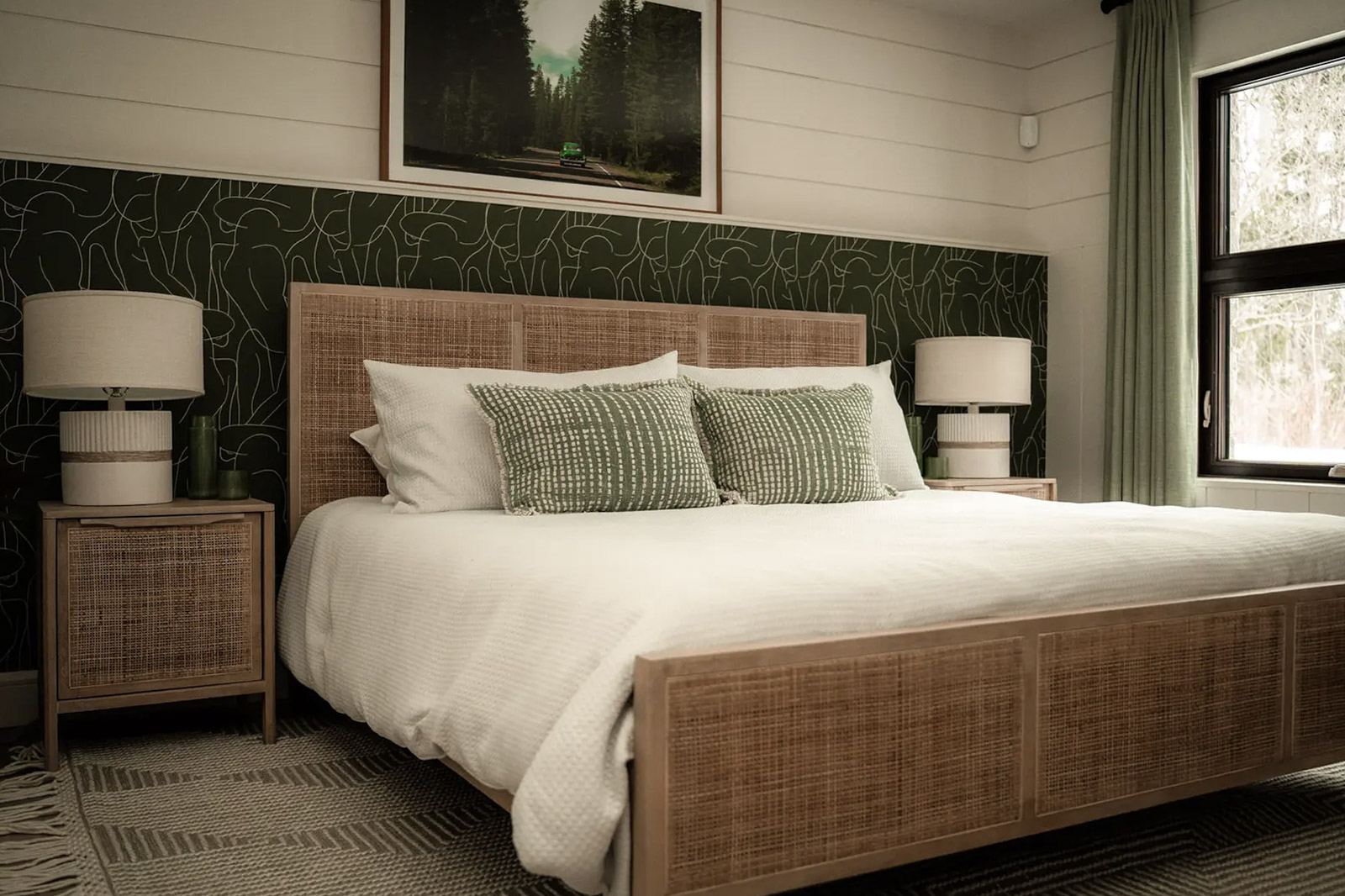
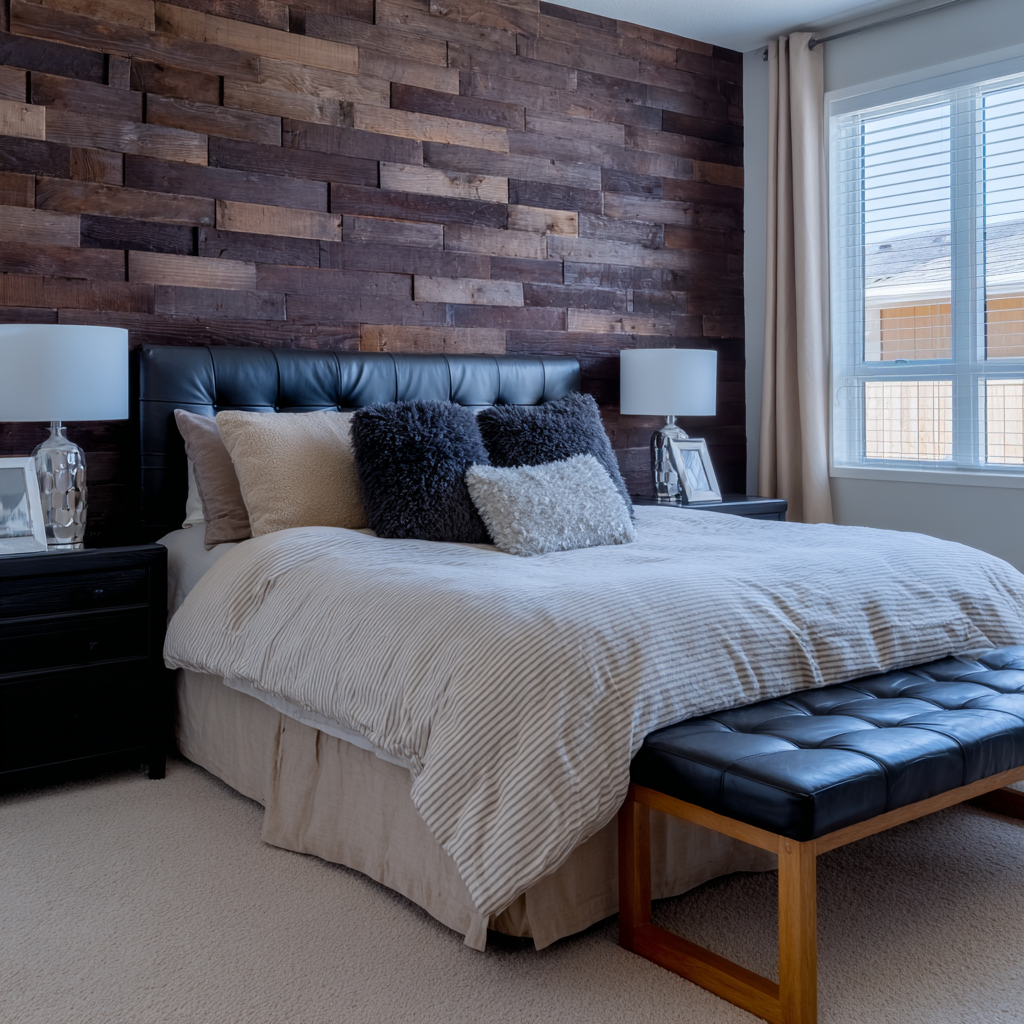
When a room feels luxurious but you cannot identify exactly why, the answer is almost always texture. A room with visual interest across different surface qualities - the softness of linen, the weight of a wool throw, the warmth of timber, the slight sheen of a ceramic lamp base - reads as considered in a way that a room with uniform surfaces does not.
Interior designers layer texture deliberately. On the bed: a cotton or linen sheet beneath a velvet or boucle cushion creates a contrast that is visually interesting. Against the wall: a textured wallpaper or limewash finish behind a smooth bedhead creates depth. On the floor: a wool or jute rug introduces natural warmth that hard flooring alone cannot provide.
The bedroom surfaces that most reward texture investment are the bed, the floor and the wall behind the bed. These three surfaces are the ones seen most when lying in or entering the room, and they form the experiential core of the space.
Lighting Is the Detail That Transforms
Source : Mem design
Renovated bedrooms often have a single overhead light and nothing else. This is the lighting equivalent of starting a room without furniture: technically it works, but it produces a result that feels flat and institutional. Interior designers treat lighting as a layered system rather than a single source.
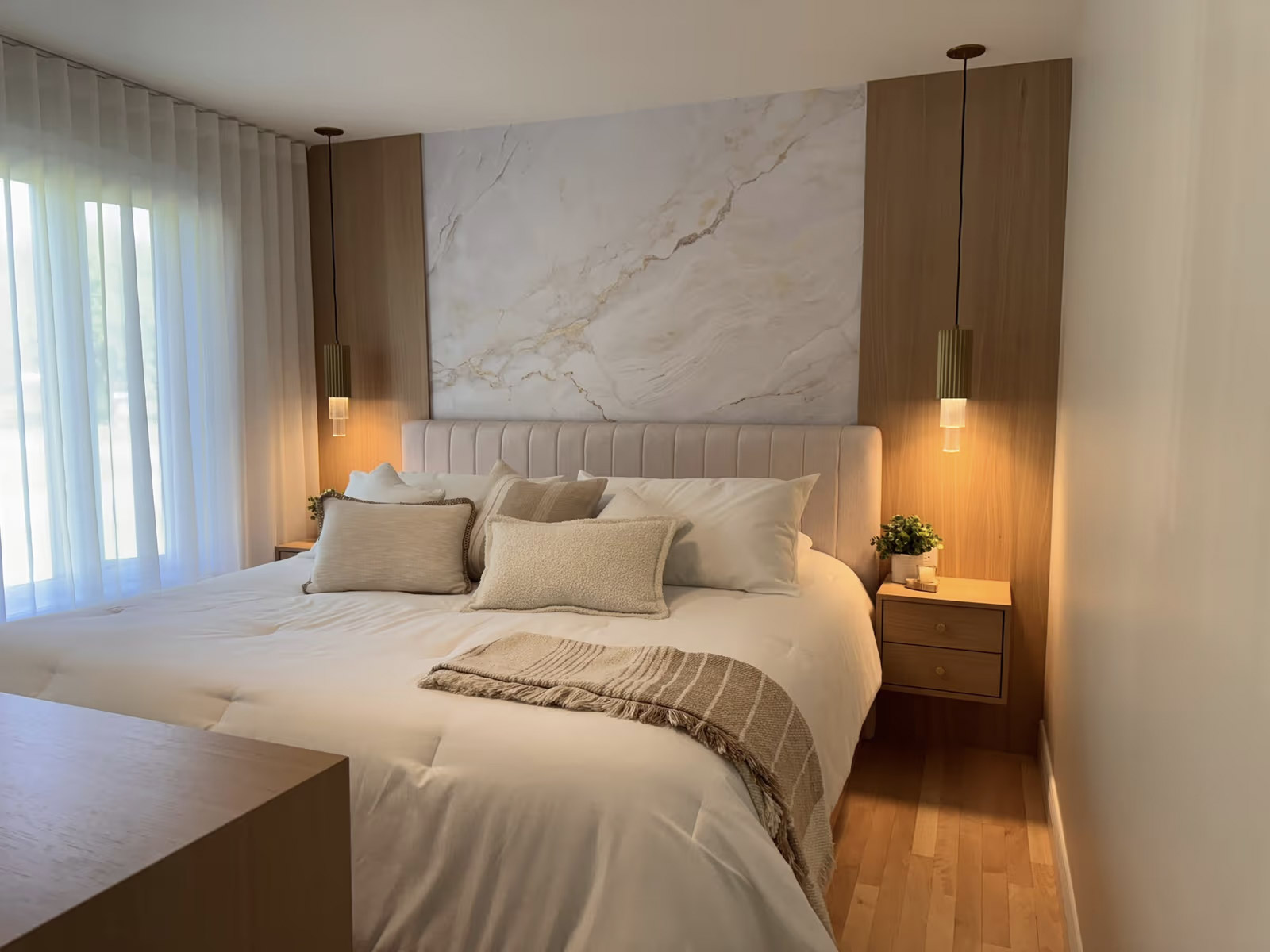
Bedside lamps are the most important addition. They bring the light source down to a human scale, create warmth and intimacy, and make the room feel habitable in a way that overhead lighting alone does not. The lamp base should relate to the materials elsewhere in the room: a ceramic base in a warm tone for a natural palette, a brass or matte black metal base for a more contemporary direction.
Wall sconces mounted either side of the bed are a more permanent option that frees up bedside surface space and creates a built-in quality that raises the apparent level of the whole room. If the renovation allowed for pre-wiring, this is worth doing. If not, hardwired wall sconces can be added as an electrician job that does not require a full renovation.
Warm globe temperatures - around 2700K to 3000K - are the right choice for a bedroom. Cool, bright light is for task spaces. Bedrooms benefit from light that is warm, dimmable where possible, and oriented toward the surfaces you want to see, which is the bed and the walls rather than the ceiling.
Scale, Proportion and Negative Space
Source : Soumission Rénovation
Furniture scale relative to the room matters. An oversized bedhead in a small room creates the enclosing, hotel-suite quality that feels luxurious in person. An undersized bedhead in a large room leaves the space feeling empty, regardless of what else is in it. When in doubt, go larger with the bedhead.
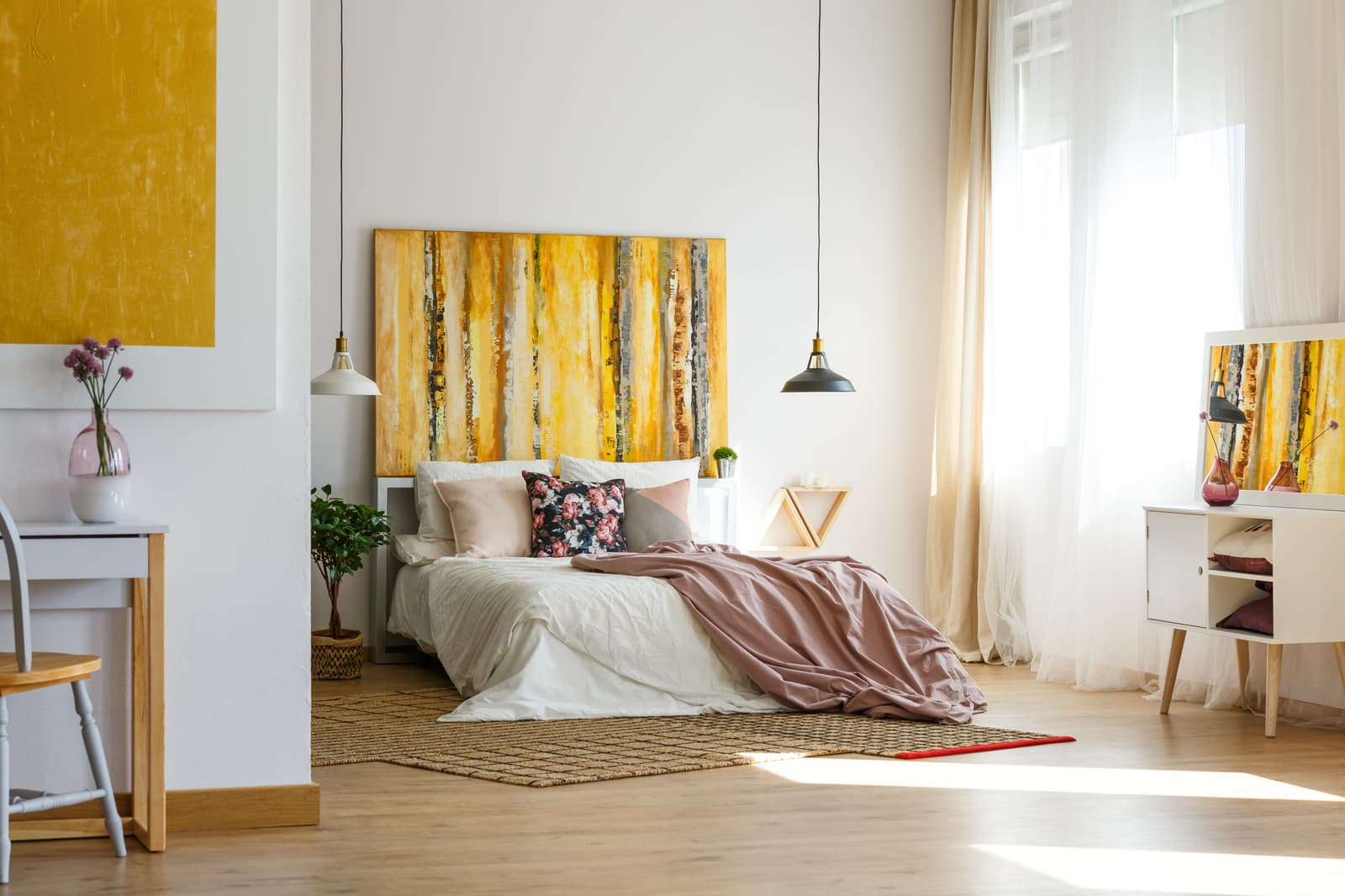
Artwork scale is where proportion errors are most visible. A small artwork on a large wall disappears, leaving the room feeling unresolved. A single larger piece, or two pieces hung close together to read as a unit, at a height where the centre of the work sits roughly at eye level, fills the wall appropriately and anchors the space. The most common recommendation is to hang artwork lower than people's instinct suggests - eye level when standing is often too high for bedroom walls, where much of the viewing is done from the bed.
Furniture scale relative to the room matters too. An oversized bedhead in a small room creates the enclosing, hotel-suite quality that photographs well and feels luxurious in person. An undersized bedhead in a large room leaves the space feeling empty regardless of what else is in it. When in doubt, go larger with the bedhead.
The Finishing Details
What separates a designed room from a furnished one is usually a small number of carefully chosen finishing details rather than a large investment in additional pieces. Plants in good pots, a considered arrangement on a bedside table, a mirror that reflects light and makes the room feel larger, a tray that contains and organises objects on a dresser - these are the details that make a room look like someone thought about it.
The rule that applies most reliably: edit rather than add. If the room feels unfinished, the answer is often to remove one or two things rather than introduce more. A bedside table with a lamp, one book and a small object of interest reads as intentional. The same table with a lamp, six books, a phone charger, two water glasses and a plant reads as accumulation. Designers make editing decisions constantly, and the discipline of removing the non-essential is as important as the skill of choosing what to include.
Give the renovation time to breathe before filling every surface. Live in the room for a few weeks and notice what it needs. A bedroom that has been thoughtfully edited and slowly refined almost always looks better than one styled completely in a single weekend. The designer approach is patient, and patience consistently produces better rooms.
Looking for something else?
Related articles
The latest industry news, interviews, technologies, and resources.
Christine Simard
•08 Nov 2023
January 2021: new year, new projects and even more new articles about renovation, design and decor around the internet! Today, we’re back in force for another year of this series where we look for the best reading material to inspire you in your current or future renovation projects.
Cynthia Pigeon
•18 Dec 2024
With the new year ahead, major developments are being ushered into the renovation industry.

Editorial Team
•29 May 2026
Have you ever considered raising your house to renovate or repair structural issues? Although this method isn’t as customary as others, it’s a common solution for numerous homeowners seeking to add square footage to their living spaces or improve their foundation.
Amanda Harvey
•09 Sep 2024
Are you looking at your kitchen cabinets thinking about how they're old and outdated but still intact? Maybe you aren’t quite ready to replace them because the frames and doors are structurally sound, or a whole new cabinet renovation just isn't in your budget. Whatever the case, for a quick kitchen update, all that cabinets require is a fresh coat of paint!

Editorial Team
•09 Dec 2023
A kids’ playroom is supposed to be fun for them and low maintenance for us—a space that’s ultimately meant for playing and conducive to creativity. In some homes, having an entire room dedicated to such a purpose isn’t out of the question, or even a basement, while in other, tighter quarters, this area has to be merged within another space serving an entirely different purpose.