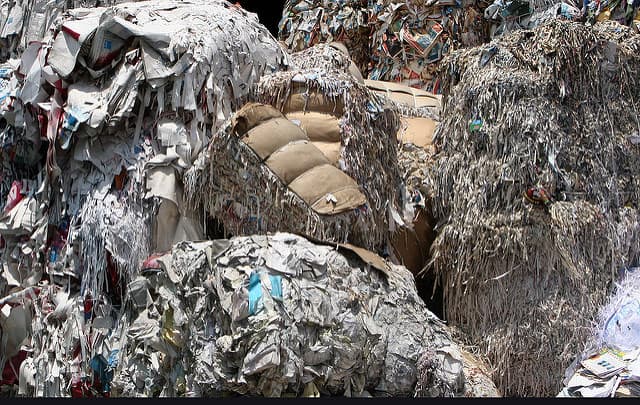
Mineral wool and fibreglass may be more familiar options, but home insulation is rarely the most exciting renovation project to tackle. That said, it can make a noticeable difference on your heating bill and improve soundproofing in your walls. So why not choose a greener and more efficient material? Let’s take a closer look at cellulose.
What Is Cellulose?
Cellulose is a carbohydrate made up of a linear chain of D-glucose molecules. These macromolecules form microfibrils, which make up the walls of plant fibres. It is the main component of wood and one of the most abundant organic materials on Earth.
In industry, cellulose is used in many products, including textiles, paint, mortars, varnishes, food products, cosmetics, and building materials. In-home insulation, cellulose is especially valued because it can be made from recycled paper products and used as a loose-fill or sprayed insulation material.
How Is Plant Fibre Turned into Natural Insulation?
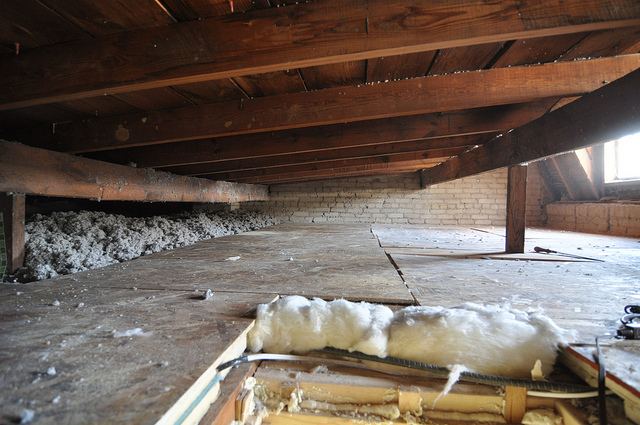
Photo : Bill McNeal
Cellulose insulation is usually made from wood fibre or recycled newspaper that has been shredded and processed. The material is then treated with mineral-based additives to help resist mould, corrosion, pests, and fire.
Cellulose can be installed in different ways:
Blown-in cellulose: Applied dry, often in attics or wall cavities.
Sprayed cellulose: Mixed with water and a binder before application.
Cellulose panels: A more rigid form used in certain building applications.
One of the advantages of cellulose is that it can fill irregular cavities and cover the available space without requiring seams. This makes it useful for attics, wall cavities, and other areas where gaps can reduce insulation performance.
Thermal Resistance of Cellulose
Cellulose generally offers an R-value of approximately R-3.5 to R-3.8 per inch, depending on the product and installation density. By comparison, many fibreglass and mineral wool products offer similar or slightly different R-values depending on their form and density.
For insulation, the higher the R-value, the better the material resists heat flow. However, R-value is not the only factor that matters. Air sealing, moisture control, ventilation, and proper installation all play a major role in the final performance of an insulation project.
Because cellulose is sensitive to moisture, it is important to ensure that the building assembly is properly air-sealed and that a vapour barrier or vapour control layer is used where required by the local building code. Cellulose also has good soundproofing properties and is treated to improve fire resistance.
An Eco-Friendly Insulation Choice
Cellulose is often considered an eco-friendly insulation option because it is made from recycled material, is widely available, and has a lower embodied energy than some synthetic insulation products. However, it is worth noting that cellulose insulation is treated with additives, often borate-based compounds, to improve fire and mould resistance. These treatments are important for safety and durability, but they are part of the product’s overall environmental footprint. From an indoor air quality perspective, cellulose insulation is generally considered a low-emission material when properly installed. As with any insulation material, it is important to follow safety guidelines during installation and avoid leaving dust or debris in living areas.
How to Install Cellulose Insulation
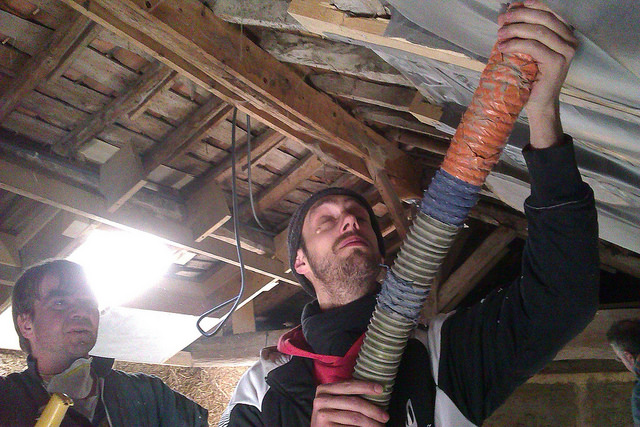
Photo : Flickr- Pierre PaillePoutreEtCo
According to many building professionals, it is often best to hire a qualified insulation contractor, especially for attic work, dense-pack wall insulation, or projects that involve air sealing and ventilation corrections. Installing cellulose may look simple, but achieving an even depth, proper density, and good coverage takes experience.
Some home improvement centres rent or lend blowing machines when you buy cellulose insulation from them. This can make DIY installation possible for some homeowners, especially in open attics. However, the equipment can be heavy, the hose can be difficult to manage, and the job usually requires at least two people.
Before blowing cellulose, you should:
Make sure the attic or work area is properly ventilated.
Seal major air leaks before adding insulation.
Avoid blocking soffit vents.
Install baffles or air channels where needed to maintain ventilation.
Use depth markers to measure the final insulation level.
Wear proper protective equipment, including safety glasses, a dust mask or respirator, gloves, and work clothing.
One person usually feeds the cellulose into the machine, while the other directs the hose and blows the insulation evenly across the space. The work should begin in the farthest corner and move gradually back toward the access point. The goal is to create a consistent layer without thin spots, blocked vents, or compressed areas.
Cellulose Fibre Rundown | Detailed Overview |
1) Definition of cellulose | Cellulose is a carbohydrate made up of a linear chain of D-glucose molecules. Its macromolecules form microfibrils, which make up the walls of plant fibres. It is one of the main structural components of plants and wood. |
2) Turning plant fibre into natural insulation | Cellulose insulation is made from wood fibre or recycled paper products that are shredded and treated with additives to resist fire, mould, and corrosion. It can be blown in dry, sprayed with water and a binder, or produced in panel form. Because it fills cavities well, it can reduce gaps that weaken insulation performance. |
3) Thermal resistance | Cellulose generally offers an R-value of about R-3.5 to R-3.8 per inch, depending on the product and installation method. Because it is sensitive to moisture, the surrounding assembly should be properly air-sealed and protected with a vapour control strategy where required. Cellulose also offers good soundproofing and fire-resistance properties when properly treated and installed. |
4) Eco-friendly choice | Cellulose is often considered an environmentally responsible insulation material because it is made from recycled fibres and uses a widely available raw material. Its additives, transport, and installation method still affect its overall environmental footprint, but it remains a popular option for homeowners looking for a greener insulation material. |
5) Installing cellulose insulation | Cellulose installation usually requires at least two people, proper protective equipment, and careful preparation. Before installation, make sure vents are not blocked, baffles are installed where needed, and air leaks are sealed. The insulation should be blown evenly across the space, starting from the farthest point and moving back toward the attic access. |
Looking for something else?
Related articles
The latest industry news, interviews, technologies, and resources.
Editorial Team
•08 Nov 2023
The clay composition of brick is what gives it its characteristic earthy colour while also delivering enormous strength and durability. While brick does outlast other materials such as wood, over time a brick wall’s worst enemies are moisture and extreme temperature changes. These two natural elements that every Canadian must deal with annually can really compromise the mortar over time, leaving cracks and stains.
Editorial Team
•23 Jul 2025
Whether by choice or simply to minimize costs, living in a small house or small apartment has both its advantages and disadvantages. However, it’s not impossible for you to arrange things to suit both aesthetic and practical needs.
Editorial Team
•08 Nov 2023
Are you a new renovation contractor? Although it’s likely you’ll focus most of your efforts on doing quality work for each of your clients, to make a mistake is only human and no one is immune to the unforeseen circumstances that may arise over the course of a project.
Editorial Team
•29 Sep 2026
A tankless water heater heats water only when you turn on a tap, which means no storage tank sitting in the basement losing heat around the clock. The appeal is obvious. The price is where most homeowners get surprised, because the unit itself is often the smaller half of the bill.

Editorial Team
•08 Nov 2023
Are your bedroom dimensions rather small? Although this situation requires us to show ingenuity and creativity, the fact remains that it’s possible to make even the smallest space both relaxing and grandiose.