Interior Concrete Flooring - How Much for Installation?
By Editorial Team
Updated on May 21, 2026

Curious if concrete floors can be painted or coloured, or if they're compatible with an underfloor heating system? Wondering if a DIY concrete floor installation is achievable or best left with the pros? And, what type of contractor should you hire for the job? This article covers all these questions and more, offering valuable insights to help you decide whether concrete flooring is the right option for your home or business.
Let’s dive right in and get to the heart of the matter!
Is Polished Concrete Flooring Expensive?
Type of Concrete | Average Price Per Square Foot (installation included) |
Polished concrete floor | $4–$15 /sq. ft. |
100 sq. ft. of polished concrete (example) | $400-$1,500 |
Stamped concrete floor | $15–$30 /sq. ft. |
By consulting experts within our network of contractors, we were able to establish the average price point for concrete flooring as such:
For a polished concrete floor, budget between $4 and $15 per square foot for a full polish. Prices can vary, with lower-end options available at a reduced cost and premium material commanding a higher price. The cost of polished concrete flooring will, without a doubt, be impacted by the selected floor finishing product, the protective coating’s thickness, and the desired colour variety. According to Mélissa Perusse, a project manager at Béton Prestige, additional services like concrete installation and saw cuts can also impact pricing.
For stamped concrete flooring, prices per square foot range from $15 to $30. Note that stamped concrete isn’t as commonly used for interior flooring. It’s more common in backyards for patios or closed-in porches.
In either case, the above-listed pricing includes installation fees. However, you may need to set aside some funds for repairs made to your current floor or improve the floor’s structural integrity. The latter can be assessed by a contractor during the quoting process.
Here are two additional factors can may affect the cost of your concrete floor:
Square footage to cover (the higher the square footage count, the lower the price per square foot)
Amount of obstacles to encounter (doors, stairs, furniture)
Lastly, in most cases, concrete flooring is more cost-effective than other resilient materials like marble and slate.
Note that if you’re looking to install concrete flooring in a commercial space, price points will differ, given that you’ll have to work with a CCQ-qualified contractor. This can impact the workers’ hourly rate, as well as the material supplied, given that for a commercial project, high-quality products are prescribed.
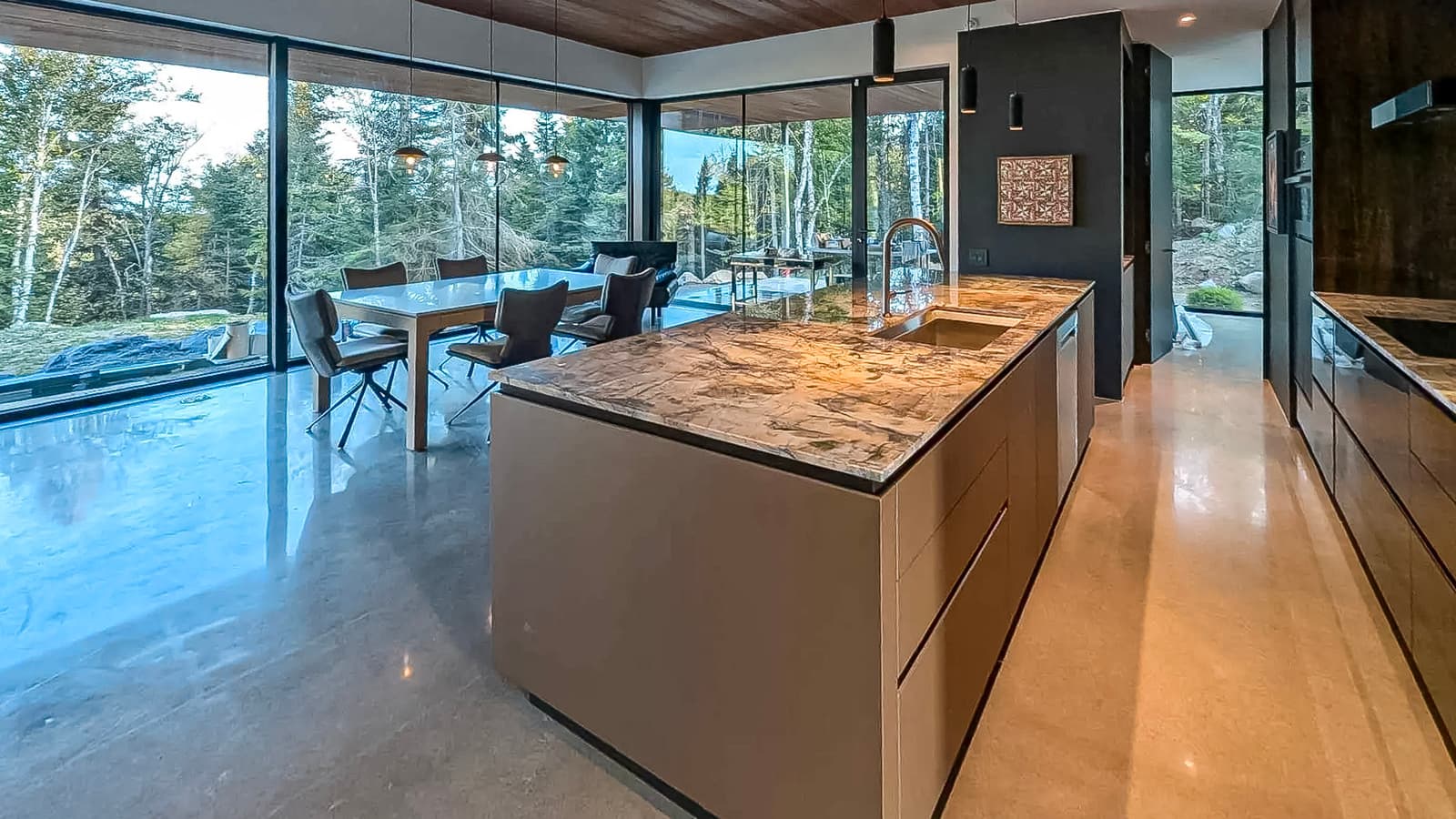
What Are the Positives and Negatives of Concrete Floor Coatings?
Source : Décor Service Concept
Before finalizing your decision and steering your choice to concrete flooring, it’s important to familiarize yourself with the pros and cons of this material. Here’s what you should know:
Advantages:
Concrete requires minimal daily maintenance.
It’s a long-lasting material.
This material is versatile and allows you to play around with colours, finishes, and textures.
It suits an underfloor heating system.
Disadvantages:
If the sealing of concrete isn’t done properly, water will permeate the surface.
It makes for a hard surface underfoot.
Dropped items are more likely to break or shatter upon hard impact.
Without underfloor heating, concrete is cold to the touch.
This type of flooring can be slippery when wet.
Where Should You Install Concrete Flooring in a House or Commercial Space?
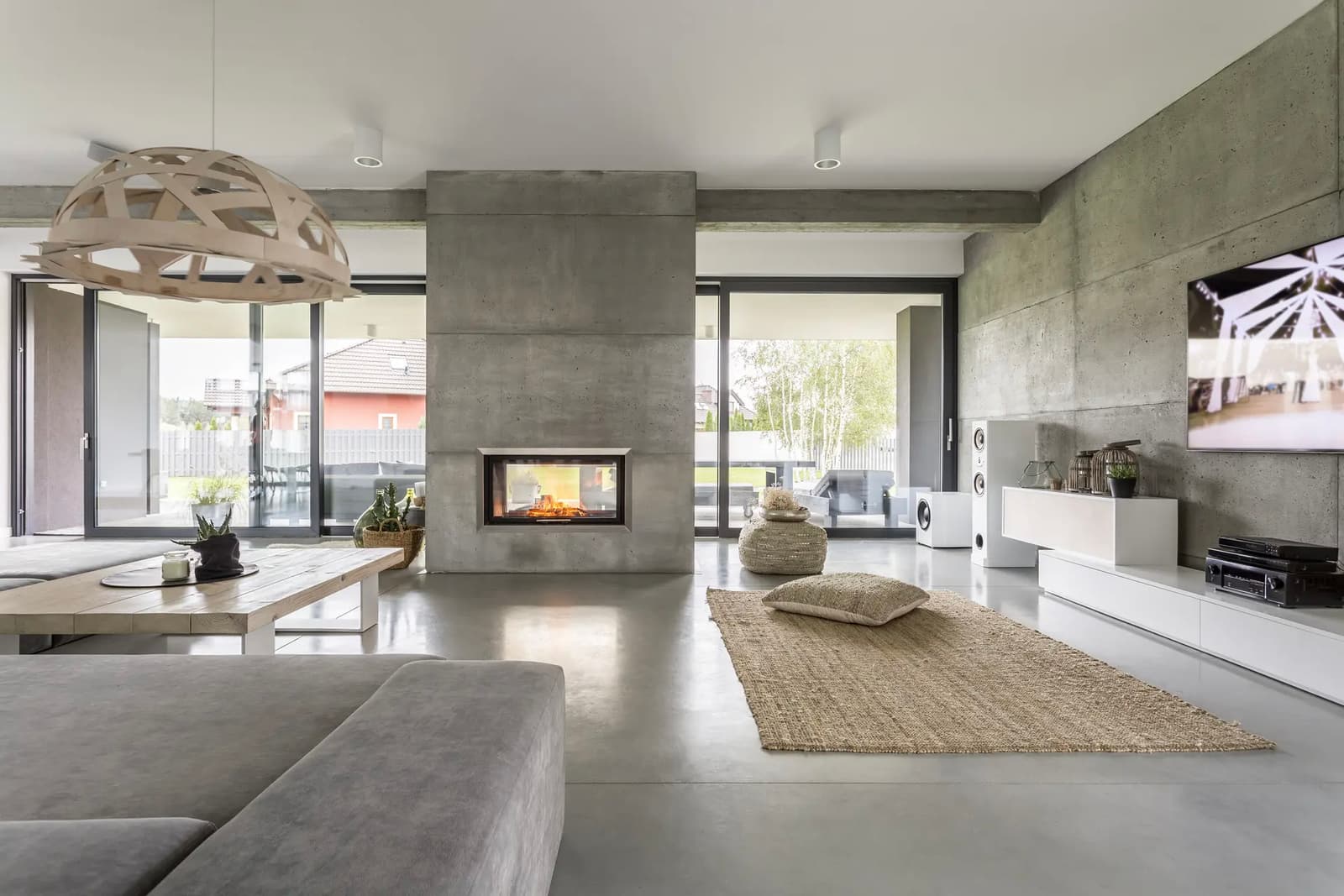
If you love the idea of having a concrete floor in your bedroom, go for it! This type of flooring suits all areas of the house. Naturally, it’s most often used in kitchens, bathrooms, and grade or below-grade basements, making for a smooth and resilient surface. Some folks in the household may find that concrete flooring is rather cold underfoot for a bedroom or living room, but underfloor heating (electric cables or hot water tubes installed beneath the flooring) can be installed under the concrete slab.
Where commercial properties are concerned, concrete is used anywhere and everywhere, both in restaurant kitchens and veterinary clinics, shops and malls. Since this type of flooring can withstand high foot traffic, it’s the preferred flooring option for such building owners.
How to Wash a Concrete Floor for a Shiny Finish
Source : H Man Reno
What Is the Best Maintenance Routine for Concrete Floors?
Concrete floors are known for their durability, and when it comes to daily maintenance, concrete flooring should solely be cleaned with products that aren’t too acidic to protect the topcoat sealer. Once in a while, use a floor polisher to resurface the flooring, removing flaws and achieving a smooth and appealing finish.
Floor polishers can be rented from select retailers, but if you’ve never operated such a machine, best leave it up to an expert.
How to Repair a Cracked Garage or Basement Concrete Floor in a House
Clean: Scrub and vacuum the crack to eliminate dust and debris. Degrease with a dedicated cleaner, if necessary.
Prep the edges: Use a chisel to slightly widen the crack to ensure the repair putty adheres properly. Wear protection goggles while working.
Apply a bonding adhesive: Apply a thin coat of concrete glue and let dry until clear. Read the instructions on the label, some binding agents blend directly with the concrete.
Prepare mixture: Mix dry sand cement with water until you achieve a smooth, non-liquid consistency.
Fill in: Fill in the crack with the mixture using a trowel, smoothing out the surface and removing excess product.
Dry: Let the mixture cure for 24 hours or according to the product manufacturer’s instructions.
Seal (optional): Apply a clear sealer or a protective coating to limit future cracks resulting from excess moisture.
Concrete Flooring Installation FAQs
What are the best sealers for concrete floors?
Choose the finish that appeals to you most, based on your home's style and aesthetic preferences, budget, and maintenance-related capacities. Here are the most commonly used concrete flooring sealers:
Water-based acrylic sealer
Polyurethane sealer
Polyaspartic sealer
Epoxy sealer
Silane sealer
Silicate- and silicone-based sealer
Can you add colour to a concrete floor?
Aren’t a fan of concrete’s natural grey colouring? Note that adding dyes or colouring agents to the dedicated cement mixture is easily attainable, tailoring the floor’s surface to your liking. From blue to red, with terra cotta shades or black in between, nothing’s out of reach. You can also play around with textures, add patterns to the design, or engrave logos (for a commercial floor, for example).
Can a concrete floor slab be heated?
As mentioned, installing an underfloor heating system under a concrete floor is entirely feasible. It might seem surprising, but according to experts, it’s one of the best flooring to lay over top of such a heating system.
The dreaded cold surface often associated with concrete flooring is effectively resolved. This sort of installation does lead to additional costs and you may have to contact different contractors for both installation steps (underfloor heating and flooring installation), but the result is well worth it!
Check out our articles about underfloor heating:
Is DIY concrete flooring installation an option?
Ideally, this sort of project is hired out to industry experts, as it's beyond easy to err and commit installation mistakes at every stage. First, determine whether your home’s structure can support concrete flooring. Next, buy the right flooring and finishing products. Lastly, the installation itself has to be carried out flawlessly, otherwise, the flooring could crack over time or within a few months of its installation.
What type of contractor can install and maintain concrete flooring?
In Quebec, the law requires that this type of renovation project be completed by an RBQ-licensed professional. Depending on the steps involved, the hired expert should have a valid licence under subclass 3.1, 3.2, and/or 9 to offer such services.
As for the rest of Canada, there’s no RBQ equivalent. Every province operates under its own region-specific regulation system.
No matter what, it’s highly recommended to hire an experienced contractor, one with stellar references, a well-stocked portfolio, and insurance.
Will my house require a structural upgrade?
Your house’s structure might need to be strengthened before laying concrete flooring. You have to be sure that it’s strong enough to withstand concrete flooring, as it’s a very heavy material.
The hired contractor will be able to assess the state of the structure, determining whether it needs to be reinforced before the concrete is poured.
Looking for something else?
Related articles
The latest industry news, interviews, technologies, and resources.
Collaboration
•25 Aug 2026
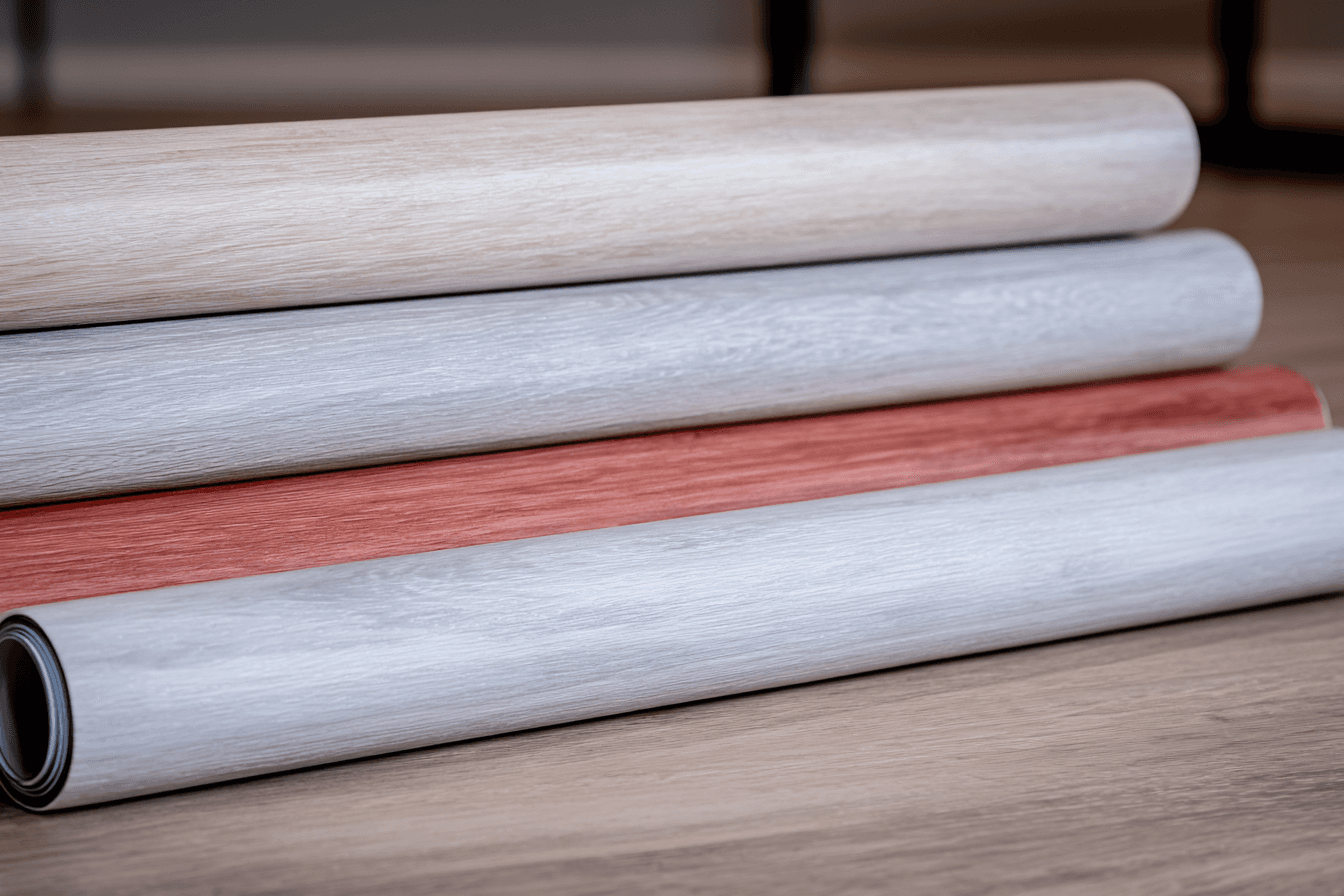
Kitchen floor looking rough? Laundry room seeing more puddles than it should? That's usually the moment people start looking into vinyl sheet flooring. It comes in wide rolls instead of individual planks or tiles, so a room can often be covered with almost no seams at all, which is basically why it ends up in kitchens, laundry rooms, rental suites, and entryways more than anywhere else.
Editorial Team
•18 Aug 2025
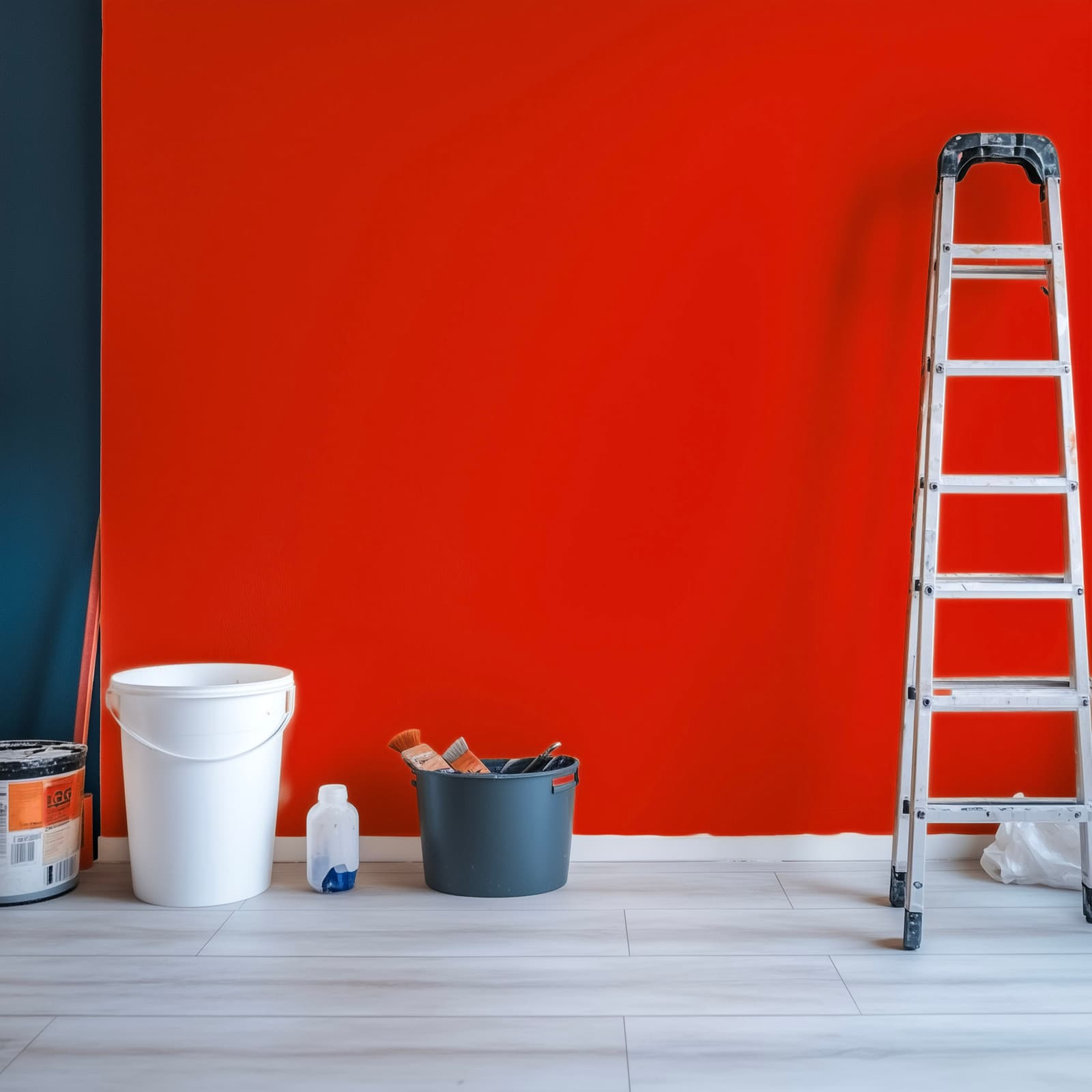
Whether you’re freshening up a bedroom or repainting a façade, painting is one of the most accessible renovation projects. However, a common mistake is buying too much or too little paint. Accurately calculating the required amount allows you to plan your budget, avoid waste, and cut down on trips to the hardware store. This guide will explain how to determine the surface area to be painted, choose the right type of paint, and estimate the number of coats to ensure success.

Editorial Team
•08 Nov 2023
Many homeowners, as well as those aspiring to become homeowners, may dream of finding their way out of the city and living a life beyond societal confines. This could mean living in an alternative home. For some, this may be a home off-grid, with no dependence on a power grid, or the rules and regulations that come with living in an urban area.
Editorial Team
•16 Jun 2025
Noise is part of daily life, but excessive noise in a household can disrupt peace and quiet. For anyone looking to create a more tranquil environment, understanding and applying effective acoustic insulation methods is key. This article tackles essential questions: What are the most effective ways to soundproof ceilings, floors, and walls? Which materials work best, and how thick should they be? And how can homeowners balance cost with effectiveness?
Editorial Team
•20 Sep 2024
Currently trending, infrared heating may be the new, modern way to stay warm. It has undeniable advantages compared to some traditional heating solutions, but the question remains, under what conditions and circumstances?