International Home Improvement: Japan Edition
By Editorial Team
Updated on December 9, 2023
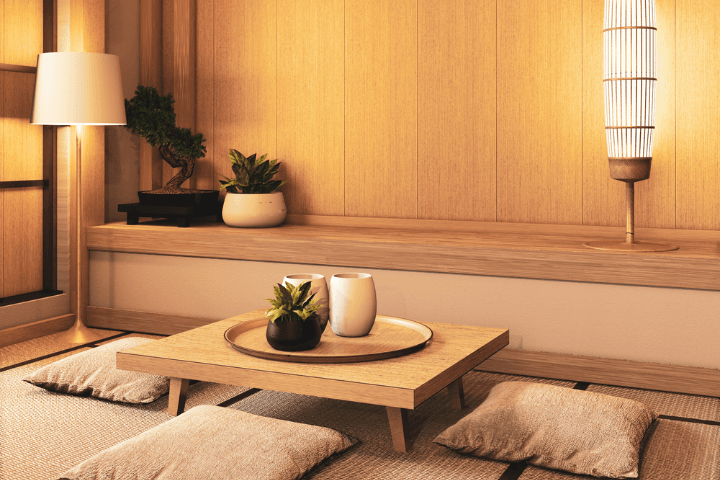
When discussing the beauty and history of architecture and decor, European countries often come to mind as a result of years of familiar artistic and cultural influence. However, by taking a step back, we can, little by little, discover that amongst the less travelled continents, there are even more breathtaking settings that reflect tradition and culture.
In Asia, more predominantly in Japan, the architecture and interior design of residential and public buildings reflect years of spiritual and cultural traditions. However, through the years, the country’s numerous technological strides resulted in the traditional Japanese aesthetic being shaped by current trends.
So, how are contractors supposed to recreate modern adaptations when it comes to strictly traditional homes? In this third installment of our series on international home improvement, we’re going delve into the specific characteristics that make up Japan’s modern aesthetic.
International Home Improvement: Japan
Source: Canva
Japanese Architecture and the Origin of its Influence
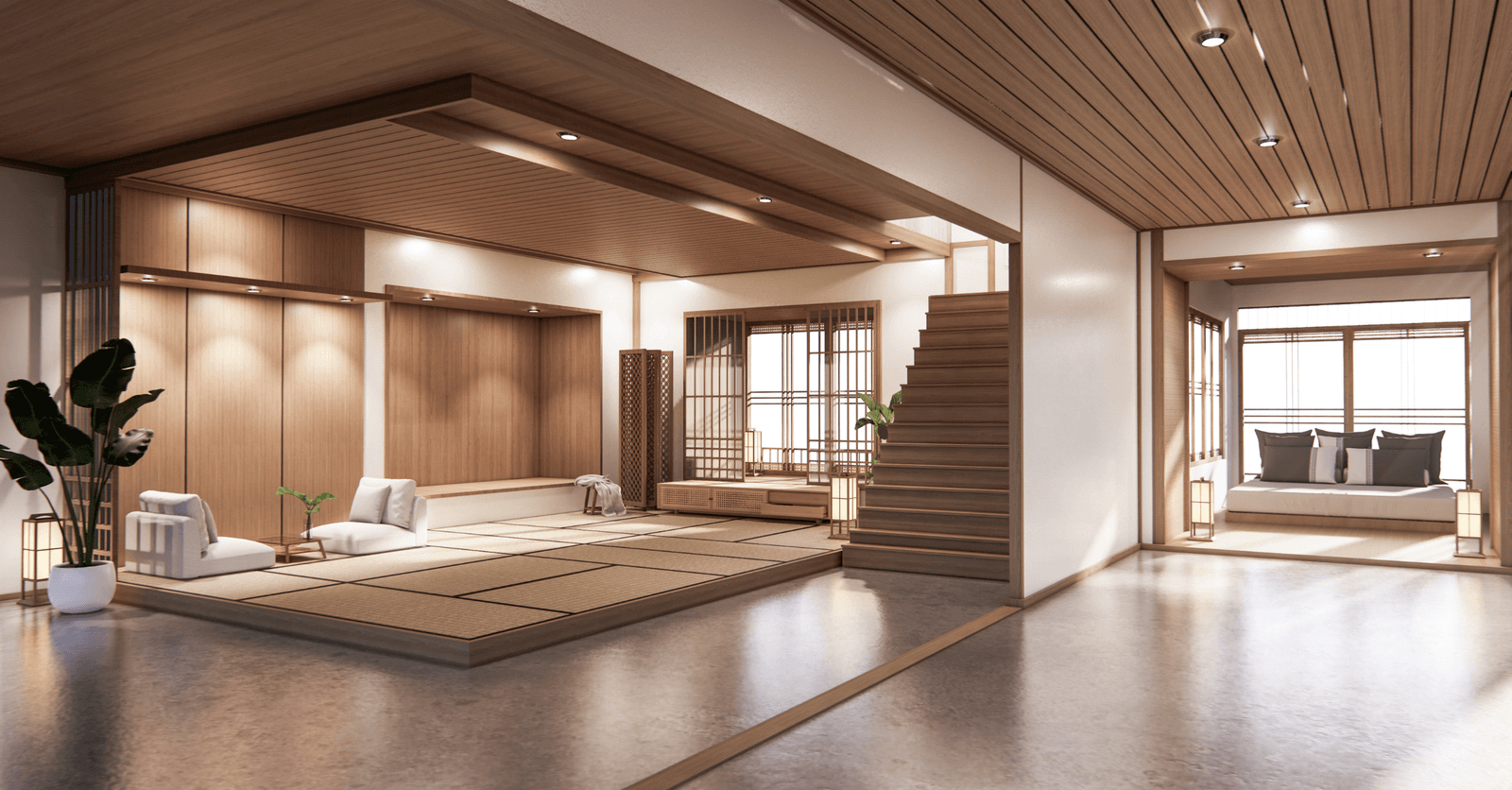
Traditional family homes reflect the country’s ancient spiritual mindset. Alongside its influences taken from Taoism, Zen Buddhism, or Shinto, the Japanese interior design aesthetic advocates minimalism and simplicity.
Spaces are usually divided with the help of sliding doors (fusuma) or screens (shoji), thereby allowing rooms in a home to be divvied up in various ways.
Another important feature that characterizes the traditional Japanese aesthetic is wood. It’s a feature that dominates over others found on the market—like stone—partially due to the prevalence of earthquakes.
A lot of homes, notably in Kyoto, are built without nails, forcing contractors to find an alternative method to bind planks to one another. Wood grain being especially valued is left as is, natural.
The entryway is usually a section in the house that’s lower than the main floor (known as genkan) and is intentionally done as such to distinguish said area from the outside. It’s where people will leave their shoes since the Japanese are sticklers when it comes to cleanliness and respect. However, though we mentioned distinguishing the inside from the outside, an interior design thematic that’s often exploited is that of harmonizing the inside with nature.
As above-mentioned, spiritual and religious beliefs such as Shinto and Buddhism, have a massive influence over construction. Though there’s great importance behind dividing the exterior grime from any dwelling's interior, the fact remains that the Japanese preach the relationship between man and nature, inviting said parallel into their interior decor.
As a matter of fact, one can spot these various references due to the abundant use of raw materials and natural light. Houses are strategically designed to have a view of nature and its seasonal changes, and it's precisely why we can see the integration of big verandas (engawa) lining the side of the house serving as a communal gathering spot where one can simply enjoy the present moment.
Modern Japanese Design
Albeit modern Japanese architecture is still marked by ancient traditions, designers and architects still know how to combine the whole with a fresh modern look, as opposed to what’s seen in certain European countries, which favour a more dramatic and abstract approach. The goal here is to reinvent, while also retaining a hint of traditional Japanese identity.
The overall result is the same: A minimalist space bathed in natural sunlight, which is a direct consequence of large windows. Wood and natural materials remain key interior design elements, blending in with the fresh and refined aspects of the above-mentioned features. The shapes used are both simple and complex, while still steering clear of extravagance.
A Practical, Micro-Space
However, residential buildings aren’t the sole cause of today’s Japanese aesthetic. In big cities, where the population is much denser, the housing demand is at an all-time high, forcing architects to rethink the available space to make limited use of it, yet doing so in a practical fashion.
With the use of restricted space, we can thus find open-concept, micro-apartments with ingenious storage, allowing people to live there conveniently. House-wise, seeing new construction built in narrow spaces, like alleyways, is another challenge designers and architects are faced with to create a viable and practical living space.
Japan-Inspired Interior Decor
To incorporate a bit of Japanese-inspired design into your home, it’s super important to keep three keywords in mind: minimalism, nature, and purity. Using materials in their raw and pure state is reminiscent of the Zen philosophy, meaning wood should be a prominent feature.
If installing a sliding door is an option that presents challenges, you can opt to divide open spaces with large partitions, like between the kitchen and the dining room.
While the plans are being drawn up, speak with your interior designer and take note of the different options that could be used as smart storage solutions, ones that’ll blend in with the decor. That way, you’ll be able to maintain a tidy and minimalist space, making the room appear more spacious. The whole concept relies on the simplicity of the elements found within.
Few Examples of Japanese Architecture
Re-Slope House by Tomohiro Hata
Source: Canva
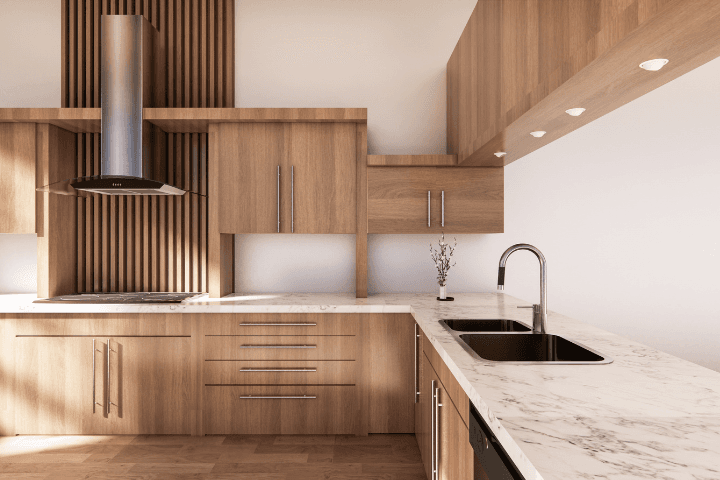
A completely wooden interior combined with a sloped roof reflects natural sunlight: This light and minimalist space has large windows that allow for natural sunlight to seep into the family room. This house was built alongside the cliff’s slope, offering an intimate feature despite the limited property.
House in Takatsuki by Tato Architects
Among my personal favourites is this sleek house with its black wood exterior siding, which cloaks an impressive interior environment. Built across more than 16 floors, its split-level design creates a bright, open space that resembles a whirlpool of floors.
House in Tsukimiyama by Tato Architects
Also created by the architectural firm Tato, the house’s design is focused on its core, highlighting the exterior courtyard, which features a light-filled, solarium-like room. Its metal exterior cladding tricks the eye by contrasting the inside of the structure with a light, sunlit, and minimalist decor. And, in the courtyard, concealed behind the wooden wardrobe, one can even find a bathroom.
Loop House by Tomohiro Hata
With another core-focused courtyard (hence “loop house”), Hata explores the same, however, an open-space concept. With multiple staircases reminiscent of a labyrinth, it adds a certain depth and texture to the space’s interior design.
House in Kyoto by 07Beach
Source: Canva
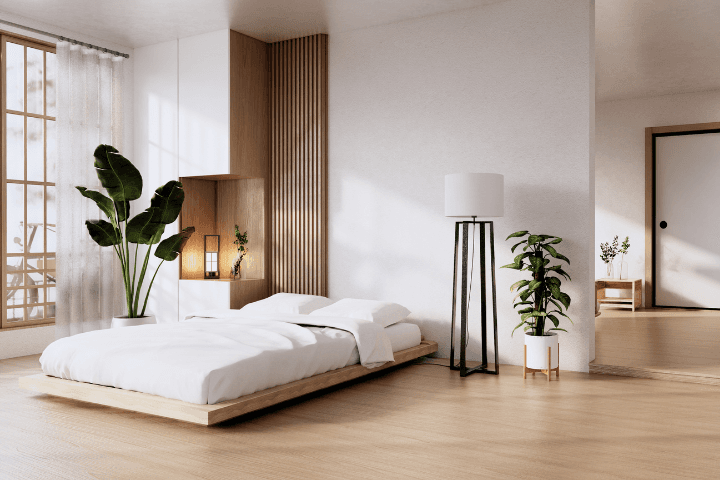
With an utterly wood-filled interior and a design made with vertical slats, the 07Beach firm created a concept that aligns with building an urban house on a restricted piece of land, with no possibility of adding a garden, with little space and skylight windows. As such, they came up with the idea of glazing the bathroom to give their client an open-concept, tree-facing bath, reminiscent of a courtyard.
Get 3 renovation quotes for your home interior design project
RenoQuotes.com can help you get quotes for your home interior design project. By submitting your project, we’ll put you in contact with top-rated contractors. Fill in the form on the homepage (it only takes a few minutes), and you will get estimates from trusted professionals.
Dial 1-844 828-1588 to speak with one of our customer service representatives.
Looking for something else?
Related articles
The latest industry news, interviews, technologies, and resources.
Editorial Team
•08 Nov 2023
Would you like to replace some of your furniture? If you’re looking for practical furniture with original design to reinvent your interior, take a look at the following!
Christine Simard
•10 Jan 2025
There are endless options when choosing a kitchen countertop, but marble is a very sought-after material in the design industry. It’s ever-present on our minds when renovating a kitchen due to its chic, timeless, and versatile appeal. However, some might find its minimalistic look too common, overdone maybe, when designing a new kitchen.
Amanda Harvey
•08 Nov 2023
After living in your home for some time, it’s normal to long for a change. If you’re not looking to make a huge move or take on something complicated, then you should consider smaller renovation projects. There are rooms you spend a lot of time in, and the kitchen is one of them. Specifically, many homeowners grow tired of their kitchen cabinets; the colour, the finish, or both. Luckily, through a process called “refacing,” you can offer your cabinets a second chance without investing in a whole new set.
Editorial Team
•05 Dec 2023
Storage space for some, unfinished room for others, yet thanks to its size the basement is a part of the house brimming with possibilities. Whether you’re ready to invest or get inventive, there is no limit to your comfort. Make your basement transformation a reality without having to quash your creativity.
Editorial Team
•29 Nov 2023
The changing seasons often inspire a sense of renewal in your home. And guess what? The bedroom is almost always the favourite room to overhaul. However, designing said room will largely depend on its dimensions, the size of the furniture, and that of the windows.