Kitchen Cabinet Refacing vs. Replacement: Which Option Should You Choose?
By Cynthia Pigeon
Updated on September 18, 2026
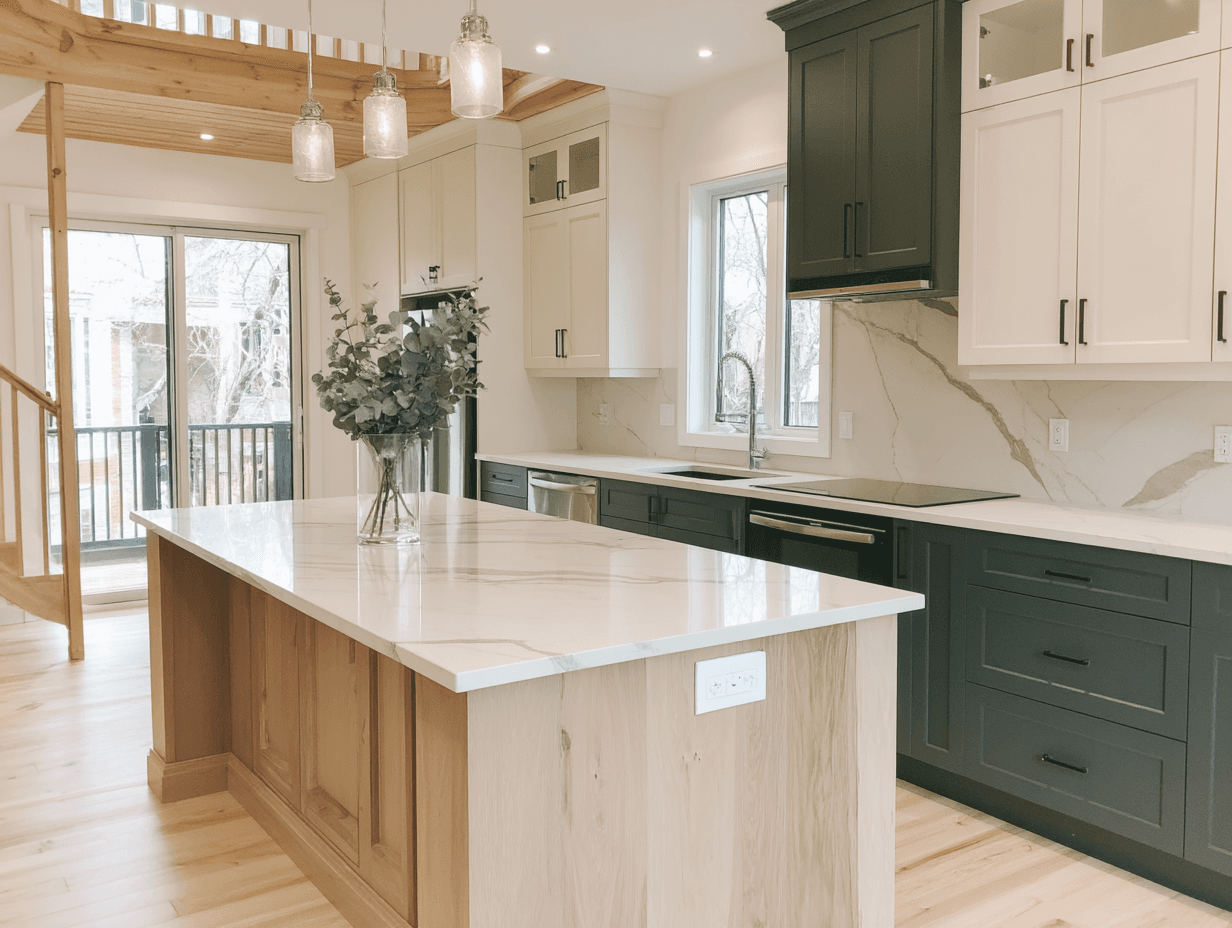
Kitchen cabinet refacing can save you up to 50% compared with a full cabinet replacement. In 2026, homeowners in Quebec can generally expect to pay $5,000 to $9,000 to reface the cabinets in a standard kitchen, compared with approximately $15,000 to $25,000 or more for a complete replacement.
Refacing is particularly worthwhile if your existing cabinet boxes are still structurally sound and you are happy with your kitchen's current layout. A full replacement is usually the better option if you want to change the room's layout or if your cabinets show signs of mould, water damage, or structural deterioration.
Cabinet Refacing vs. Replacement: How Much Does It Cost in Quebec in 2026?
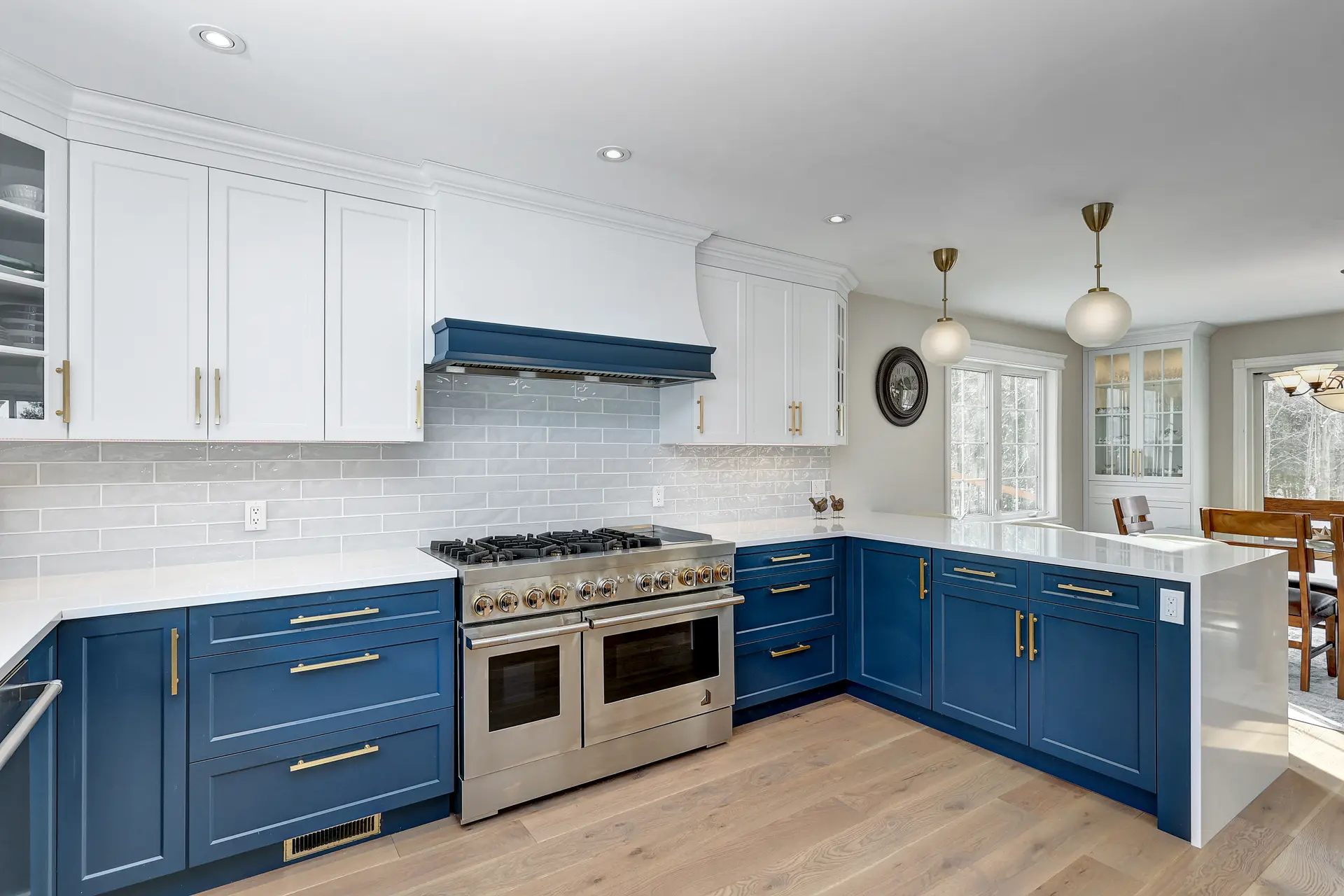
Source: KARHU FINE CABINETRY
The kitchen is often the central gathering space in homes across Canada—a place for family meals, entertaining guests, and daily routines. However, it’s also one of the most expensive areas to renovate. With rising material costs and skilled labour rates across provinces like Ontario, Quebec, British Columbia, and Alberta, many homeowners face the same question: Should you completely replace your cabinets or simply refresh what you already have?
What Is Cabinet Refacing?
Cabinet refacing (also called resurfacing) is a renovation method that updates the look of your kitchen without replacing the cabinet boxes. Instead of removing everything, only the visible components are upgraded.
The process typically includes:
Removal: Old cabinet doors, drawer fronts, and hardware are taken off.
Refinishing: Exposed cabinet surfaces are covered with a veneer (laminate, thermofoil, or real wood).
Installation: New doors, drawer fronts, and modern hardware are installed.
This approach can transform an outdated kitchen into a modern space in just a few days. For best results, it’s important to work with experienced professionals and compare quotes from certified contractors in your area.
Pros and Cons of Cabinet Refacing
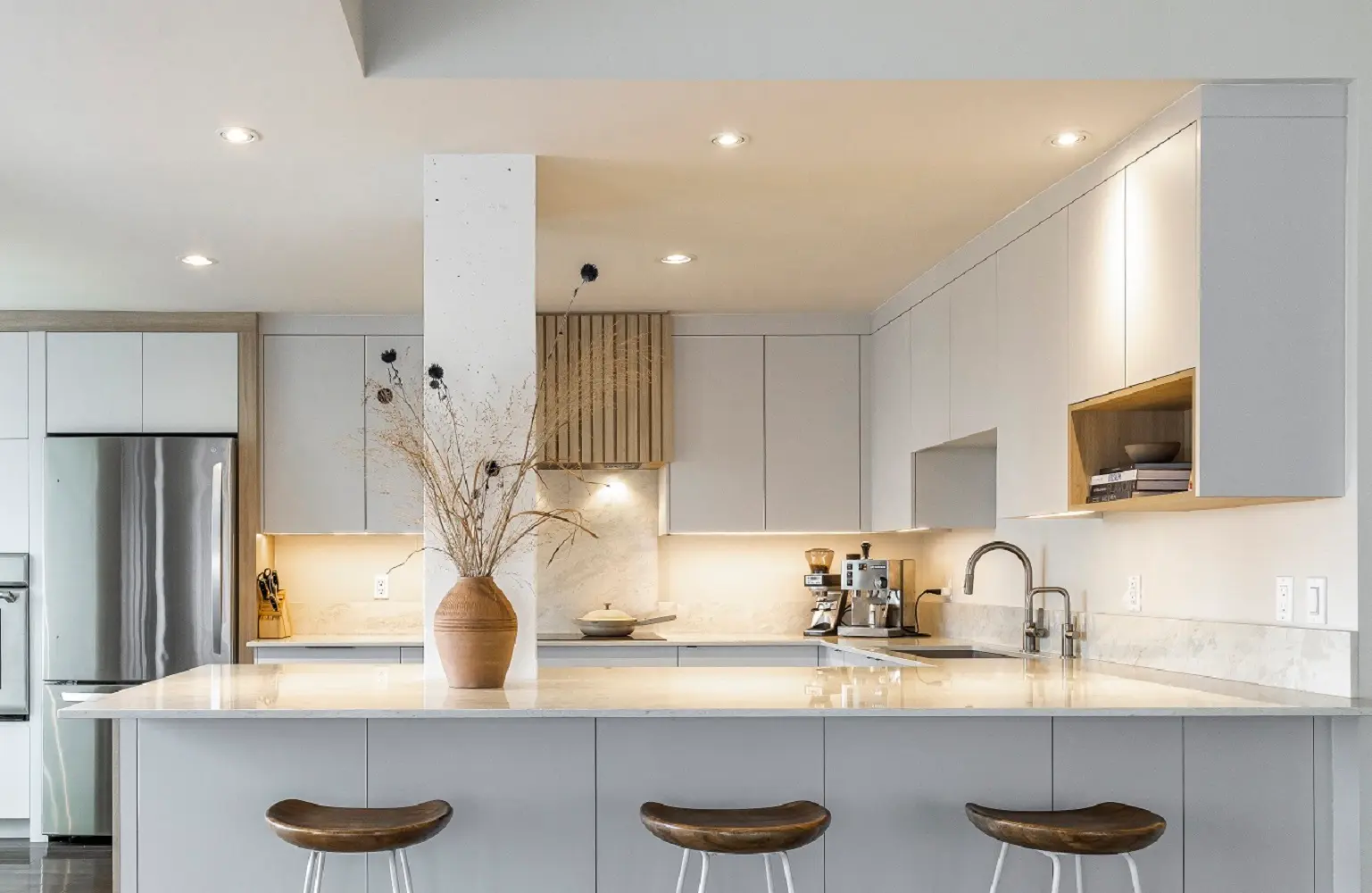
Source: Cuisines Rive-Sud
Like any home renovation project in Canada, cabinet refacing offers significant benefits, but also comes with certain limitations you should understand before signing a contract.
Advantages: Fast and Cost-Effective
Significant savings: No need to rebuild cabinet boxes or perform major demolition.
Quick turnaround: Most refacing projects are completed in just 2 to 5 days, whereas a full replacement can render your kitchen unusable for weeks.
Eco-friendly: Reduces construction waste by reusing existing structures.
Minimal disruption: Less dust, and you can often still use your kitchen during the process.
Limitations: Fixed Layout
No layout changes: You can’t easily move plumbing or add features like an island.
Dependent on cabinet condition: If boxes are damaged or swollen (e.g., from water exposure), refacing is not recommended.
When Is a Full Cabinet Replacement Necessary?
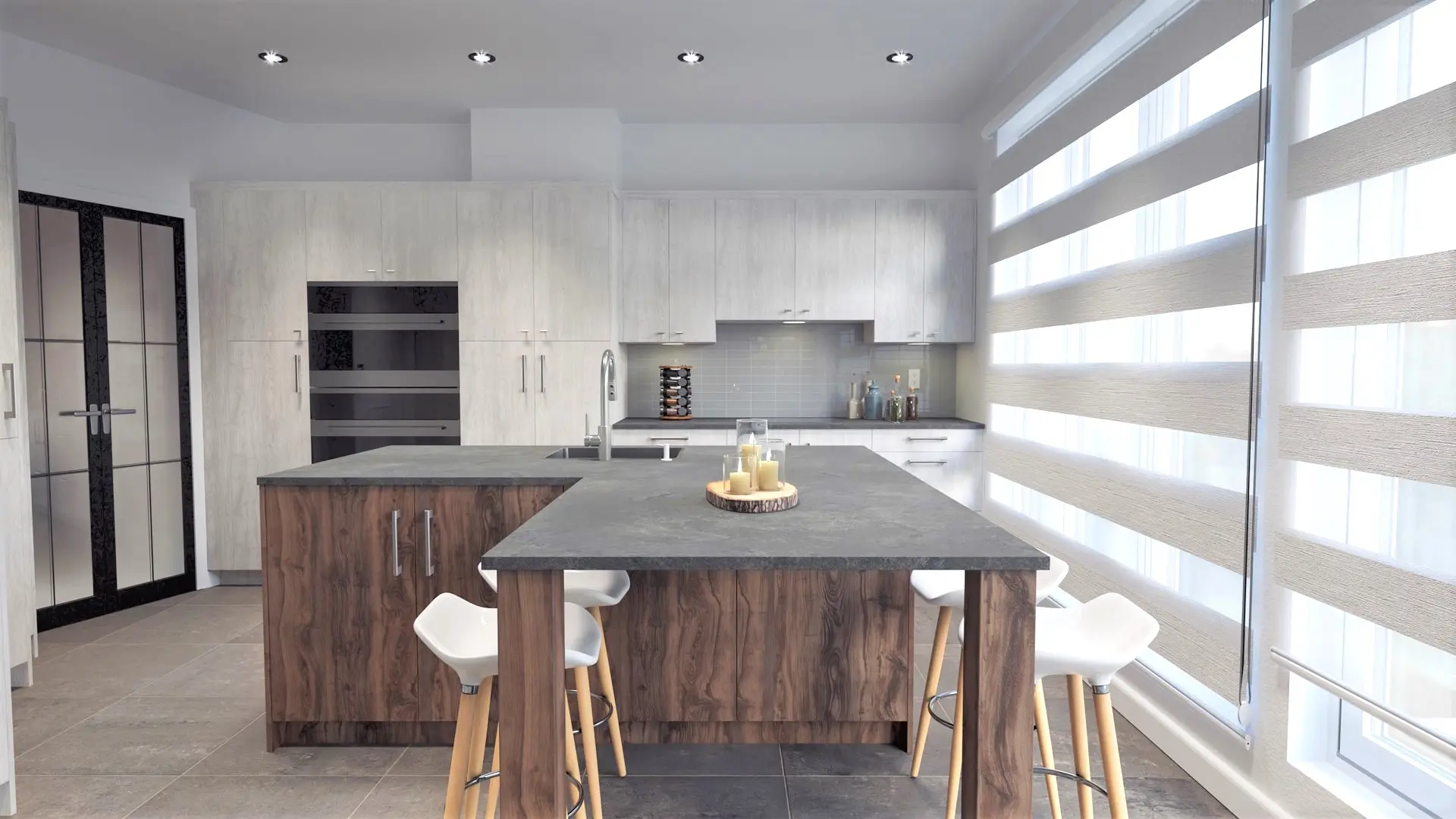
Source: Versa Style Design
While refacing offers clear advantages, certain conditions demand a full replacement to protect—and potentially increase—the long-term resale value of your property.
1. Structural Damage
If your cabinets are warped, deteriorating, or affected by mould, refacing won’t solve the underlying issue.
2. Poor Layout or Functionality
If your current kitchen layout is inefficient—lacking counter space, featuring a poor work triangle, or offering limited accessibility—refacing won’t solve those daily frustrations. A full replacement allows you to redesign the space, incorporate modern pull-out storage, and install a larger, more functional countertop.
3. Major Ground Floor Renovations
If you’re removing walls or creating an open-concept space, new cabinetry will likely be required to match the new layout.
Cost Comparison in Canada: Save 30% to 50%
Budget is often the deciding factor. Across Canada, refacing typically costs significantly less than full replacement.
Element | Refacing (Mid-Range) | Replacement (Mid-Range) |
Average Cost (Standard Kitchen) | $5,000 – $9,000 | $15,000 – $25,000+ |
Labour | Included (2–4 days) | Higher (demolition + installation) |
Materials | Doors, veneer, hardware | Full cabinetry system |
Countertops | Often kept | Usually replaced |
Note: Prices vary depending on materials (laminate vs solid wood) and project complexity.
Labour costs are a major portion of renovation budgets. Since refacing requires fewer work hours, it directly reduces total expenses. If you decide to move forward with a full replacement, be sure to review the average cost of a kitchen renovation in your area to plan your budget effectively.
Project Timeline: A Cleaner Renovation
Source: H Man Reno
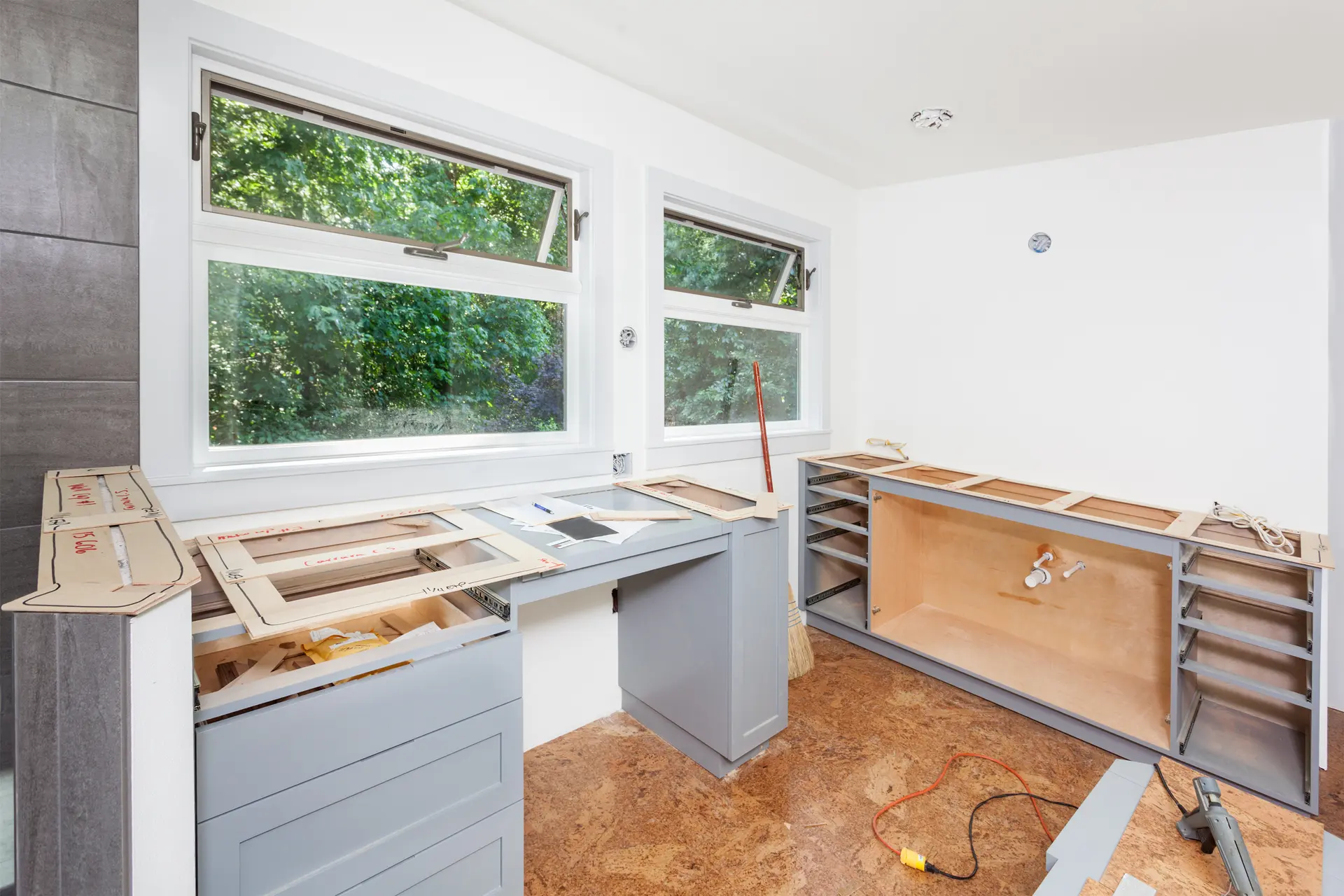
One of the biggest frustrations during renovations is dust and disruption.
Full replacement involves demolition, generating debris and limiting kitchen access for weeks.
Refacing, on the other hand, is much cleaner since components are pre-fabricated and installed with minimal cutting on-site.
For families, this can make a significant difference in day-to-day comfort.
Final Verdict: Which Option Should You Choose?
Source: AJG Architecture
Your decision should be based on a realistic assessment of your kitchen:
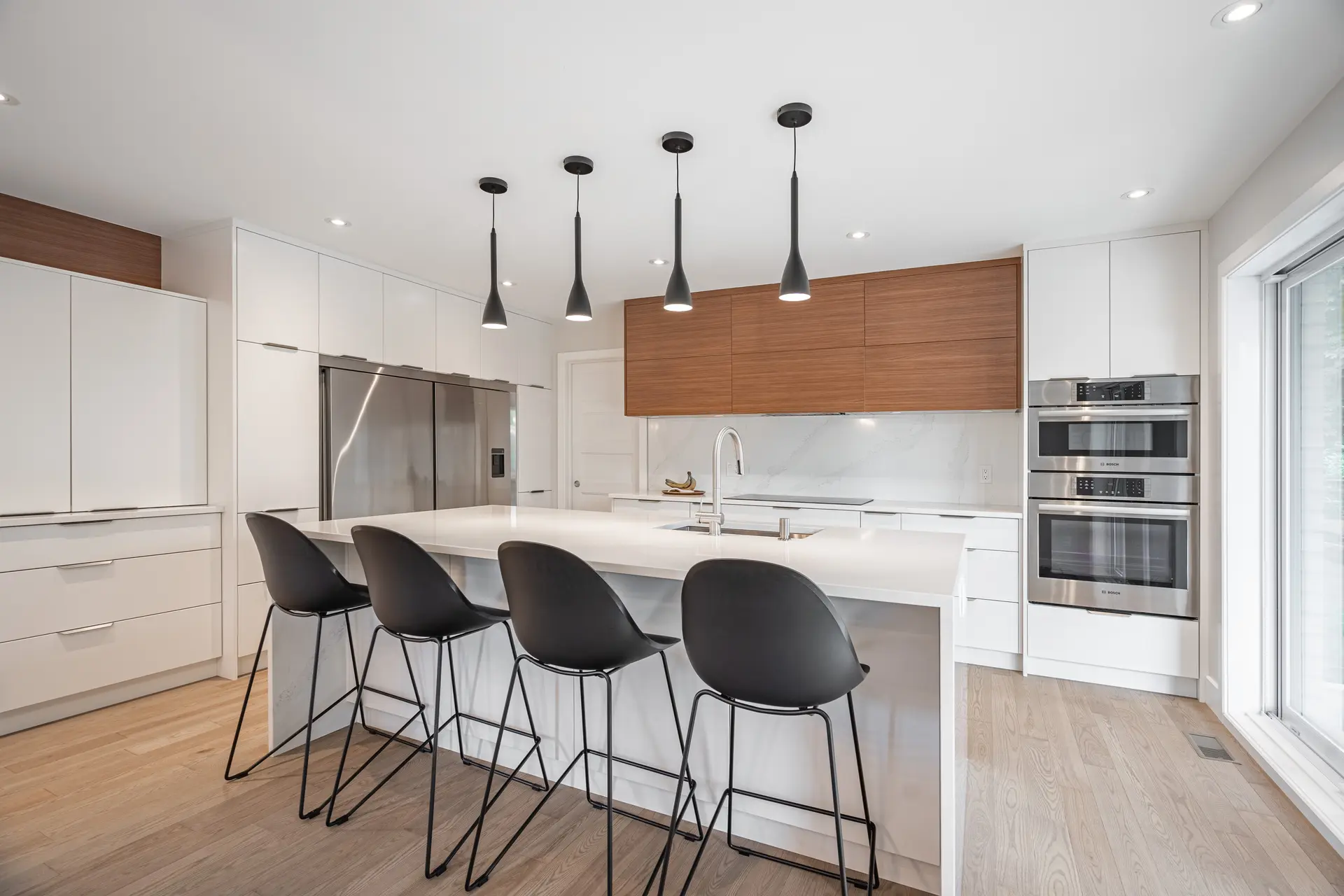
Choose refacing if: Your cabinet boxes are structurally sound, your current layout meets your needs, and you're looking for a high-impact upgrade at a fraction of the cost. It's one of the most effective ways to enhance your kitchen's appeal and maximize your home's resale value before listing.
Choose replacement if: Your cabinets show structural wear or damage, if your current layout no longer functions efficiently, or if you're investing in a long-term renovation and want complete design freedom and lasting value.
Regardless of your choice, always hire qualified and licensed contractors according to your province’s regulations. This is your best protection against poor workmanship. To simplify the process, consider using trusted contractor referral platforms to compare quotes and find professionals suited to your renovation project.
Making the Right Choice for Your Home
Ultimately, choosing between cabinet refacing and full replacement comes down to balancing your budget, current kitchen condition, and long-term goals. Refacing offers a fast, affordable, and environmentally friendly way to modernize your space, while full replacement provides complete flexibility and long-term value.
Take the time to assess your needs, compare options, and consult experienced professionals to ensure your investment enhances both your daily comfort and your home’s overall value.
Looking for something else?
Related articles
The latest industry news, interviews, technologies, and resources.
Editorial Team
•08 Nov 2023
Arriving home at the end of a long day of work will have any homeowner looking for ways to make their life easier. An electric garage door is one of the ways that can simplify life, allowing your car to glide into the garage with the touch of a button. However, as with any form of technology, there is plenty to consider before going forward with this purchase.
Editorial Team
•24 Apr 2026
Looking to change your kitchen countertop but think you can’t afford it? A countertop is a work surface that needs to be both practical and aesthetically pleasing. It is also one of the elements that can be very expensive when renovating a kitchen.
Editorial Team
•08 Nov 2023
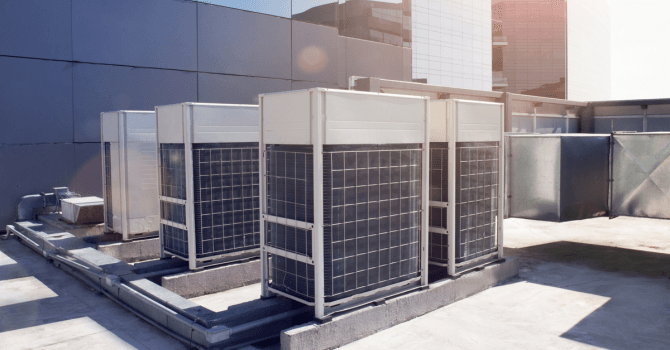
Industrial air conditioners are, contrary to what their names suggest, units that can do more than just air conditioning. A variety of air handling operations are possible, ranging from controlling incoming air pollution, humidity and, in some cases, also acting as a heater.
Cynthia Pigeon
•16 Apr 2026
To ensure safe aging in place in Canada in 2026, a home should follow widely recognized VisitAble (or VisitAbility) accessibility guidelines. These include a step-free entrance (threshold under 13 mm), doorways with a clear width of about 800 mm, and a main-floor bathroom with a turning radius of approximately 1,500 mm. While these are best-practice recommendations—not mandatory national standards—they significantly improve safety and mobility.

Editorial Team
•08 Nov 2023
Your home is important, providing a place to nest, offering shelter to loved ones and giving you a space to rest your head. Of course, to make sure your house is in good working order, you need to keep everything in good shape while working with the best materials.