Everything to Know About MIG/MAG Welding
By Editorial Team
Updated on August 1, 2024
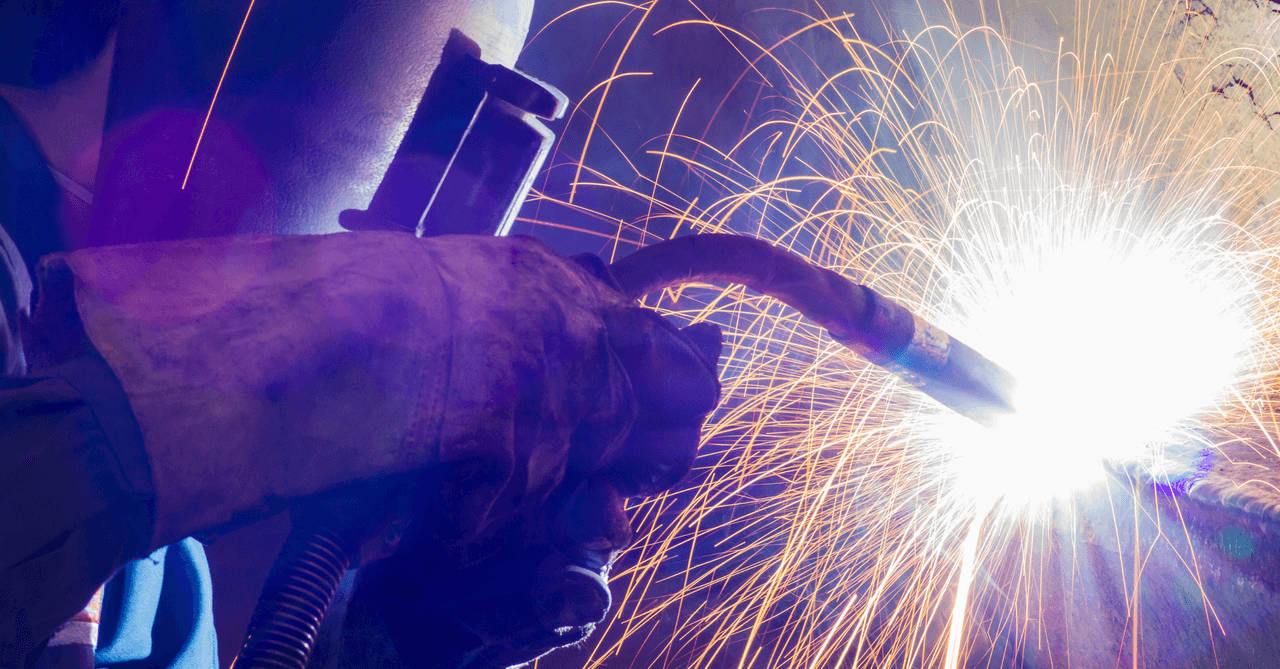
MIG/MAG welding is a widely used welding technique in various industries. In this article, we will delve into the details of this welding process and explore why MIG/MAG welding is such a popular method.
MIG/MAG, also known as Gas Metal Arc (GMAW) Welding
Source: Canva
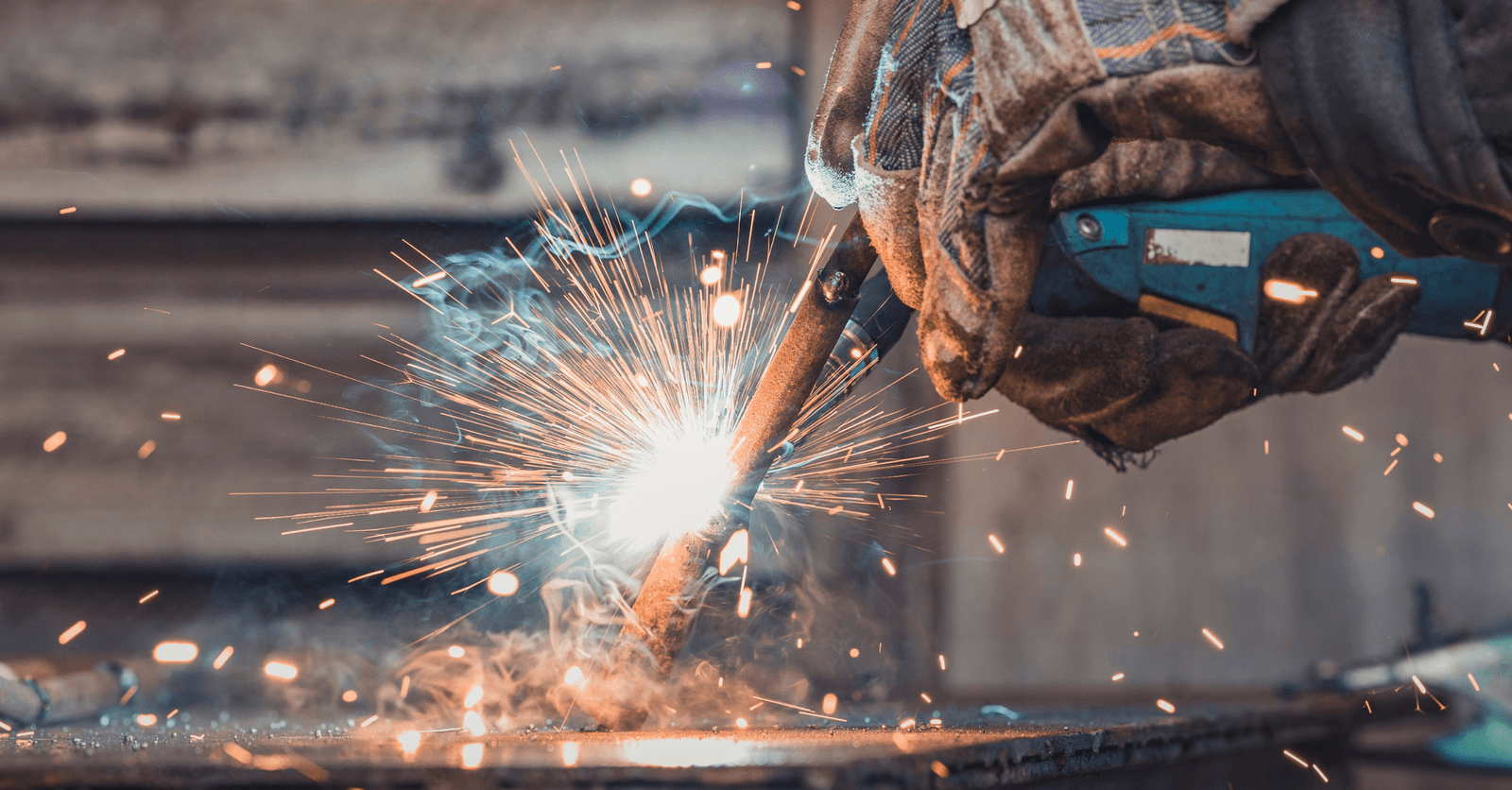
MIG/MAG welding is a type of arc welding that’s also known as GMAW, which stands for Gas Metal Arc Welding. It’s basically a process in which an electric arc is produced between a metal welding wire fed through a torch to a welding piece.
The electric power strategically melts both the piece of metal and the tip of the welding wire, creating a molten pool. To ensure the quality of the weld, a gas supply is used to shield the electrical arc from any airborne contaminants (oxygen, nitrogen, and moisture) present at the worksite.
What's the Difference? MIG vs MAG
Two gases are used:
Inert gas for MIG (Metal Inert Gas)
Active gas for MAG (Metal Active Gas)
MIG welding is suitable for fusing delicate materials like aluminum or alloys that are sensitive to oxygen and nitrogen. MIG welding employs inert gases such as argon, which is a mixture of argon and helium.
As for MAG welding, this method employs oxidants found on the surface of molten pools. The oxidation process is done through the presence of oxygen or carbon dioxide. However, these gases aren’t used in their pure state but mixed with shielding gases. They're active gases.
How Does MIG/MAG Welding Work?
MIG/MAG welding has three different metal transfer methods. This type of welding uses the following modes:
Short Circuit (GMAW-S): Direct contact between the welding wire and the molten pool;
Pulsed MIG: A droplet forms with each peak of the electrical output;
Axial Spray: Includes globular transfer (glob by glob), axial spraying (spattering), and a combo of the two.
Furthermore, there are four types of welds classified according to their position:
Flat weld
Horizontal weld
Vertical weld
Overhead weld
Different gas mixtures are available depending on the welding mode used, the type of weld being made, and the materials being worked on. They’re mostly made of argon, which benefits from being denser than air. Therefore, it can shield the molten pool better than helium since the latter is lighter than air.
Adding oxygen (O2) or carbon dioxide (CO2) to argon basically yields the same result:
Stabilizes the electric arc.
Improves the look of the weld.
The benefit of oxygen and carbon dioxide is that they don’t need as much force to be expelled from the torch as helium since they’re much denser than air.
As for helium, it has a better thermal conductivity compared to argon. Therefore, it ensures better uniformity with the electric arc.
The Machine: The MIG/MAG Welder
Source: Canva
A MIG/MAG welding machine houses a transformer that adjusts a high voltage (575 V or 220 V) to a low amperage (20 to 50 amps) and a low voltage (16 V to 40V) to a high amperage (80 to 500 amps).
Aside from the transformer’s purpose, a MIG/MAG welding machine also includes a current rectifier, which converts alternating current (AC) into direct current (DC). Why? To ensure the welding arc is stable and reaches the very high heat required for welding.
Polarity is also inverted during this welding process.
To adjust a welding machine’s current output, the welder can use either of these settings:
Amperage
Voltage
The welding machine’s current output can be set by adjusting the welding wire feed speed, while the voltage can be adjusted directly on the machine. Changes in voltage will directly impact the length of the electrical arc.
Some MIG/MAG welding machines also have a slope and inductance setting. The inductance is what controls the speed at which the current reaches amperage and voltage parameters set by the welder.
MIG/MAG welding machines that lack a slope control feature come preset from the factory at 2 volts for 100 amps. However, increasing the slope allows for better control over low amperage in a short circuit mode. This mode is essential for two reasons:
It won’t cut through thin material.
It reduces spattering when starting the arc.
Regarding inductance, it serves to prevent overheating or electrode explosions. In certain modes, such as axial spray transfer, it’s essential to have, low inductance settings to ensure proper and controlled metal transfer.
Can You MIG Weld with a MAG Welder or Vice Versa?
Yes, MIG (Metal Inert Gas) and MAG (Metal Active Gas) welding use the same welder. The difference lies in the type of shielding gas used, not the machine itself.
Pros and Cons
Source: Canva
The MIG/MAG welding process has eight advantages:
It allows for welding in various positions, including underwater, using submerged arc welding (SAW).
Has a continuous electrode wire feed.
No length restrictions for electrode wire.
Suitable for welding all metals and alloys retailed in stores;
Lack of slag;
High metal deposition rate, higher than those of SMAW (shielded metal arc welding).
The welding speed is very fast, also related to deposition rates.
Deep welding penetration can be achieved using axial spray mode.
However, this welding process also has a few downsides:
The equipment can be complex to set up and relatively expensive.
The system is very vulnerable to drafts that disrupt the shielding gas.
Generates intense heat and a powerful electric arc.
Want to learn more about other types of welding? Check out these articles:
Get 3 quotes for your renovation project
RenoQuotes.com can help you get quotes from a general contractor. By submitting your project, we’ll put you in contact with top-rated contractors. Fill in the form on the homepage (it only takes a few minutes) and get estimates from trusted professionals.
Dial 1-844 828-1588 to speak with one of our customer service representatives.
Looking for something else?
Related articles
The latest industry news, interviews, technologies, and resources.

Editorial Team
•29 Jan 2024
Are you looking for a beautiful sunroom to fully benefit, book in hand, from the summer? Given that it’s a significant investment, it’s definitely not a decision to be made lightly. So, without further ado, here are the different options available to you in the hopes you make the right decision.
Editorial Team
•05 Nov 2024
For many, one of the most challenging aspects of a home improvement project is finding the right contractor to carry out the job. Avoid making a deal with the first available Joe with the sole purpose of saving both money and time, given that it could lead to problems down the line. If you’re wondering how to hire the right person, you’ve come to the right place!
Editorial Team
•13 Aug 2025
Plenty of industries and various fields are adapting and evolving by introducing new technologies to their production procedures. Even in the construction sector, we’ve been noticing the rise of 2.0 methods, such as virtual or augmented reality, as well as robots working their way around construction sites.

Editorial Team
•25 Aug 2025
By definition, a construction contract notice and legal hypothec, also known as a construction lien or construction mortgage, are legal actions taken by individuals contributing in different capacities to the construction of a building to secure amounts owed for work completed, materials supplied, or services rendered during the course of said construction project.

Editorial Team
•08 Nov 2023
Your home is important, providing a place to nest, offering shelter to loved ones and giving you a space to rest your head. Of course, to make sure your house is in good working order, you need to keep everything in good shape while working with the best materials.