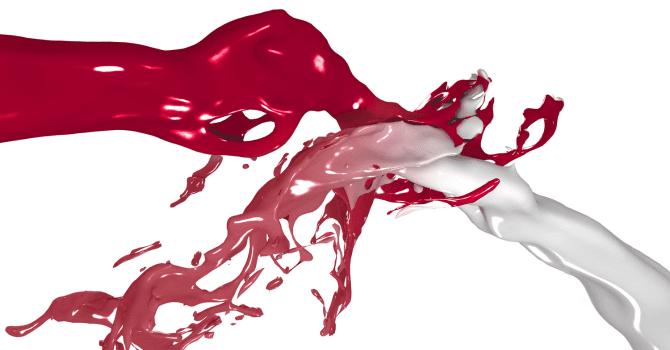
Are you looking to restore an antique piece of furniture or give a rustic spin to a modern-day piece? Is your farmhouse-inspired décor in need of a little facelift or are you simply looking for an eco-friendly alternative to traditional paints? Milk paint may end up being just the thing that both meets your needs and spruces your DIY projects!
What’s milk paint?
Source: Canva
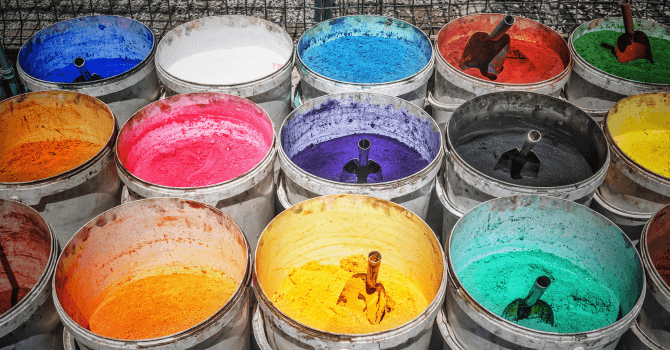
Milk paint is sold in coloured powder format to which you simply need to add the required amount of water to obtain the desired result.
This product will do it for all wood-finish lovers. You can dilute it at will, meaning to obtain the following:
thick paste for added texture;
normal paint-like consistency;
colour wash-like look;
clear stain finish.
In any case, you’ll get a matte, eggshell, or chalk-like finish, maybe even a cracked, weathered look if the right technique is used.
Since this paint is crafted from natural ingredients, it’s not too far-fetched to suggest that it can be made using a DIY approach. Besides, it’s named after its primary component, a protein found in milk called “casein.” So, if you have skimmed milk, and a head full of ideas, follow along with the recipe instructions detailed at the bottom of this article! When retailed in-store, the other components are borax, a type of clay known as “kaolinite,” limestone in lime form, mineral pigments, as well as calcium carbonate.
Characteristics and Benefits of Powdered Milk Paint
Source: Canva
Main characteristic:
Unlimited shelf life when in powder form and can be stored in the fridge for 2 weeks after being mixed with water
Possibility of creating your own colours by adding separately purchased pigments
Ideal to restore antique furniture and woodwork, can also be used to paint walls and cabinets
Control over the desired finish with the possibility of creating varying effects (antique, cracked, matte, stained, gloss, weathered, brush-stroked, patina, etc.)
Made for primer-free use on porous surfaces (wood, gypsum, terracotta, cardboard, etc.)
Can be applied to all materials as long as the surfaces have been sanded and an acrylic-based binder is added (glass, melamine, enamel, metal, oil, ceramic, plastic, etc.)
Also made for outdoor use
To obtain a washable, glossy, and protected surface, top it with a finishing coat (beeswax, hemp oil, or tung oil)
Can’t be stripped, has to be sanded
Significant benefits:
Doesn’t have a potent smell
Doesn’t chip or peel (unless done purposefully!)
Lasts decades
Eco-friendly, VOC-free, non-toxic, 100% organic, biodegradable
Kid- and pet-friendly
Cost-effective (about $20 = 1 litre = 60 sq.ft.)
Ideal for DIY enthusiasts or work-shy individuals
How do you apply milk-based paint?

Source: Canva
First of all, note that milk paint can be used as conventional paint or as a semi-clear wood stain. Ultimately, the consistency depends on the amount of water added to the powder mix.
Homestead House Paint: User Guidelines
This is the only Canadian brand—made in Ontario—and it’s been around since the beginning of the 80s. Its manufacturing process hasn’t changed over the years, and natural pigments are still used (coal, soil, berries, etc.).
User guidelines:
Add 1 part lukewarm water, ideally boiled and cooled to eliminate bacteria, to 1 part paint powder.
Mix vigorously in a clear glass container with a stick.
Close the lid and set the mixture aside for 10 minutes.
Shake and wait 5 minutes, then repeat 2-3 times to properly mix the colour and prevent any lime deposits.
If needed, use a mixer or a paint filter to remove any lumps to obtain a creamy consistency.
Test on a sample and fine-tune as needed, to suit your purpose, prior to mixing again (add more powder if the paint is too liquid or water if too thick).
When applying, lightly mix with your paintbrush or roller to disperse the pigments resting at the bottom of the container.
Apply 2 to 3 coats to obtain the desired result and allow for 30 minutes or so of drying time between each coat.
Use indoors, albeit it isn’t mandatory, and coat in a hemp oil or beeswax finish. For outdoor use, you can use a tung oil finish or swap ¼ of the water for said oil during the initial mix. For a less eco-friendly, yet maintenance-free finish, consider a polyurethane sealer or varnish.
Milk Paint Stain
Add more water to the powder mixture to obtain a stain-like finish. Before applying, it’s best to run a damp rag over the piece, allow it to dry, then sand the surface with the wood grain. Protect the stained surface with wax or oil.
Basic Method for an Antique Finish on Wood
For a surface like a standard-sized kitchen table.
Follow the same steps but:
Sand the surface with 120-grit paper.
Mix 1L of lukewarm water with 100g of walnut stain (crystallized wood stain to obtain various walnut hues).
Spread a coat of the mixture onto your surface.
Allow to dry and apply a neutral-coloured vegetable paste wax made with Carnauba wax in areas where you want the colour of the wood to show through the paint.
If your goal is to create little cracks, apply gum arabic or fish glue to the surface before spreading the paint onto this sticky texture (wet the gum or glue if it’s too dry).
Apply a first coat of white milk paint.
Allow to dry and reapply wax to areas where you want the colour of the wood or white to show through.
Now apply paint in the colour of your choosing.
Flake the paint where you previously applied wax with 100-grit sandpaper.
(Optional) Sand the entire surface with 220-grit paper prior to applying a coloured wax.
Methods for Surfaces Other Than Bare Wood
Follow the same steps but:
Lightly sand the surface with 120-grit paper.
Clean with a popular degreaser like TSP.
Add ⅓ part bonding agent to your milk paint mix.
DIY Milk Paint Recipe
Warm up skimmed milk (1 litre for every 60 square feet or so) with 30ml of white vinegar on low heat for 5 minutes. The milk will curdle, like when making buttermilk.
Slowly pour into a bowl so that the yellowish milk drains, and filter the rest with a cheesecloth or coffee filter. Allow to drain overnight or for at least 6 hours. You’ll get about 300g of curdled substance in your filter.
Dissolve a pinch of borax (antibacterial that renders casein water-soluble) in 30ml of water. Add to curdled substance and stir. The result should look like thick and creamy yogurt. Should that not be the case, add a bit of water.
In another bowl, mix 250ml of water with 300g of Meudon white (a whiting powder made with crushed chalk), then add to the previously mentioned mixture.
To add colour, use gouache, eco-friendly dyes, watered-down soil, or store-bought pigments. Add an acrylic binder or methylcellulose solution so the paint better adheres to the surface in question. To prevent a soured milk smell while applying the paint, you can add a few drops of pine- or lemon-scented essential oils; the smell won’t linger on your furniture after the paint has cured.
Looking for something else?
Related articles
The latest industry news, interviews, technologies, and resources.

Editorial Team
•22 Dec 2023
When it comes to choosing paint colours for a workspace, it pretty much bears the same weight as furniture, lighting, storage, and tech devices.

Editorial Team
•27 Sep 2024
If you own a cottage and go there several times per year or per season, you may be considering taking on some renovations. Even if it was recently built, it’s never unnecessary or too late to add value to your property.

Équipe éditoriale
•24 Sep 2024
Do you appreciate old houses and their unique charm? If you're about to buy one or renovate the one you're currently living in, here are some ideas to inspire you!

Editorial Team
•07 Aug 2025
Bringing to fruition an entrepreneurial endeavour doesn’t solely contribute to the province’s employment rate, it's an accomplishment that rewarding on both professional and personal levels. This is all the more true if you’re operating in the construction industry, an all-important sector in Quebec’s economy, encompassing numerous professionals and trade groups.

Cynthia Pigeon
•02 Aug 2024
While traditional roof coatings are still highly sought after, it's important to recognize some of the newer materials hitting the market. These latest options, which feature new technologies, are worth considering, and amongst them are plastic roofing panels.