How to Mitigate the Effects of Plastic Use in the Construction Industry
By Editorial Team
Updated on May 11, 2026

Plastic is a hugely exploited building material since it’s durable, waterproof, supple, and lightweight. However, just like its many other daily uses, it definitely has a bad reputation. Subsequently, several companies are looking to take major steps to reduce its harmful effect on the environment.
Though still far from the ideal outcome, governments and scientists are studying methods to improve the conception of plastic materials. As such, they’re establishing certain rules to help reduce biodiversity damage, curb plastics polluting the oceans, minimize waste when recycling, and so on. Single-use plastics are predominantly targeted by such initiatives giving value to renewable and reusable materials.
As a construction contractor, on what level can you tackle this problem to make your worksites more eco-friendly?
Plastic Use in the Construction Industry
Source: Canva
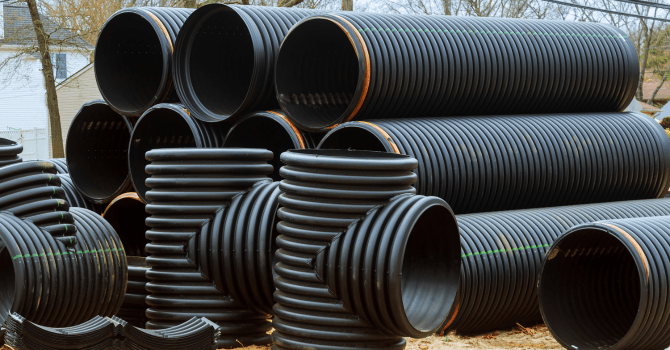
Without delving too deep into the scientific details of it all, plastic is a high-molecular compound that’s derived from petroleum, natural gasses, or plants. It can be grouped into two main categories: single-use or reusable.
In Canada, the construction industry is a major consumer of all types of plastics since it’s a versatile and affordable product. It’s lightweight and malleable, making its transportation and installation easy. Waterproof, corrosion- and rot-resistant, these definitely slow down its deterioration process. Also, its numerous qualities as well as the substantial savings made are presented as non-negotiables for contractors.
However, waste derived from its various uses is, unfortunately, generated throughout its entire process: from manufacturing to demolition, by way of transportation and construction itself. Moreover, some materials are rather difficult to recycle, such as PVC and flame retardant products.
Nonetheless, note that it’s mandatory, for safety measures in some cases, that some materials aren’t decomposable or too “green.” Their use isn’t hazardous to the environment, it’s the complete opposite. For example, who would want the polystyrene blocks fitted to the new Champlain Bridge to be biodegradable? On a more serious note, the product’s durability allows for a near-permanent installation, such as pipes, which reduces waste pollution.
The Most-Used Plastics in the Renovation and Construction Industry

Source: Canva
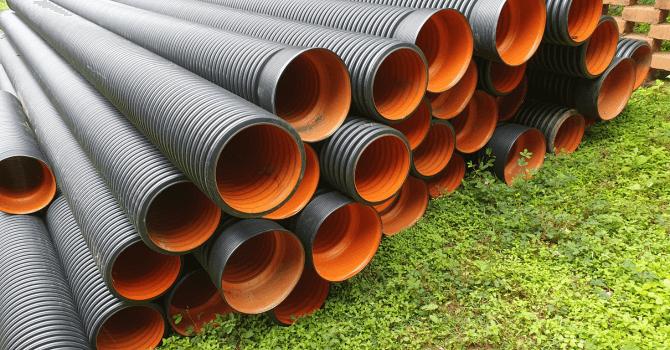
The types of plastics most used in construction are as follows:
Polyvinyl chloride (PVC)
High-density polyethylene (HDPE)
Expanded polystyrene (EPS)
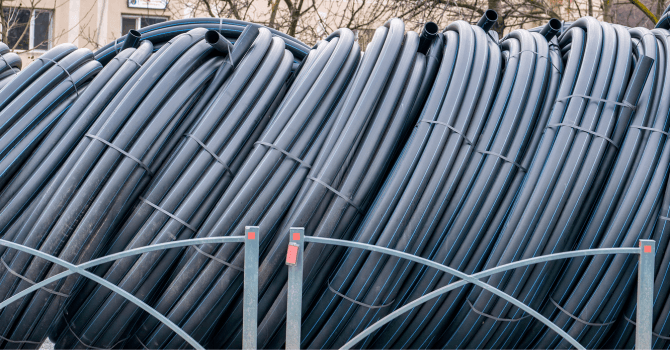
There's no way to accurately list the many uses of this popular material in terms of building and renovation work, but here are a few: wiring, piping, joints, doors and windows, insulation, paints, tanks, mouldings and formwork, road signs, filtration, flooring and exterior cladding, etc. Nowadays, wood, glass, and metal are even being swapped for plastic.
Ways to Limit Plastic Use on Worksites
Source: Canva
The biggest challenges remain sorting, reusing, and recycling end-of-life plastics. That's why it's important to embrace good, sustainable, and eco-friendly practices from the get-go. Not only is the planet's health at stake but also your company's reputation.
If you're looking to move conscientiously away from the overuse of plastic products, you'll first need to formulate an action plan. For this, you'll need to evaluate the set of measures that are most effective and realistic for you.
Focusing solely on biodegradable, bioplastic, and composite products, though it might seem like the most logical and obvious solution, isn't your only option. You have to think globally, on a multi-level, eco-friendly approach, not only in terms of material components and use. Recycling construction waste and developing a circular economy is more profitable long term.
A well-thought-out strategy takes into account both advantages and disadvantages of using plastic for such and such. Hence, consider the possibility of swapping it out by weighing its effects, from start to finish (raw material extraction, manufacturing, transportation, function, safety, recycling, disposal, etc.).
As such, it’s best to start by implementing simple and easy-to-control actions. You can educate and/or raise awareness among your employees by urging them to bring reusable drinkware and tumblers, properly dispose of their waste, even if they're in a rush, and so on. You can also take it one step further by giving out reusable bottles with the company’s logo on them and having a water refilling station. Lead by example: purchase cleaning products in bulk and ban the use of single-use plastic like straws and utensils during meetings and gatherings.
Follow the 3Rs and beyond:
Reduce
Reuse
Recycle (or compost)
Value energy recovery
Responsible waste disposal
Goals Targeted by Limited Plastic Use
Source: Canva
The expected results consist of improving waste collection, reusing, and recycling plastic waste issued from building industry ventures.
You can save by using less expensive, recycled building materials to keep them out of landfills. The entire life cycle of plastics demands change. Solutions must be thought out in terms of economic needs and capacities and should include the province's unique climate conditions.
Check out the following for more concrete details.
Examples of recycled materials used on building sites
1) Polystyvert, Pyrowave, Polyform, and Groupe Gagnon: Quebec-based companies striving to give a new meaning to polystyrene, a material widely used in the construction industry.
2) A German developer and builder saved 1,613 tons of concrete and 136 tons of CO2 emissions by using recycled plastic to build a residential high-rise. In due part to a patented void-former system, the steel-reinforced air bubbles replaced 35% of the reinforced concrete that would normally have been used for the slabs.
3) A company in the United Kingdom collaborated with clients and suppliers to reduce single-use plastics. One of the collaborators was able to save, what would add up to 40 tons of plastic waste a year among other things, by limiting the use of hazardous packaging. Employees were also provided reusable shoe covers and a closed-loop system for protective plastic sheeting.
4) During a commercial construction project in London, contractor Multiplex swapped out plastic mastic tubes for foil mastic tubes. This initiative led to saving 9,290 single-use tubes as well as reducing the volume of waste that would normally be generated from such a project by 96%.
How can I dispose of construction and demolition waste?
Whether you outsource waste management to a recycling company or do it yourself, there are plenty of options available to minimize your ecological footprint.
Here are a few topics to be discussed as far as “green managing” your waste and construction worksite:
Sustainable designs;
Bio-based materials;
Ecological designs;
Converting existing buildings;
Advanced framing;
Redirecting construction, renovation, and demolition waste to appropriate resources and ecocentres.
To learn more about sustainable development and demolition waste, you can:
Join CPEG (Quebec Business Council on the Environment), which supplies a lot of information, has several committees, and more.
Check out the RECYC-QUÉBEC website, which details what one should do with all types of waste and offers relevant information for companies.
Consult the Ecohome website to know how to divert waste and reduce GHGs.
Look over carbon material databases and inventories to review the carbon levels present in various forms of plastics.
Looking for something else?
Related articles
The latest industry news, interviews, technologies, and resources.
Editorial Team
•18 Dec 2024
The Government of Quebec initiated its energy transition in the last few years, encouraging consumers to pivot toward green energy solutions. Green projects are focused on clean energy, also highlighting transportation electrification. To promote new construction projects in an effort to keep up with the trend, subsidies and financial assistance have been made available.

Editorial Team
•26 Aug 2025
It’s not much of a secret that the construction industry is facing a labour shortage, as many companies report a lack of labour although faced with growing demands. With the industry itself booming in sectors such as residential housing, commercial properties, and public work projects, the workforce necessary to take on these projects isn’t readily available. So, what effect will the labour shortage have?

Editorial Team
•12 Aug 2025
Delve into a world of modern designs with a house that aligns functionality with aesthetics. Modern architecture, characterized by its clean lines and brightly lit spaces, is the ideal living space. Whether you’re a fan of a Scandinavian-inspired style or single- or two-story homes, learn how to put everything together to suit your aesthetic to perfection. There’s a world of possibilities out there for you to design your very own modern haven.

Paul Riopel
•17 Mar 2026
So, you're considering getting an in-ground pool? That's a refreshing idea that is sure to delight the entire family for years to come!

Cynthia Pigeon
•07 May 2026
Building a pool house in Canada usually requires a building permit and strict compliance with local setback rules. These setbacks vary by municipality, but they often determine how close your structure can be to property lines, fences, neighbouring buildings and easements. Any electrical or plumbing work should be completed by qualified, licensed trades in accordance with provincial regulations. Your pool house must also respect local pool safety requirements to ensure it does not create unsafe or unsupervised access to the swimming area.