Moisture and Organic Materials: A Breeding Ground for Mould
By Editorial Team
Updated on November 8, 2023
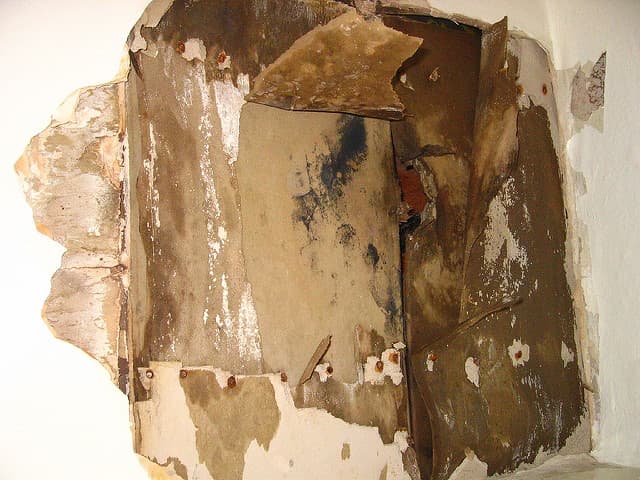
Organic materials such as wood, drywall boards, and dust combined with water or moisture for more than 48 hours become favourable environments for mould growth.
Having a good ventilation system can clear moisture, but as soon as mould takes hold, it is then subject to rapid proliferation.
According to Health Canada, moulds are fungi that are present in nature, yet invisible to the naked eye. Carriers include and are not limited to humans, pets, and even air drafts. Organic matter and water trigger mould growth, and once it develops significantly, mould can cause severe health problems.
How to Recognize the Presence of Mould
In damp or poorly ventilated areas in your home, you will most likely find mould growth. Mould can be recognized by its pale green or black spots and leaves behind fluffy or powder-like residue on walls, ceilings, carpets, around window sills, and in closets. Mould gives off a musty or wet, earthy smell. However, the presence of mould may not be apparent because of water seepage. Should you notice dark rings, buckles, or chips on anything, it may be that mould is concealed behind it. On the backside of materials like wallpaper, mould can take the form of filaments.
When mould is present, you must inspect your home; find out where the moisture could be coming from. Carry out minor repairs or maintenance work to fix leaks or in the event of a major problem, have a licensed contractor perform the necessary repairs. Check to see if the repairs have corrected the issue. Avoid applying a layer of paint over a mouldy spot, it will only mask the problem and will not prevent mould from spreading.
Once the presence of mould is confirmed, it is best to get rid of any porous materials like drywall, ceiling tiles, fabrics, books, papers, and cardboard, as opposed to attempting to clean them. You may have to get rid of carpets, furniture, mattresses, pillows, stuffed toys, or bedding. On the other hand, non-porous or semi-porous materials such as metal, glass, rigid plastics, and concrete can be cleaned and kept as long as their structure is not contaminated.
In the event of a mould problem, it is recommended to adopt strategies to prevent excess moisture inside your home. The solution is quite simple: proceed with a thorough clean-up. Regular maintenance coupled with a thorough and complete inspection of all parts and recesses of your home once a year is sure to keep mould at bay.
To rid your home of any invasive mould, why not carry out a full, annual inspection of the exterior of your home? Make sure that the roof, siding, attic, gutters, joint seals, and drainage system are all in good, working order.
Would you lie to know more about the cost of a potential decontamination project? Read our article The Average Cost of a Decontamination Project.
What Are the Effects of Mould on Your Health?
According to Health Canada, the symptoms associated with mould exposure vary from one person to the next and may depend on the other contaminants present in the home.
Symptoms include eye, nose, and throat irritation; nasal discharge, sinus congestion, and symptoms similar to that of the common cold; wheezing and coughing. Also, increased frequency and severity of asthma attacks; chronic fatigue and headaches.

Photo: NIAID
People at risk of developing health problems following mould exposure are those suffering from allergies, asthma, and/or chronic respiratory problems. Babies, young children, the elderly, and those with a weakened immune system are also at risk.
Other types of contaminants are cigarette smoke, dust mites, volatile organic compounds, allergens, and airborne particles from heating or cooking.
How to Clean Contaminated Surfaces?
According to the Canadian Centre for Occupational Health and Safety (CCOHS), cleaning methods vary depending on the extent and severity of the damage. For large-scale sanitation projects, contaminated areas of 3 metres or larger than 100 square feet, you must contact a certified professional. For heating, ventilation, and air conditioning system (HVAC) contamination, it is best to refer to a professional as well.
As a general rule, small and medium-sized surfaces can be cleaned with soap or detergent, to avoid the production of dust. When vacuuming, use a high-frequency filter for air particles (HEPA). If mould seems to reappear once the area has been cleaned, you need to call in a certified professional.
Your land is contaminated? Our article Land Decontamination Project will give you some information about the step to follow.

To clean small-surface areas that are less than 1 square meter or 10 square feet, use an N95 disposable respirator mask, gloves, and goggles. After preparing the surface to be cleaned, pour or spray diluted soap or detergent, or use a damp rag and sodium bicarbonate. Avoid using soaked-through rags on drywall.
To clean medium-sized surfaces, repeat the safety precautions above-mentioned. However, make sure that nobody else is present in the work area. Cover floors, ventilation ducts, and any other opening with plastic covers. You may need to shut off the AC unit to properly seal the ducts. Before cleaning, run a soaked rag over the surfaces to remove any dust. Clean the surface with water and soap or detergent. Once cleaned, the surface should be dry and free of contaminants.
Additional Precautions
It is not recommended to use chemical disinfectants when decontaminating surfaces since these chemicals can present a health hazard. Also, avoid using bleach.
Should you be able to use a vacuum cleaner, it is preferable to use a central vacuum system that exhausts air outdoors or one fitted with a very high-efficiency HEPA filter. It is highly recommended to seal contaminated materials in disposal bags before discarding them.
Get 3 quotes for mould decontamination
RenoQuotes.com can help you get quotes for mould that needs to be cleaned. If you submit your project to us, we’ll put you in contact with the most suitable contractors for you. Fill in the form on our homepage (only a few minutes), and you will receive quotes from trusted professionals.
Dial 1-844 828-1588 to speak with one of our customer service representatives.
Looking for something else?
Related articles
The latest industry news, interviews, technologies, and resources.

Cynthia Pigeon
•18 Dec 2024
With the new year ahead, major developments are being ushered into the renovation industry.

Cynthia Pigeon
•06 Aug 2026
With rising real estate costs and limited land availability in major Canadian urban centres, many homeowners are looking for smart ways to make better use of their existing space. Whether your family is growing or you dream of creating a private primary suite, the solution may be directly beneath your roof.
Cynthia Pigeon
•08 Nov 2023
While painting a wall may seem like a rather simple thing to do, it is nonetheless easy to overlook a few basic rules and end up with a botched final outcome. In order to avoid this, here is a list of common mistakes to avoid when painting.
Editorial Team
•20 Mar 2026
Whether it’s getting ready in the morning before leaving for work or treating yourself to some well-deserved R&R at the end of a long day, the bathroom is a space where one spends a considerable amount of time. And that’s why a bathroom that’s been hit hard by the passage of time can quickly become a nuisance, both in terms of function and aesthetics. Fortunately, the latest bathroom design trends can help turn your space into a modern and calming retreat.
Editorial Team
•30 Apr 2026
For contractors across Canada, the construction season is not simply a period of increased activity—it is the operational core of the year. As summer demand approaches, the decisions made in the months leading up to peak season often determine whether a company can scale efficiently, optimize its teams effectively, and maintain steady project delivery under pressure.