Prompt Payments in Construction and Project Execution
By Editorial Team
Updated on May 31, 2024

Construction projects undertaken by the federal government of Canada are paramount for developing and preserving essential public infrastructures. Public Services and Procurement Canada (PSPC) is key in overseeing such projects, ensuring construction contracts are awarded and supervised accordingly. However, a crucial component of said process involves payments made to contractors and contract-holding companies. A prompt and fair payment system is mandatory for ensuring projects are completed successfully while healthy relationships with the construction industry are maintained.
Prompt Payment for Construction Work Act: New Legislation in Canada

Public Services and Procurement Canada announced that the Federal Prompt Payment for Construction Work Act was instated on December 9, 2023.
Under this law, the federal government will have 28 calendar days to pay contractors after receiving their undisputed invoices.
Contractors will then have 7 days to pay their subcontractors, and they, in turn, will have another 7 days to issue payment to their subcontractors, and so forth according to the contractual payment chain.
All existing construction contracts must be compliant with the Act no later than one year following December 9, 2023.
In Quebec, the government launched a pilot project with the purpose of experimenting with a solution to solve any delayed payment issues in the construction industry. Said pilot project, which applied to public construction project contracts and public organization sub-contracts subjected to the Act respecting contracting by public bodies, aimed to appraise two elements:
a mandatory payment calendar; and
a dispute resolution process (adjudicator authority). The 52 public construction work contracts that were targetted by the pilot project were designated by decision by the Treasury Board on August 21, 2018, and January 15, 2019.
The Institut de médiation et d’arbitrage du Québec (IMAQ – arbitration and mediation services) was designated as the neutral third party responsible for making adjudicator authorities available to the parties within the pilot project. The pilot project, which lasted 3 years, was terminated on August 1, 2021.
Understanding Public Services and Procurement Canada

Public Services and Procurement Canada is the federal agency responsible for purchasing, overseeing, and handling real estate assets, services, and construction work for the Government of Canada. PSPC oversees a vast portfolio of construction projects, ranging from minor renovation work to large-scale, complex infrastructure projects.
As part of their responsibilities, PSPC is expected to ensure that payments are made to contractors and construction contract-holding companies in a fair and timely manner. Despite the efforts deployed by the PSPC, construction project payments are still somewhat of a significant hurdle. Detailed below are a few of the primary challenges experienced.
Construction projects undertaken by the federal government can be extremely complex and involve numerous stakeholders, have tight turnarounds, and mandate strict technical requirements. Said complexities may be related to the payment process, especially when changes or delays are factored in.
A lot of construction projects account for extended supply chains, involving several subcontractors and suppliers. This can culminate into complex payment chains and make it more difficult for participating parties to be paid fairly and promptly.
The PSPC—as a government agency—is subjected to budgetary constraints and strict regulations. Said constraints can, at times, delay the payment process or call for additional requirements, which can lead to tension between contractors and businesses.
Contractual disputes are common in the construction industry. When such situations arise, it can delay or complicate payments, which can have negative repercussions on contractor and company relationships.
PSPC’s Initiatives to Improve Payment Process

PSPC is well aware of said challenges, and for that reason has put together several initiatives to improve payment processes for construction projects.
Improving Contract Management Processes
PSPC improved its processes in terms of contract management to ensure payments were closely monitored and better communication was had between contractors and companies. This includes establishing invoice monitoring systems, more effective approval procedures, and dispute resolution mechanisms.
Using Digital Technologies
PSPC also started using digital technologies to rationalize payment processes. For example, using online platforms for submitting and processing invoices can streamline the process and limit mistakes.
Training and Awareness
PSPC put together training and awareness programs for its personnel and contractors to educate them regarding payment processes, contractual requirements, and best practices. Said programs were established to promote better mutual understanding and prevent payment delays or errors.
Industry Collaboration
PSPC closely collaborates with the construction industry to gather payment process-related comments and suggestions. Said collaboration facilitates the identification of areas needing improvement and the implementation of solutions suited to the needs of contractors and companies.
Benefits of a Prompt Payment System for Construction Work

An effective and fair payment system meant for construction projects undertaken by the PSPC has several advantages for all stakeholders as detailed below.
Fostering Healthy Relationships with the Industry
By ensuring payments are processed fairly and promptly, the PSPC can maintain healthy relationships and mutual trust with the construction industry. It streamlines future collaborations and encourages qualified contractors and companies to bid on government projects.
Reducing Risks of Disputes and Delays
A prompt payment system can limit the risks of disputes and delays linked to contractual disagreements or cash flow issues. This means bypassing additional costs and project timeline disruptions.
Improving the Quality of Projects
When contractors, companies, and subcontractors are paid fairly and in a timely manner, they can focus on executing the construction job at hand without worrying about cash flow issues. The latter fosters quality projects and ensures they’re completed according to the timelines established. In conclusion, payments made to contractors and construction contract-holding companies with Public Services and Procurement Canada are crucial components of construction processes. A prompt and fair payment system is paramount for maintaining healthy relationships with the industry, limiting the risks of disputes and delays, improving project quality, and strengthening public trust.
Get 3 quotes for your renovation project
RenoQuotes.com can help you get quotes from a general contractor. By submitting your project, we’ll put you in contact with top-rated contractors. Fill in the form on the homepage (it only takes a few minutes) and get estimates from trusted professionals.
Dial 1-844 828-1588 to speak with one of our customer service representatives.
Looking for something else?
Related articles
The latest industry news, interviews, technologies, and resources.
Editorial Team
•23 Feb 2024
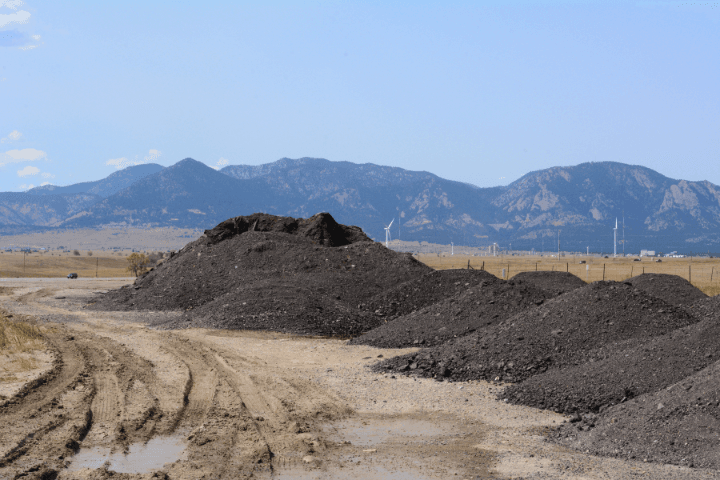
Every year, between 3 and 5 million tons of asphalt concrete is poured over Quebec’s roadways. While conventional asphalt is still most commonly employed, other materials are making their way onto the scene, filling in cracks, such as recycled asphalt.

Editorial Team
•18 Mar 2026
We can all recall images of people shocked at finding their homes completely destroyed as a result of major flooding. It happened in Montreal and Toronto in 2024, Baie-Saint-Paul in 2023, Sainte-Marthe-sur-le-Lac in 2019, Montérégie in 2011, and the list goes on. While once a rare occurrence, major flooding is becoming increasingly common. As a result, many homeowners are coming to terms with the fact that their homes weren’t built to withstand such natural forces.

Editorial Team
•18 Jan 2025
A lack of space can be seen as an obstacle when thinking about the layout of our home. Of course, that doesn’t mean that it will necessarily be more complicated. Instead, it's all a matter of perception.
Editorial Team
•08 Nov 2023
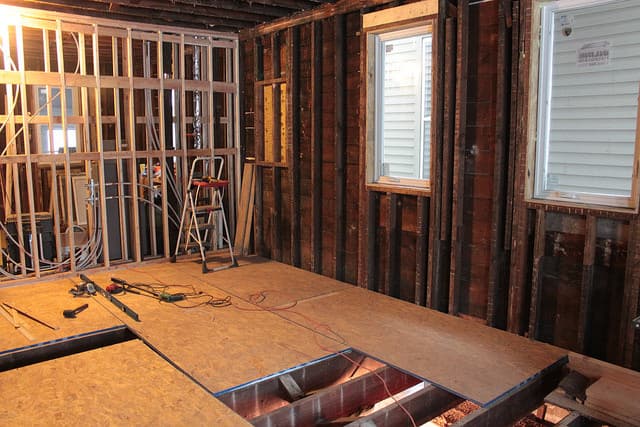
If you’re finding that your floor is squeaking or feels soft underneath your feet even though it’s called hardwood, you may have some issues with your subfloor. Subflooring becomes soft for several reasons, most commonly the penetration of humidity into the material. If this happens, it is important to remove and replace your subfloor to avoid mould and mildew growth.

Editorial Team
•08 Nov 2023
Facilitating independence and make everyday life at home easier for individuals with reduced mobility or suffering from various other disabilities are desirable lifestyles nowadays. Knowing that people are less and less marginalized and can, with ease, share their real needs with others lends a helping hand to the cause).