
Even though you consider your home to be synonymous with protection and shelter, severe storms can sometimes cause severe problems. Whether it's the fault of winds, heavy rain or thunderstorms, your roof is not immune to unforeseen damage.
Get Your Project Started Today
Submit your details and receive three free quotes from trusted contractors.
Other well-known scenarios also include snowmelt, shingle loss and water infiltration caused by bad weather. However, with a little TLC, last-minute disasters can be easily avoided. This is why, before starting any work, other questions could run through your mind: "Do I need to redo my entire roof? Is it still good for a few more years?"
Here are some tips that might help you figure out the right decision: repairing or replacing?
Repairing or replacing: everything you need to know about your roof
Evaluating the condition of your roof
Before anything, it is good to know the estimated age of your roof. You will need to consider this aspect in relation to its material (metal, shingles, membrane, etc.) and the year of its installation. According to ToiturePro, "the companies offer a guarantee on the material related to this life expectancy as well as a 5 to 10 years guarantee on the work".
If the life expectancy of your roof is unknown to you, it is therefore important to proceed with its assessment. It is possible to do this yourself, making sure to do the full perimeter of the roof and take into account as many details as possible: ventilation, the soffits, the flashings and the fascias. Check to see if your shingles are peeling, curling, or missing at some spots. It is best to do this inspection at least twice a year.

The interior of your home: a good indicator
The external appearance of your roof is not the only factor to be taken into account when it comes to the roof. High humidity, swelling paint, mould and seeping water could all be directly related to your ageing roof. Going to the attic to check the frame will give you a better idea of the condition of your roof. If it is wet, take action quickly.

Finally: replacing or repairing your roof?
If your roof is only a few years old, it would be best to contact the company you dealt with if you have any problems with it. They will be able to fix any issues and ensure that it is solid for years to come.
However, if this is not your first repair and your roof never seems to give you a break, you might want to consider a full repair. If you put off work constantly, you could end up with more damage to your home. To learn more, read our article What happens if you don't renovate your roof?
Finally, if during the inspection you have noticed significant damage on a specific part of the roof, but it still seems very solid to you, a repair for that specific area may be possible. It is always better to call a professional in this situation.
Would you like to continue reading on this subject? Check out our articles:
Looking for something else?
Related articles
The latest industry news, interviews, technologies, and resources.
Cynthia Pigeon
•08 Nov 2023
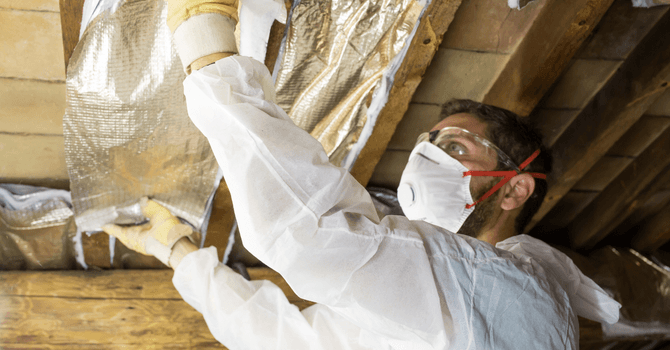
Considering that buildings can lose up to a quarter of their heat by way of their roofs, and on top of that cold air can seep through an improperly insulated roof, it's easy to gauge the importance of opting for well-insulated roofing panels.
Editorial Team
•17 Feb 2025
The kitchen is such an important part of a home. People spend time cooking, some even prefer to have their family meals there, too. Essentially, it’s a space that’s meant to reflect you. How can you design a kitchen plan that truly suits your fancy? What free online tools can help you create a custom space? How can they be used to preview the finished project beforehand? Courtesy of all the tips detailed, you’ll be able to transform your kitchen into the ideal space.

Editorial Team
•29 Feb 2024
If your home is slightly cramped or your family is expanding, you’re likely looking for a way to add more space to your home without starting from the ground up. Have you ever considered an addition above your garage? Many homeowners may overlook this area, but in fact, the space above your carport or garage is an excellent and cost-effective way to gain an extra bedroom, home office or otherwise.
Editorial Team
•08 Nov 2023
Recently, the rules surrounding the legal construction hypothec have been the subject of analysis and discussion. Now, a new view is emerging to ensure better supervision of the use of this restrictive measure, which can have financial consequences for many families.

Editorial Team
•08 Nov 2023
Many would love to believe that living on this earth means we have access to an endless supply of water. Of course. If you’re conscious and aware of our environmental impact, you’d know that this isn’t the case. Globally, the average household is the smallest consumer of water, yet each home still has a large impact. Finding ways to reduce water usage in your home is an excellent strategy for enacting environmental change while saving some much-needed cash on your electricity bills.