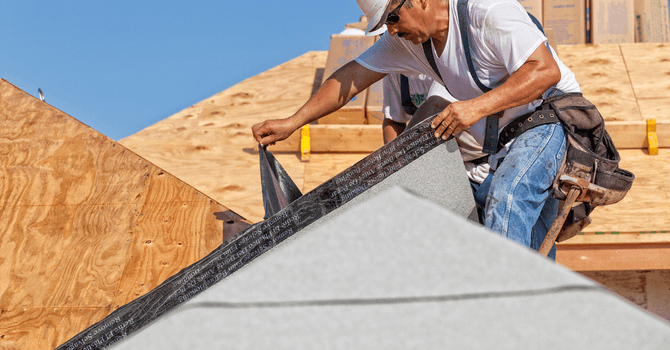
Roofing underlayment isn’t a luxury. It’s the one element that guarantees a decent and weather-protected structural design.
Its many benefits are far from being limited to this role; roofing underlayment strengthens the structure against leaks, protects the roof from mould, and acts as a protective barrier between the wood’s resin and the covering.
What’s Roofing Underlayment?
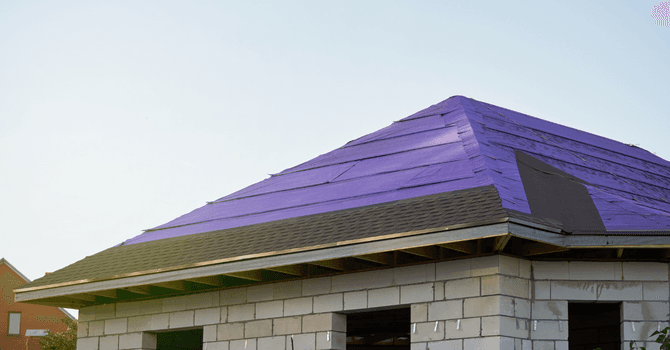
Source: Canva
A roofing underlayment is a protective layer of roofing felt; in other words, a pressed material made of:
Cellulose fibres saturated in asphalt;
Woven polypropylene;
Woven polyethylene;
Other synthetic fibres.
This material is available as a self-adhesive membrane made from modified bitumen or SBS polymer. When made as such, the material can be used as a protective roofing layer and as a protective screed shield.
However, underlayments aren’t made for long-term exposure to nature’s elements. The more durable materials can withstand being in the open air for a maximum of 90 days, while most other models can withstand 60 days, tops. Bitumen-coated roofing underlayments are more prone to drying out and becoming increasingly permeable; the complete opposite of what’s actually desired. So, that’s why the covering must be laid within a reasonable time period.
The material used is extremely important. There are other material components available in lieu of synthetic ones, but using these can damage the roof’s framework.
The elements to avoid using for your roofing underlayment are:
Waterproof laminated paper rolls;
Felt finishes;
Other vapour barrier materials.
The above-mentioned materials won’t prevent humidity caused by freeze-thaw weathering between the underlayment and the covering.
Benefits of Roofing Underlayment
Protects the roof from adverse weather
When building your house, it’s imperative that you protect your structure’s interior from adverse weather as soon as possible. Laying the roofing underlayment, which occurs after the framework is finished and the wooden covering is set, allows the structure to be weatherproofed in between the completion of the work.
The earlier the roof is rendered watertight by the underlayment, the quicker the house’s interior will dry, meaning the work can officially begin. Laying a roofing underlayment will thus also allow one to move in at an earlier stage.
Protects the roof from water and mould
The first owners of an asphalt shingled house quickly detected leaks as a direct result of insufficient waterproofing layers. The roofing underlayment counteracts the effects of this eventual problem. It also acts as a protective barrier between the structure, water leaks, and mould.
Protects the roof against chemical incompatibility
There’s a chemical incompatibility between asphalt shingles and wood resin. The roofing underlayment will act as the divider between these two layers and prevent them from coming into contact.
How to pick your roofing underlayment
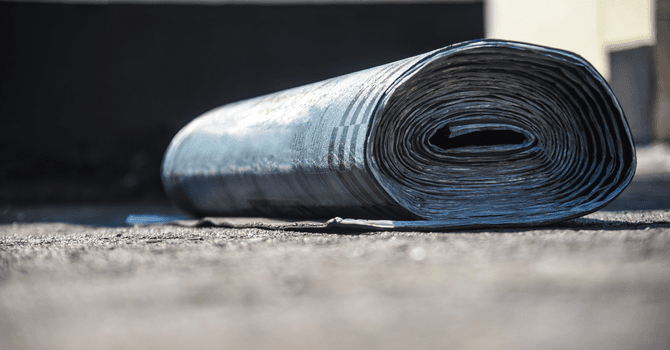
Source: Canva
To really understand the answer to this question, we have to discern the two main types of underlayments: synthetic and bitumen.
Synthetic Underlayments
The polypropylene underlayment
Weighing in at 25 pounds, this polypropylene underlayment is lightweight and perfect to temporarily cover a roof, as well as protect the interior of the structure from adverse weather. This underlayment resists traction, tears, and temperatures ranging from -55°C to 110°C.
Polyolefin and polymer underlayment
This underlayment, which only weighs 21 pounds, has the added benefit of being non-slip, unlike the former. Therefore, its installation is made rather simple. However, beware of using this underlayment in Quebec. It can only withstand temperatures dipping just below -40C°, but nothing lower. In other words, it can barely ride out some of the cold fronts experienced in the province.
Woven polypropylene and polyethylene underlayments
Designed to provide greater waterproofing qualities, this membrane has several advantages:
9 times lighter than felt paper rolls;
5 times sturdier than felt paper rolls;
Non-slip;
Traction- and tear-resistant;
Temperatures tolerated: from -55°C to 110°C.
Of all the synthetic underlayments, this one appears to be the most advantageous.
Non-slip and non-woven polyolefin and woven polymer underlayments
Anti-slip and relatively lightweight, this underlayment has somewhat of a drawback: its minimal service temperature is only -43°C, versus 116°C during summertime. Therefore, it isn’t made for harsh winters.
However, it has a few advantages that render its installation rather easy:
Printed-on nailing pattern;
Flexible in low temperatures;
Pleat-free.
Bitumen Underlayments
These usually have the benefit of being resistant to high temperatures.
Elastomeric bitumen underlayment
Resists temperatures between -45°C to 115°C;
UV ray resistant;
Self-adhesive around the nails and screws.
However, it weighs 49 pounds and its uncovered lifespan is two months tops.
Tri-laminated polyethylene and elastomeric bitumen underlayment
This one’s the best underlayment for sheet metal roofing. This underlayment was designed to be self-adhesive, anti-slip, and resistant to harmful UV rays. Its sole drawback might be its maximum service temperature, which doesn’t exceed 90°C, which can oftentimes be quite plentiful for Quebec’s infrastructures. Another version of this model was designed with the same components, and it can resist maximum temperatures of 126°C.
Are you looking for experts to tackle your roofing project?
Fill out our form to receive quotes from certified contractors!
10 Tips to DIY a Roofing Underlayment Installation
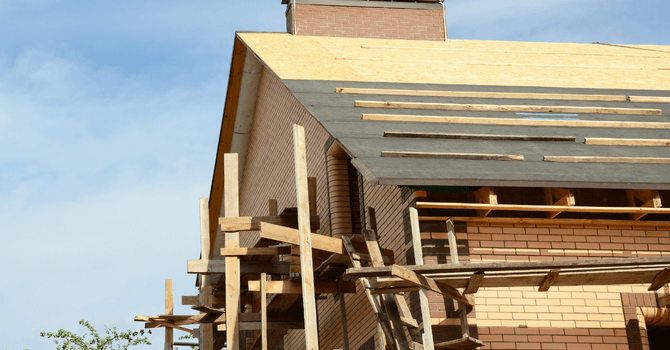
Source: Canva
Once you’ve landed on the perfect roofing underlayment based on its temperature, weight, and resistance, you can install it yourself!
For practical and safety reasons, don’t work alone.
Always work from the bottom of the roof and work your way to the top.
Unfurl the paper rolls in a straight line; the paper has a tendency to slip along the roof.
Use staples to secure the roofing underlayment, to prevent it from slipping along the roof’s slope. These staples are only temporary; they’ll be removed once the roofing nails are properly affixed.
Use metal drip edges levelled with your eaves to align the edge of the underlayment and then staple it in place.
Secure the underlayment with roofing nails along the edges of the roof and everywhere it overlaps.
Allow for roughly 6 inches between every nail, and an inch between the nail and the edge of the roof. Where the underlayment overlaps, nail the roofing nails in a zigzag pattern every 12 to 15 inches.
Allow for at least 6 inches of overlap between every felt paper roll.
If your roof has a low slope (less than 33%), you’ll need to lay another layer of underlayment to protect the roof’s framework from water backflow. To prevent this from occurring, you’ll need to lay two 36-inch wide layers. The horizontal joints must overlap by at least 19 inches. At the vertical ends, the joints must overlap by at least 12 inches.
On low-sloped roofs, you can also add a waterproof self-adhesive strip on the eaves.
For a synthetic roofing underlayment, expect to pay between $65 and $140. Keep in mind that, if you need to cover a low-sloped roof, you’ll then need to double the underlayment layer, thus doubling your budget. Also, if you opt for the waterproof, self-adhesive strip, it’ll cost you roughly an additional $20, per unit.
Cover photo source: Matt Thompson – Flickr
Get 3 quotes for your roofing project
RenoQuotes.com will put you in contact with 3 reliable contractors for your roofing renovation project. Fill in the form on our homepage (it only takes a few minutes), and you will receive quotes from trusted professionals.
Dial 1-844 828-1588 to speak with one of our customer service representatives.
Looking for something else?
Related articles
The latest industry news, interviews, technologies, and resources.
Editorial Team
•23 Jul 2025
Choosing the right paint or stain for your deck is key to ensuring its durability and aesthetic. Whether partial to stain or paint, wood or concrete, this buying guide will help you navigate the array of options available. Learn how to prepare your surface and choose the best product to revamp this outdoor space.

Editorial Team
•08 Nov 2023
A sheet metal roof might sound absurd to some, but this material is quite popular for those searching for a long-lasting and strong overhead cover. In recent years, sheet metal roofing has been recognized for its durability and longevity. Unlike asphalt, which has a lifespan of between 20 and 30 years, sheet metal can last up to 50 years. Therefore, installing this roofing material is a worthwhile, lifetime investment!
Cynthia Pigeon
•29 Jun 2026
Aging in place is a priority for many Quebec seniors and people with mobility limitations. Staying at home, in a familiar environment, provides an unmatched sense of comfort and stability. However, the family home can sometimes present hidden hazards, and the bathroom is often one of the riskiest rooms. With its slippery surfaces and physical obstacles, it can quickly become a stressful space as independence decreases.

Christine Simard
•08 Nov 2023
Over the past two years, we have often mentioned the phenomenon that is biophilic design but never really delved into the depths of this trend. With people growing more and more conscious of the need for a more sustainable future, the architecture and design world soon picked up on those issues and are now working around the inclusion of these principles in their practices.
Editorial Team
•27 Jan 2026
A kitchen remodel is one of the most common renovation endeavours, especially in terms of flooring. Kitchen floors have to put up with a great deal of daily use, resulting in fast-tracked wear and tear. This area goes through it, from falling pots and pans, boiling liquid or other spills to normal foot traffic.