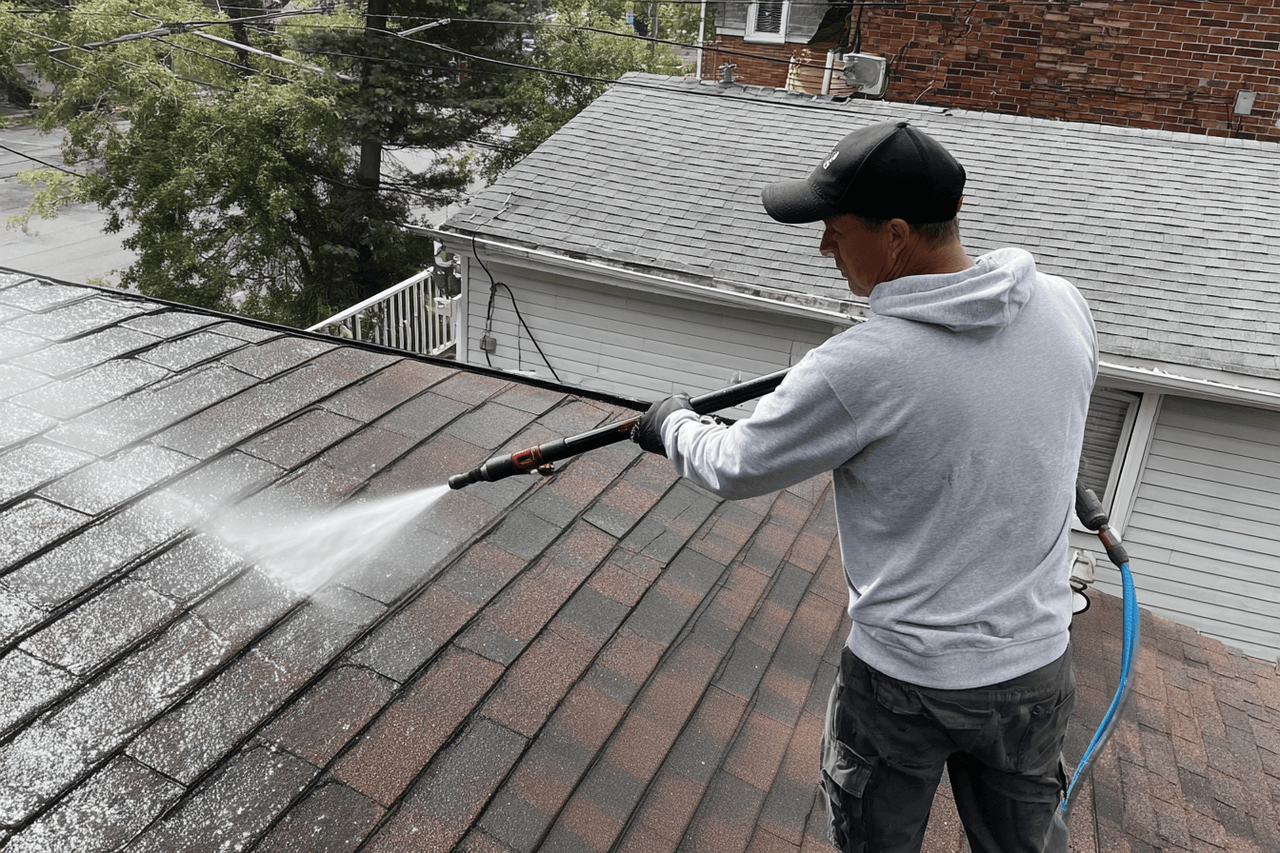
After winter, your roof has endured snow, ice, and harsh weather. Early spring is the ideal time to plan your roof inspection and cleaning—and to book a contractor in advance before the season gets busy. Annual maintenance not only prevents damage but also extends the lifespan of your roofing, enhances its appearance, and protects your home’s structure. By planning ahead, you ensure a timely, safe, and effective cleaning.
Get Your Project Started Today
Submit your details and receive three free quotes from trusted contractors.
The 7 Steps to Follow
1. Inspect the Roof and Prepare Equipment

Source: Option toiture
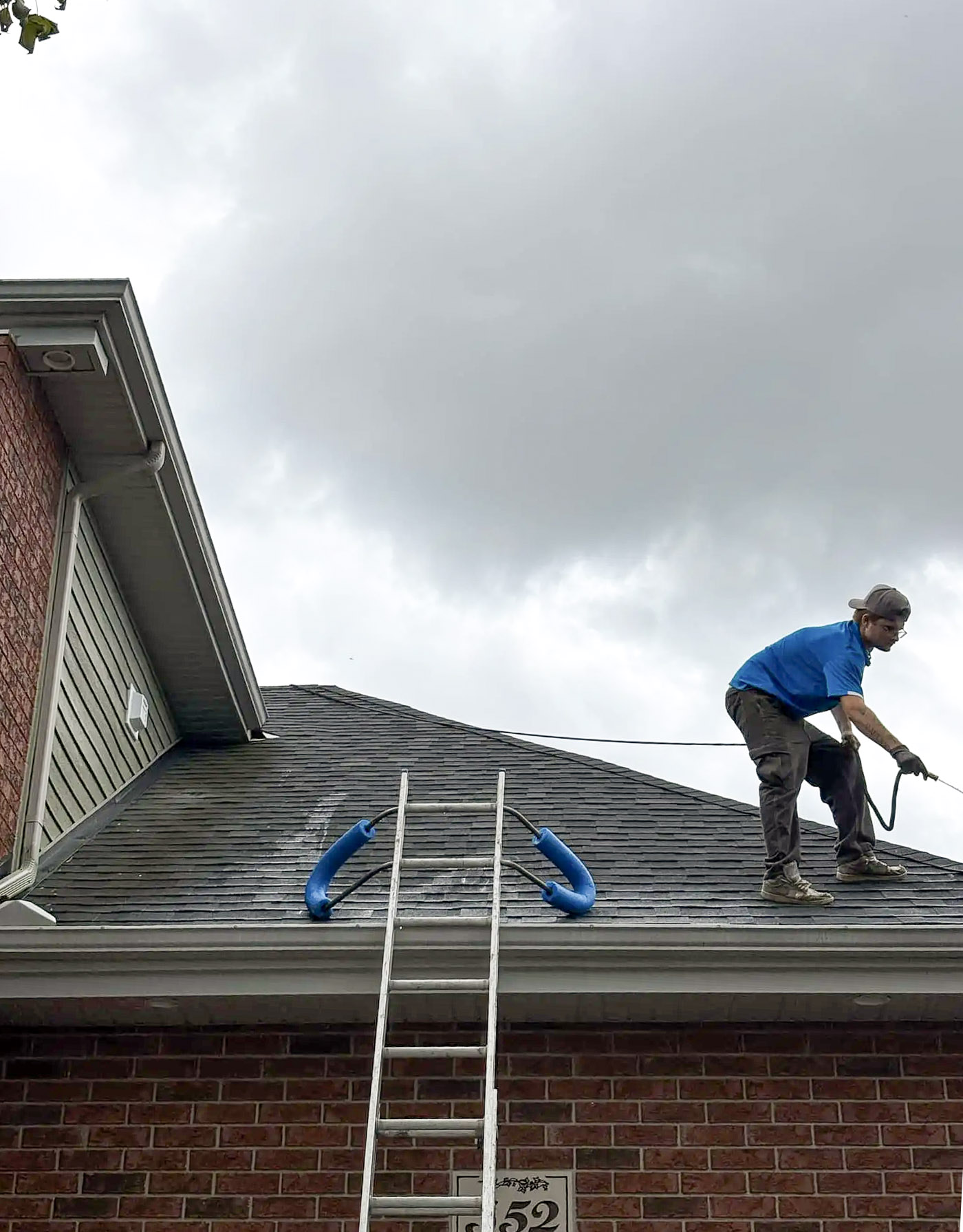
Before climbing onto the roof, examine it from the ground. Look for missing shingles, branches, and accumulated leaves. Ensure you have the right equipment: a stable ladder, safety harness, gloves, soft-bristle broom, plastic scraper, and garden hose. Never climb onto a wet or icy roof.
Never forget that safety should come first at every stage. If you’re not comfortable working at heights or if your roof presents specific risks, it’s best to schedule a qualified professional early in the season. Professional roof cleaning companies have the expertise, equipment, and cleaning solutions to handle even the most challenging roofs efficiently and safely. They can identify potential issues during cleaning, help prevent damage, and often provide warranties or guarantees for their services. Booking in advance helps ensure the work is done safely, at the right time, and with long-lasting results, giving you peace of mind and protecting your investment.
2. Remove Debris
Start by clearing branches, leaves, and other debris. Use a broom or a low-power blower to avoid damaging shingles. According to roofing cleaning guidelines, this step is crucial to prevent clogged drains and mold growth.
3. Clean Gutters and Downspouts
Clogged gutters prevent water from draining properly and increase the risk of leaks. Using a small shovel or your gloved hands, remove leaves and debris. Rinse thoroughly with a hose. Check that downspouts are properly secured and free of holes or disconnections.
4. Wash the Roof Surface
Source: Entretien Optiplus
For shingle roofs, avoid high-pressure washers that can remove the protective granules. Use a hose with a low-pressure nozzle. To keep it simple, use a gentle solution of water and biodegradable soap to remove dirt. Apply it with a sprayer and gently scrub with a soft broom. Rinse thoroughly.
Choosing the Right Products and Safety Precautions
To clean your roof effectively without causing damage, choose a product specifically designed for your roofing material (asphalt shingles, tiles, metal, etc.). Opt for gentle, preferably biodegradable solutions, or approved commercial roof cleaners, and carefully follow the manufacturer’s instructions for dilution and rinsing. Avoid overly aggressive products or improperly used concentrated bleach solutions, as they can damage the roofing material, gutters, and surrounding vegetation.
Before applying any product, read the manufacturer’s instructions carefully and test it on a small, inconspicuous area to ensure compatibility. Finally, always wear gloves and safety glasses, and avoid any contact between cleaning products and your skin or eyes.
5. Treat Moss and Algae
If you spot moss or black stains on your roof, apply an eco-friendly antifungal treatment or a solution of water and white vinegar. Allow it to sit briefly, then gently brush the affected areas to remove the growth. To help prevent moss from returning, consider installing zinc or copper strips along the roof ridge.
6. Check the Overall Roof Condition

Source: 9398-7410 Quebec inc.
Use the cleaning as an opportunity to inspect joints, flashing, and shingles. Check for cracks, exposed nails, or lifted shingles. Replace any damaged shingles and apply sealant to cracks. For flat roofs, make sure drains are clear and the membrane is free of bubbles or wrinkles. Booking a professional early in the season can help ensure these inspections and repairs are done safely and efficiently.
7. Plan Necessary Repairs
If you detect more serious damage (sagging, leaks), contact a roofer. Acting quickly is more cost-effective than letting the problem worsen. Annual cleaning is the perfect opportunity to make a list of repairs and plan preventive maintenance.
Spring roof cleaning is an investment that protects your home and improves its durability. By following safety practices and these systematic steps, you will avoid unpleasant surprises and ensure the longevity of your roof.
Looking for something else?
Related articles
The latest industry news, interviews, technologies, and resources.
Cynthia Pigeon
•08 Nov 2023
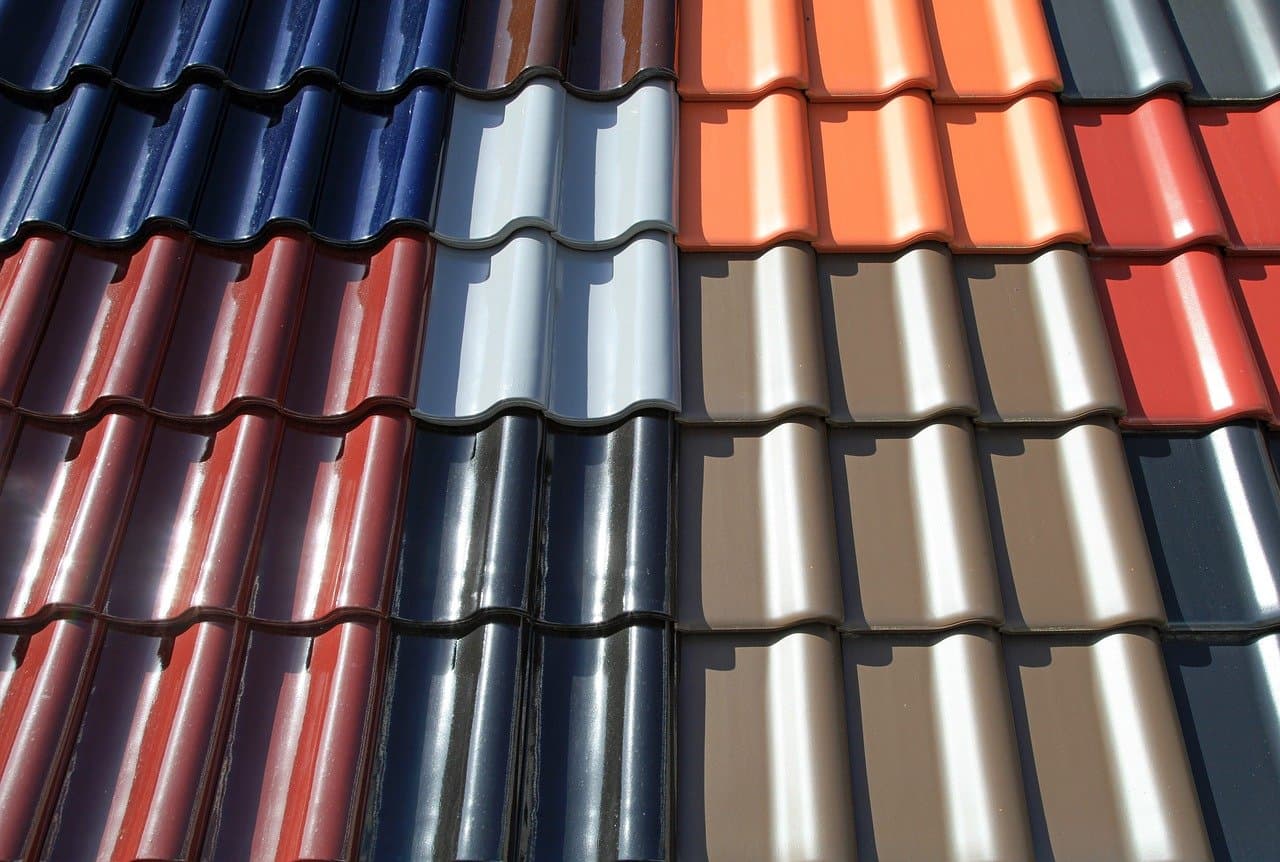
Are you shopping around for a new roof? Do you also want to change the siding on your house, but aren't sure which roof colour is best? Well, you've come to the right place! Below, we've outlined all the factors to consider when choosing a roof colour for your Quebec home.
Cynthia Pigeon
•08 Nov 2023
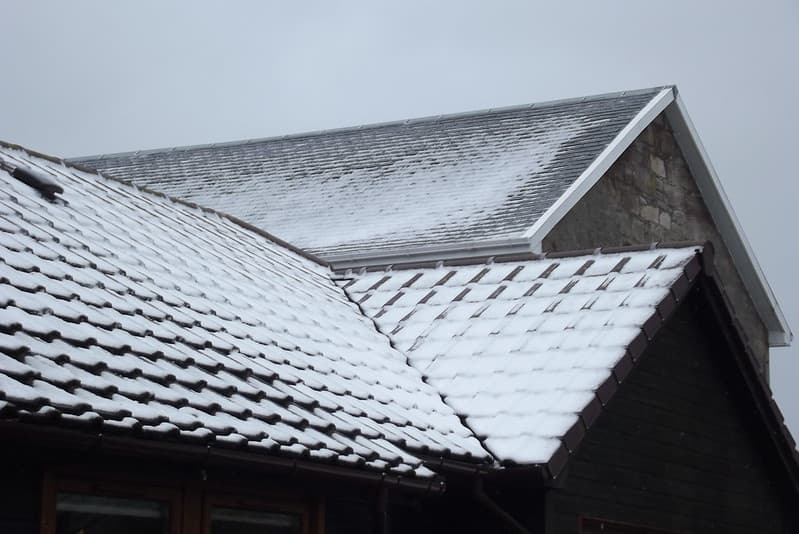
When it comes to re-roofing, your main concerns are likely to be preventing future water infiltration and choosing a durable coating.

Editorial Team
•18 Jan 2025
Has your son or daughter grown up a lot and their childhood bedroom isn’t cutting it anymore? Well then, it’s about time to redecorate their slice of heaven to revamp their bedroom according to their personality and the young adult they’re quickly becoming. Here are some ideas to serve as inspiration for your teenager’s future bedroom design project!

Editorial Team
•08 Nov 2023
Summer might be over, but that doesn’t mean all dreams of being whisked away seaside have to fade. What if we told you that travelling to a coastal haven with sandy beaches was a possibility without having to leave your cozy pad?
Editorial Team
•13 Sep 2024
Foam insulation is a valuable product, especially since it’s lightweight and easy to install. It’s also an effective way to insulate walls and floors in your home. However little known, polyurethane foam is an amazing product that can very likely be a solution to many a problem. Since it’s particularly adhesive and effectively insulates, every year, this product enables Canadians to shield their residences from the harsh winter cold.