What is the standard ceiling height in Canada?
By Cynthia Pigeon
Updated on October 7, 2026
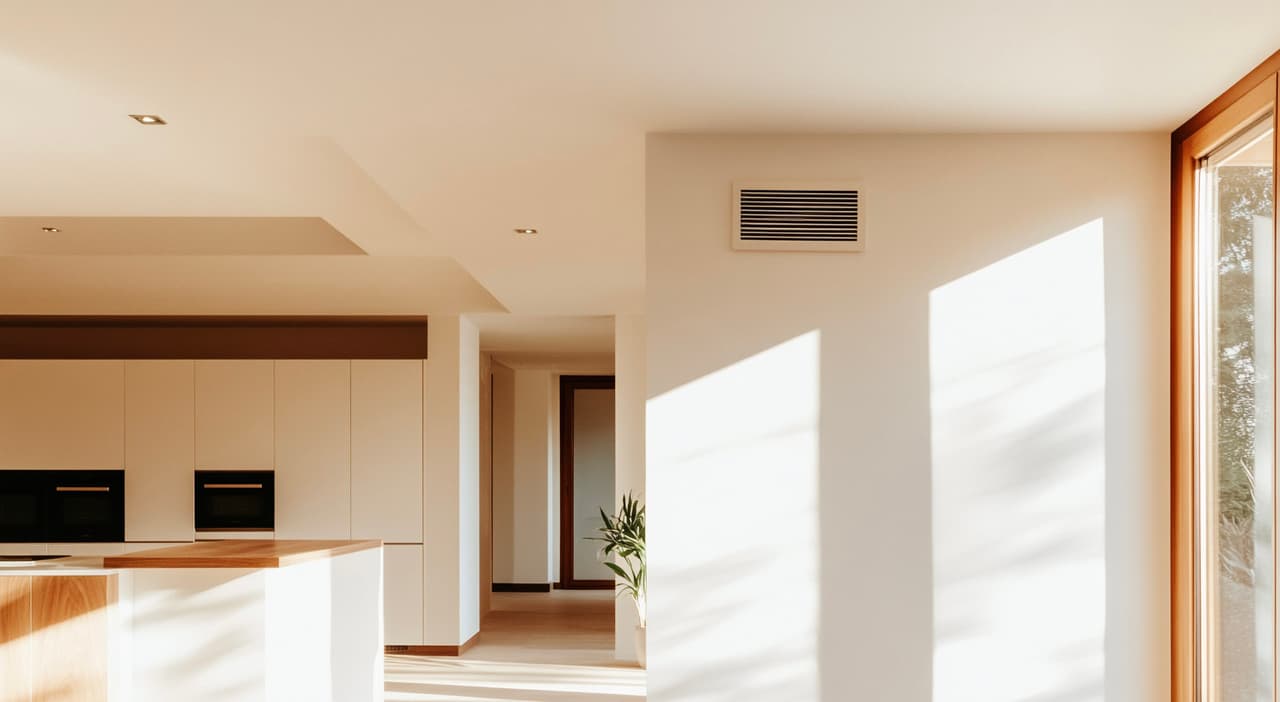
The standard ceiling height is 8 feet in older Canadian homes and 9 feet on the main floor of newer builds. Custom and luxury construction commonly reaches 10 feet, while finished basements typically land between 7 and 8 feet.
Those are the standards. The building code minimum is different and much lower, at 6 feet 11 inches for most habitable rooms under the National Building Code. A code minimum tells you what's legal, not what's normal, and the two get confused constantly.
This guide covers what each height costs, how it changes the way a room feels, what it does to your doors and windows, and what it's worth at resale.
Standard Ceiling Heights in Canadian Homes
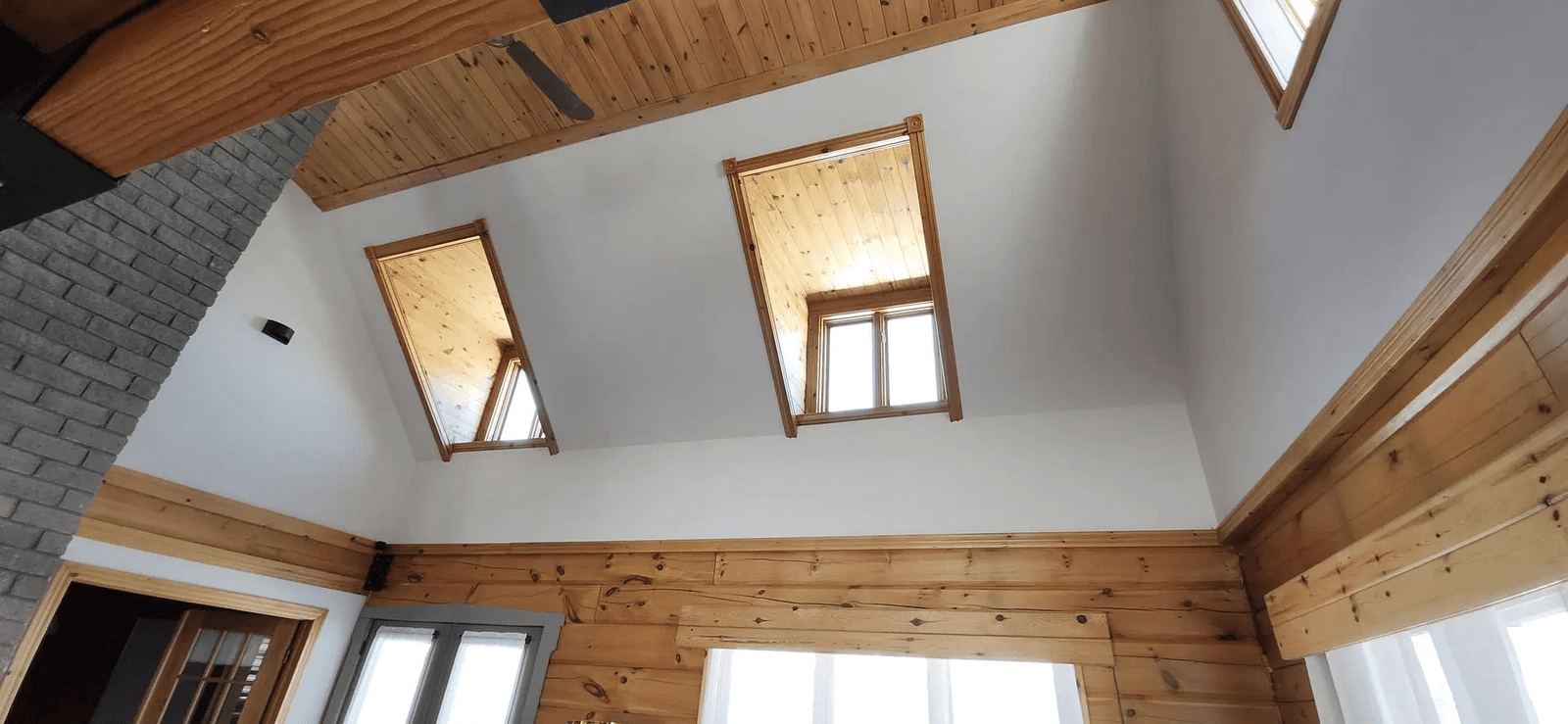
Source: INNOVATION MAISON RB
Height | Where you find it | Wall above a 6'8" door |
8 feet | Homes built before the 1990s, apartments, second floors | 16 inches |
9 feet | Main floor of most new construction | 28 inches |
10 feet | Custom and luxury builds, statement rooms | 40 inches |
11 to 12 feet | Great rooms, lofts, heritage homes | 52 to 64 inches |
Eight feet was the norm for decades and remains common. It meets code comfortably, costs the least to build, and feels normal in a room of ordinary size.
Nine feet is the current standard on main floors in new Canadian construction. It's the single most common upgrade, and most builders now offer it as a base specification rather than an option.
Ten feet reads as custom. It supports taller windows and 8-foot interior doors, both of which change how a house presents.
Ceiling Height by Room
Space | Common height | Recommended range |
Main floor living areas | 9 ft | 9 to 10 ft |
Second floor bedrooms | 8 to 9 ft | 9 ft |
Finished basement | 7 to 8 ft | 8 to 9 ft net |
Bathroom | 8 ft | 8 ft |
Attached garage | 8 to 10 ft | 10 to 12 ft with a lift |
Basements are where planning matters most, because the number you measure before finishing isn't the number you end up with. Drywall, flooring, and bulkheads for ductwork each take their share.
Garages have a hard constraint. A standard garage door has a 7-foot rough opening, which means the ceiling needs to sit at least 8 feet to clear the door mechanism, track, and header hardware above it.
How to Tell What You Have
Reach up with your arm fully extended. If your fingertips nearly touch the ceiling, you're at 8 feet. If there's a clear gap, you're likely at 9 or 10.
The more reliable tell is the wall above a door. Interior door leaves are 6 feet 8 inches almost everywhere, so the gap above the casing is a fixed indicator: roughly 16 inches at an 8-foot ceiling, 28 inches at 9 feet, and 40 inches at 10 feet.
Building Code Minimums
Code minimums are what's legally permitted, not what's typical. The gap between them and the standard is substantial, and confusing the two leads to rooms that pass inspection and feel wrong.
National Building Code Requirements
The National Building Code of Canada sets these minimums for residential occupancies:
Space | Minimum height | Over |
Living room | 2.1 m (6'11") | The lesser of total area or 10.0 m² |
Dining room | 2.1 m (6'11") | The lesser of total area or 5.2 m² |
Kitchen | 2.1 m (6'11") | The lesser of total area or 3.2 m² |
Master bedroom | 2.1 m (6'11") | The lesser of total area or 4.9 m² |
Other bedrooms | 2.1 m (6'11") | The lesser of total area or 3.5 m² |
Bathroom or laundry above grade | 2.1 m (6'11") | The lesser of total area or 2.2 m² |
Passage, hall, or vestibule | 2.1 m (6'11") | The total area |
Other habitable rooms | 2.1 m (6'11") | The lesser of total area or 2.2 m² |
Unfinished basement | 2.0 m (6'7") | Clear height under beams and in passage areas |
Note how the requirement works. The minimum applies over a specified portion of the room rather than the whole thing, which is what makes sloped and vaulted ceilings possible without violating code.
Why Basements Are the Problem
An unfinished basement that measures adequately turns into a problem the moment you draw a bedroom in it.
A bedroom is habitable space, which brings the full habitable-room requirement with it. Add drywall, flooring, and a bulkhead for ductwork, and a basement measuring 7'6" unfinished can finish out below the minimum.
Measure your net height, not your gross. Deduct for the finished floor assembly, the ceiling finish, and any mechanical runs you can't relocate.
Regional and Builder Variations
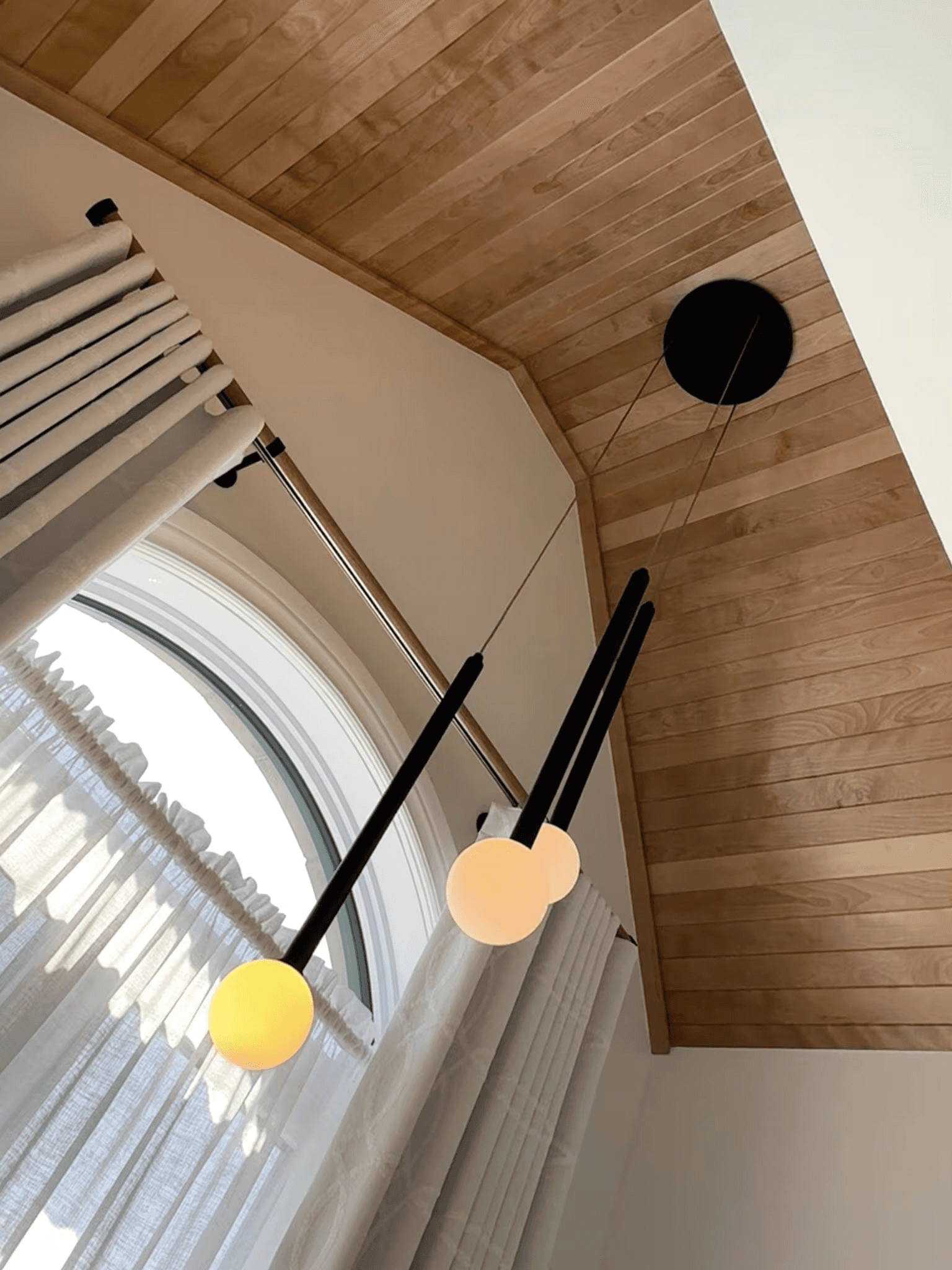
Source: Mem design
Ceiling height isn't a single national standard. It varies by province, by builder, and by what the local market expects.
How Codes Differ by Province
Each province adapts the National Building Code, and the minimums aren't identical.
Ontario's Building Code sets a 7'6" minimum for main floor habitable space, higher than the national figure, with 6'11" permitted in hallways and finished basements.
Check your provincial code and your municipality before planning a basement finish or an addition, since this is where the differences matter most.
What Builders Actually Offer
Code sets the floor. Builder practice sets the norm, and it has shifted substantially.
Nine feet on the main floor is now the base specification for most production builders in Canadian new construction, where it was an upgrade a decade ago. Second floors typically remain at 8 or 9 feet depending on the builder and the price point.
Custom builders commonly start at 10 feet on the main floor, with 9 feet upstairs, and treat anything lower as a cost-driven compromise rather than a design choice.
Traditional and modern elevations diverge here. A modern elevation leans on horizontal lines and taller windows, which reads best at 10 feet. A traditional elevation with divided-light windows and substantial trim works comfortably at 9.
Regional Market Expectations
What buyers expect differs considerably across the country.
Urban infill and luxury markets place real weight on ceiling height, and 8 feet in new construction reads as a cost cut.
Suburban production markets have largely converged on 9 feet on the main floor, which means meeting it is neutral rather than advantageous.
Rural and small-market construction weighs square footage and lot size more heavily, and 8-foot ceilings remain common without penalty.
Older housing stock sets local norms. In neighbourhoods built before 1990, 8-foot ceilings are what buyers expect and price accordingly.
8, 9, or 10 Feet: What Changes
How Each Height Feels
Eight feet feels normal in a room of ordinary size. Where it shows is in large rooms, because the greater the floor area the more a low ceiling reads as flat and compressed. Windows matter here too: at 8 feet, a standard window sits close to the ceiling line, which limits how much the room can be visually opened.
Nine feet is the sweet spot for most homes. The extra foot changes the proportion between the window head and the ceiling, which is what makes a room read as open rather than merely adequate. It gives a room noticeably more air without the structural coordination that 10 feet demands.
Ten feet reads as grandeur. Paired with light colours and taller windows, it visually magnifies the space and accentuates its dimensions. It also demands more from the rest of the design, since window proportions, door heights, and stair risers all need to follow.
Working the Vertical Space
Above 9 feet, the wall becomes a design surface rather than just a boundary, and three devices do most of the work.
Transom windows above doors and windows fill the upper band, bring daylight in at a high level, and connect openings into a continuous horizontal line.
Window head height can rise with the ceiling, which separates a tall room that works from one that feels like a short room stretched upward.
Visual levels created by picture rails, deep crown moulding, or a two-tone paint break give the eye something to read at height, and stop a 10-foot wall from feeling blank.
A room feels cramped when the ceiling is low relative to the floor area, not simply when the ceiling is low. A small den at 8 feet feels snug. A 20-foot great room at 8 feet feels compressed.
Varied Heights Through a House
Ceiling heights don't have to be uniform, and treating height as a design variable rather than a fixed constraint opens up options.
Lower ceilings create intimacy. A cocoon-like den or reading room is a legitimate choice, provided you respect the minimums. A well-planned lighting arrangement is essential, or the room reads as austere rather than cosy.
Higher ceilings create openness, which suits great rooms, entryways, and kitchens where you want the space to feel generous.
A common approach in new construction is 9 or 10 feet on the main floor, 9 feet upstairs, and a feature height in one or two statement rooms.
How Ceiling Height Affects Doors and Windows
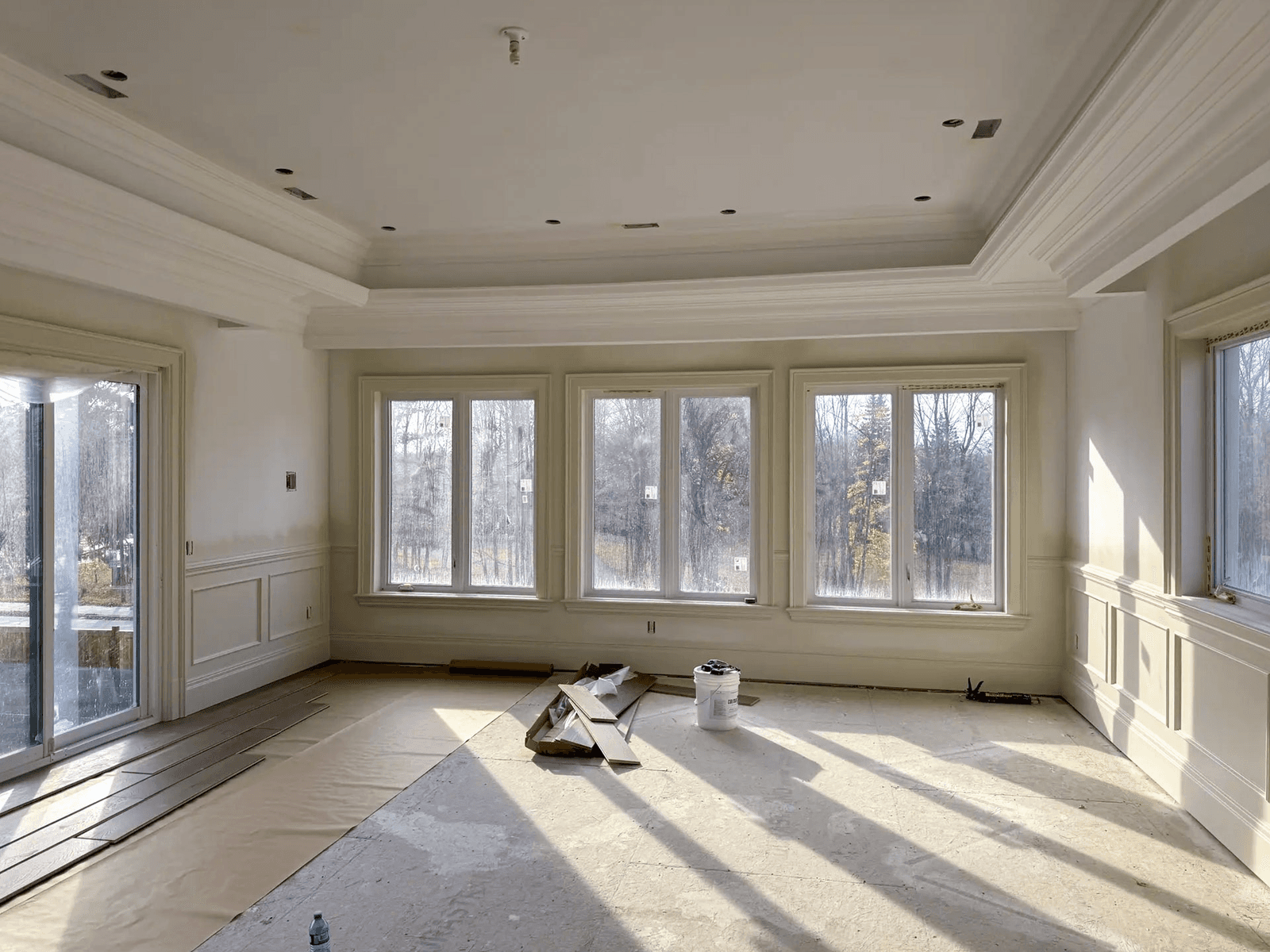
Source: Tomas Construction Services
This is the part most homeowners don't anticipate, and it's where ceiling height stops being an abstract number.
The Wall Above the Door
Interior door leaves stay at 6 feet 8 inches regardless of your ceiling height. That's the standard height door in virtually all Canadian residential construction, and it doesn't scale with the room.
So raising the ceiling doesn't raise the door. It raises the amount of blank wall above it.
Ceiling height | Wall above a 6'8" door | How it reads |
8 feet | 16 inches | Tight but conventional |
9 feet | 28 inches | Noticeably more blank wall |
10 feet | 40 inches | Enough that door height becomes a design decision |
At 9 feet, 28 inches of wall above the casing is the thing people notice and can't quite name. It's why the question of whether 8-foot doors belong with 9-foot ceilings comes up constantly on building forums.
Matching Door Height to Ceiling Height
Ceiling height | Sensible door leaf | Notes |
8 feet | 6'8" | The only practical option. |
9 feet | 6'8" or 8'0" | Both work. 8-foot doors look taller and cost more. |
10 feet | 8'0" | 6'8" doors look undersized at this height. |
Eight-foot doors at a 9-foot ceiling leave 12 inches above the casing, which reads as deliberate rather than leftover. They cost more, particularly in solid core, and they affect every opening in the house including patio sliders and double exterior front doors.
The alternative at 9 feet is to use the extra wall. Taller casing, a deeper trim profile, or running trim to the ceiling all turn the gap into a feature rather than an accident.
Aligning Windows and Doors
The alignment of door heights and window heights is what makes a room look designed. When door headers and window headers sit at the same elevation, the eye reads a continuous horizontal line. When they don't, something feels off even to people who can't identify why.
At 9 and 10-foot ceilings this becomes a real decision, since you have room to raise window headers but have to do it deliberately.
What Higher Ceilings Cost
Construction Cost
Upgrade | Cost impact | Notes |
8 ft to 9 ft | +3% to +7% | Good return, and the modern standard. |
9 ft to 10 ft | +5% to +10% | Requires coordination with windows, stairs, and structure. |
Basement underpinning | $70,000 to $120,000+ | Only route to added height in an existing basement. |
The jump from 8 to 9 feet is modest because it's mostly more of the same materials: taller studs, additional drywall, more insulation, and minor HVAC adjustment. Framing lumber is readily available in 9-foot lengths and often costs little more than 8-foot.
The jump from 9 to 10 feet costs disproportionately more, because it stops being a materials question. Stair runs need more risers, window and door proportions have to be reconsidered, and structural and mechanical coordination becomes real work.
Underpinning an existing basement is the only way to gain height in a finished house, and at $70,000 to $120,000 it's a structural project rather than a renovation.
Heating and Cooling
A room with a 10-foot ceiling holds roughly 25% more air volume than the same room at 8 feet. More volume means more air to condition.
The practical effect is smaller than that figure suggests, since heat loss happens through the building envelope rather than through air volume, and a well-insulated 10-foot room doesn't cost 25% more to heat. But it isn't nothing, particularly in a Canadian winter where warm air collecting at ceiling level does you no good.
In cold climates, lower ceilings genuinely help conserve heat, which is part of why 8-foot ceilings persisted in Canadian construction longer than in milder regions.
Ceiling fans set to winter mode push warm air back down and meaningfully reduce the penalty in rooms above 9 feet.
Ceiling Height and Resale Value
Source: proRconstruction inc
Homes with ceilings above 9 feet sell for roughly 2% to 4% more than comparable homes with 8-foot ceilings in the same market.
Set that against a 3% to 7% construction premium for the 8 to 9 foot upgrade and the return is close to break-even on cost, with the benefit showing up in how quickly a home sells rather than purely in price.
Three things matter in how buyers respond:
Nine feet is now expected on main floors in new construction, which means 8 feet increasingly reads as dated rather than standard in that segment.
The feedback is strongest in open-concept layouts, where a low ceiling over a large floor area is most noticeable.
Regional preference varies, as the section above covers. Urban and luxury markets price ceiling height more heavily than rural ones.
Where it doesn't help: an 8-foot ceiling in a 1970s bungalow isn't a deduction, because buyers price it as normal for the era. The penalty applies to new construction that chose the lower specification.
Lowering an Existing Ceiling
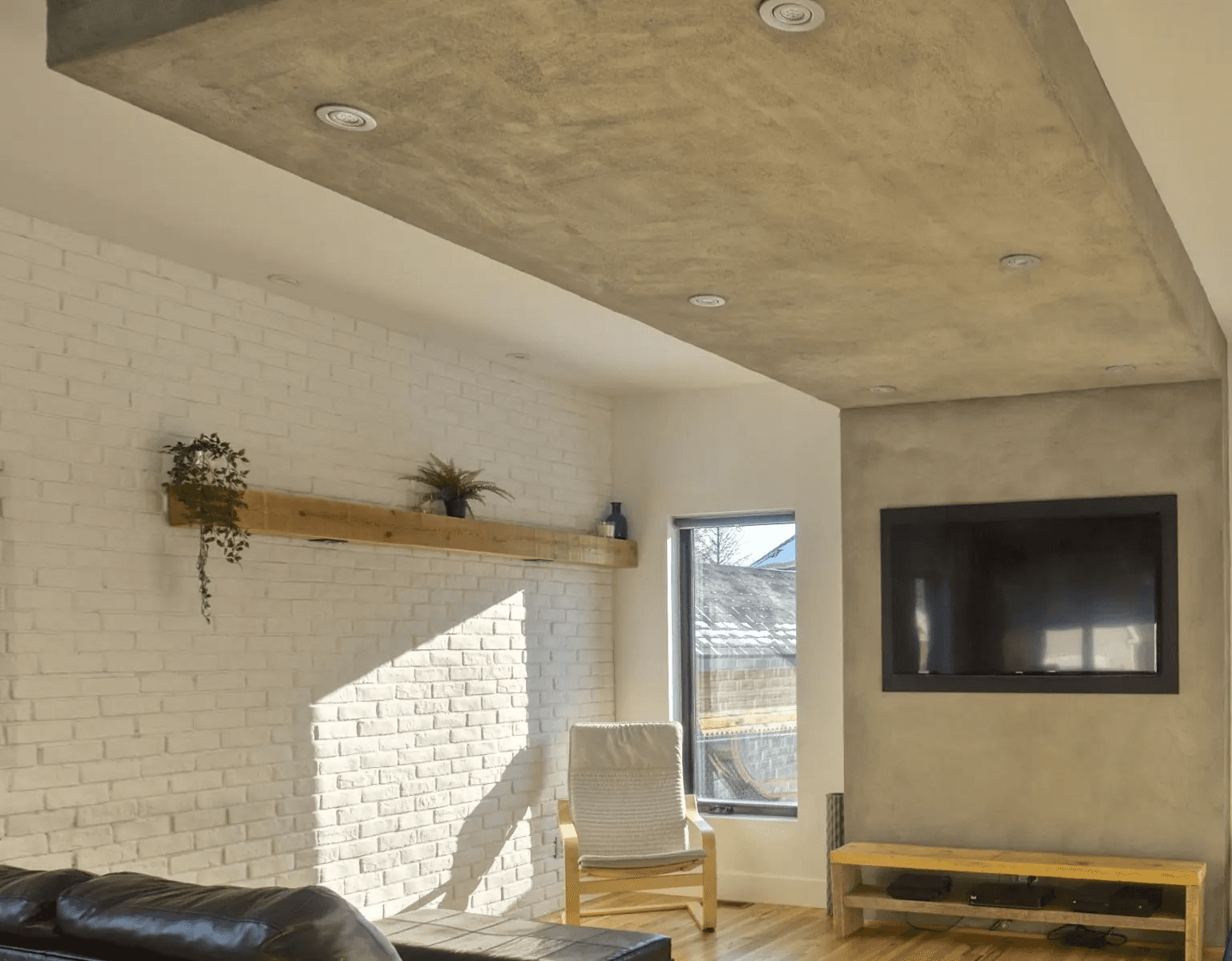
Lowering a ceiling is sometimes practical, whether to conceal ductwork, improve acoustics, or create a more intimate space.
Stretch Ceilings
A fabric membrane installed beneath the existing ceiling, stretched to its maximum elasticity and secured onto aluminum tracks positioned across the perimeter.
This demands expertise and is worth hiring out. Fabric options include gloss, matte, metallic, and satin finishes, as well as translucent and mirror-effect materials, so the aesthetic range is wide.
Maintain at least an inch of space between the fabric and the existing ceiling.
Suspended Ceilings
Tiles set into a grid, often in neutral patterns. Installation follows the manufacturer's instructions and is considerably more approachable than a stretch ceiling.
The practical advantage is access. A suspended ceiling can be lifted panel by panel, which matters in a basement where plumbing, wiring, and ductwork run overhead and may need servicing.
The trade-off is height. A suspended grid typically costs you 3 to 6 inches, which can push a marginal basement below code for habitable space.
Choosing the Right Ceiling Height
For most Canadian homes, 9 feet on the main floor is the right answer. It costs 3% to 7% more than 8 feet, returns roughly 2% to 4% at resale, and it's what buyers now expect in new construction. Eight feet remains perfectly livable and is the correct choice in a small home, on a second floor, or where the budget is better spent elsewhere. Ten feet is a design decision rather than a value one, and it only works when the windows, doors, and trim are planned around it.
The number that matters most isn't on your plans, though. It's whatever you're left with after drywall, flooring, and the bulkheads your ductwork demands, which is why basements catch people out and why a bedroom drawn into one can push the room below code. Measure your net height before you commit to a layout, confirm your provincial minimum rather than the national one, and decide on door height at the same time as ceiling height rather than after.
Frequently Asked Questions
What is the standard ceiling height?
Eight feet in older Canadian homes and 9 feet on the main floor of new construction. Custom and luxury builds commonly use 10 feet. The building code minimum is lower at 6'11" nationally, but a minimum isn't a standard.
What is the minimum ceiling height in Canada?
2.1 metres, or 6 feet 11 inches, for most habitable rooms under the National Building Code, and 2.0 metres for unfinished basements. Provincial codes differ: Ontario requires 7'6" for main floor habitable space. Check your province and municipality.
Is an 8-foot ceiling too low?
No. It meets code comfortably and was the standard for decades. It feels normal in rooms of ordinary size and only starts to read as flat in large open spaces. In new construction, though, buyers increasingly expect 9 feet on the main floor.
What is the standard ceiling height for a basement?
Seven to 8 feet is typical, with 8 to 9 feet recommended for a comfortable finished space. The code minimum for an unfinished basement is 2.0 metres, but adding a bedroom brings the full habitable-room requirement with it. Measure your net height after drywall, flooring, and bulkheads.
What is the standard ceiling height for a garage?
Eight feet minimum, with 10 to 12 feet preferred if you want a car lift or overhead storage. A standard garage door has a 7-foot rough opening, so the ceiling must sit at least 8 feet to clear the door mechanism, track, and header hardware.
Should I use 8-foot doors with 9-foot ceilings?
Either works. A 6'8" door leaves 28 inches of wall above the casing, which some find excessive. An 8-foot door leaves 12 inches and reads as deliberate, at higher cost across every opening. The alternative is taller casing or transom windows to use the space intentionally.
How much does it cost to go from 8-foot to 9-foot ceilings?
Three to 7% of construction cost, mostly in taller studs, additional drywall, more insulation, and minor HVAC adjustment. Going from 9 to 10 feet costs 5% to 10% more and requires coordination with stairs, windows, and structure.
Do higher ceilings increase heating costs?
Somewhat. A 10-foot room holds about 25% more air volume than the same room at 8 feet, though heat loss happens through the envelope rather than air volume, so the real penalty is smaller. Ceiling fans in winter mode push warm air back down and reduce it further.
Do high ceilings increase home value?
Homes with ceilings above 9 feet sell for roughly 2% to 4% more than comparable 8-foot homes in the same market. The effect is strongest in new construction, open-concept layouts, and urban or luxury markets. An 8-foot ceiling in an older home isn't a deduction, since buyers price it as normal for the era.
Can I raise the ceiling in an existing house?
On a main floor, only by removing the floor above or altering the roof structure, both of which are major projects. In a basement, underpinning lowers the floor at $70,000 to $120,000 or more. Neither is a renovation in the ordinary sense.
How can I tell how tall my ceiling is?
Measure the wall above an interior door. Door leaves are 6'8" nearly everywhere, so the gap above the casing tells you: about 16 inches at 8 feet, 28 inches at 9 feet, and 40 inches at 10 feet.
Do ceiling heights have to be the same throughout a house?
No. Varied heights are a legitimate design approach, with lower ceilings creating intimacy in dens and reading rooms and higher ceilings opening up great rooms and entryways. A common pattern is 9 or 10 feet on the main floor, 9 upstairs, and a feature height in one or two rooms.
Looking for something else?
Related articles
The latest industry news, interviews, technologies, and resources.

Editorial Team
•08 Nov 2023
Hello, and welcome back to our monthly entry about the best articles on interior design, decor and renovations! If you are new to this series, here is a quick recap: each month, we dedicate ourselves to finding the best articles on the internet to inspire you in your design and renovation projects.
Karine Dutemple
•08 Nov 2023
Although materials like ceramic, wood, porcelain or natural stone are still going strong, the arrival of new ones on the market could easily create new competition for them.

Christine Simard
•08 Nov 2023
If you are a plant lover, you have surely heard of green walls. If you are not familiar with this term or, like me, thought it meant a wall full of vines, think again! Instead, imagine a vertical garden, filled with different and varied plants, concentrated on a wall section.

Editorial Team
•08 Nov 2023
Wall panels are a wonderful feature for the home, and they come in a variety of materials, shapes, styles and colours. Therefore, they can be used alongside almost any home decor, made to suit the needs of any homeowner. Panelling can cover an entire wall, or just half if you so choose. Installing wall panelling is a DIY project that can be easily accomplished with the right steps and the options are endless!

Editorial Team
•08 Nov 2023
During your home-building process, making an informed decision regarding the type of heating system you’d like installed is of utmost importance. Gas, hot water, or electric heating solutions, no matter the system, each have their advantages and disadvantages. However, electric heaters are the most commonly used heating solution in the province of Quebec, and most residents aren’t holding back from renovating their entire heating system to install residential electric heaters.