Sunroom Cost in Canada in 2026: Budget, Permits and Key Tips
By Cynthia Pigeon
Updated on May 6, 2026
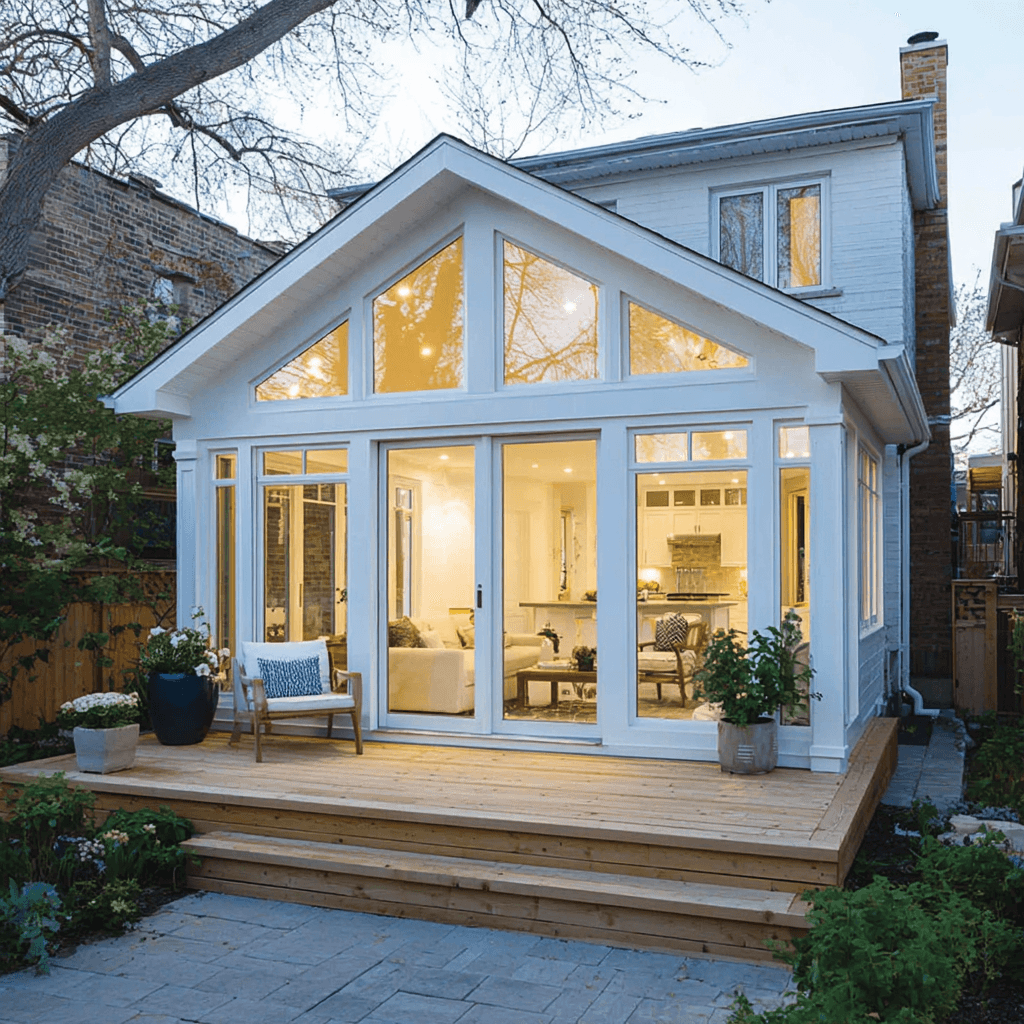
In 2026, installing a sunroom in Canada generally costs between $15,000 and $30,000 for a basic 3-season model, while a 4-season sunroom designed for year-round use can easily reach $45,000 to more than $75,000, depending on the size, foundation, glazing, insulation, finishes, and local labour costs. In most municipalities, a building permit is required before work begins, since a sunroom is usually considered a home addition or a permanent structural modification. The structure must also meet the applicable building code requirements in your province or territory, especially when it comes to frost protection, wind resistance, and snow loads.
How Much Does a Sunroom Cost in Canada in 2026?
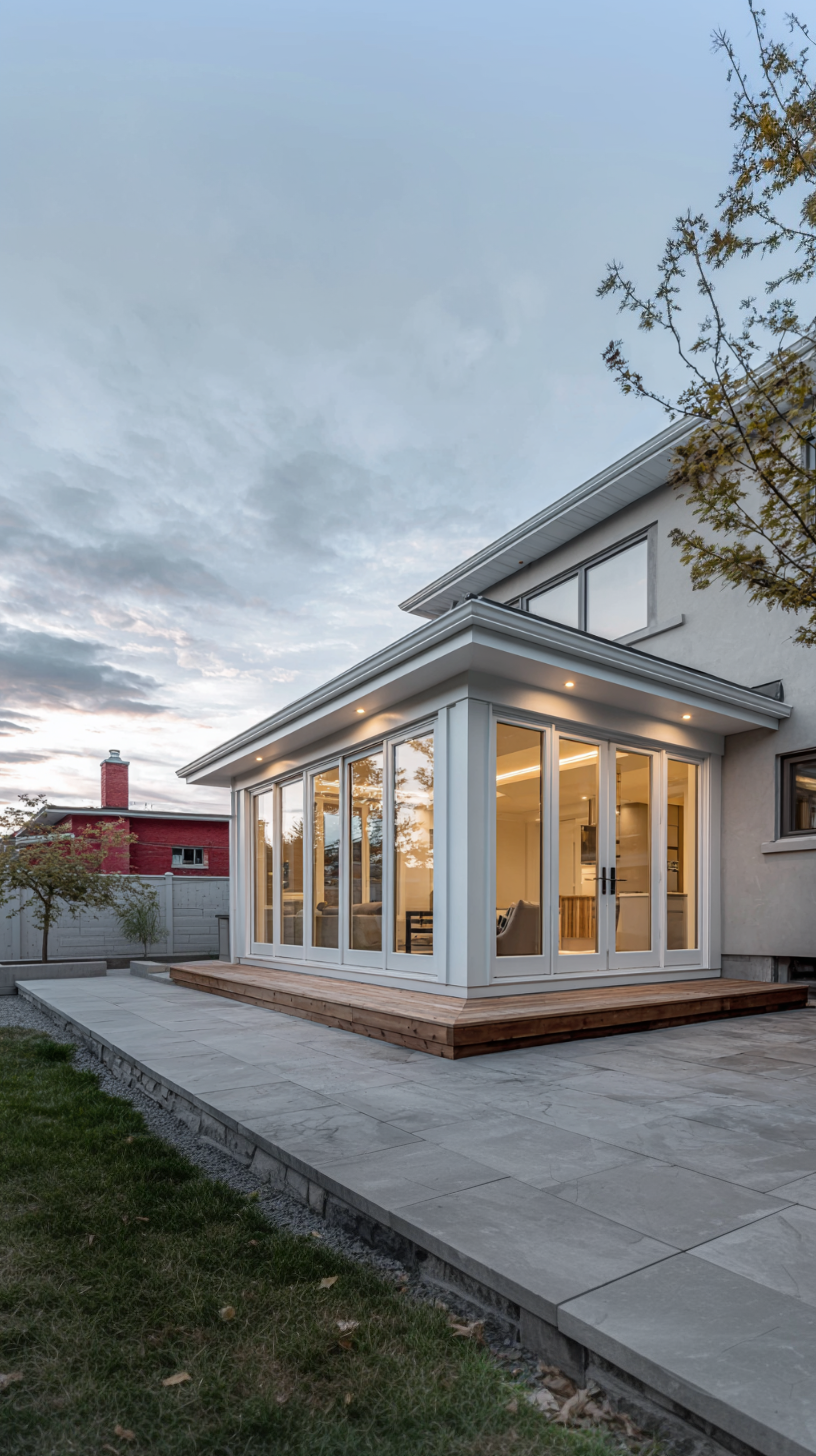
Source: RenoQuotes
Adding a sunroom is one of the most attractive renovation projects for Canadian homeowners. Whether you want to enjoy natural light during chilly October afternoons or create a bright living space in the middle of winter, this type of addition can completely change the way you experience your home. However, Canada’s climate makes planning essential. Between freezing temperatures, heavy snow, changing material costs, municipal rules, and provincial building code requirements, a sunroom project must be carefully designed from the start. This guide will help you compare your options and plan your budget according to your needs.
3-Season vs. 4-Season Sunroom: Understanding the Difference
Choosing between a 3-season and a 4-season sunroom is one of the most important decisions in your project. In Canada, the difference is not only about comfort or appearance. It is mainly about insulation, structural performance, and the ability to handle winter conditions.
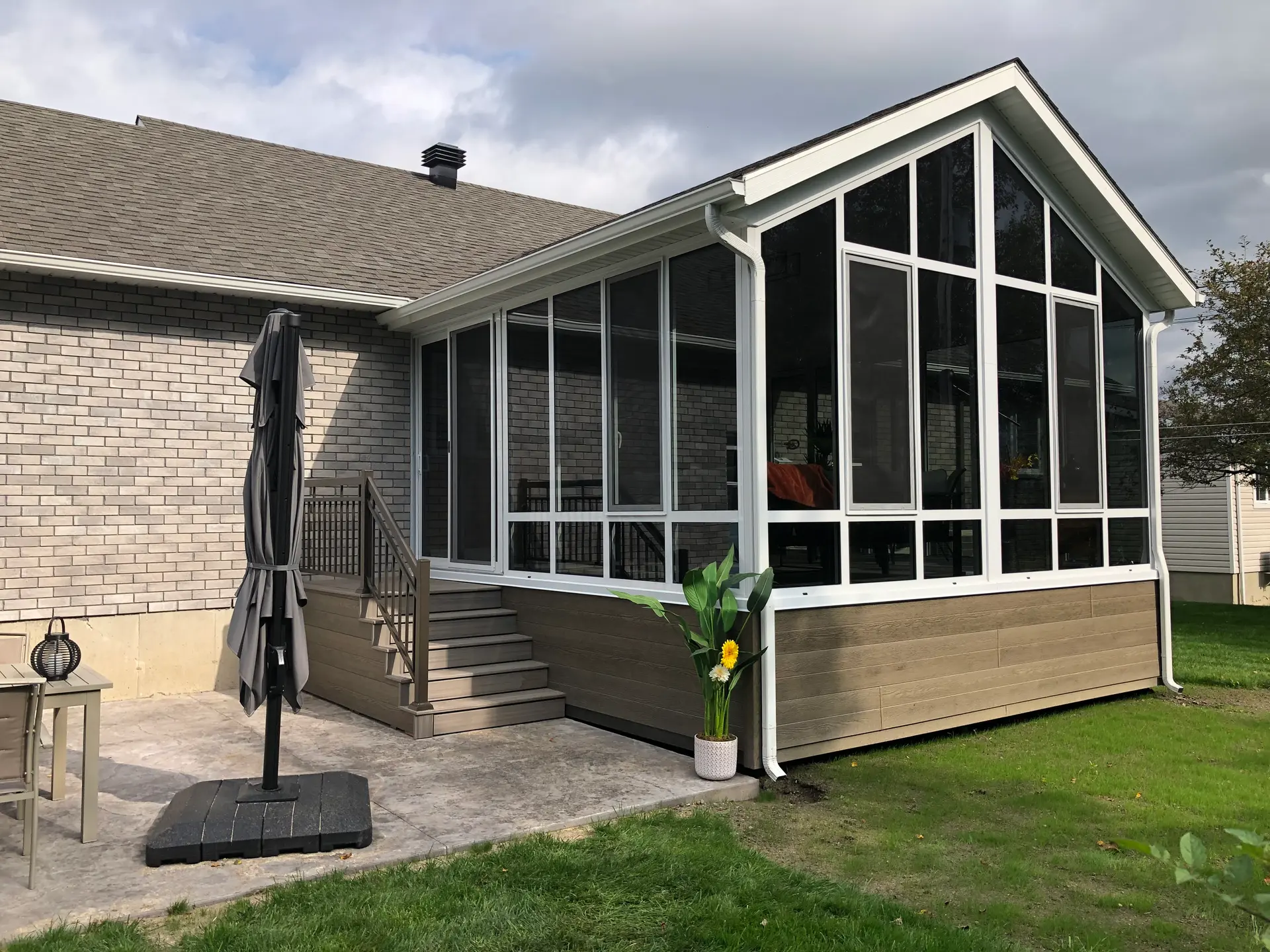
The 3-season sunroom is designed to be used from spring to fall, usually from April to November depending on your region. It is generally not insulated to the same standard as the rest of the house and is usually not connected to the home’s central heating system. It protects you from rain, wind, insects, and cooler evenings, but it can become very cold once temperatures drop below freezing.
The 4-season sunroom is closer to a true home extension. To handle Canadian winters, it usually requires energy-efficient Low-E glazing, sometimes with argon gas, thermally broken frames, and stronger insulation in the floor, walls, and roof. It also requires a stable foundation, such as screw piles, concrete piers, or a full concrete foundation, depending on the soil, structure, and local code requirements.
Because heating and air conditioning represent a major portion of energy use in Canadian homes, the performance of the glazing and insulation is especially important in a 4-season sunroom. A poorly insulated sunroom can become uncomfortable in winter and expensive to heat.
Sunroom Cost Estimates in Canada in 2026
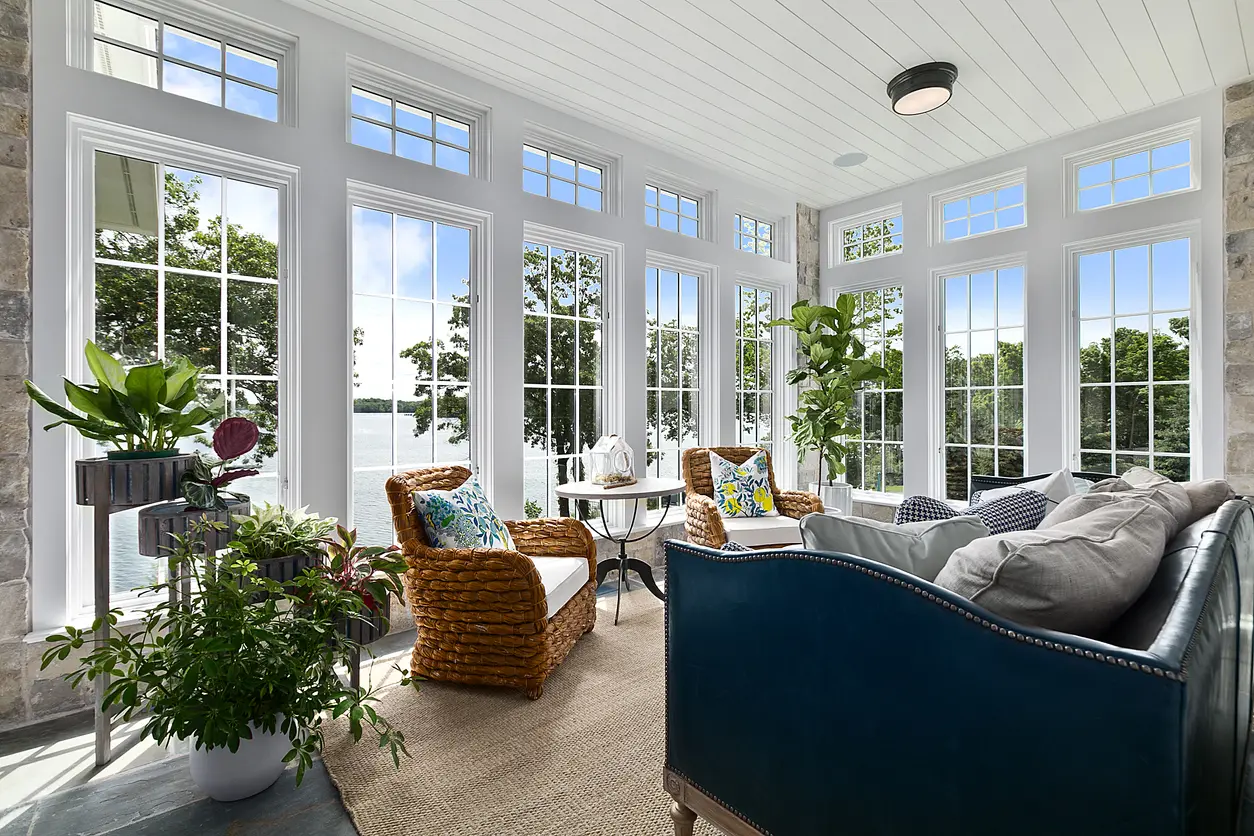
Source: Builda Construction Inc.
The cost of a sunroom varies widely depending on the size, glazing type, insulation level, foundation, finishes, and complexity of the installation. It is strongly recommended to get several quotes from qualified contractors so you can compare prices, inclusions, warranties, and structural solutions.
Budget for a 3-Season Sunroom
A 3-season sunroom is usually the most affordable option for homeowners who want a bright relaxation space mainly for spring, summer, and fall, without turning it into a fully heated living area.
Average price: About $150 to $250 per square foot, sometimes more depending on the materials, roof type, dimensions, access to the site, and related work.
Total investment: For a standard size of about 12 ft. x 12 ft., expect to pay around $15,000 to $30,000 for a basic model. Turnkey projects with upgrades can exceed this range.
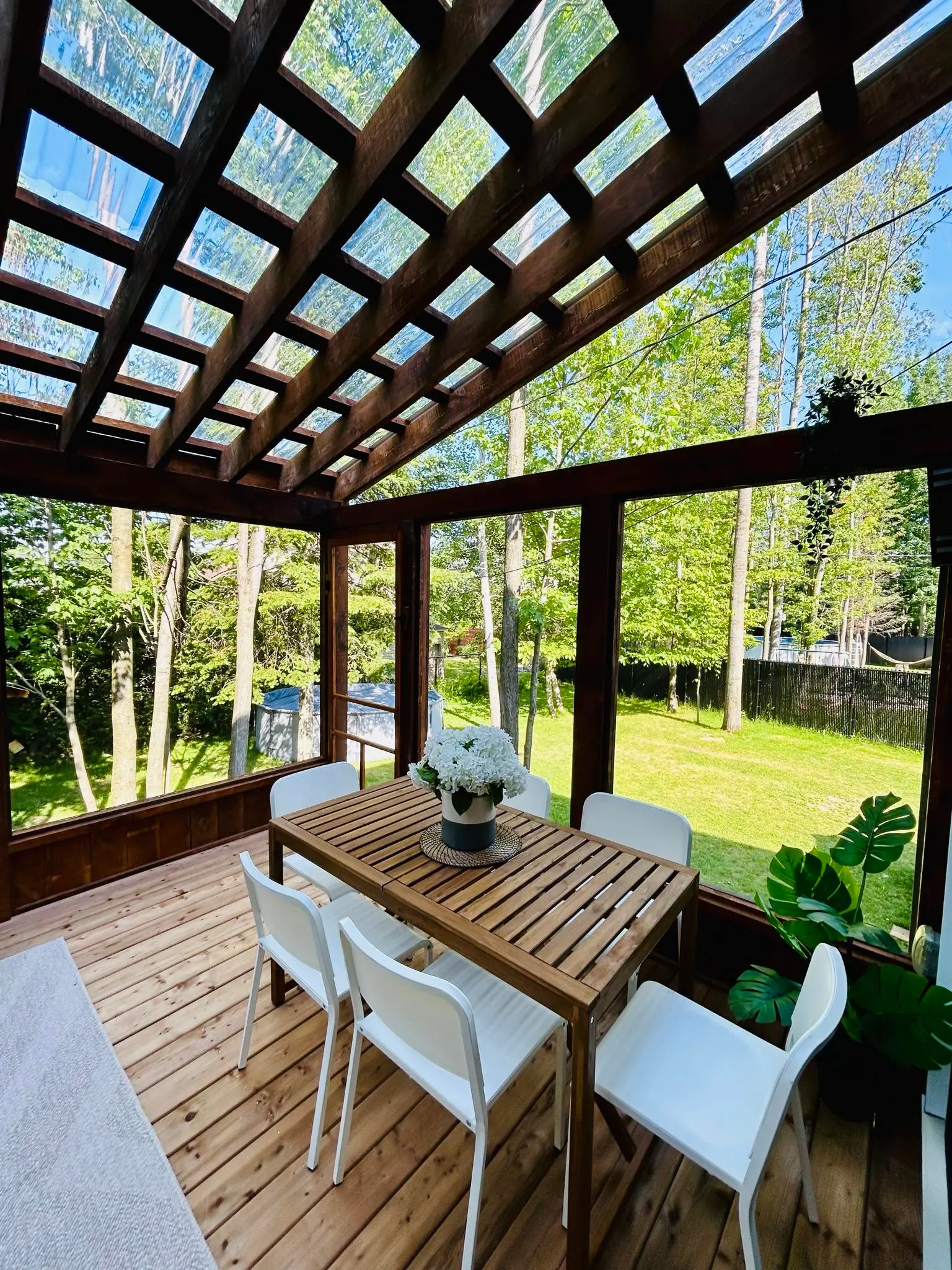
Common features: Lightweight aluminum structure, single glazing or tempered glass, and a polycarbonate, acrylic, or glass roof. This type of sunroom can sometimes be installed on an existing deck, but only if a structural assessment confirms that the deck can safely support the added load and meet local requirements.
Budget for a 4-Season Sunroom
For a room that can be used year-round, the investment is closer to that of a traditional home addition.
Average price: About $400 to $600 per square foot for a complete, well-insulated project, depending on the design, glazing, foundation, heating, cooling, and interior finishes.
Total investment: Expect to budget around $50,000 to $85,000 or more for a turnkey 4-season sunroom.
Common features: Energy-efficient Low-E glass, sometimes with argon gas, reinforced insulation in the floor, walls, and roof, and integration of heating and cooling. In many parts of Canada, screw piles are often used for sunrooms and small additions, but the final foundation choice should be based on soil conditions, the structure, municipal requirements, and professional recommendations.
Type of Sunroom | Minimum Installed Price | Maximum Installed Price | Use |
3-season sunroom | $15,000 | $35,000 to $40,000 | Spring, summer, fall |
4-season sunroom | $45,000 | $80,000+ | Year-round |
Custom sunroom | $60,000 | $100,000+ | Year-round/high-end |
Building Permits and Municipal Regulations in Canada
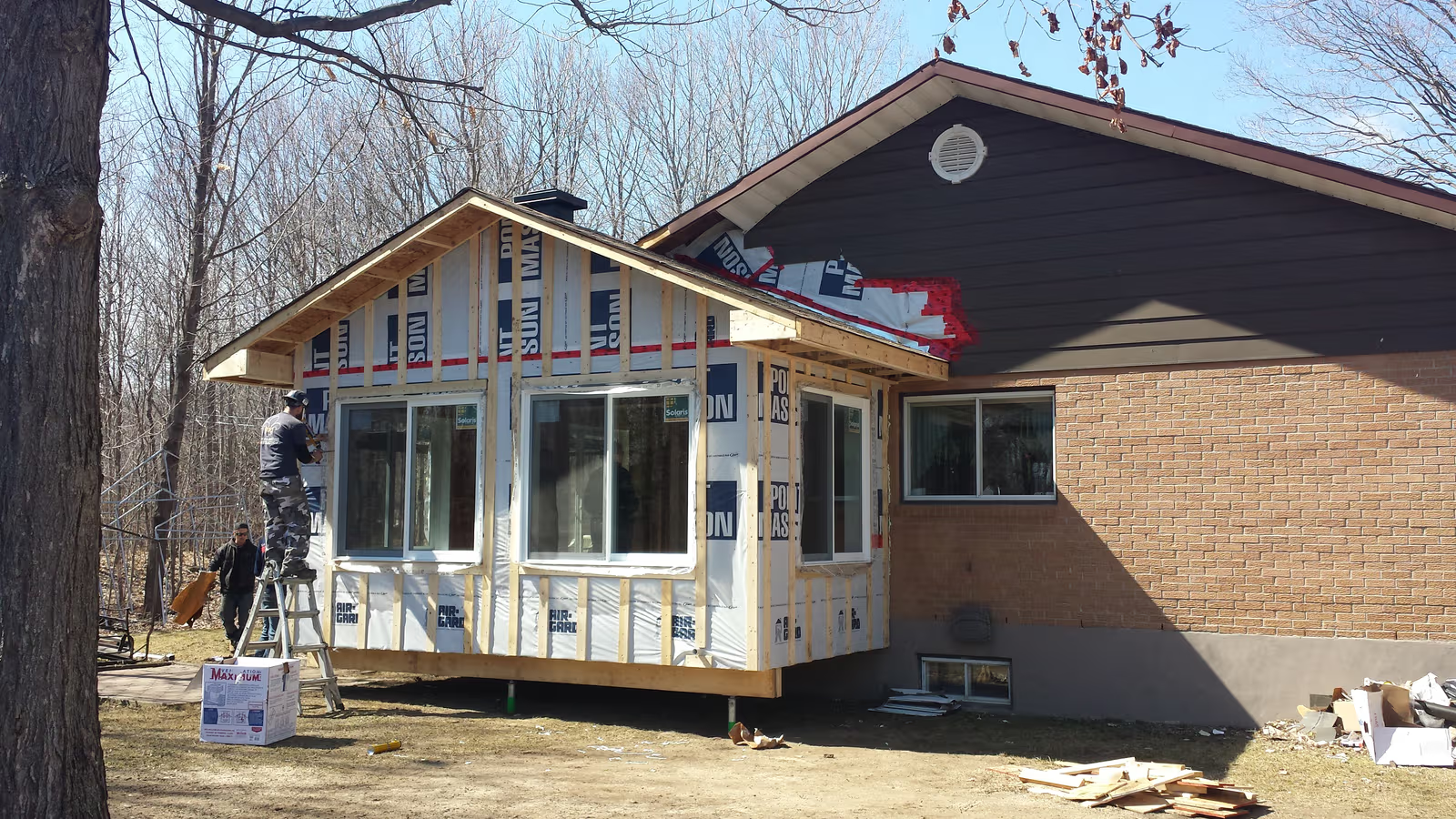
Source: CEBRQ
Before ordering materials or signing a contract, you should verify the requirements with your municipality. Each city has its own zoning, setback, lot coverage, height, and permit rules. Requirements can vary not only by province, but also by municipality and neighbourhood.
Building permit: A municipal permit is generally required for a sunroom addition because it is usually considered a home addition or a permanent structure attached to the house. The permit cost varies depending on the municipality, project value, and type of work, but it often represents a few hundred dollars.
Setbacks: Your sunroom must respect the required minimum distances from property lines, neighbouring buildings, easements, and sometimes the street. These distances vary depending on the municipality and zoning category.
Lot coverage: Some municipalities limit the percentage of the lot that can be covered by buildings. If your home already occupies the maximum permitted area, your sunroom project may need to be modified or could be refused.
Building Code and Structural Requirements
In Canada, a sunroom must comply with the applicable provincial or territorial building code. These codes are generally based on the National Building Code of Canada, with local adaptations depending on the province or territory. The structure must be designed to resist local climate loads, including snow, wind, frost, and sometimes seismic considerations. A poorly designed sunroom roof can become a serious safety risk during winter, especially in regions that receive heavy snowfall.
A sunroom should be built by a qualified contractor who holds the appropriate licence or certification required in your province. For example, licensing rules are different in Ontario, Alberta, British Columbia, and Quebec. For a 4-season sunroom that becomes part of the heated living space, the design must also account for applicable insulation, air sealing, energy efficiency, and ventilation requirements. Electrical work, such as lighting, outlets, baseboard heating, radiant floors, or heat pump wiring, should be completed by a licensed electrical contractor according to provincial and local requirements.
Factors That Influence the Final Cost
Source: VITRERIE ADSTOCK
Beyond the type of structure, several factors can affect the final cost of your sunroom project.
Excavation and foundations: If your soil is clay, rocky, unstable, sloped, or difficult to access, the cost of anchors, screw piles, footings, or concrete foundation work can increase.
Room orientation: A south- or west-facing sunroom may require glazing with a carefully selected solar heat gain coefficient (SHGC). A large glass area with the wrong glazing can create a greenhouse effect in summer and increase cooling needs.
Heating system: Adding electric radiant floors can improve comfort during the colder months, especially in a 4-season sunroom. Other options may include baseboard heaters, a ductless heat pump, or integration with the home’s existing heating system, depending on the design.
Connection to the house: If the project requires opening or partially removing a load-bearing exterior wall, you should plan for engineering fees, structural plans, and reinforcement, such as LVL or steel beams.
Financial incentives: Some energy-efficiency upgrades may qualify for provincial, municipal, or utility-based programs, but eligibility varies by region and by project type. In many cases, incentives apply more easily to the replacement of existing windows or insulation upgrades than to new windows installed as part of a new addition. Always verify the current rules before assuming your sunroom project will qualify.
Increasing the Value of Your Home
Source: Bois terra Inc
Although adding a sunroom represents a significant investment, it can improve the appeal of your property and contribute to its resale value, especially if the addition is well built, code-compliant, energy-efficient, and well integrated into the home. The return on investment depends on the type of sunroom, quality of materials, local real estate market, and buyer expectations. Some North American estimates place the potential return around 50% to 70%, but this is never guaranteed. In many cases, the biggest benefit is not only resale value, but also the extra comfort, natural light, and usable living space it adds to the home.
Plan Your Sunroom Carefully to Enjoy It Year-Round
Adding a sunroom can transform the comfort of your home, but it is not a project to improvise. Between the choice of a 3-season or 4-season model, foundation type, glazing, insulation, heating, municipal permits, and building code requirements, every decision affects the final cost and long-term durability of the addition.
Before moving forward, take the time to compare several quotes, verify your contractor’s qualifications, and confirm the rules that apply in your municipality. A well-designed sunroom can improve your quality of life, bring more natural light into your home, and increase the appeal of your property. With proper planning, it becomes much more than a simple addition: it becomes a new living space designed for the realities of the Canadian climate.
Looking for something else?
Related articles
The latest industry news, interviews, technologies, and resources.
Cynthia Pigeon
•08 Nov 2023
Are you thinking about purchasing an air exchanger to improve the comfort level in your home? If you want to get the most out of this device, installation is key.
Editorial Team
•08 Nov 2023
Recessed lighting is a great feature and acts as a way to enhance any space by introducing more light. In fact, one of the reasons it is such a popular way to illuminate parts of your home is thanks to the way it can make small spaces feel bigger.

Editorial Team
•08 Nov 2023
If there’s one thing to check prior to purchasing or renting a home, it has to be the humidity levels. Not only are high humidity levels a health hazard, but they can definitely cut down the service life of a structure. Ideally, humidity levels should be between 40 and 50%. Anything above this limit will cause a proliferation of bacteria, mould, and dust mites.

Editorial Team
•20 Apr 2026
Is your landscaping basking in concrete paving stones or pavers? Guess all that’s left is for you to get some paving stone sealer to safeguard your driveway and walkways. Why, though? Because such surfaces are easily soiled or stained.
Cynthia Pigeon
•08 Nov 2023
While thermal insulation is a top priority for most homeowners, proper roof ventilation is also critical to keeping your roofing system in tip-top shape. A roof vent cap is key to achieving this goal.