The R-20 Act: Which Renovation Work Is “Outside CCQ”?
By Editorial Team
Updated on November 18, 2025

The R-20 Act, which governs labour relations, professional training, and workforce management in Quebec’s construction industry, is often a source of confusion for contractors and homeowners looking to undertake residential renovation work.
One of the biggest grey areas remains: which projects are truly “outside CCQ”, meaning they are not subject to the strict application of the R-20 Act and its collective agreements? Here is a practical guide to clarify this, with concrete examples.
Understanding the R-20 Act and the Role of the CCQ

Source : RenoQuotes
The R-20 Act regulates the majority of construction work carried out in Quebec. It defines labour relations rules, imposes mandatory union membership, and requires specific certifications for employers and workers. Its application and official interpretation are overseen by the Commission de la construction du Québec (CCQ), the public body responsible for:
Ensuring compliance with working conditions and collective agreements;
Issuing competency cards and providing professional training;
Inspecting job sites and verifying employer compliance;
Administering social benefit plans;
Combating undeclared work and corruption.
The CCQ thus acts as the guardian of sector rules, protecting both workers and the integrity of the industry.
Renovation Work “Outside CCQ”: What the Law Says
Source : Construction Atco inc
According to the R-20 Act, certain renovation or construction projects can be carried out without being subject to its requirements. Here are the main cases:
1. Renovation of an Owner-Occupied Dwelling
Concrete example: You are the owner-occupant of a duplex and want to renovate your bathroom.
What the law says: Maintenance, repair, renovation, and modification work on a dwelling occupied by the owner, carried out for personal, non-commercial purposes, is excluded from the application of the R-20 Act. You can perform these projects yourself or hire people who are not necessarily CCQ-covered employees, as long as the dwelling is your primary residence.
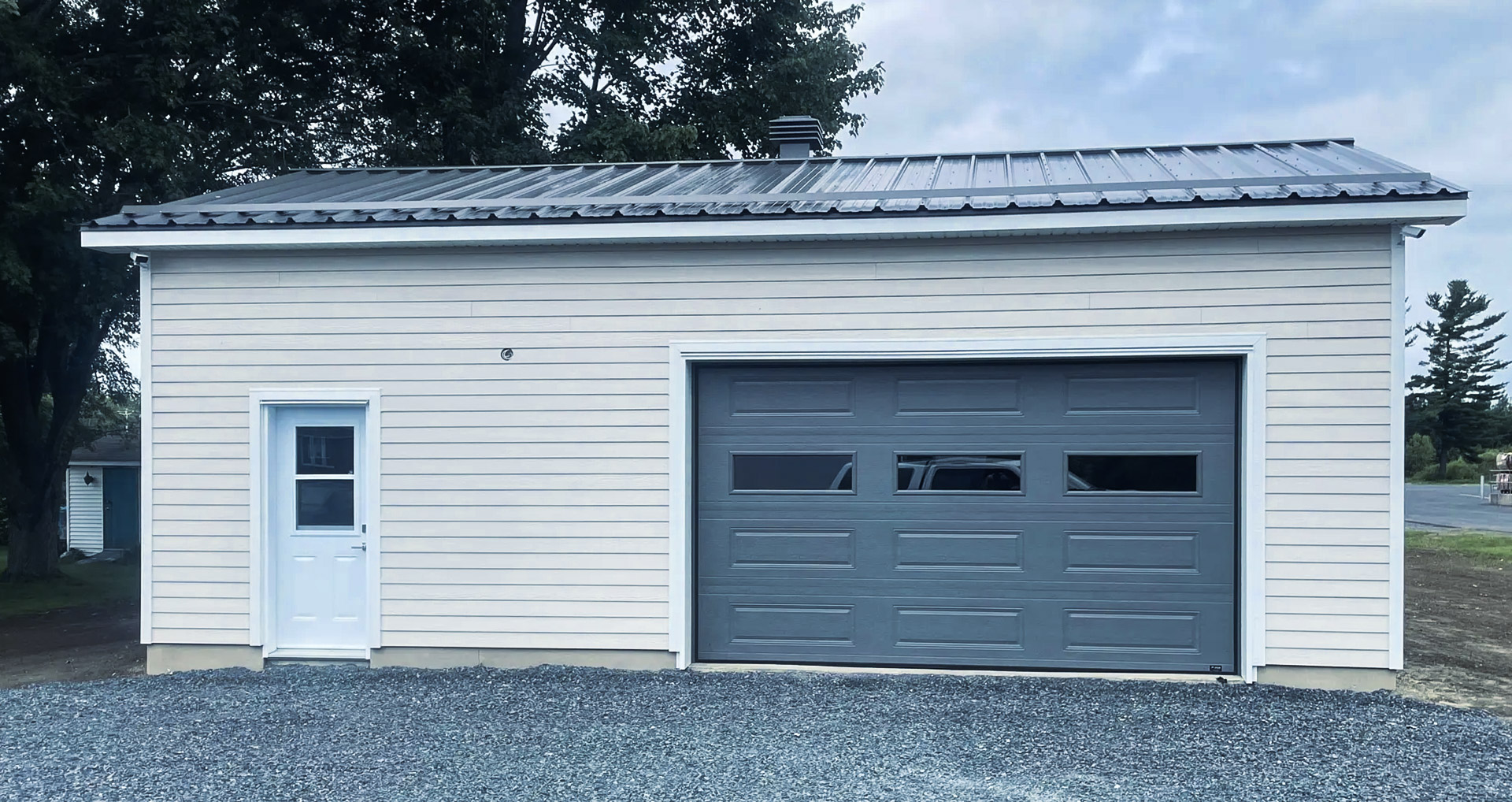
2. Construction of a Garage or Shed
Concrete example: You want to add a garage to your single-family home.
What the law says: The construction of a garage or ancillary shed for an owner-occupied dwelling (whether attached or detached) is not subject to the R-20 Act, provided the work is done for personal, non-commercial purposes.
3. Work on a Detached Single-Family Home
Concrete example: You hire a contractor to redo the asphalt in your driveway.
What the law says: Work involving gutters, garage doors, central vacuum systems, and landscaping (including asphalt or concrete for driveways and sidewalks) on a detached single-family home, carried out by a person who is not a professional employer or an employee who does not normally perform other construction work, is excluded from the R-20 Act.
Caution: Limits of Exclusions
Extension or Enlargement
Concrete example: You add an extension to your duplex.
What the law says: As soon as the work goes beyond maintenance or renovation and affects the structure or increases living space, the exclusion generally no longer applies. Enlargement, extension, or major modification projects may be considered construction subject to the R-20 Act, especially if professional contractors or employees are involved.
Multi-Unit Buildings
Concrete example: You want to renovate several units in a triplex where you occupy only one apartment.
What the law says: The exclusion applies to the owner-occupied dwelling. If the work concerns rental units that you do not occupy, it will be subject to the R-20 Act, even if you are the owner of part of the building.
Practical Summary: Main Cases Table
Type of Work | Owner-Occupant | Tenant / Non-Occupant Owner | Subject to R-20 Act? |
Bathroom renovation | Yes | No | No |
Adding a garage / shed | Yes | No | No |
Extension / enlargement | Yes / No* | No | Yes (in most cases) |
Renovation of rental units | No | Yes | Yes |
Landscaping (detached single-family home) | Yes | N/A | No |
* Depending on the scope of work or the structure modified, the enlargement may become subject to the R-20 Act.
Best Practices to Avoid Surprises
Always verify your specific situation: The configuration of your building, your occupant status, and the nature of the work can affect the application of the R-20 Act.
Seek advice from the CCQ or a professional: When in doubt, consult the Commission de la construction du Québec or a legal professional specializing in construction law.
Keep proof: If you carry out work excluded from the R-20 Act, keep invoices and documents demonstrating that you are indeed the owner-occupant.
Collective Agreements in Residential Construction: Their Link to the R-20 Act

Source : RenoQuotes
Although many residential projects may be excluded from the R-20 Act, it is essential to understand that, for all work that is subject to the law, collective agreements play a central role in defining working conditions on Quebec construction sites.
What Is a Collective Agreement in Construction?
In the construction industry, a collective agreement is a written contract between employer associations and representative unions. It sets working conditions, wages, benefits, work hours, leave, and several other aspects for a specific sector (residential, industrial, institutional and commercial, civil engineering, and roadwork).
How Does the R-20 Act Regulate Collective Agreements?
The R-20 Act provides that each construction sector has its own collective agreement, negotiated through a defined process. For the residential sector, this means:
Employers and workers subject to the law must comply with the applicable collective agreement
Negotiated conditions apply to all residential projects covered by the R-20 Act, regardless of the employee’s or employer’s union affiliation
The CCQ ensures proper application of these agreements on job sites conducting inspections and intervening in cases of non-compliance
Why Is This Important in the Context of Exclusions?
If your residential projects are not excluded from the R-20 Act (for example, major expansions or rental unit renovations), you must comply with both the law and the residential sector collective agreement. This involves:
Hiring workers with the required certifications
Providing wages and benefits as specified in the collective agreement
Adhering to the schedules and safety rules defined.
Where to Consult the Residential Sector Collective Agreement
Official texts of collective agreements are available from the CCQ or your sector association. It is recommended to review them before starting any major projects to avoid non-compliance.
This section clarifies the link between exclusions under the R-20 Act and the mandatory application of collective agreements for work that is subject to the law, helping contractors and owners understand that compliance is required outside exclusions.
Conclusion
In summary, the R-20 Act provides a clear framework for labour relations and worker protection in the construction sector while offering specific exceptions for owner-occupants performing residential work. For residential renovation contractors, it is crucial to understand these nuances to ensure compliance and avoid penalties. When situations are unclear, it is always recommended to verify the applicable rules before starting a project.
Looking for something else?
Related articles
The latest industry news, interviews, technologies, and resources.

Editorial Team
•13 Aug 2025
Plenty of industries and various fields are adapting and evolving by introducing new technologies to their production procedures. Even in the construction sector, we’ve been noticing the rise of 2.0 methods, such as virtual or augmented reality, as well as robots working their way around construction sites.

Editorial Team
•05 Nov 2024
An entrepreneurial takeover—transferring business ownership—is an increasingly sought-after course of action in the construction industry. One way to look at this trend is by recognizing that a lot of contractors are nearing retirement age, therefore taking a step back and leaving a sort of legacy for the new generation. However, this transition isn’t done without hardships and poses a few specific challenges. In this article, we’ll take a look at the main challenges facing construction contractors deciding to entertain entrepreneurial takeovers.

Editorial Team
•08 Nov 2023
Thinking of replacing your shower to offer your bathroom a little extra flair? There are plenty of options! Here are some of the possibilities available for you to carry out a new renovation project.
Editorial Team
•01 May 2026
The sheer size of a home's plumbing system can make plumbing issues seem rather complex. There are pipes in the basement, drains outside, bits of pipe coming out on the roof, valves, and J-bends under the sinks...

Editorial Team
•11 May 2026
Are you looking to design a cozy and relaxing lounge area in your backyard to spend quality time with your family? Even though summer is coming to an end, nothing’s keeping you from planning ahead for next summer! Here are a few ideas to help you design your landscaping project accordingly.