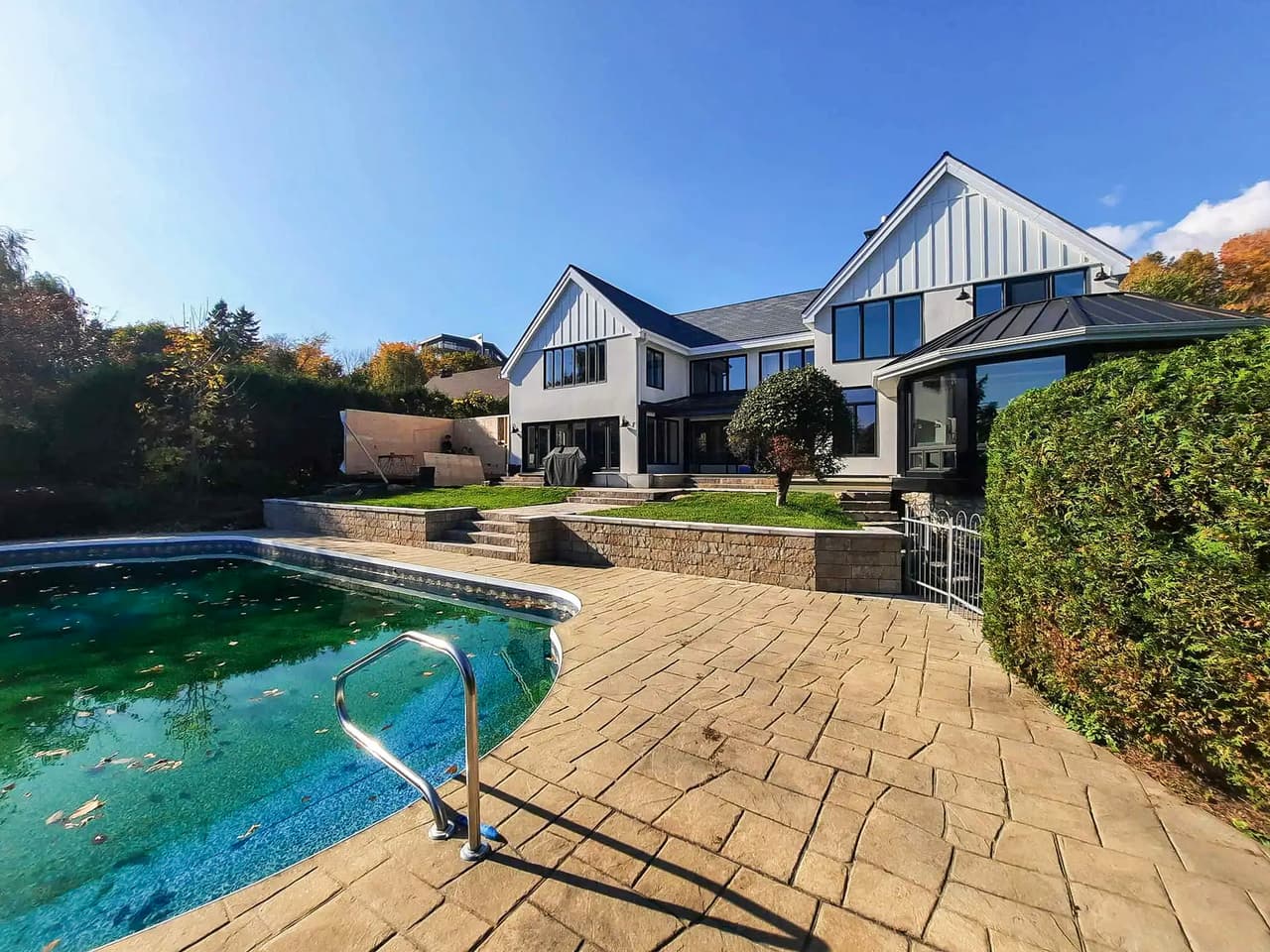
True to its name, stamped concrete combines two things: concrete and stamps. While this definition paints a rather clear picture of what this building material actually is, it’s still important to delve into its other defining factors, thereby taking a closer look at other types of concrete.
What’s stamped concrete?
Source : Soumission Rénovation
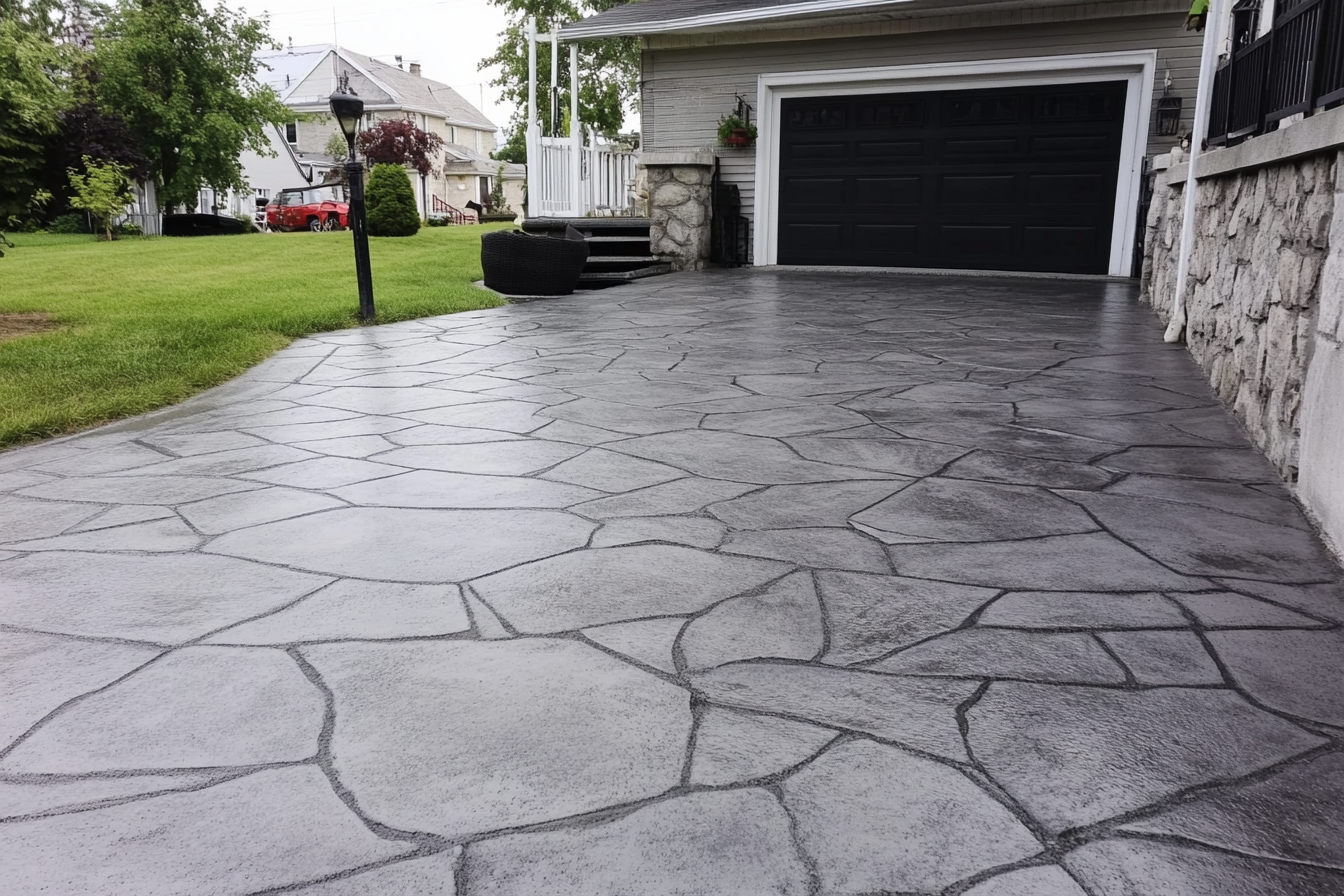
Stamped concrete, also known as “textured” or “imprinted” concrete, is a cutting-edge landscaping and building method that has amassed quite a following in recent years.
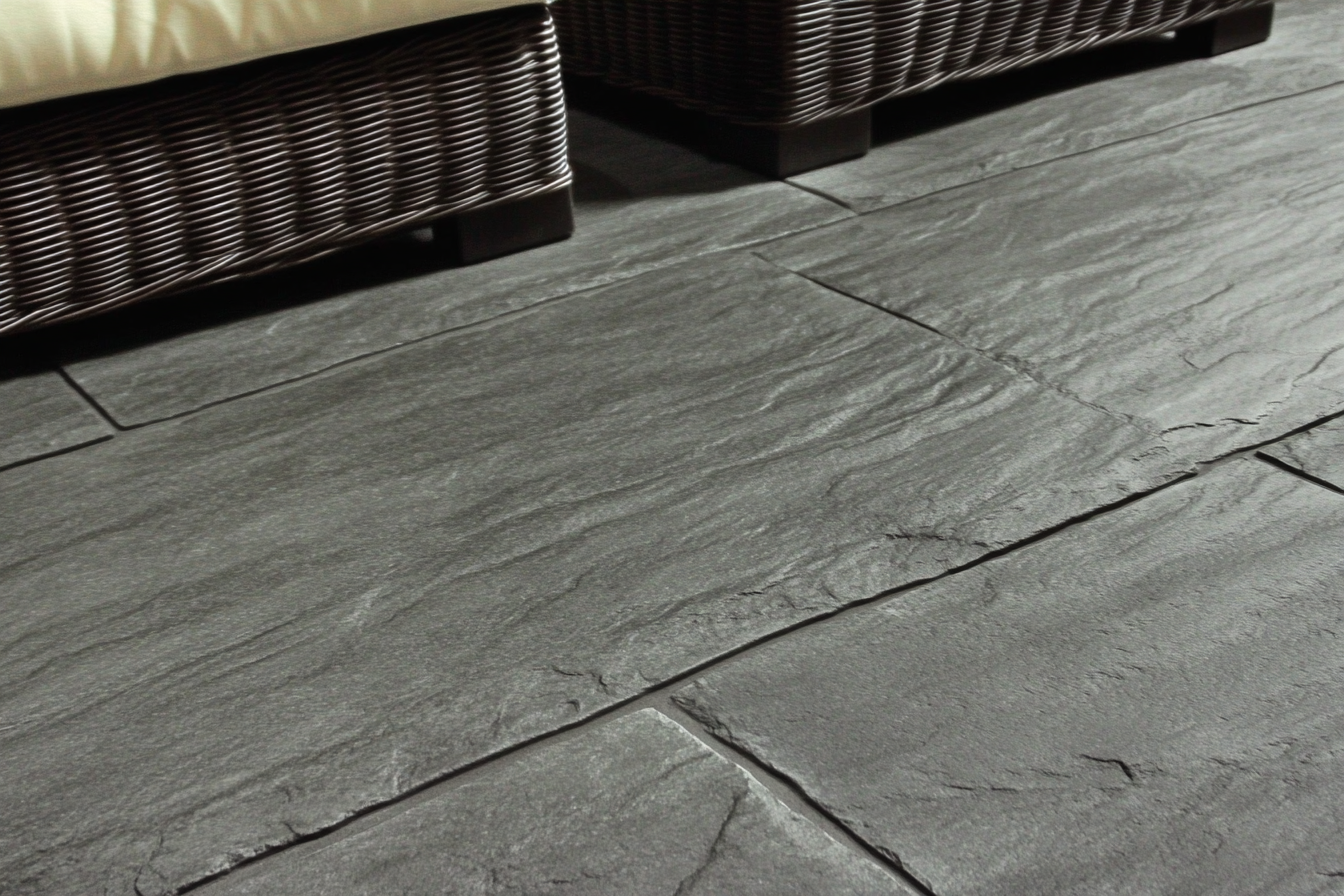
This type of concrete has an extensive selection of patterns and colours. The method used to make stamped concrete consists of pouring 4-inch to 6-inch thick pre-coloured slabs of cement on-site. Then, rubber moulds are used to imprint designs on the concrete’s surface while the latter is still malleable.
The Advantages of Stamped Concrete
Stamped concrete is low maintenance, elegant, durable, and cost-effective. What’s more, it’s important to note that this material is fire-, insect-, rot-, and mould-resistant. Given the aforementioned qualities, it’s no wonder this material is often used to mimic others like pavers, fieldstones, ceramic tiles, brick, and even wood at times. Fun fact: Concrete is increasingly resistant over time, which is a factor that sets it apart from other types of materials available on the market.
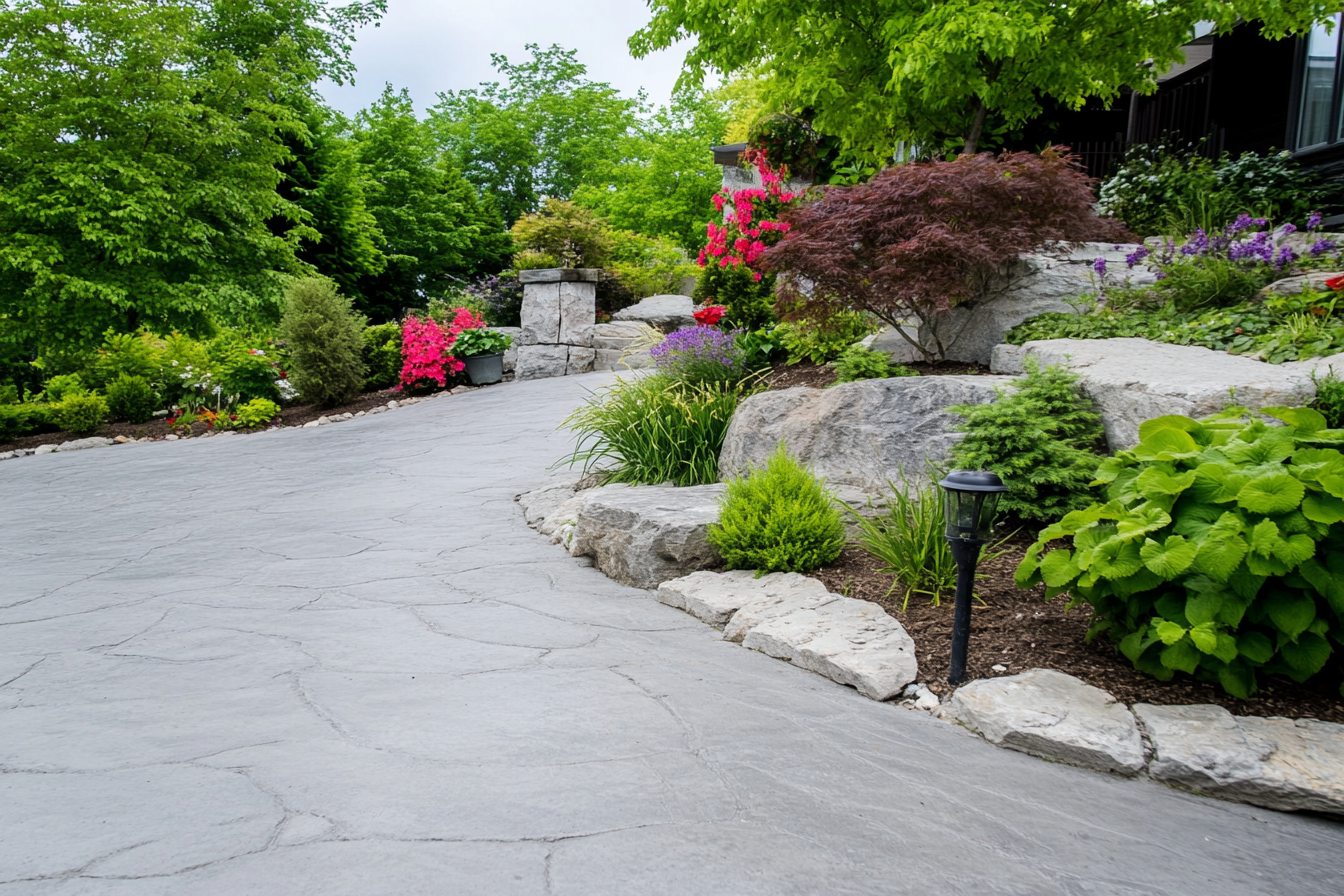
Besides, stamped concrete can be used just about anywhere, whether it’s to revamp the coping around a pool, walkways, balconies, parking lots, stairs, or even patios. That’s proof enough of just how versatile this material is, which is without a doubt one of its greatest assets.
Picking the Right Concrete Type
Source : Soumission Rénovation
Concrete is a paste with varying consistencies that, when cured, becomes solid after having been moulded in a factory or poured directly on-site. There are several types of concrete and what’s referred to as concrete will change based on the type of binder used.
Cement-Based Concrete
Since the 20th century, cement-based concrete has risen in the ranks, sitting in the number two position, and is one of the most used mineral materials in the world. It has also become the most used building material on the planet. Note that in layman’s terms, when speaking of concrete, ultimately, one is referring to cement-based concrete.
Soil-Cement
On the other hand, soil-cement (also known as rammed earth or daub), was primarily used before the 20th century. This type of concrete was clay- and silt-based. And, at the time, these materials were available for free and in large quantities, sourced directly from the ground. Nowadays, soil-cement is still used, but isn’t as sought-after compared to cement-based concrete. Nevertheless, it’s an eco-friendlier option, and its manufacturing method is much simpler too. Clay and silt are free, and the transformation process of rammed earth requires no chemical agents.
How to Clean Stamped Concrete
Source : Soumission Rénovation
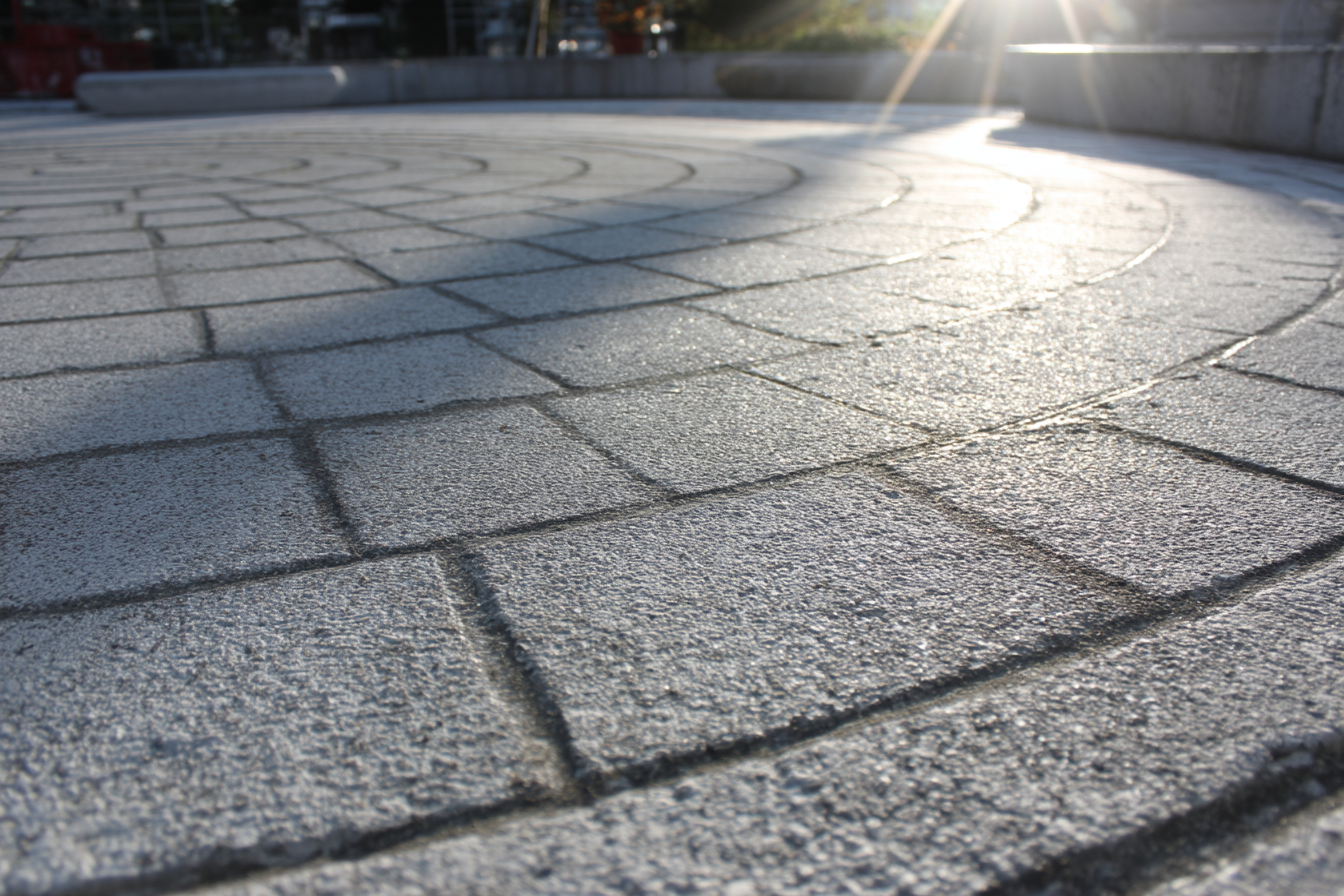
Cleaning stamped concrete is rather straightforward and can be done following these key steps.
Regular Cleaning
Stamped concrete has to be regularly cleaned to remove dirt, dust, and debris. Use a soft-bristle broom to remove debris from the surface, then use a garden hose with a moderate-pressure nozzle to rinse the surface.
Use a Cleaner
If your stamped concrete has stubborn stains or oil stains, you might have to use a specially designed cleaner made for concrete surfaces. Make sure to follow the manufacturer’s instructions and test the cleaner on a small, unapparent spot before using it over the entire surface.
Repair Cracks
Regularly inspect your stamped concrete to locate any fissures or damage. If you spot any, use a specially designed repair putty to fill in and seal the gaps. Follow the manufacturer’s instructions and allow for ample drying time prior to walking or driving over it.
Weatherproof
To prolong your stamped concrete’s lifespan, it’s highly recommended to apply a coat of protective sealant every year or every other year. The sealant will safeguard the surface from discoloration, stains, and wear brought on by the elements, such as the sun, rain, and snow. Make sure to choose a sealant made for stamped concrete surfaces.
Say Nay to Corrosive Chemical Products
Avoid using corrosive chemical products, such as salt-based ice melters on stamped concrete, as they can damage the surface. Use salt-free ice melters or more gentle alternatives to prevent damaging the surface.
By following these simple steps and regularly cleaning the surface, your stamped concrete will withstand the test of time and still look good.
How much does a stamped concrete structure cost?
Source : Soumission Rénovation
One must first establish the fact that setting up a stamped concrete structure is more expensive compared to standard concrete. For a more detailed overview of the costs involved, note that the cost of installing a stamped concrete structure is roughly $14.50 per square foot (using only one colour).
For a more elaborate pattern and the use of two or three colours, the asking price is closer to $22 per square foot. Ultimately, paying upwards of $29 per square foot isn’t unheard of for all projects using several different colours, more refined imprinting methods, or handmade finishes.
Stamped Concrete: An Affordable Elegance
Stamped concrete was unveiled as an aesthetic and long-lasting solution in the construction industry. This ingenious technique creates elegant surfaces, faithfully mimicking the look of other, costlier materials. Whether it be for alleyways, terraces, or other outdoor surfaces, stamped concrete is an appealing alternative, meshing concrete’s robustness with the versatility of patterns and textures. It’s beckoning to challenge the boundaries of architectural creativity while preserving the practical advantages of concrete, making for an enticing solution for durable and aesthetically pleasing outdoor spaces.
Looking for something else?
Related articles
The latest industry news, interviews, technologies, and resources.
Cynthia Pigeon
•30 Apr 2026
In 2026, the cost of building a detached garage in Canada typically ranges from $35 to $65 per square foot for a traditional wood-frame structure, and $12 to $25 per square foot for prefabricated models. For a standard single garage, expect a total budget between $30,000 and $55,000, including the concrete slab and basic electrical installation. Costs vary depending on materials, municipal permit fees, and local building code requirements.

Editorial Team
•02 Jul 2024
Composite panels are far from the latest addition in all things construction-related. However, what is groundbreaking is the wide range of materials from which such panels are manufactured.

Paul Riopel
•09 Jun 2026
On April 10th, the Ontario government introduced its newest Building Code, signaling a significant step towards simplifying regulations in the construction sector. This update aims to make it easier for the industry to navigate compliance requirements while ensuring that safety and performance standards remain uncompromised. By reducing regulatory hurdles, the revised Building Code seeks to facilitate smoother construction processes and promote housing development in the province.

Cynthia Pigeon
•16 May 2025
Although installing a drop ceiling is the perfect project for any and all DIY enthusiasts, it’s still important to know the proper installation guidelines to follow when proceeding with this project. So here's everything you need to know about installing a drop ceiling.

Editorial Team
•21 Aug 2024
The mere thought of adding wood accents to your new bathroom design is enough to bring a big smile to your face, but are you still a bit skeptical about it? Note that the use of wood in bathrooms has been a growing trend over the last few years. Not only is it aesthetically pleasing, but it’s also a durable choice. Courtesy of wood, your bathroom exudes warmth, and that’s here to stay.