Balcony and Deck Renovation in Canada: Costs and Material Guide 2026
By Editorial Team
Updated on April 8, 2026
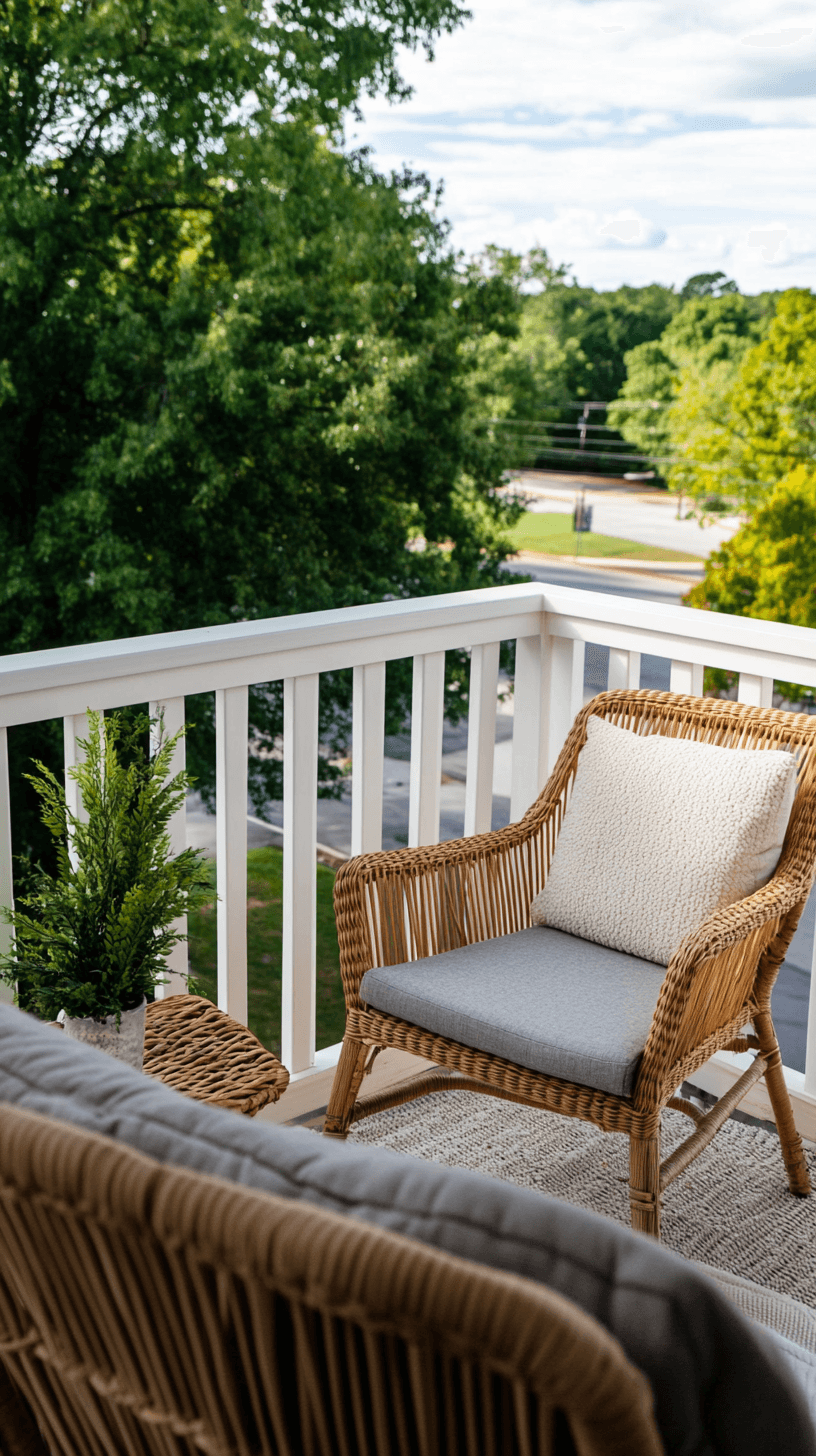
Renovating a balcony or deck in Canada requires close attention to structural durability, especially in regions affected by repeated freeze-thaw cycles. In 2026, fibreglass remains a popular choice for elevated balconies because of its waterproofing performance and long lifespan, while ground-level structures continue to benefit from improved stability with helical piles. Before starting your project, make sure your guardrails meet local code requirements and that you obtain any required municipal permits for proper compliance and to protect property value.
Renovating Your Balcony or Deck in Canada: A Planning Guide
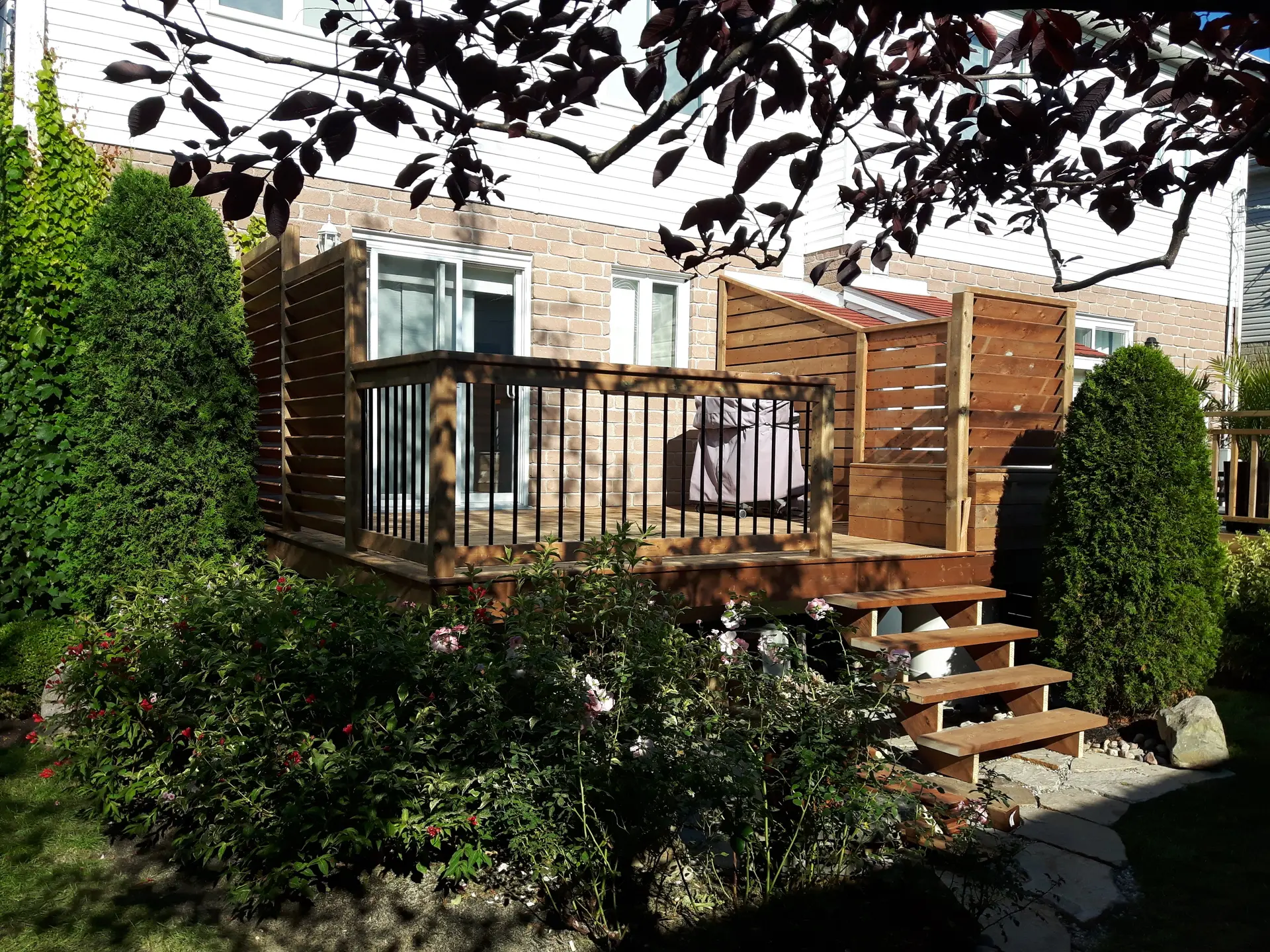
Source: Rénoflip concept inc.
Across Canada, a balcony is much more than an architectural extension—it’s a key living space that must withstand harsh winters, heavy precipitation, and strong summer UV exposure. Whether you’re planning to refurbish a street-facing balcony on a Toronto multiplex or build a spacious backyard deck in Vancouver or Calgary, the success of your project depends on a sound structure and materials designed either to allow proper ventilation or to effectively resist moisture, depending on the application.
Assessing the Current Condition: Repair or Rebuild?
Before choosing a new surface finish, inspect the structural “backbone” of the balcony or deck: the joists, framing connections, and anchors. A beautiful new surface will not rectify underlying structural problems.
Checking for rot: Use a screwdriver to probe the wood in the supporting joists. If the wood feels soft, flakes apart, or crumbles easily, the structure may be compromised.
Corrosion and rust: On steel balconies or structures with metal supports, inspect welded connections, fasteners, and anchor points carefully. Rust that has eaten through the metal is often a sign that full reconstruction may be the safer option.
Slope test: A balcony or deck that tilts toward the house should be treated as a serious warning sign. Water should always drain away from the building to reduce the risk of moisture infiltration into the wall assembly or foundation.
Choosing the Right Surface for Low Maintenance
The material you choose will affect how much maintenance you will need to do over the next 15 years or more. In Canada, three common options remain especially relevant in 2026.
Fibreglass: A Popular Choice for Elevated Balconies
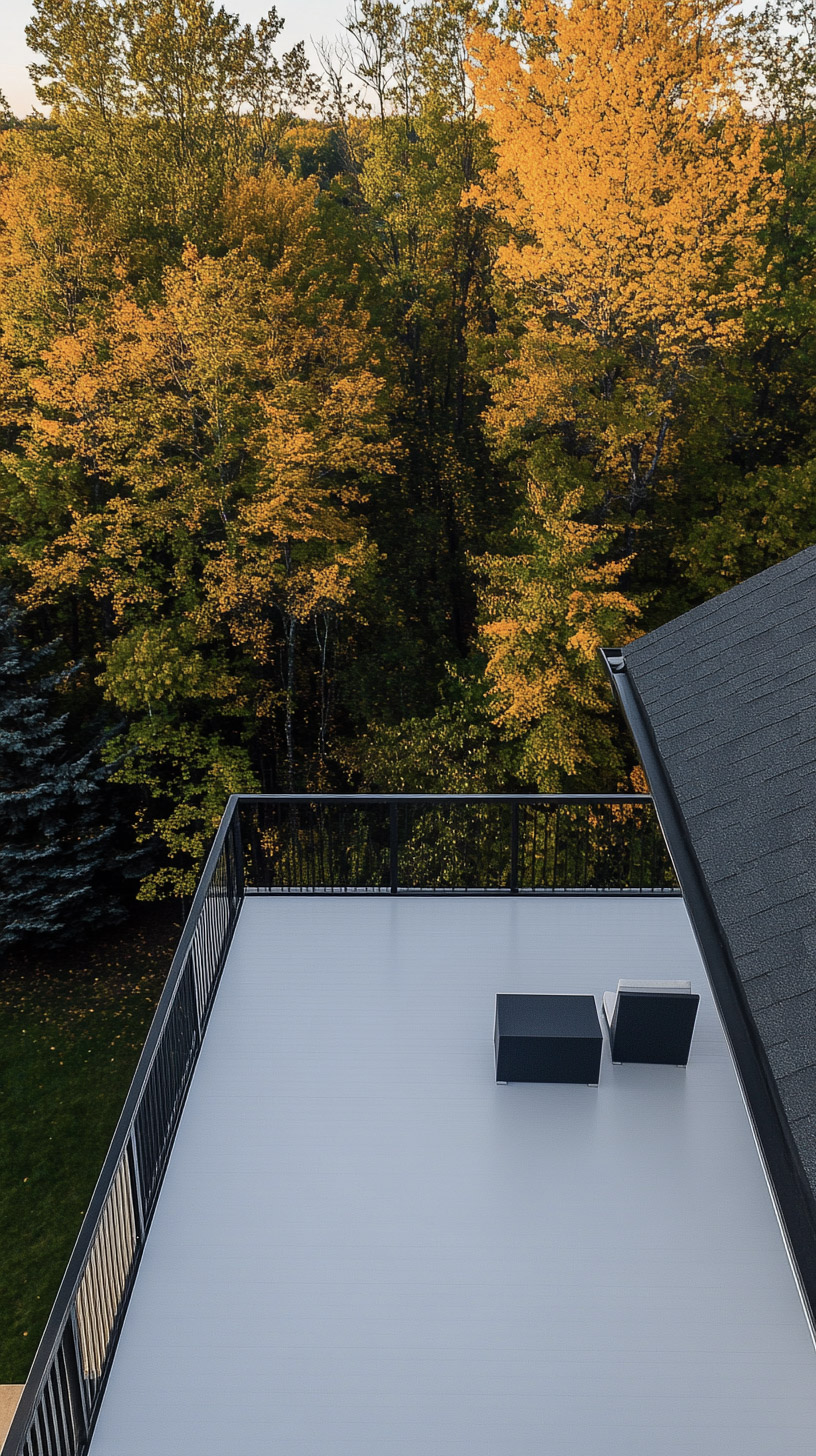
Source: RenoQuotes
Fibreglass has become a very popular option for upper-level balconies, especially on multi-unit residential buildings.
Complete waterproofing: Unlike wood decking, fibreglass creates a sealed surface that helps protect the structure below.
Durability: With a lifespan that often exceeds 20 years, it stands up well to snow, ice, freeze-thaw conditions, UV exposure, and de-icing residue. Installed costs typically range from $30 to $65 per square foot, depending on product quality, whether a new structure is needed, and the overall complexity of the job. That makes it a strong long-term investment for many homeowners.
Pressure-Treated Wood and Cedar: High Maintenance Yet Cozy
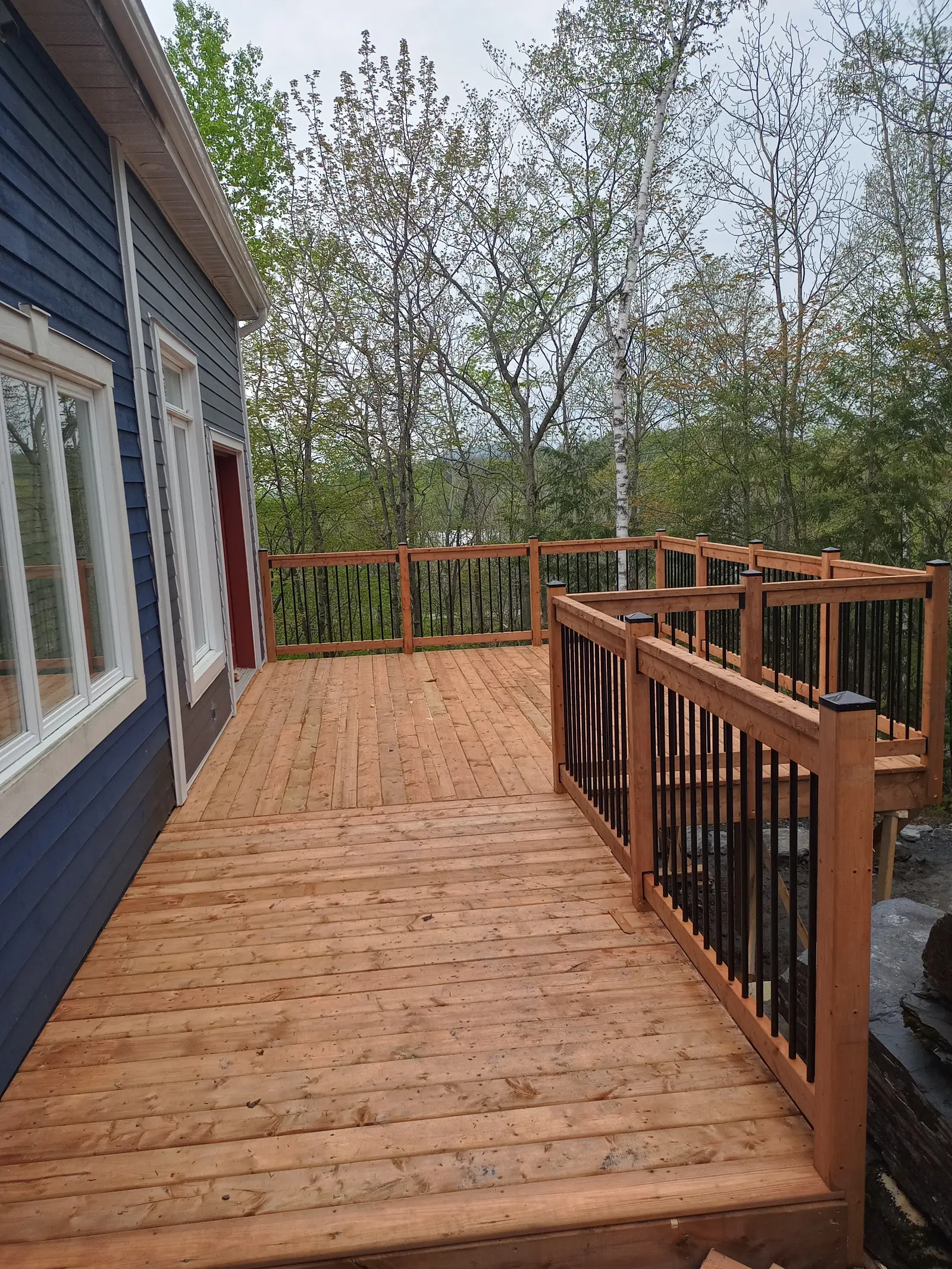
Source: Tradi-Charpente
For a more traditional look or for ground-level decks, wood remains a timeless option.
Pressure-treated wood: This is usually the most budget-friendly choice, but it typically needs stain or sealer every two to three years to help prevent cracking, drying, and weather damage.
Cedar: Naturally resistant to insects and appreciated for its appearance, cedar can age beautifully to a silver-grey tone if left untreated. Even so, the structure can remain solid for 15 to 20 years when properly built and maintained.
Structure and Foundation: The Freeze-Thaw Challenge
Source: Arfang Construction Inc.
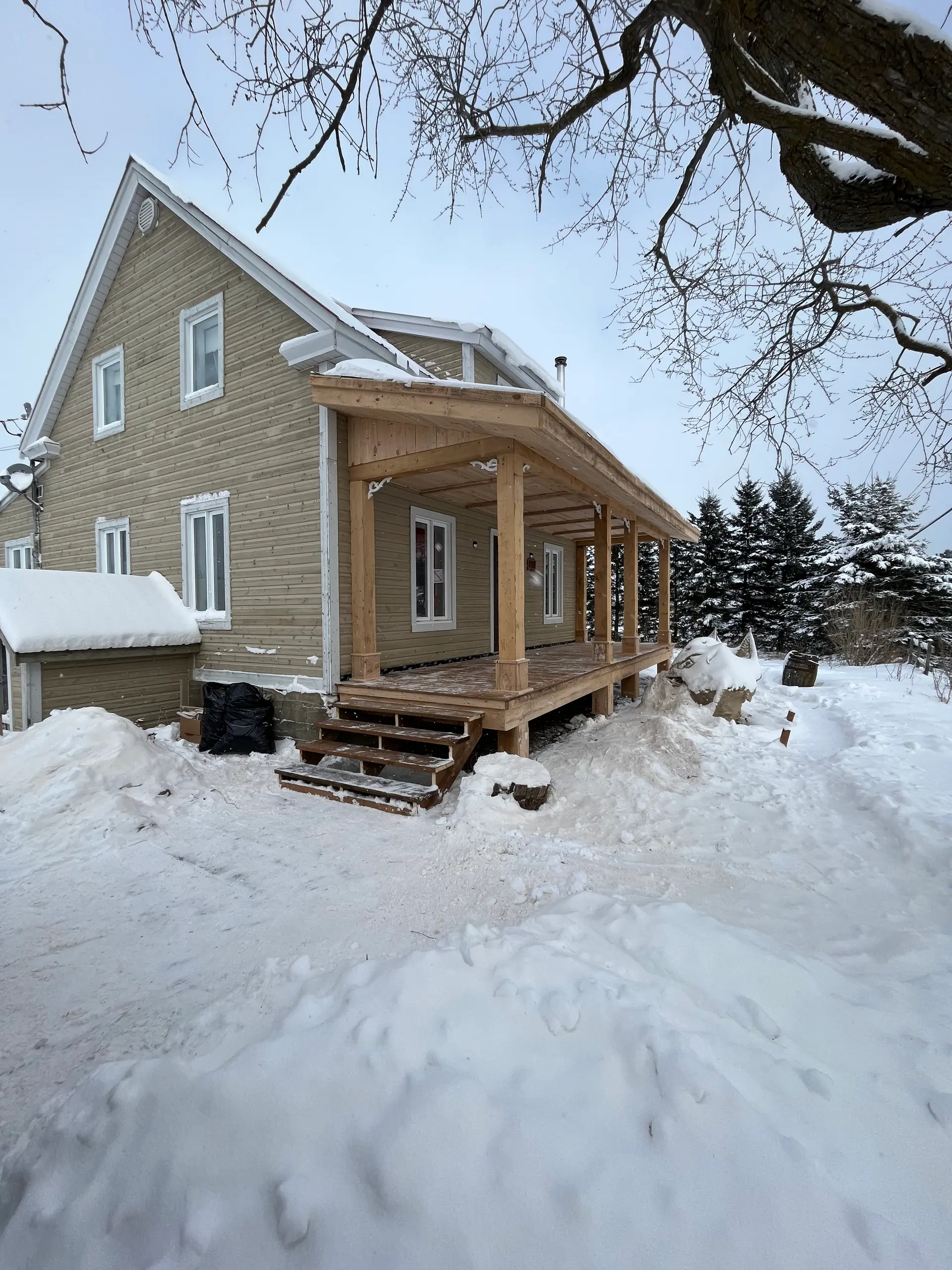
One of the biggest threats to decks in many parts of Canada is frost movement. When the ground freezes and thaws repeatedly, poorly supported structures can shift, heave, or settle unevenly.
Helical piles: For a longer-lasting deck, helical piles are increasingly recommended because they are installed below the frost line and help reduce structural movement. As a rough guideline, helical piles often cost around $250 to $350 each, though pricing varies by location, access, engineering requirements, and soil conditions.
Sonotubes: Although more affordable upfront, concrete form tube footings can move if drainage is poor or if they are not installed below the required frost depth. For a structure attached to the home, helical piles are often preferred because they can help reduce the risk of movement that puts stress on the ledger connection.
Guardrails and Railings: Safety and Style
Source: Solid Rock Construction LTD.
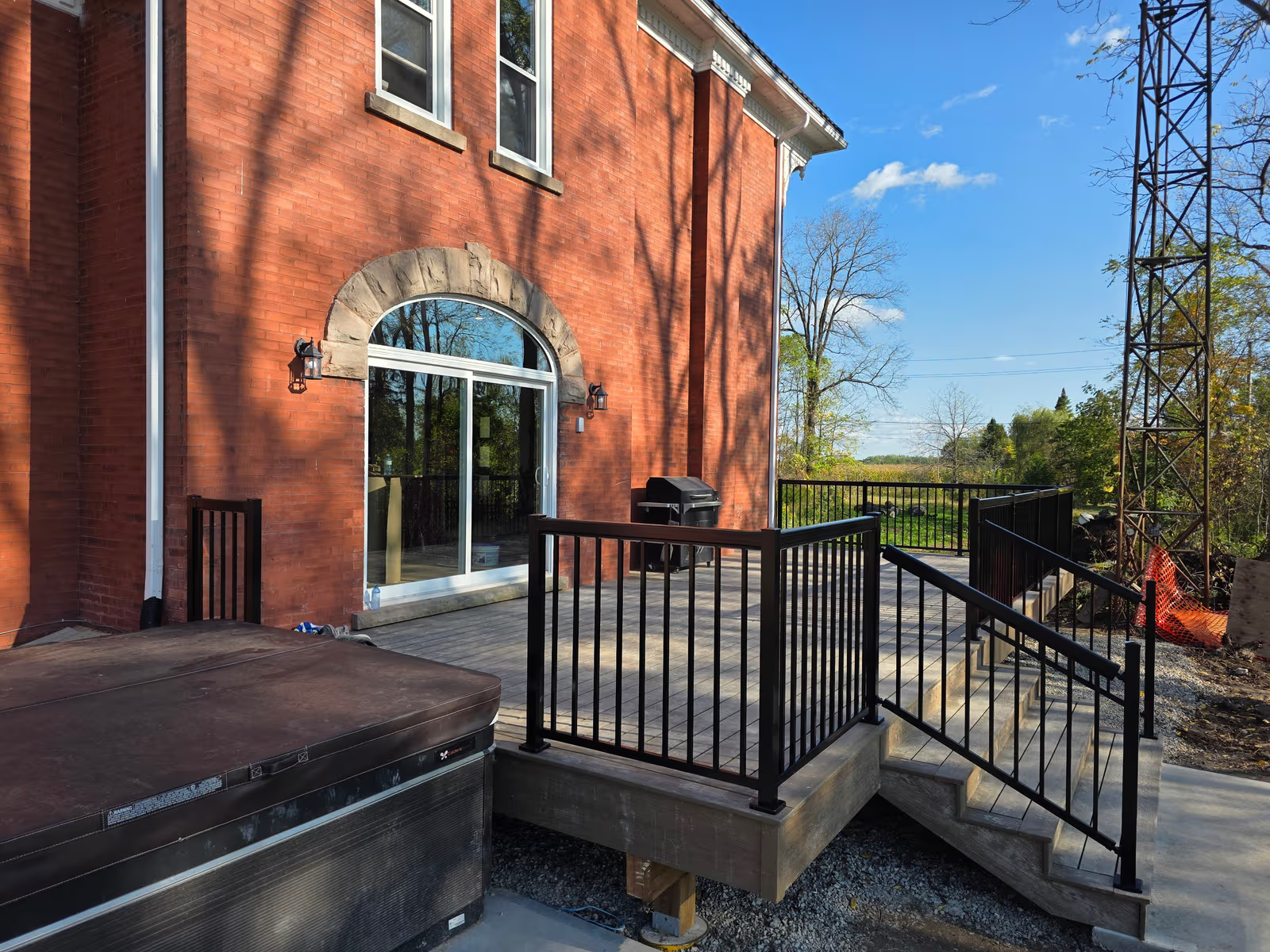
Guardrail requirements across Canada are governed by provincial and local building rules, so exact requirements should always be confirmed with your municipality or local authority having jurisdiction. In many cases, the general safety principles are similar.
Height: When a balcony or deck is more than a certain distance above grade, a guardrail is required. Common requirements often fall in the 36-inch to 42-inch range, depending on height and local code.
Spacing: Balusters are generally not allowed to have openings large enough for a 4-inch sphere to pass through.
Materials: Aluminum remains one of the best low-maintenance choices. Tempered glass is another attractive option if you want to preserve the view, though it will need occasional cleaning to remove fingerprints, dust, and water spots.
Budget and Permits: What to Plan for Before You Start

Source: RenoQuotes
Do not underestimate the administrative side of the project.
Municipal permits: In most Canadian municipalities, rebuilding or significantly altering a balcony or deck requires a permit. In 2026, approval timelines may vary widely depending on the city, season, and scope of work, but several weeks of lead time is common.
Demolition costs: Plan for approximately $500 to $1,500 to remove and dispose of old materials responsibly. Final costs depend on the size of the structure, site access, labour requirements, and hauling or disposal fees.
Finding the Right Contractor: Licensing, Insurance, and Warranties

Source: RenoQuotes
For any work involving elevated structures or parts of the home’s structural system, it is important to hire a qualified contractor.
Verification: In Canada, contractor requirements vary by province and municipality. Always verify whether the contractor holds the licences or registrations required in your area, and confirm that they carry liability insurance and, where applicable, workers’ compensation coverage.
Warranty: A reputable contractor will often offer a workmanship warranty of 1 to 5 years, in addition to any manufacturer warranties on materials, such as fibreglass systems.
To compare professionals and get realistic pricing, request multiple quotes and review the contractor’s experience with balcony, deck, or exterior structural work specifically.
Conclusion: Safety First
Renovating a balcony or deck is not only about improving appearance. It is also about protecting your home, improving safety, and preserving long-term value. By combining a sound structure, frost-resistant support systems, a properly selected surface material, and code-compliant guardrails, you can create an outdoor space that performs well for many years in Canadian conditions.
Looking for something else?
Related articles
The latest industry news, interviews, technologies, and resources.
Editorial Team
•19 Mar 2026
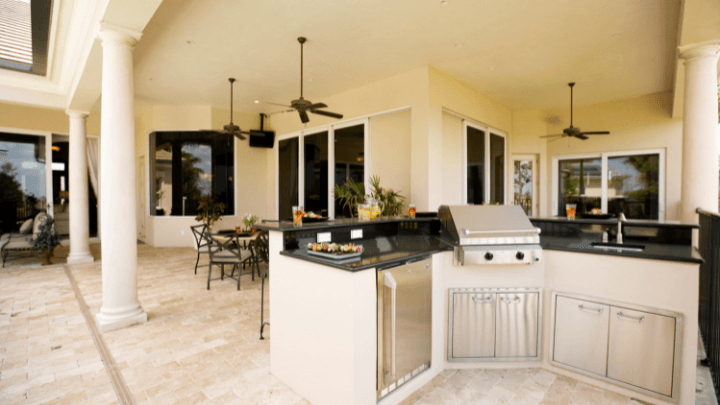
Are you dreaming of a beautiful outdoor kitchen to unwind in the sun, inhaling the smells from your dinner cooking slowly on the barbecue? Before designing your new summer kitchen, you first have to establish a realistic budget. But, the question is, How much should you plan on spending for such a project?
Editorial Team
•05 Feb 2026
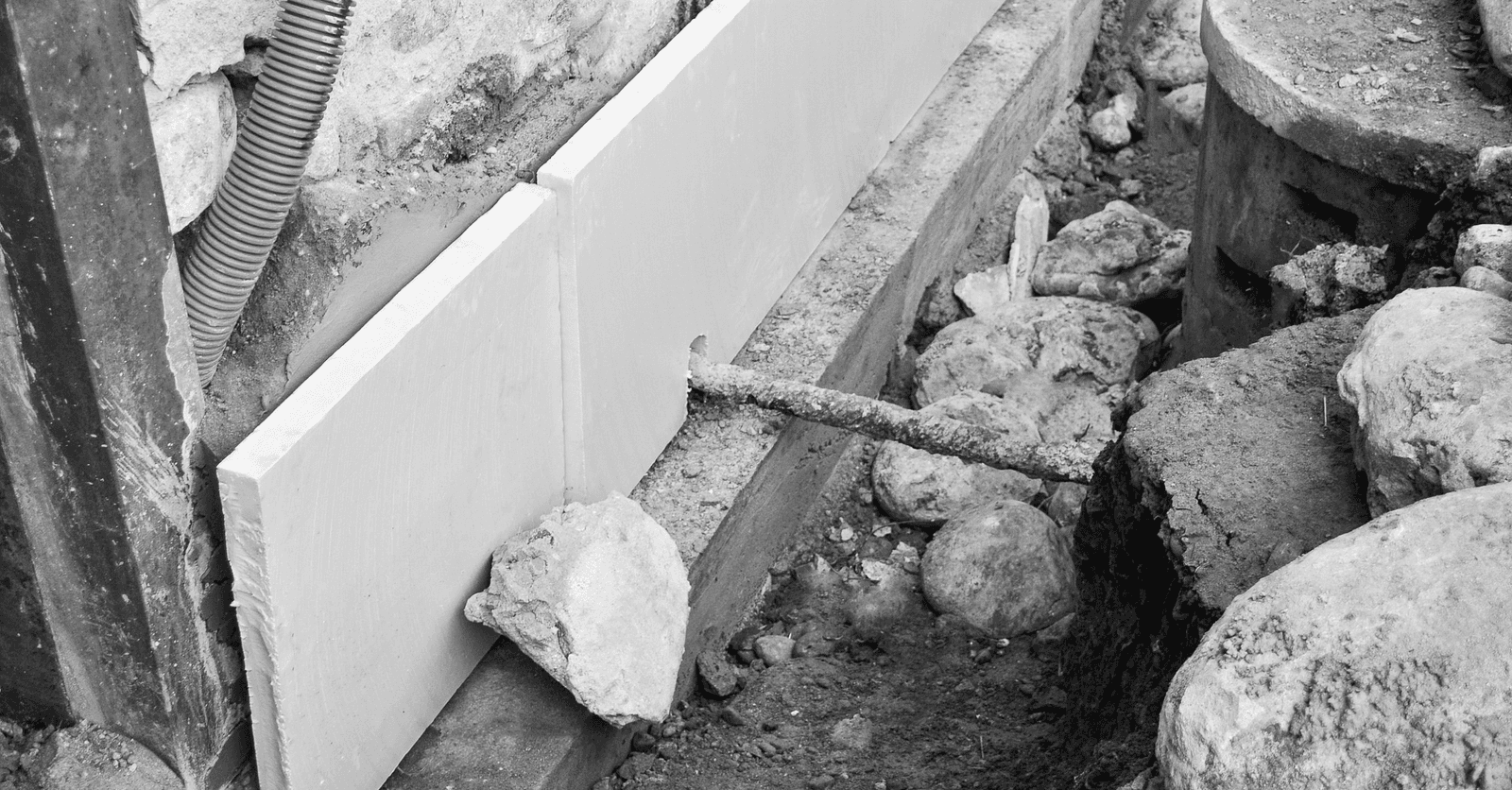
The cost of foundation repair varies widely, and many Canadian homeowners like to look up how much foundation repair costs before committing to a project. Pricing depends on excavation depth, soil type, and building size—and may rise significantly in 2026 based on damage severity. This article breaks down common solutions so you can budget more confidently.
Léa Plourde-Archer
•16 Jun 2025
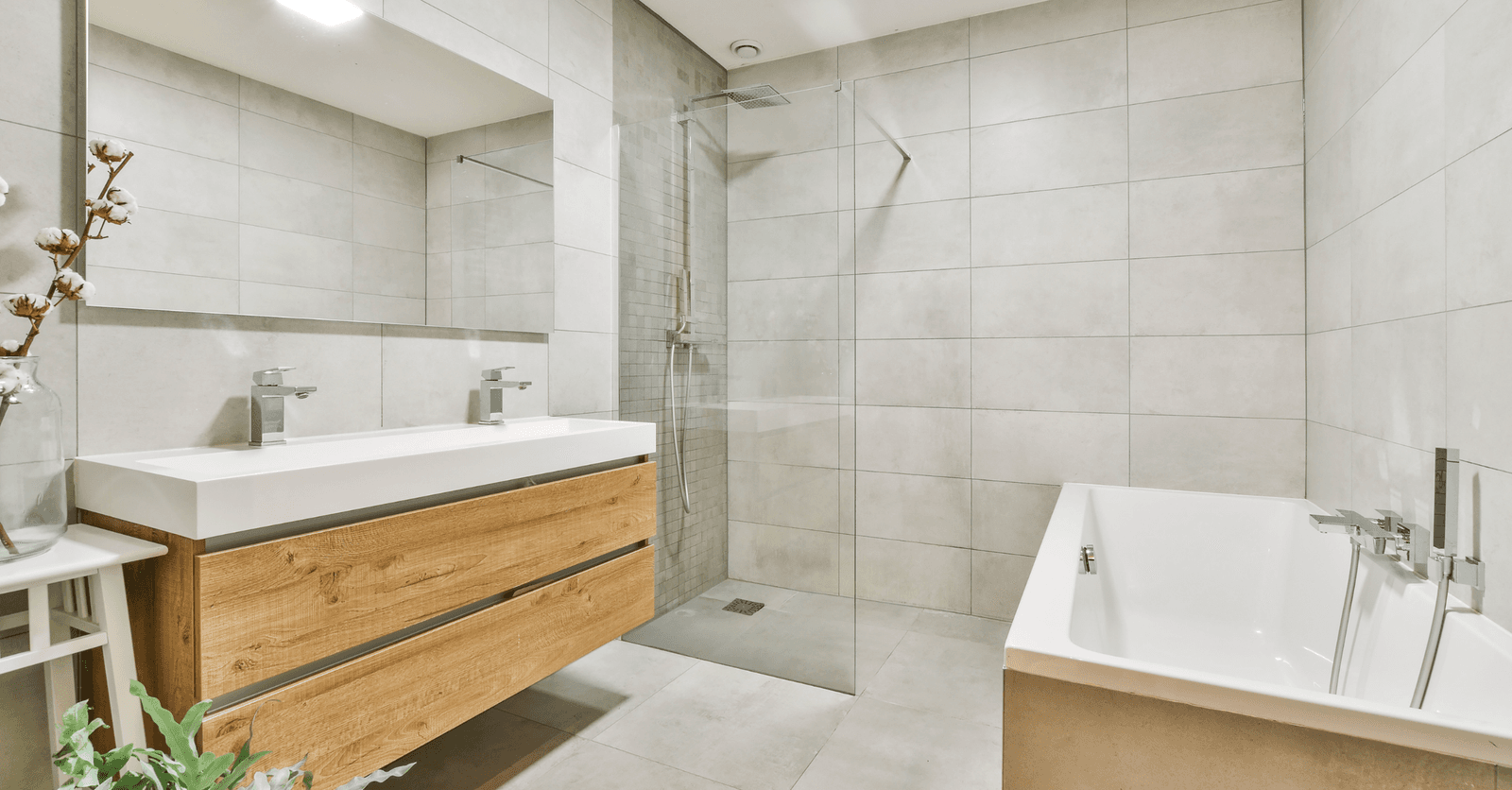
Thinking about laying tiles as a wall covering? Learn more about the different characteristics of this material that’s both durable and customizable, as well as maintenance tips, and the average cost of tiles.
Amanda Harvey
•08 Nov 2023
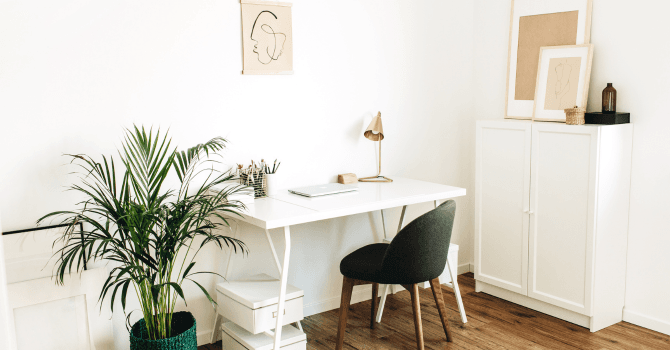
With the advancement of technology, and with many jobs becoming digitized, it's growing more common for people to work from the comfort of their home. Whether you’re a new mother raising a baby while trying to meet deadlines or a person who has decided to branch out and bring that new business venture to life, having an efficient and relaxing home office will allow you to maintain productivity and get the most out of life.
Christine Simard
•16 Jun 2026
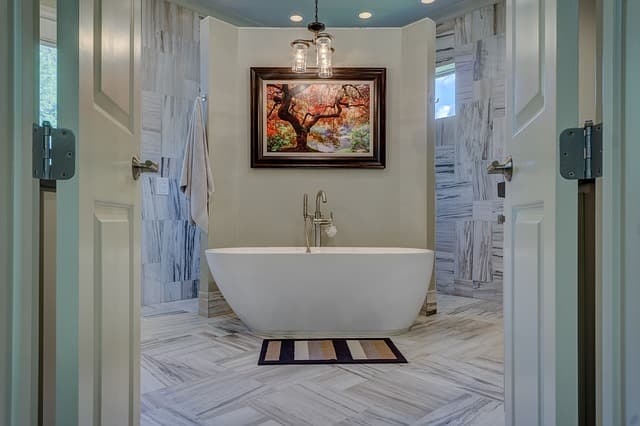
Are you shopping for ceramic tiles to spruce up your kitchen, living room or bathroom? Well, you are absolutely right, since ceramic has a charm and an allure that can only enhance the cachet of your home. The choice of styles and colors has never been wider for this timeless material.