New Regulation Respecting Construction Worksite Safety
By Editorial Team
Updated on August 2, 2024

Working on a construction site has its fair share of risks, regardless of the nature of the work involved. Since worker safety is an ever-present concern, it requires the cooperation of quite a few players. Therefore, last October, the CNESST initiated an awareness campaign, targeting construction industry workers, employers, general contractors, and affiliated individuals in the province of Quebec.
Since January 1, 2024, new mandatory training and certification requirements have been enforced. Between hazard identification, the rigorous enforcement of health and safety rules, and mandatory training, every single concerned individual must be accountable. Having an ASP certification and completing health and safety training are now deemed mandatory. Indeed, it’s imperative to abide by the Safety Code for the construction industry. Here’s a comprehensive overview of what is required to ensure construction worksite safety.
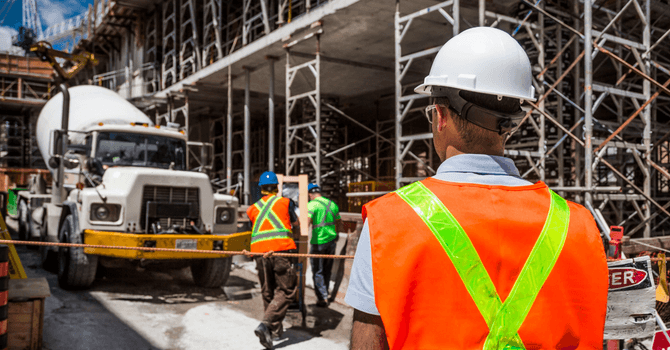
Health and Safety Training: Mechanisms Specific to Worksite Safety
Source: Canva
Worksite Management: Who Is Responsible for Construction Site Safety?
As mentioned earlier, since January 1, 2024, new mandatory training and certification requirements have been established on construction worksites. Construction committee members (Comité de chantier), full-time health and safety officers, and health and safety coordinators will have to complete specific training in compliance with the Act to modernize the occupational health and safety regime.
The duration of mandatory training courses varies based on designated categories of workers:
1 hour for construction committee members (Comité de chantier)
3 hours for part-time representatives
40 hours for full-time representatives
240 hours for coordinators
As of the start of the year, training for construction worksite committee members, part-time representatives, coordinators, and full-time representatives has been made available. Under the Act respecting occupational health and safety, prevention mechanisms have been implemented, allowing workers to be better protected against situations that risk jeopardizing their health and/or safety. Furthermore, there are several preventative measures as well as recommendations explicitly targeting the limiting of accidents caused by falls or structural collapses.
How to Obtain an ASP Construction Certification
As outlined in the Safety Code for the construction industry (section 2.4.2.i), all construction site workers must complete a course on General health and Safety on Construction Sites, which will result in ASP (Association paritaire pour la santé et la sécurité du travail du secteur de la construction) certification.
Right to Refuse to Work
Any worker who perceives that performing any given task entails a threat to their health, physical integrity, or safety is entitled by law to refuse to perform said task. However, this right to refuse to work cannot be applied if it compromises the health, integrity, or safety of others. To exercise their right to refuse to work, the individual in question must notify their health and safety prevention representative or their union representative, who will independently assess the legitimacy of the refusal based on whether the safety standards were indeed not respected.
On-Duty Security Officer
Safety officers, whose sole role is to ensure the safety of workers, must be present on-site at all times if the contract is valued at over $8 million (except for work on structures other than bridges, overpasses, or tunnels) or if the number of employees is at least 150. Under the guise of the general contractor, the safety officer will plan, organize, and manage all activities designed to prevent accidents. They will also act as a point of reference for workers who seek advice and information.
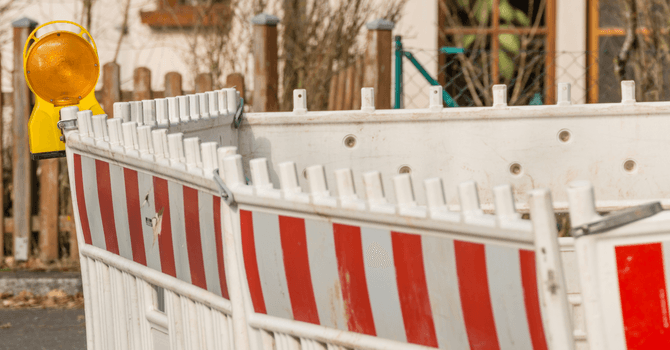
The CNESST's Worksite Safety Recommendations
Source: Canva
The Canadian Centre for Occupational Health and Safety is a valuable source of information regarding measures to follow to minimize the risk of workplace injuries and accidents. Specifically, it suggests:
Inspecting the worksite prior to starting work and keeping clutter to a minimum;
Inspecting all work materials and machinery;
Wearing work-appropriate clothing as well as protective footwear (e.g. steel-toed boots);
Avoiding positions that require sustained efforts;
Taking breaks at regular intervals;
Inquiring regarding precautionary measures in the event of extreme weather conditions (cold, wind, or rain);
Being aware of procedures to follow in the event of an emergency.
To have comprehensive and detailed information on the necessary safety measures to uphold to limit worksite accidents, refer to the Safety Code for the construction industry.
How to Limit Slip and Fall Accidents on Worksites
To avoid a serious fall, the Commission des normes, de l'équité, de la santé et de la sécurité du travail (CNESST - Commission on workplace standards, fairness, health and safety) recommends the following:
Guardrails are required for all work performed over three metres above the ground. Where this is not possible, workers must wear a harness.
When using a ladder, it must be securely affixed to the ground and stand on a stable surface. The top of the ladder must exceed the roof surface by at least 900 mm.
Avoid carrying equipment while climbing a ladder to ensure your hands are free at all times.
To allow workers to be safe from the time they step off the ground and to enable them to work more comfortably, using a platform lift may be preferable. The platform lift is ideal for masonry work, exterior siding installation, or guttering. It allows workers to reach higher ground than with a ladder and still have a stable work platform. However, to ensure the safe use of this device, do not overload the device and ensure workers are secured to the platform, if necessary.
How to Limit Collapsed Structure-Related Worksite Accidents
To limit the risk of accidents resulting from a structural collapse, all scaffolding must be anchored to fixed points. And, base plates and beams should be installed under each upright. The CNESST has several guidelines to ensure the safe use of scaffolding.
On another note, all excavations or trenches must be shored (i.e. supported by adjustable metal beams). Also, all materials need to be placed at least 1.20 metres from the edge of the trench or excavation site. Vehicles should not be parked or driven within three metres of the work area.
Furthermore, the beams must be inspected on a regular basis to prevent any damage to the scaffolding.
To prevent a structural cave-in, incomplete or temporary structures must be braced. More specifically, bracing consists of joining materials (beams) to stabilize a structure to prevent it from collapsing as a result of wind or adverse weather conditions. The National Building Code of Canada says that "Any framework shall be calculated, constructed, placed, supported, wind-braced or guyed to resist any load which could be imposed during construction or demolition.”
Amongst the many elements that absolutely must be braced, the CNESST specifically mentions:
Precast concrete beams
Steel beams
Concrete block walls
Scaffolding
Concrete forms
With regard to this last point, note that plans relating to formwork shoring and temporary structures on-site must be approved by an engineer before being implemented.
Joining a Prevention Mutual

Source: Canva
As clearly stated on the Corporation des Entrepreneurs Spécialisés du Grand Montréal Inc. website, a prevention mutual is “A group of business owners who are committed to the prevention, rehabilitation, and reintegration of workers who have sustained a work-related injury.”
Note that joining a prevention mutual group is entirely voluntary and no particular relationship is needed between the employers. However, the CESGM does specify three eligibility criteria for joining a prevention mutual group. First, one must be an employer under the Act respecting industrial accidents and occupational diseases (AIAOD). Thus, a self-employed person or a company with no employees cannot join a mutual group.
Second, you are required to be in good standing with the Commission des normes, de l'équité, de la santé et de la sécurité du travail (CNESST). This means that all requirements related to the Act respecting industrial accidents and occupational diseases and those related to the Act respecting occupational health and safety are met.
As stipulated by the CNESST, employers must implement a prevention program in line with the Act respecting occupational health and safety, by April 1st of the year, which will be updated and come into effect on January 1st. The employer is also responsible for implementing suitable conditions for the safe return of injured workers. Note that employers covered at unit or personalized rates are eligible to join a prevention mutual group.
Get contracts for your renovation company
RenoQuotes.com can help you get contracts. We receive quotes from potential clients seeking professional, top-rated contractors like yourself. Fill in the form on the homepage (it only takes a few minutes), and receive information regarding potential new clients by way of our service.
Looking to connect with contractors and get proposals? Call us at 1-844 828-1588.
Looking for something else?
Related articles
The latest industry news, interviews, technologies, and resources.

Editorial Team
•13 Aug 2025
The Canadian weather is what it is, and construction and renovation industry workers performing outdoor jobs will inevitably be exposed to the wintertime cold. Protection measures are crucial since extreme cold weather can cause severe, even fatal, injuries. Frostbite, hypothermia, and increased exposure to carbon monoxide are just a few of the risks associated with working in cold temperatures.
Editorial Team
•19 Nov 2025
La gestion de CNESST (Commission des normes, de l’équité, de la santé et de la sécurité du travail) is often seen as a simple administrative formality, focused on the annual payroll declaration. However, for SMEs in the construction sector, effective CNESST management goes far beyond this obligation. Optimizing health and safety on worksites, anticipating risks, and keeping up with regulatory changes are essential to controlling costs, protecting workers, and ensuring the long-term sustainability of the business. To fully benefit from these practices and avoid common pitfalls, it is important to lay a strong foundation for your company from the outset.

Editorial Team
•08 Nov 2023
Are you looking for ceramic tiles? RenoQuotes.com has put together a short guide to the 7 main ceramic suppliers in the area of Longueuil.

Cynthia Pigeon
•02 Aug 2024
When you start building or renovating your house, you’re faced with many choices, especially in terms of land location, the type of house you want (or have), the types of materials to be used, etc. Regarding the latter, it's imperative to select quality masonry materials to have a solid foundation, which will withstand heavy loads and the test of time. That said, are you looking to make an informed decision about which products to use? This article will allow you to get an overview of the types, brands, and prices of commonly used masonry materials.
Editorial Team
•22 Jun 2026
When renovating a garage, you need to consider both the garage renovations and taking care of your vehicles while the renovations are ongoing.