New House Construction Cost: How Much Does It Cost in 2026?
By Editorial Team
Updated on May 29, 2026
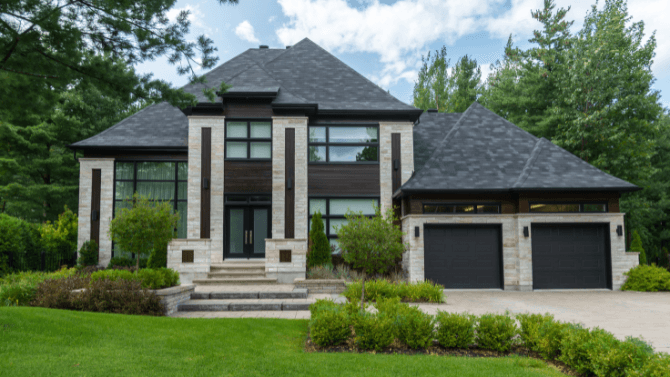
New homes are increasingly in demand. In fact, they're very popular with young professionals looking for a modern and comfortable living space. Gone are the days of people purchasing to restore and remodel; the trend’s now set toward new construction. And it's understandable!
Get Your Project Started Today
Submit your details and receive three free quotes from trusted contractors.
With the development of programs like the Guarantee Plan for New Residential Buildings, Quebec is now more than ever boosting the number of new residential buildings on its territory. Therefore, it must be stated: Our population is growing at full speed and the construction of new residential buildings are at an all-time high to meet demands.
Home Building: A Breakdown of Land-Related Prices and Costs
Product / Service | Price |
Buying the land | 25% to 30% of the total budget |
Surveyor's services | About $2,000 |
Connection work | Between $3,000 and $10,000 |
Geological study | Between $2,000 and $7,000 |
A well | Between $10,000 and $20,000 |
The septic tank | Between $10,000 and $60,000 |
The benefits of newly built houses are undeniable: location selection, layout design, modern fixtures, and eco-friendly materials. You have the freedom to make design choices for everything, from exterior doors and light fixtures to the inclusion or omission of hardwood flooring, countertops, cabinetry, paint colours, and much more. On top of ensuring the well-being of the dwellers, newly built residential buildings have the advantage of being well-insulated. It’s the ideal way to save heating and air conditioning costs, without having to compromise your comfort in any way.
If you’re convinced that a new build is just what you need, first off, you’ll definitely need to look over the associated costs for this type of large-scale project.
Cost of Land and Earthworks
Shopping around for land to build on is definitely a lot more complex than just looking to purchase an existing structure. One question that must be on your mind is: How do you go about gauging free land? There are a few points to consider.
Note that, first and foremost, purchasing land is directly linked to location, especially since your future home’s geographical location needs to meet your current and future needs. If you don’t have kids yet but are planning on maybe one day taking the leap, it’s best to choose a site that isn’t too far from schools and daycares.
Obviously, the price of land largely depends on geolocation and plot size. As a general rule, the price of land will amount to 25—30% of your home project budget. Therefore, if you plan on building a home worth $400,000, the land will cost between $100,000 and $120,000. On that matter, note that the services of a land surveyor are roughly $2,000.
Undeniably, rare are those among us who don’t wish to benefit from having a nice yard, one we can fully enjoy during the summer with close friends. Keep in mind that you’ll need to slap down about 10% of the property’s total value if you call in the services of a professional to complete all earthwork.
Expect the Following Expenses
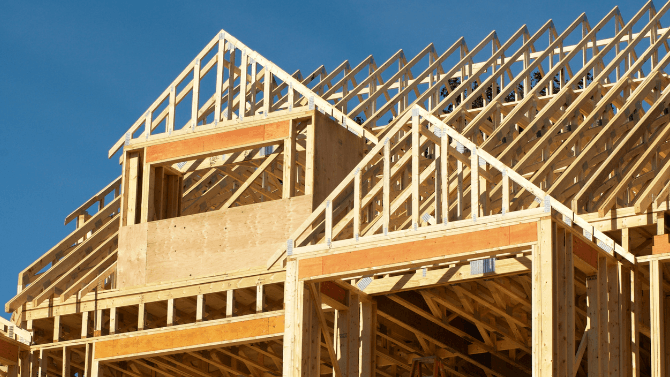
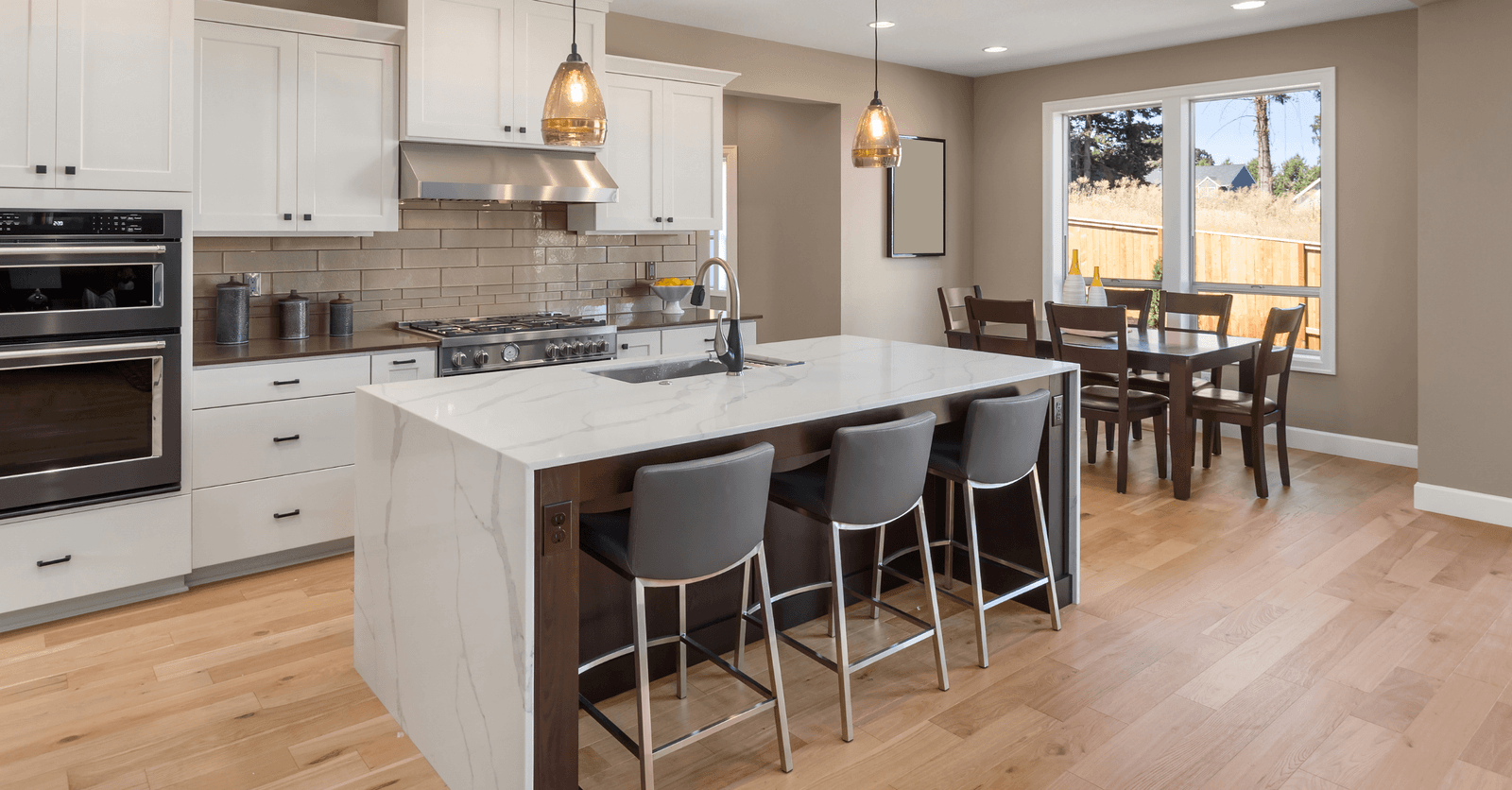
Source: Canva
The land budget doesn’t just stop at that, other expenses need to be factored in, hence the importance of gathering as much information on the matter as possible. Moreover, it’s always best to ask straight off the bat whether the desired land is serviceable or not. As a matter of fact, if the land is developable but not serviceable, your newly-built house won’t have the necessary connections/wirings to fuel a residential structure.
The work required to wire a house is performed by a general contractor, who’ll be commissioned and supervised by the supplier. Note that all fees are charged to the landowner (which means you!). Account for roughly between $3,000 and $9,000 for waterworks and sewer networks connections and $1,000 for electrical wiring, which doesn’t include gas, phone, and fibre connections. Truth be told, the price for this type of work varies between $3,000 and $10,000.
After having purchased the land, we recommend doing a soil survey and validating the quality of the water. Even if optional, this step is highly recommended and allows one to examine the soil over several layers deep. Expect to pay between $2,000 to $7,000 for a geotechnical survey; the cost varies depending on the dimensions of the land.
The soil’s nature and properties will most definitely impact the cost of building your new house because, for example, clayey soil will require deeper foundations than normal, which tends to increase the overall bill. This preliminary study serves as a tool to determine the presence of clay, embankments, underground cavities, phreatic zone, and whether the land is contaminated or not.
Over and above, the survey provides the general contractor with recommendations as to how best to adapt the structure based on the nature of the land. This’ll avoid risks of cracks, floods, and other inconveniences that’ll without a doubt shorten the life span of the structure.
Cost of a Well and Septic Tank Installation
Note that if the future residential building isn’t fueled by an aqueduct, then obtaining a compliance report by a construction technologist is an absolute must. This report will be essential when requesting a water well and septic tank installation permit. So, how much do these systems cost on average?
For a water well, expect to pay roughly between $10,000 and $20,000 but for a septic tank, bear in mind that the required budget varies greatly: between $10,000 and $60,000.
For more information regarding what should be factored in, and anything else regarding this subject matter, check out our article: A Short Guide to Septic Tanks: Price, Maintenance, and Operation.
How Much Will My House Cost to Build?
Product / Service | Price |
Architect's fees | Between $28,000 and $60,000 (for a $400,000 house) |
Technologist's fees | Between $1,500 and $3,500 (for a $400,000 house) |
Notary fees | Between $1,200 and $1,600 |
Welcome tax / mutation duties | Between $1,500 and $3,000 (for a house estimated at $240,000) |
Building permit | $100 to $500 |
Cost of an Architect or Construction Technologist
After having determined the nature and property of the soil on which the structure will be erected, now comes the time to commission an architect to draw up the house plans. The architect in question will have to be attentive and attuned to your needs to plan a home adapted specifically for you. The architect will actually be in on the journey with you from beginning to end, and they’ll also be able to support your choice of a general contractor, especially if you wish to incorporate particular elements in your home. (This is highly likely in the case of an eco-friendly home.)
For new constructions, architect fees are as high as 7% to 15% of the cost of the construction. This fee covers drafting the plans, preliminary design, detailed design, bidding process coordination, and construction site supervision.
For a $400,000 house, the architect's fees will then be between $28,000 and $60,000. However, there are a number of other factors to consider which could also increase costs, notably the scale of the construction project and the number of details and the overall complexity requested by the client. Thinking of dealing with a construction technologist instead? If so, expect to shell out between $1,500 and $3,500 for their services.
Nonetheless, it’s no secret that requesting the services of an architect or construction technologist when building a new home is best. Moreso, in order to obtain building permits, you need to provide a file containing the architect’s plans and other elements such as the property site plan issued by a land surveyor, a notarized deed of the land, and the various connection/wiring permits.
What's the Construction Cost Per Square Foot to Build a Home With a Contractor?
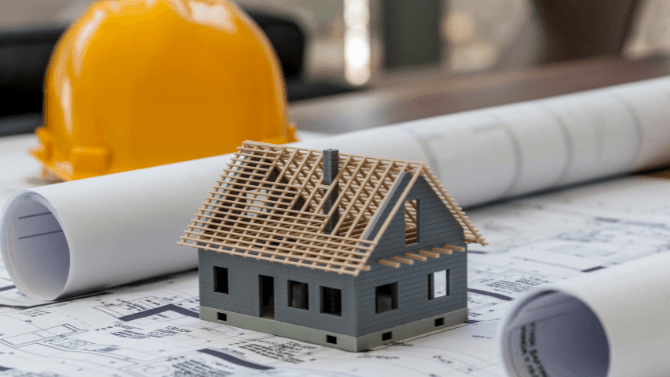
Source: Canva
Building a new home is a rather complex process, one that requires many steps before arriving at the final result. One must account for the cost of labour, material transportation, and the different labour forces who’ll be involved in the project (engineer, plumber, electrician, carpenter, etc.), including any unpredicted issues that could complicate things on-site and increase the price that you’ll have to pay for a turnkey house.
The reality is, the overall cost will largely depend on the choices you’ll have made over the course of the construction of your home. The choice of flooring, heating and air conditioning systems, the insulation materials used, doors and windows are just as much a contributing factor as their prices vary, mostly depending on their performance and quality.
Cost Per Square Feet of Construction
To build a new house, you’ll need to consider the quality of materials used. As a matter of fact, these will considerably affect the total cost of this type of large-scale project. So, here’s an overview of the cost, per square footage, of purchasing a house:
Entry-level home: approx. $200 per square foot
Mid-range home: Between $250 and $300 per square foot
High-end home: Between $350 and $500 per square foot
To that, one can add the cost of land, excavation, sanitary fittings, as well as landscaping.
Note on Regional and City-Specific Cost Variations
Building costs can differ significantly across Canada depending on your chosen region or city. Factors such as local labour rates, material availability, land prices, and municipal fees mean that constructing a home in a major urban centre like Vancouver or Toronto will likely cost much more per square foot than in smaller cities or rural areas. Always consult local experts and gather quotes specific to your desired location for the most accurate estimate.
Other Expenses to Keep in Mind
Besides the previously mentioned fees, note that there are other expenses to keep in mind when you’re putting together your new house construction budget:
Notary fees: Between $1,200 and $1,600
Welcome tax/transfers of immovables: Between $1,500 and $3,000 for a house with an estimated value of $240,000
Construction permit: Varies, but it’s usually around $100 to $500 a construction deposit
Taxes: GST and HST on goods and services
Alternative Home Building Options
While custom-built homes offer unparalleled personalization, they aren’t the only route to new home ownership. For many Canadians, alternative building options like subdivision new builds and small or tiny houses present practical, cost-effective solutions.
Subdivision New Builds
Opting for a new-build home in a subdivision can strike a balance between customization and convenience. These homes are constructed by developers within planned communities, offering a selection of pre-designed layouts and upgrade packages. Buyers benefit from a brand-new house without the need to manage contractors or coordinate the construction process. While you may not have full control over every detail, you’ll often have choices for finishes, fixtures, and certain design elements. Subdivision new builds can also offer advantages such as streamlined timelines, builder warranties, and access to community amenities.
Small and Tiny Houses
For those looking to downsize or minimize their environmental footprint, small and tiny houses are gaining momentum across Canada. Typically, a small home is defined as under 1,000 square feet, while a tiny home is around 400 square feet or less. These compact options can be significantly more affordable to build and maintain. They’re ideal for singles, couples, or anyone seeking a simpler, more efficient lifestyle. However, it’s important to check local zoning regulations and bylaws, as not all municipalities permit tiny homes or small dwellings on all types of land.
FAQ
How to calculate the cost of building a house in Quebec?
To calculate the cost of building a house in Quebec, use our guide by adding the price of the land (25% to 30% of the total budget), the fees for services like surveyors and utility connections, as well as the cost of materials and professionals such as architects. Also, factor in the price per square foot based on the quality of materials chosen.
For a home expansion, what budget should you plan for 2026?
If you choose to expand an existing house rather than build a new one, a budget of at least $100,000 is generally required, though exceptions at just over $80,000 may exist.
What is the most expensive part of new, custom home construction?
Whether your home is highly customized or not, the most expensive part of the whole construction is typically the framing and foundation.
How long does it typically take to build a new house?
Building a new house usually takes between 8 and 24 months. Conventional homes with standard designs may be finished in as little as 6 to 12 months, while custom or luxury homes with more complex features can take up to two years to complete.
What factors can influence the construction timeline for a new home?
Several factors can impact how long it takes to build a house. These include the complexity and customization of the design, weather conditions, the speed of permit approvals, the availability of skilled labour, material shortages, financing issues, and unexpected site conditions. Planning for these variables helps set realistic expectations for your home-building project.
What are the best ways to save money when building a house?
To cut costs when building a house, choose pre-designed home plans instead of custom designs, compare multiple contractor quotes, and focus on essential features over luxury finishes. Build a smaller or simpler home, use reclaimed materials where possible, and do some simple tasks yourself, like painting. Always review quotes carefully to avoid hidden costs. These strategies help keep your build affordable without sacrificing quality.
What types of financing and loan options are available for building a house in Canada?
In Canada, most people use some form of construction financing when building a house, which differs from a standard mortgage. The main options are construction mortgages or construction loans, typically structured as either a completion mortgage—where funds are released after the home is finished—or a draw (progress-draw) mortgage, where funds are provided in stages as construction advances.
Construction loans generally have higher interest rates and usually require a larger down payment, often at least 20% of the total build cost, though this can vary depending on the lender, project, and borrower profile. If you need to purchase land first, land or lot loans are available. However, these usually require a higher down payment—often 25–35%—and may come with higher interest rates, as vacant land is considered a riskier asset.
Looking for something else?
Related articles
The latest industry news, interviews, technologies, and resources.
Editorial Team
•16 Jun 2025
Are you looking to learn more about the different types of interior wall covering materials? There are so many different options available that one can easily feel lost when faced with the idea of choosing one over another. In order to help you find the material that best suits your needs and taste, here is an overview :
Editorial Team
•27 Jan 2026
A kitchen remodel is one of the most common renovation endeavours, especially in terms of flooring. Kitchen floors have to put up with a great deal of daily use, resulting in fast-tracked wear and tear. This area goes through it, from falling pots and pans, boiling liquid or other spills to normal foot traffic.

Editorial Team
•30 Jun 2026
The construction industry in Ontario is poised for continued growth over the next several years, driven by robust activity in both the residential and non-residential sectors, according to the latest forecasts from BuildForce Canada. “Construction is a key contributor to Canada’s gross domestic product, and an employer of approximately one out of every 13 working Canadians. Employment has increased by about 80% since 2002, and now counts about 1.5 million people,” says Sean Strickland, Chair of BuildForce Canada. “With further growth projected across the forecast period, the challenge before our sector is how to manage labour force pressures.”

Cynthia Pigeon
•21 May 2026
Considering a change to your exterior siding? CanExel siding is a popular engineered siding choice in Canada, particularly for homeowners seeking the appearance of wood but with less maintenance than traditional cedar.
Editorial Team
•16 Jul 2024
When contemplating about insulating a house or condo, window insulation is rarely at the forefront of our minds. However, every year, in Quebec, energy costs related to poorly insulated window joints are valued at $417 out of the $1,460 spent.