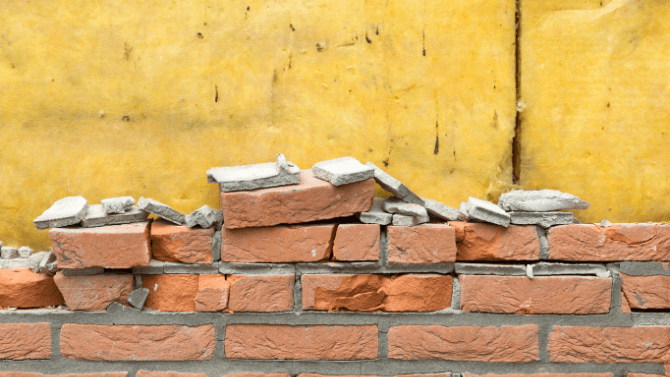
Whether you're renovating to accommodate a growing family, addressing structural issues, or simply modernising your living space, the decision to demolish or remove part of a brick wall in your home is a significant one.
From navigating building regulations to selecting the right tools for the job, we delve into the complexities of brick wall demolition and provide guidance to help you make informed decisions for your home renovation endeavours.
How to Safely Demolish an Existing Brick Wall in Your House

Source: Canva
What Is the Best Tool to Remove Interior Brick Walls?
Depending on the method you've chosen to remove the wall, you'll need different tools. Knocking it down and removing it brick by brick will require different equipment. Nevertheless, here is a comprehensive list of the tools you should expect to use for this project:
Safety glasses
Work gloves
Dust mask
Heavy-duty tarp
Masonry chisel
Hammer or mallet
Ladder
Pry bar
Drill
Tools You'll Potentially Need:
Sledgehammer
Saw (circulaw saw, angle grinder, reciprocating saw, or multi-tool)
Best Way of Removing Brick Walls Without Damaging the Bricks
Steps Before Starting:
The first step in removing a brick wall, before even putting your safety glasses on, is to check with your municipality to find out if you’ll need a building permit for this type of work. As much as you might want to tear it down, don't let a wall get you into trouble; get the necessary permit if need be!
Now that you've figured that out, it's time to ask yourself an important question: Is this a load-bearing wall? If it is, you're going to need a permit, but we also strongly suggest leaving it in the hands of a qualified engineer. If you're unsure, don't touch it.
If the brick wall might contain electrical wires, gas pipes, or any other hidden utilities, take a look at your house's blueprints and contact a professional before getting to work.
At this point, you're just about ready to get going. Gather your hand and power tools, put on your protective equipment, lay down your tarp, and set up your ladder; you're going to want to start at the top of the wall.
Once You're Ready:
Drill a series of holes in the mortar around the brick using a ⅜-inch bit on a drill of 800W or higher, set to a low speed. Make the holes close together to ease removal. You should expect to use multiple drill bits and ensure they penetrate through the entire mortar joint.
After drilling the holes, use a masonry chisel and hammer to carefully chip away at the mortar surrounding the bricks, starting with the sides, then move on to the bottom, and lastly the top. Work carefully along each mortar joint, taking care not to apply too much force that could crack the bricks.
As you loosen the mortar, use a pry bar to carefully pry the bricks away from the wall. Always make sure to support the bricks from below as you work to prevent them from falling and potentially breaking.
Start removing bricks from the top of the wall and work your way down. This helps prevent the weight of the remaining bricks from causing damage as you progress.
Once a section of bricks is removed, clean off any remaining mortar residue. Stack the bricks in a safe location for later use or disposal.
After the wall is removed, inspect the surrounding area for any damage and make any necessary repairs. Patch any holes or damage to the underlying structure as needed.
Alternatively:
If a chisel and mallet are too labourious, or if you simply don't care whether or not the bricks survive your renovation, here are two alternative methods for removing brick walls which may prove a tad easier:
Start by drilling holes along the desired cut line, ensuring they penetrate through the entire thickness of the brick. Use a masonry chisel and hammer to break the brick along the drilled holes, angling the chisel to avoid damaging surrounding areas. This method helps to free the brick from the mortar, allowing for easier removal. Chip away at the mortar to free the brick, using a pry bar if needed. Once the brick is loose, remove it by hand, smoothing the edges of the hole with a chisel and wire brush.
Last but certainly not least: the sledgehammer. Use the sledgehammer to break the wall into sections by swinging it forcefully near the score lines. Always make sure that no one is in the way while you're swinging the hammer and continue hitting the wall until cracks appear in the brick and mortar.
Cutting Edge Tips on How to Cut Bricks
Circular saws with masonry or diamond blades cut brick and mortar cleanly but generate significant debris and noise. Angle grinders also cut through brick and mortar, offering tighter angles, but indoor use can be messy due to blowback debris. Reciprocating saws with masonry blades cut relatively straight lines but are less effective for brick walls compared to other materials. Multi-tools with masonry attachments facilitate plunge cuts and are useful for cutting mortar during brick removal.
For more information on this, see our articles:
Get quotes for your home deconstruction project
RenoQuotes.com can help you get quotes for your deconstruction project. If you submit your project to us, we’ll put you in contact with top-rated contractors. Fill in the form on the homepage (it only takes a few minutes), and you will receive quotes from companies that are specialized in home renovations.
Dial 1-844 828-1588 to speak with one of our customer service representatives.
Looking for something else?
Related articles
The latest industry news, interviews, technologies, and resources.

Cynthia Pigeon
•06 Aug 2026
Expanding a single-family home to bring more natural light into its living spaces is a dream for many Canadian homeowners. With our bright summers and long winters, maximizing sunlight can provide an invaluable sense of well-being. However, when it is time to move forward with an addition, one fundamental question arises: should you choose a three-season sunroom or invest in a four-season sunroom?

Editorial Team
•03 Aug 2026
A fireplace situated anywhere in your house makes an impact. It creates an ambiance that adds to the sense of comfort. You can place it in a corner, blend it with the rest of the décor, place it high up on the wall or even on the floor.
Editorial Team
•13 Aug 2026
During the busiest renovation months, having the right construction site equipment can help contractors manage demanding schedules, coordinate crews and subcontractors, and keep projects moving efficiently. Choosing equipment that matches the work can also reduce delays and help maintain service quality when workloads peak.

Cynthia Pigeon
•28 Sep 2026
Planning home renovation work in Quebec requires rigour and a strong understanding of the local economic reality. Whether you own an older duplex in Montréal, a modern condo in Québec City, or a single-family home in Estrie, using price benchmarks adapted to the Quebec market is essential.

Amanda Harvey
•08 Nov 2023
During the warmer months of the year, letting a cool breeze in through the windows of your home feels like a treat. However, during winter time those drafts feel particularly frustrating, blurring the lines between indoors and outdoors.