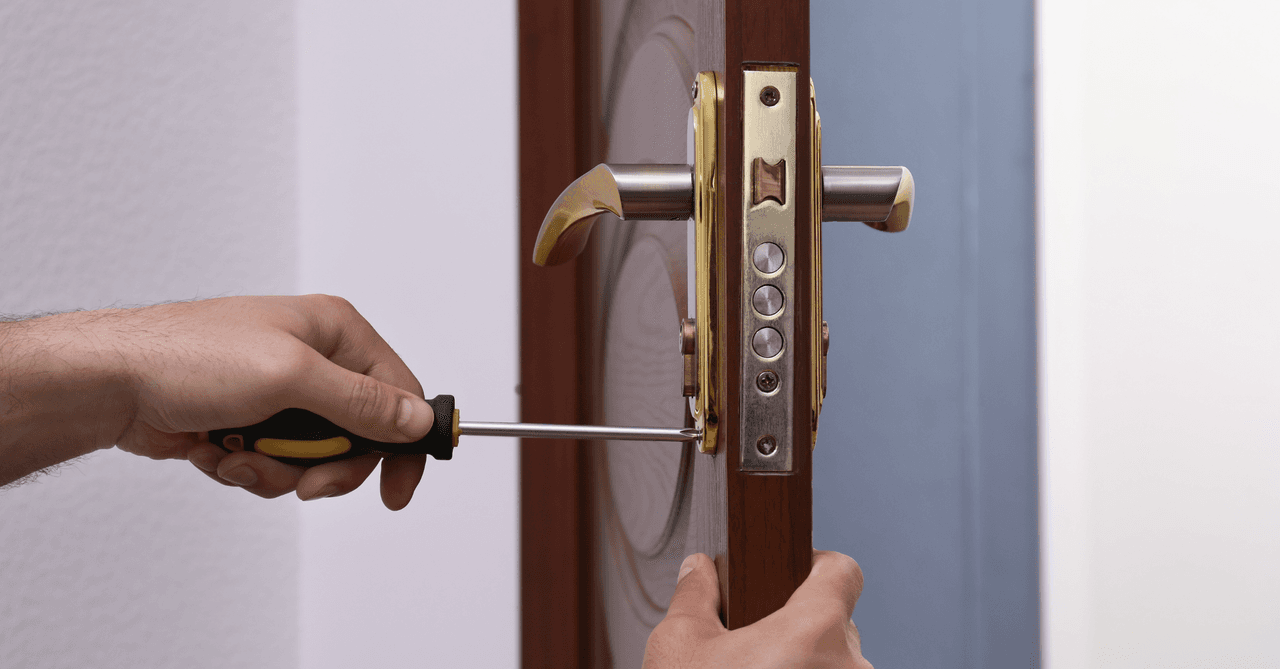
Do you have a problematic front door lock? Whether this is a direct result of regular wear or an attempted break-in, there’s no doubt that you’re trying to remedy the situation as fast as possible. So here’s a rundown of the quick fixes available to you.
Problematic Door Lock: Main Causes
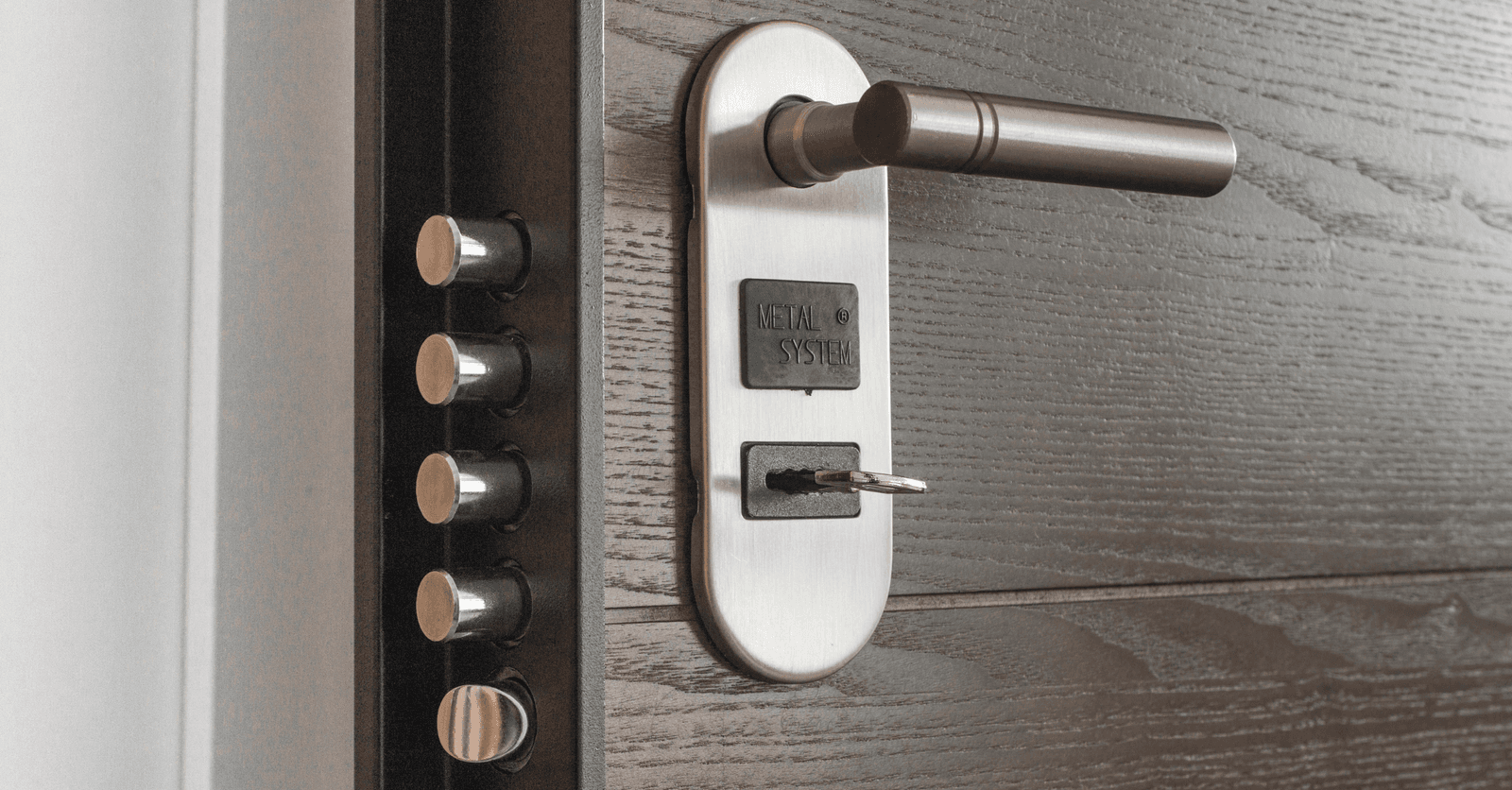
Source: Canva
Before we jump ahead with our list of solutions available to you, we first have to go over the probable causes of a door lock issue. Essentially, there are two:
Your door lock was tampered with: That being, your key is probably turning into nothing and your lock is without a doubt broken;
Your door lock has worn with time: If your key is inserted into the locking mechanism, but you’re unable to unlock the door, your problem is most likely caused by the device’s wear over time.
Your door lock is worn: what should you do?
As above-mentioned, it’s not uncommon for a door lock to show signs of wear over time. This shouldn’t come as a surprise if you’ve had the same door and lock for an extended period of time. Since the impossibility of unlocking a door due to a worn locking mechanism is undoubtedly problematic, here are a few solutions available to you.
Remove the cylinder with pliers
The first solution available to be able to unlock the door to your dwelling is to opt to remove the cylinder with pliers. Before proceeding, it’s best to apply a release spray to the latter, a product better known as WD-40.
Should this tip work, you’ll be able to remove this part with pliers by means of small back-and-forth motions to dislodge it from its position. Afterward, you’ll need to replace the old cylinder with a new one.
That said, it’s still important to issue two cautionary warnings regarding this procedure and the damages it could cause. In fact, if your back-and-forth motions are too sharp or forceful, you risk damaging the inside of the door lock.
As such, if you’re unsure of the degree of pressure to apply, hire an expert locksmith. Also, you have to keep in mind that this technique won’t work if your cylinder doesn’t overlap the doorframe by at least 3 mm.
Drill into the cylinder
If you happen to find yourself in this situation, you could also proceed by drilling into the cylinder by using the space between the cylinder and the box as support.
Nonetheless, note that this technique is also susceptible to damage your door, especially if you don’t have the correct sized drill bit (5 mm). And that’s why, when you don’t have the right tools, you should really call upon the expert skills of a professional.
Are you looking for experts for your door project?
Fill in this form to be connected with top-rated contractors!
That way, you won’t further mangle your door and have to pay to repair the damages that could have been avoided. In fact, attempting to drill unknowingly into the cylinder risks making the task at hand a lot more difficult for the locksmith whom you called for help.
Whether you’ve used said technique yourself or decided to hire a professional to handle it, note that you’ll still need to change the cylinder and the lock itself.
Use a lock puller
Let’s wrap this up by stating that there’s another option: it consists of using a lock puller. This device was specially made to remove lock cylinders from their position. Albeit using such a tool can be super useful, the reality is that its usage is typically reserved for locksmiths.
Were you a victim of an attempted burglary?
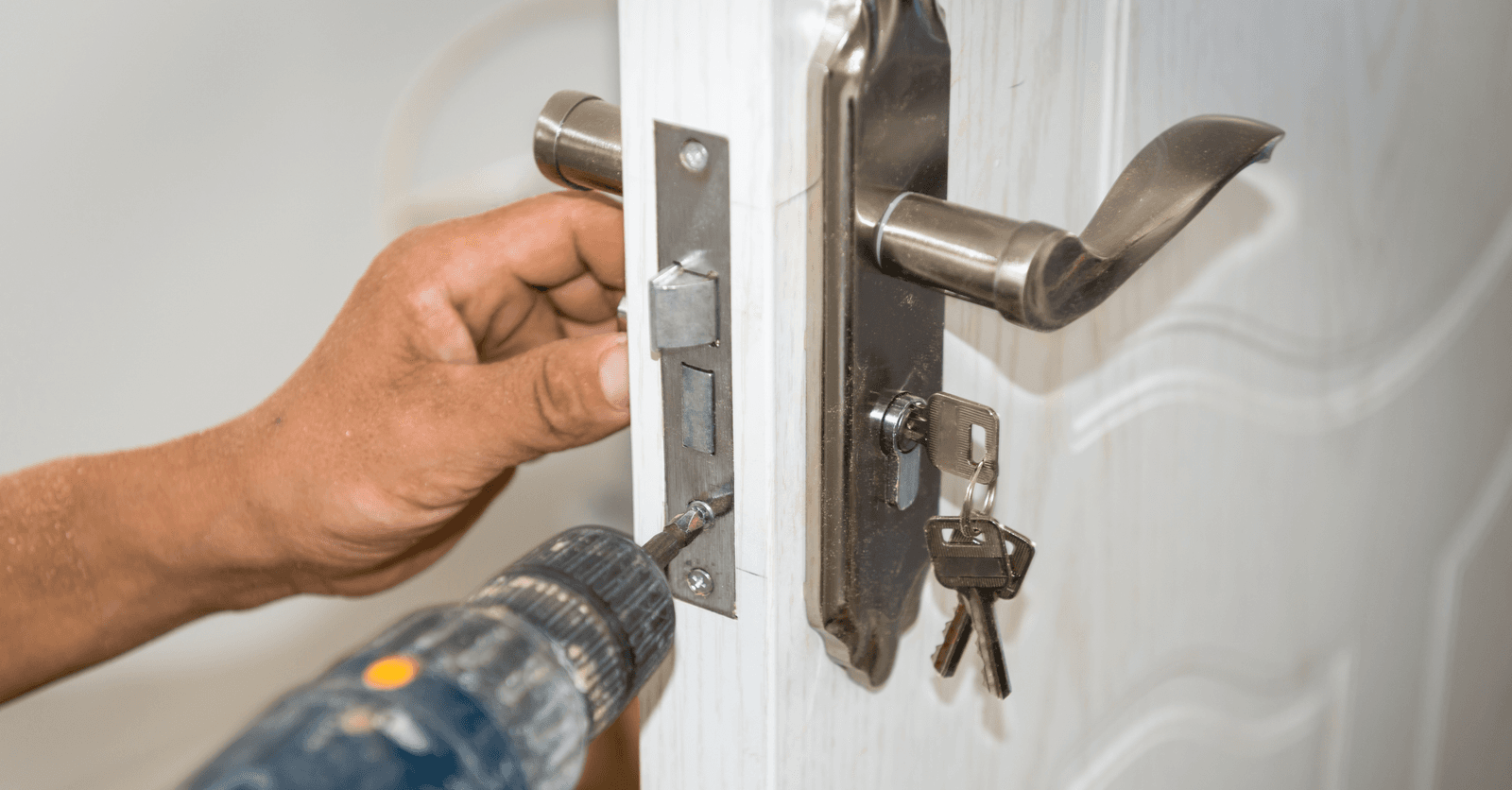
Source: Canva
Albeit we often blame the lock’s sturdiness as a result of its failing use, note that this problem is often caused by a mismeasured cylinder.
In fact, some cylinder door locks have a tendency to exceed the door. If it exceeds it by more than 3 mm, you can most likely remove it with pliers. However, it makes it easier for thieves to break in, so we strongly recommend you choose a cylinder that doesn’t overhang the side of the door.
If your door was tampered with, the deed is done, however, the good news is that no one actually broke into your home and made off with your personal belongings. Even so, clearly, this less-than-delicate manoeuvre damaged your door lock. So, what should you do?
Basically, to methods used to fix the above-mentioned problem resulting from an attempted break-in are very much the same as those you would employ to repair a faulty, worn-out door lock. Unfortunately, it might be that you’ll need to replace your door if the damages are quite extensive.
Other factors that might explain a problematic door lock
If your door is just about new, and an attempted break-in isn't the problem, it may be that your door lock isn’t the problem. In fact, a lot of factors could explain said situation. First, it may be that your door isn’t levelled with the frame. As such, the two parts that make up the locking mechanism aren’t properly aligned, thus obstructing the opening.
Second, let’s not forget about the key; it could be the root cause of your problem. As a matter of fact, if it’s a copy of the original, certain discrepancies between the original model and the copy can explain the resistance experienced when trying to turn the key into the lock.
In such a case, feel free to replace the key with a new one that’s perfectly fitted to your door lock. This will prevent you from damaging your door lock or getting your key stuck in it.
What if it wasn’t a lock problem?
Last, if nothing seems to explain your faulty door lock, check the strike plate at the bottom of the panel. This small cavity in which the bolt is inserted can become obstructed over time due to a build-up of dirt. Check with expert locksmiths to know exactly how to proceed to clean it.
Get 3 renovation quotes for your doors and windows project
RenoQuotes.com can help you get quotes for your doors and windows project. By submitting your project, we’ll put you in contact with top-rated contractors. Fill in the form on the homepage (it only takes a few minutes), and you will get estimates from trusted professionals.
Dial 1-844 828-1588 to speak with one of our customer service representatives.
Looking for something else?
Related articles
The latest industry news, interviews, technologies, and resources.
Editorial Team
•08 Nov 2023
Not every home is privy to a huge backyard with ample green space. Some of us live in tiny homes or high rise apartments. If your home is far from the ground, but you find your green thumb itching, then you can create a mini garden or greenhouse right indoors!
Amanda Harvey
•24 Oct 2024
Buying a new home is an exciting venture, with endless possibilities laid out in front of you. Of course, everyone has an idea of their ideal home and for most this includes the extra space that a basement encompasses. With the right basement and the assistance of a good contractor, you could host an alternative living area, game room, a home gym or a place for washer and dryer. When shopping for a house, it can be difficult to tell the condition a basement is in; so how do you figure out what to look for?
Editorial Team
•02 Jun 2026
Pyrite is an iron sulphide, known as “fool’s gold” whose crystallization shimmers with gilded reflections. If the brilliance of this worthless mineral deceived gold prospectors of their time, its oxidization when in contact with moisture and oxygen, producing sulfuric acid, stirs up a bitterness in many owners today. The presence of pyrite or of pyrrhotite underneath a foundation may cause the slab of concrete of the house to rise and crack.

Léa Plourde-Archer
•08 Nov 2023
With the new year starting and the wind of renewal that is blowing in, paint companies are currently announcing their colour of the year. These companies are offering eclectic and creative palettes, which perfectly follow the trends of the coming year.

Editorial Team
•08 Nov 2023
Concrete is one of the most common construction materials on the planet. Up until the end of the 1900s, it was bestowed with numerous qualities, but none were that of luminosity…