How ESG Criteria Shape the Construction Industry
By Editorial Team
Updated on November 8, 2023

In Canada, the construction industry is facing numerous challenges, especially regarding corporate social responsibility (CSR).
As a professional contractor, you’re most likely looking to make a name for yourself, be a valuable asset to your company, and positively contribute to society. For this purpose, your projects, and how you handle the managing, planning, and building stages, must mirror the impact you wish to have, encompassing environmental, human, and financial aspects.
In this article, we’ll look at the growing relevance of ESG standards set forth in the construction industry in Canada.
ESG Standards: Environmental, Social, and (Corporate) Governance

Source: Tumisu – Pixabay
This abbreviation, which first came about in the financial industry, now bleeds into other societal spheres. In striving for social responsibility, astute management, and ensuring future generations are left with a less scarred planet, upholding these standards improves decision-making while executing business ventures.
What’s the difference between CSR and ESG?
The CSR (corporate social responsibility) and ESG (environmental, social and [corporate] governance) are connected, yet distinctive concepts.
Corporate social responsibility (CSR)
It focuses on a corporation’s social and societal responsibilities. It encompasses a company’s efforts to minimize adverse effects on the environment and society, all the while maximizing the benefits of its stakeholders (employees, clients, investors, etc.). The CSR will typically include initiatives such as business ethics, transparency, human rights, contribution to society, environmental impact management, etc.
ESG (Environmental, social, and governance)
The ESG basically refers to a set of practices used to weigh a company’s sustainability and performance from an environmental, social, and corporate governance standpoint. The ESG rests on the principle that companies should consider environmental, social, and governance aspects in their decision-making processes as well as actions since these factors can affect a company’s fiscal performance and long-term value. Investors often use ESG analysis to assess the risk and potential of a particular investment.
In a nutshell, CSR is a broader concept that includes a company’s social and environmental responsibilities, whereas ESG specifically focuses on environmental, social, and corporate governance practices to assess a company’s performance. CSR can be considered a philosophy and global approach, whereas ESG is a set of specific standards and practices used in financial analysis.
ESG Evaluation Metrics: How to Measure ESG Performance
ESG (environmental, social and governance) evaluation metrics are used to assess a company’s performance based on sustainability and social responsibility. There are different methods used to evaluate the criteria, some being more quantitative while others are more qualitative. Here are a few common approaches used to measure ESG performance:
ESG indices
Several ESG indices were developed to measure a company’s performance based on a particular metric. These indices take into consideration financial and extra-financial data designed to evaluate ESG performances to compare companies against one another.
ESG ratings
ESG rating agencies measure a company’s ESG performance using proprietary methodologies. These ratings take into account indicators such as natural resource management, relationships between stakeholders, financial transparency, etc. Ratings, which are essentially scores, can either be given a letter or number score or by comparing one company to another same-field company.
Sustainability reports
Companies will often publish their sustainability reports detailing their ESG performances. These reports provide comprehensive data regarding the actions taken by a company to reduce its environmental impact, promote diversity and inclusivity, improve workplace conditions, etc. Sustainability reports can be used to evaluate a company’s ESG performance.
ESG financial metrics
Some companies include ESG criteria in their financial reports, which makes measuring their ESG performances in a quantitative manner possible. For example, companies can include data related to greenhouse gas emissions, employee safety costs, or even sustainability-focused R&D expenses.
Customized Evaluation Methodologies
Some organizations develop their own methodologies to assess a company’s ESG performance, based on specific goals and values. These methodologies can include additional criteria or be focused on other metrics based on the organization's priorities.
Note that ESG performance evaluations are constantly evolving and new methods and tools are being developed. Therefore, it’s essential to stay appraised regarding the latest developments in the field to conduct relevant and comprehensive ESG evaluations.
ESG in Canada’s Construction Industry: Challenges and Initiatives
Source: Flickr
The Construction Industry and the Environment
One of the primary ESG challenges facing the construction industry in Canada is environmental sustainability and, more broadly speaking, environmental factors and criteria.
Truth be told, on a global scale, the construction industry is notorious for being the biggest culprit in terms of greenhouse gas emissions. Furthermore, buildings consume a significant amount of energy and natural resources, which has a sizeable influence on the environment. Hence, a lot of Canadian construction companies have adopted measures to reduce their carbon footprint, such as using sustainable materials and implementing green building practices.
As a construction contractor, you can:
Measure your company’s impact on the environment, climate, and pollution.
Attempt to reduce your greenhouse gas emissions, water and electricity consumption, and biodiversity footprint around your worksite.
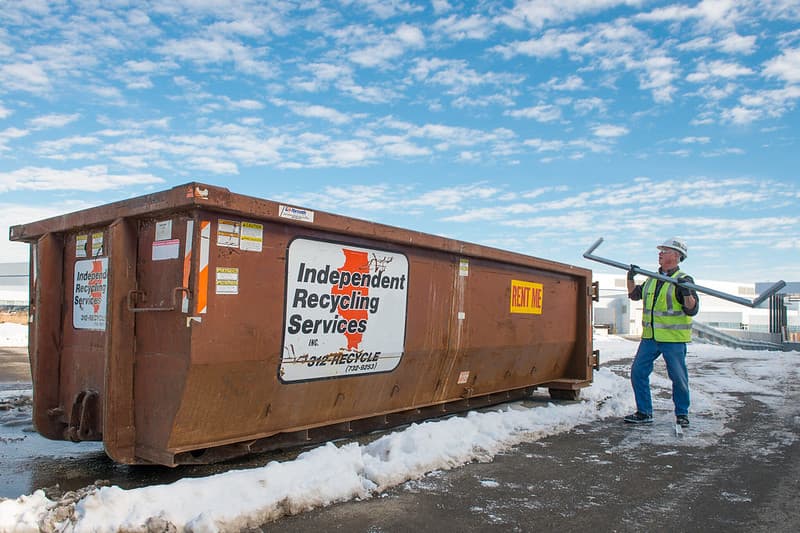
Effectively manage the use of natural resources and waste recycling.
The Social Pillar
The “social” pillar aspect of ESG is also a significant challenge facing the construction industry and its related activities in Canada. Construction workers are often up against harsh working conditions, precarious worksite situations, and health and safety risks. Therefore, Canadian construction companies must comply with labour standards to ensure safe and fair working conditions for their employees. Furthermore, companies can also support social initiatives, such as supporting community projects or training programs for disadvantaged people.
As a construction contractor, you can:
Analyze and improve the impact of your company’s actions on clients and all individuals involved, whether directly or indirectly, in a building project (supplier, citizens, employees, etc.)
Maintain safety all-around, whether that be on a confidentiality level, in terms of banking transactions or worksite safety
Provide a work environment focused on learning and training
Respect rights, standards, equal opportunity, and inclusivity
Construction Company Governance
Lastly, governance is another major focus in the construction industry. To guarantee transparency and integrity in their daily operations, construction companies must establish strong governance, like enforcing internal controls, workplace health and safety, and an open-door management policy. Good governance also ensures efficient risk management and a strategic decision-making process.
As a construction contractor, you can:
Foster relationships with shareholders and clients
Establish administrative and management roles with transparency
Be fair, open, and team-oriented on all levels, across all departments (sales, procurement, and management policy)
ESG Initiatives in the Construction Industry—Exhibit: Pomerleau
Many construction companies across Canada have already taken measures to implement ESG standards in their daily operations.
Pomerleau, for example, a construction industry giant in Canada, has recently published their first integrated report, which details their ESG performance. This report includes the measures taken by the company in matters of environmental sustainability, social engagement, and company governance.
Pomerleau also developed Perspective, an ESG performance platform that measures a company’s progress toward its ESG goals. This initiative underscores their commitment to ESG and their transparency in showcasing industry performance.
ESG Criteria: Construction Industry Advantages and Challenges
Advantages
Integrating ESG standards in the construction industry presents numerous advantages. First, embracing green and sustainable practices enhances a company’s reputation, fosters the trust of investors and clients alike, and sets it apart from the competition. Construction companies that present themselves as socially responsible and eco-friendly are often considered industry leaders.
Furthermore, the ESG can also contribute to reducing construction industry-related operational risks and costs. For example, using sustainable materials reduces a building’s energy consumption, which leads to long-term savings. Moreover, implementing improved health and safety practices can limit work-related accidents, as well as any associated costs, such as absences and productivity losses.
Challenges
In spite of the numerous advantages of ESG, the construction industry in Canada still faces significant challenges in terms of implementing ESG practices. First, embracing sustainable and eco-friendly practices can lead to additional costs, which can hinder certain companies running on narrow profit margins.
Furthermore, training and raising awareness regarding the value of ESG amongst construction labourers can be challenging. Therefore, putting together worker-based training programs as well as advocating for better practices and encouraging them to adopt sustainable and eco-friendly practices is vital.
How to Apply ESG Criteria in the Construction Industry

Source: Ameen Fahmy – Unsplash
While promoting ethical and responsible work practices is greatly emphasized, there’s no universal consensus to consult, nor are there clear and concise instruction manuals. Even something as common as the carbon tax seems nebulous. Everything appears to be a question of moral investment, subjectivity, and furthering one’s knowledge.
However, on-site, common sense applies, and each and every person develops their own methods of doing things (in spite of it all) based on their goals and project-specific characteristics. For example, one can’t implement the same guidelines on a new construction worksite as on a century-old structure renovation project.
Improve Your Environmental Impact
In practical terms, to positively impact your balance sheet, you can start by getting a fleet of electrical vehicles.
Next, collaborate with green waste management and collection agencies to dispose of your worksite waste—organizations that could potentially instruct you on how to upcycle some of it for future projects.
Design blueprints that incorporate methods for enhancing energy and heat transfer between different sections of a building, along with integrating renewable energy sources like solar panels. The best case scenario would be to aim for a carbon-neutral construction, while also fostering biodiversity within the building itself.
Use multi-purpose materials with eco-friendly properties and functions. For example, wood stores carbon, emits less GHG during its life cycle, and comes from a renewable source that’s locally harvested and transformed. And, not only is wood versatile and strong, it blends into any and all décor.
Improve Commercial and Management Performances
Set your sights on worksites that foster client self-sufficiency and promote the use of nearby services.
Collaborate with suppliers who also have defined their ESG strategies and take into account the new generation that’s passionate about merging their personal values with those of the company.
Promote equal opportunities and diversity by embracing zero-tolerance policies when it comes to violence and encourage women to join your ranks, for example. Set realistic goals, such as prioritizing the recruitment of a skilled workforce, of which 20% of the employees are recognized minorities, over the next five years.
Stay posted on the latest technologies, make use of the digital management tools available, etc.
Certifications and Governmental Measures
You don’t have to adhere to all the recommendations put forward by the diverse programs established to improve work practices according to ESG criteria. Truth be told, there’s a plethora depending on
province;
project type;
department, etc.
To name just a few: WELL, IWBI, CBDC, BOMA BEST, etc.
The two most common, and widely practiced, certifications are LEED and ICP.
LEED (Leadership in Energy and Environmental Design)
This certification focuses on all construction and renovation stages. LEED certification is awarded to companies with enviable performance scores regarding, amongst others, eco-friendly development, energy efficiency, employee health/safety, and judicious material choices.
ICP (Investor Confidence Project)
As for an ICP certification, it predominantly concerns project financing and adhering to proper commercial protocols.
Overall, taking initiative and innovative practices remain your best bets when detailing your useful ESG worksite methods.
Construction Company Forecast: The Growing Influence of ESG Standards
In Canada, ESG has turned into a major issue in the construction industry. Construction companies are increasingly aware of the importance of integrating ESG criteria into their daily operations and are taking the necessary steps to adopt sustainable and eco-friendly practices. The ESG has numerous advantages, such as enhancing one’s reputation, reducing risks and costs, as well as stakeholder satisfaction. However, hurdles remain, such as additional costs and worker awareness. It’s essential for the construction industry in Canada to continue progressing toward better ESG integration to have a hand in a more sustainable and responsible future.
Get contracts for your renovation company
RenoQuotes.com can help you get contracts. We receive quotes from clients looking for renovation professionals just like yourself. Fill in the form on the homepage (it only takes a few minutes), and you will get information related to new clients by way of our trusted service.
Dial 1-844 828-1588 to speak with one of our customer service representatives.
Looking for something else?
Related articles
The latest industry news, interviews, technologies, and resources.

Karine Dutemple
•02 Apr 2026
As a contractor, building strong relationships with customers becomes essential as you prepare for the summer rush. With higher demand and tighter timelines, clear communication and quick follow-ups allow you to secure projects faster, reduce delays, and keep your schedule optimized.
Editorial Team
•08 Nov 2023
The globe is becoming more environmentally conscious, taking responsibility for the wear and tear humans impose on our planet. Thus, it should be no surprise that sustainable energy sources are being used by homeowners more widely, and one of the sources growing in popularity is geothermal energy.

Cynthia Pigeon
•08 Nov 2023
While painting a wall may seem like a rather simple thing to do, it is nonetheless easy to overlook a few basic rules and end up with a botched final outcome. In order to avoid this, here is a list of common mistakes to avoid when painting.

Editorial Team
•19 Mar 2026
Are you dreaming of a beautiful outdoor kitchen to unwind in the sun, inhaling the smells from your dinner cooking slowly on the barbecue? Before designing your new summer kitchen, you first have to establish a realistic budget. But, the question is, How much should you plan on spending for such a project?

Cynthia Pigeon
•18 Sep 2026
In 2026, installing a heat pump in Canada is more accessible than ever, thanks to robust local and provincial incentives. By leveraging provincial utility rebates and home retrofit grants—as well as federal programs for those converting from oil heating—homeowners can, in some cases, cover a significant portion of purchase and installation costs, often estimated between 30% and 50% depending on eligibility. For a high-performance central heat pump, these incentives represent meaningful savings. In addition, select regions offer rebates of up to $600 for the purchase and installation of a residential EV charging station.