Everything About Transforming Your Patio Into a Solarium
By Editorial Team
Updated on May 28, 2025
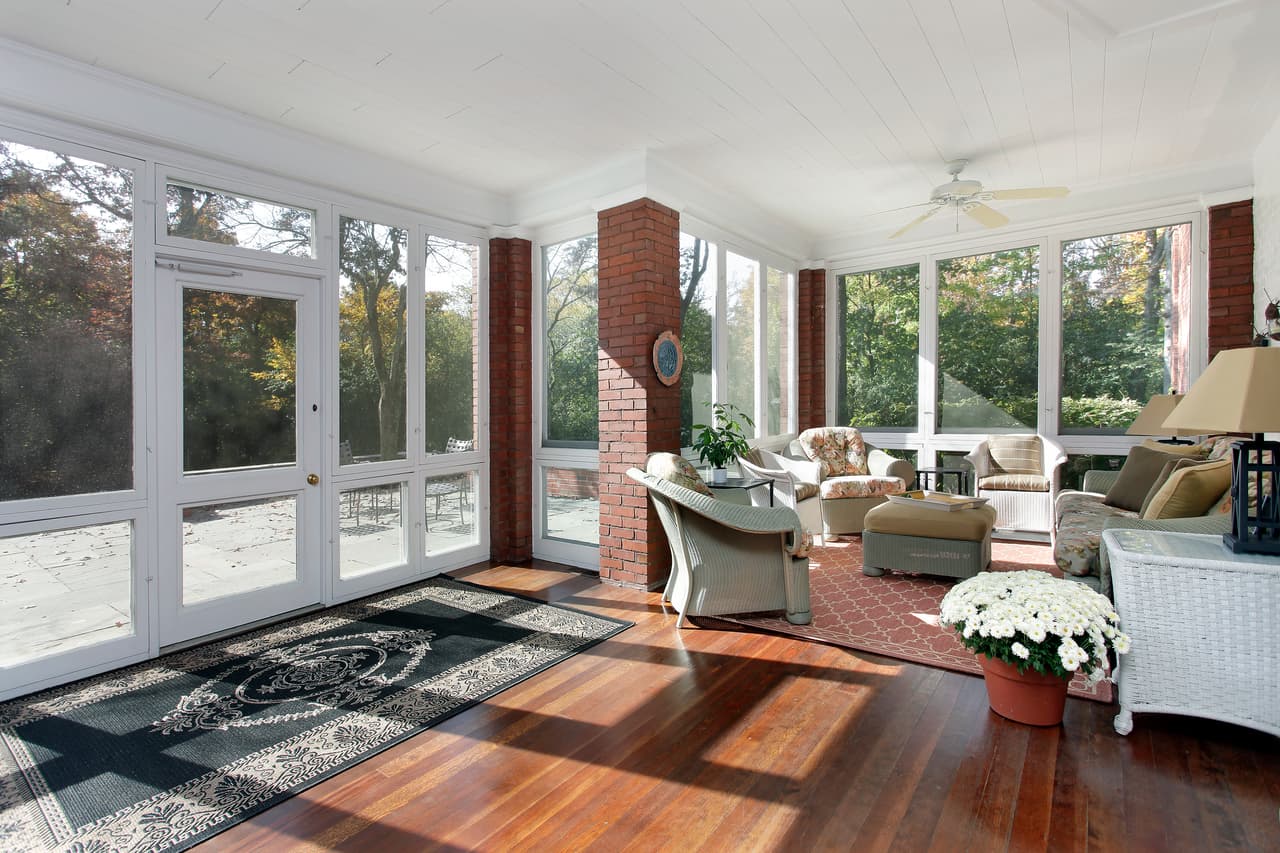
Transforming your deck or patio into a solarium means benefiting from the surrounding landscape without dealing with weather-related downsides. Whether the wind is blowing, rain is falling, or storms are veering their ugly heads, why deprive yourself of a beautiful view? To reap the benefits of your solarium at will, you first have to choose wisely regarding the different options made available to you.
Guidelines for Transforming Your Deck Into a Solarium in Canada
Source: Canva
Resilient Glazing
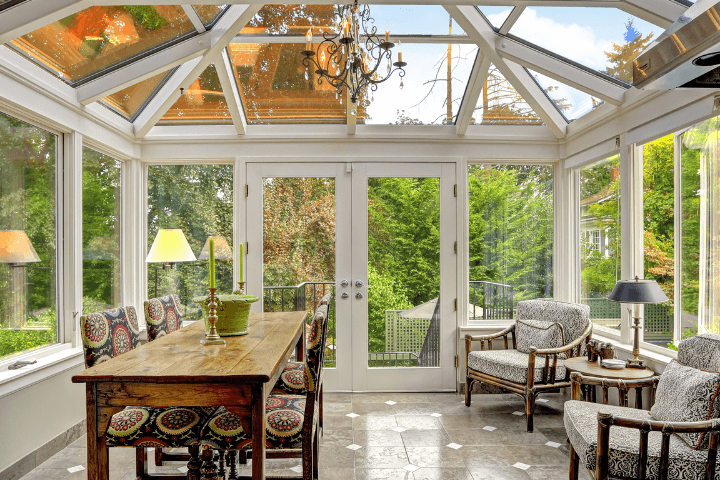
No matter your motivation behind wanting to turn your deck into a solarium, note that choosing tempered glass is a must. This type of glazing was treated to render it two to five times more resistant to thermal shocks compared to standard glazing, making it the obvious choice when building a solarium.
A Low-E Film for Optimal Energy Efficiency
Also noteworthy, applying a low-e film over your windows. This film is made of a thin layer of metallic oxide that's applied to your windows' surfaces, allowing heat to reflect inside during the winter and outside during the summer. Therefore, no matter the season during which you plan on enjoying your solarium, you’ll reap its benefits.
Transforming an Outdoor Space Into a Solarium… Costs Matter
It's no surprise that a year-round solarium comes with a significantly higher price tag compared to a heatless version. This cost difference stems from the need to insulate the entire structure to withstand harsh winters and the requirement to build a sturdy foundation.
Additionally, professional installation is a must, which further adds to the overall expense. As a result, the average cost of a heated solarium typically hovers around $20,000 to $75,000—a stark contrast to the more affordable options available for heatless solariums.
Turn Your Patio or Gazebo Into a Temperature-Controlled Solarium
If you’re considering using your solarium throughout the summer, note that a north-facing space is preferable. A solarium facing said direction will fully benefit from its positioning, creating an enjoyable coolness within its confines and bypassing the overwhelming heat outside.
As for the type of glazing to prioritize, reflective glass is best. The latter doesn’t retain heat inside the solarium, therefore it won’t magnify it into a sauna-like space. In keeping with the idea of maintaining a cool solarium, choose single-glazing (5- to 6-inch thick glass panes) with limited insulation properties. Also, consider installing window shades to create a sun-shaded zone. Along the same lines, consider buying a specifically designed ceiling shade.
Looking to buy blinds?
We recommend Quebec-based company StoresBoutique.ca: custom-made blinds, sought-after products, but above all else, the best warranties for a stress-free purchase.
Broad Range of Heatless 3-Season Solarium Options
Source: Canva
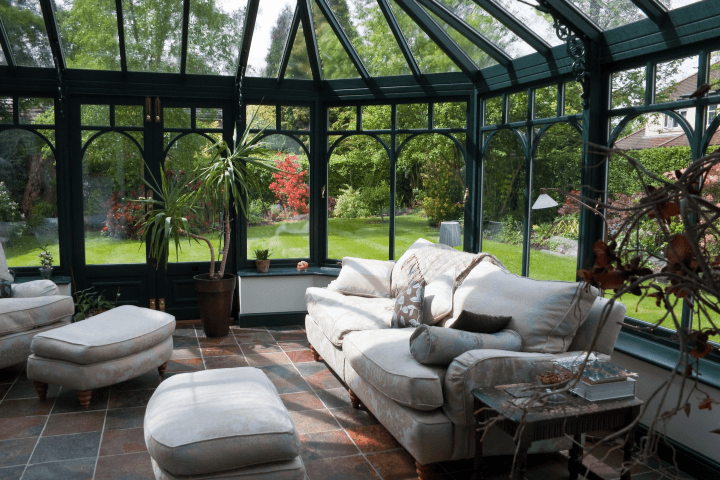
There are three heatless solarium options available.
Firstly, note that glass-framed solariums are an especially sought-after option. In terms of characteristics, this type of solarium is similar to a heated model, aside from its lower energy efficiency. Note that this type of solarium retails for roughly $30,000 to $75,000 (heatless).
Secondly, a polymer solarium has an aluminum frame. Its glazing is clear or tinted and especially resilient and has a 10-year or so lifespan. However, maintenance-wise, it does require more upkeep if you want to steer clear of dirt-stained windows. This type of solarium is half the price of its glass counterpart. Therefore, you can get a sun porch-like solarium for about $15,000 to $37,500 (heatless).
Lastly, purchasing a sun porch-like solarium is a worthwhile choice for those looking to blend in their new purchase with their home’s architecture as much as possible. This type of solarium is designed with several windows, allowing you to benefit from a crisp, gentle breeze while easily airing out the inside of your enclosure. To benefit from a sun porch-like solarium, budget between $25,000 and $75,000 (heatless).
If you deem yourself quite handy, go ahead and build your new solarium yourself. Bear in mind that it must stand on a sturdy wooden deck, upheld by piles or forming tubes inside which concrete is poured.
What Is the Difference Between a Solarium and a Sunroom?
According to the APCHQ (Quebec’s Association of Construction and Housing Professionals), the main difference between a solarium and a sunroom lies in their build and usage. A solarium is typically heated, insulated, and used year-round, which subjects it to the rules and standards outlined by the Building Code since it’s considered an integral part of a house.
On the other hand, a sunroom or sun porch is typically not heated nor insulated and isn’t built for year-round usage, which excludes it from the Building Code requirements established for house-related structures. As such, a solarium is an additional living space, while a sun porch could be described as an indoor-to-outdoor, seasonal transition space.
To learn more about how these two structures differ, check out our article What Best Suits Your Project: A Solarium or Sunroom?
How Much Does It Cost to Transform a Patio Into a Heated, Winter-Ready Solarium in Canada?
Source: Canva
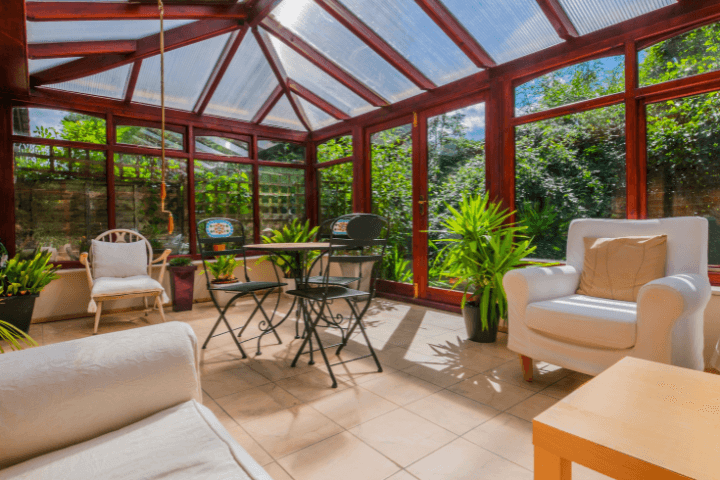
If you’re planning on using your solarium mainly during the wintertime, a north-facing positioning is best. In fact, doing so will trap the heat generated via the sun’s rays inside the enclosure. The thermal disparity found between the solarium’s walls and its interior setting will allow for an even heat flow.
The enclosure should preferably be small in size since it requires the use of artificial heating on top of the natural heat stemming from the sun’s rays.
To get the most out of heat storage during the colder seasons, select energy-efficient insulated glazing. Double-glazing is a must since you have to boost heat retention as much as possible.
Flooring choices are also of utmost importance, as some types of floor materials are especially cold underfoot, and not the most judicious of choices if you’re looking to benefit from a warm and cozy nook. Therefore, ceramic tiles and stone shouldn’t be at the top of your list of preferred flooring.
Should you not be able to go without the sheer beauty and aesthetic appeal of the above-mentioned flooring materials and want to install either one in your solarium, then it’s best to artificially heat the floor. Note that doing so will cost roughly $300 to $450 per square foot, so it’s a significant financial investment.
No matter your flooring of choice, injecting polyurethane foam (at least 5 inches thick) to fill the void under the flooring is recommended. This supplementary and highly efficient protection acts as an air and vapour barrier, limiting gaps that are likely to allow cold air to filter through your floor and into your solarium. Implementing this measure means complying with the requirements established by the Régie du bâtiment du Québec for outdoor flooring insulation.
How to Set Up a Solarium Properly
To minimize setbacks post-solarium construction, request information from your local authorities to gain insight into local regulations regarding this type of build. The established measures may very well vary based on your area of residence. Also, bear in mind that you have to comply with the mandatory measures imposed by the Régie du bâtiment du Québec (or your local building regulatory authority) regarding your solarium building project.
FAQ About Solariums and Sunrooms
Source: Canva
How can you DIY insulate a solarium’s flooring?
For optimal floor insulation in a solarium, it's recommended to apply a minimum of 5 inches of spray polyurethane. This material works similarly to an air barrier or vapour barrier, preventing cold air or moisture from seeping through. Doing so is especially important for 4-season solariums, where thermal comfort is a priority.
What is the best type of flooring for a solarium?
Solarium-adapted materials are those that provide a great balance between durability and thermal comfort.
For example:
Wood flooring: Adds warmth and is cozy underfoot.
Vinyl or laminate: Moisture-resistant, ideal for 3-season solariums.
Underfloor heating: Recommended if you’re looking to lay stone or ceramic tiles, which are colder underfoot, yet aesthetically pleasing.
What is the best type of solarium?
When it comes to choosing a solarium, it all depends on your needs and intended use:
3-season solarium: Ideal to benefit from natural daylight during the spring, summer, and fall without requiring additional heating.
4-season solarium: Insulated and heated, can be used year-round much like a home extension.
Solarium/sun porch combo: Features removable windows and natural ventilation, perfect for the summer months.
Sunroom vs. solarium: Which glass enclosure is best?
Choosing between a sunroom or a solarium depends on your priorities:
Sunroom: A sun porch isn't insulated nor heated, yet ideal for summer use, and boasts great ventilation.
Solarium: Insulated and often heated too, provides an additional room for year-round use, but calls for a hefty budget. The work done must be compliant with your local building code and standards.
Is a solarium cheaper than a sunroom?
No, sunrooms are usually much cheaper than solariums because they're not considered "home extensions." They're enclosed outdoor structures, built adjacent to the home, lacking insulation for year-round use. Moreover, sunrooms are typically not temperature-regulated and, therefore not ideal for winter use.
Can I turn my patio into a sunroom?
Absolutely! You can transform your patio into a sunroom, creating a comfortable, 3-season enclosed space. To do so, assess your patio's structure, design a sunroom that fits your needs, and install windows, and roofing. Additionally, check local building codes and consider hiring professionals to ensure a smooth and safe transition from patio to sunroom.
Looking for something else?
Related articles
The latest industry news, interviews, technologies, and resources.
Editorial Team
•08 Nov 2023
The clay composition of brick is what gives it its characteristic earthy colour while also delivering enormous strength and durability. While brick does outlast other materials such as wood, over time a brick wall’s worst enemies are moisture and extreme temperature changes. These two natural elements that every Canadian must deal with annually can really compromise the mortar over time, leaving cracks and stains.
Editorial Team
•07 May 2026
A fibreglass balcony is a popular choice in Canada because it can resist moisture, weather exposure, and freeze-thaw conditions. Over time, however, the surface may lose its shine, crack, fade, or show signs of wear. In many cases, a small repair or resurfacing job can extend the life of the balcony without replacing the entire structure.

Paul Riopel
•17 Jun 2026
Navigating Ontario's booming construction industry requires savvy bidding strategies. From understanding bid packages to mastering the bidding process, contractors must equip themselves with essential knowledge.
Editorial Team
•11 May 2026
Are you dreaming of sun-filled summer days? What better than a jaw-dropping outdoor kitchen to make the most of it? But first, how does one go about getting such a large-scale project off the ground? Well, the answer couldn’t be simpler: by following a few paramount tips!
Cynthia Pigeon
•05 Dec 2025
A common question among those renovating their bathroom is whether to opt for a bathtub or shower. While the initial focus is often on space constraints, there are other factors that come into play when making the final decision. So, what exactly are these factors? Keep reading to find out!