What Are the Causes and Solutions to a Faulty French Drain?
By Léa Plourde-Archer
Updated on October 24, 2024
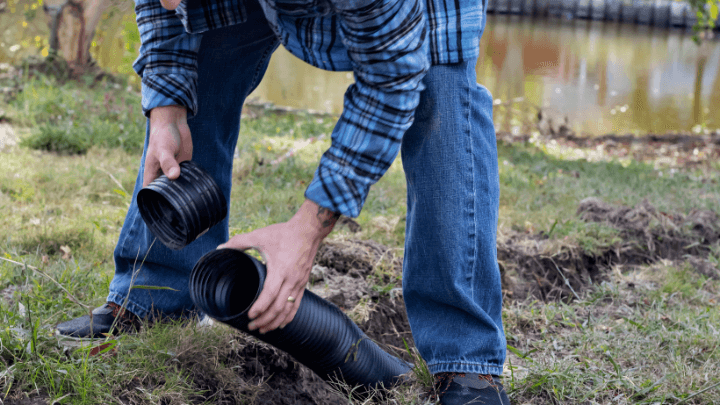
The French drain plays a highly important role in preserving your home's integrity, as water accumulating near the foundations can seriously damage a home and lead to expensive renovations.
Unfortunately, French drains can break down. In order for the drain to be able to fulfill its role properly again, it's important to identify what is causing it to malfunction.
What Causes French Drain Issues?
Source: Canva
A few important details
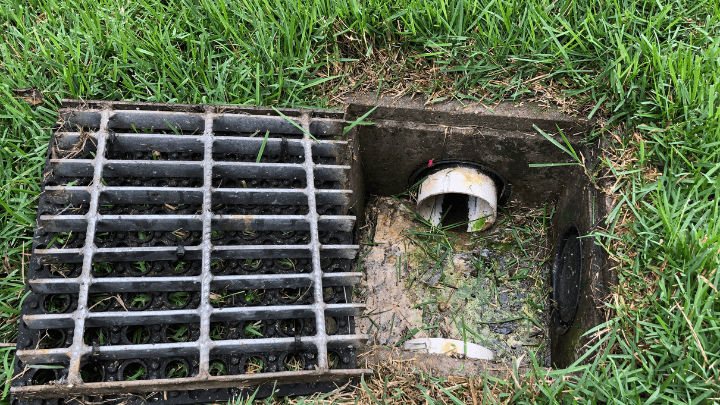
A French drain (or foundation drain) plays several roles: it ensures that rainwater is drained from the ground to be directed to a storm sewer or a cesspool, in addition to being very useful if you have drainage problems with surface water on your property.
It also prevents water from accumulating at the foundation level, as it is installed underground all around the perimeter of the house. Therefore, having a functional French drain can save you the inconvenience of experiencing water infiltration inside your basement.
Before we talk about the reasons why your french drain might not be working, it should be known that it not functioning properly is not necessarily a sign that it is broken; it may also have reached the end of its lifespan. The operating life of a French drain is around thirty years and can vary depending on the type of soil in which it has been installed.
Types of Soil
Source: Canva
Regarding French drains, each type of soil has its pros and cons:
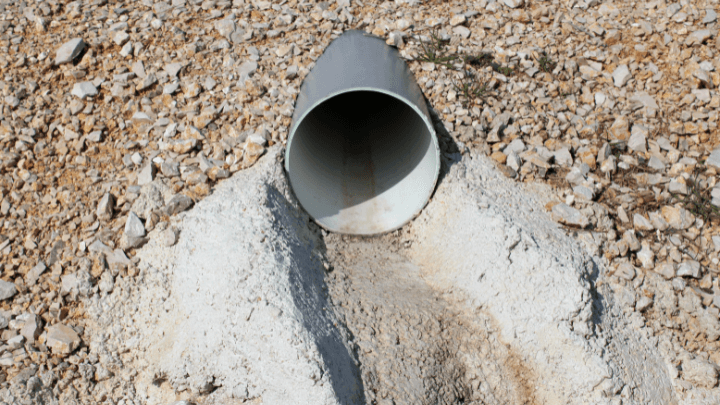
A soil composed of stones and/or gravel can break the drain if a large stone exerts continuous pressure on it. French drains are quite rigid (in order to guarantee their longevity), but if a rock is creating pressure over a long period of time on one of the drain walls, this could eventually end up causing damage.
On the other hand, soil that mainly consists of sand has fairly low water content, but can easily clog a French drain due to the small fine particles that may be likely to seep into it over time.
Soils rich in iron particles can create iron ocher in the soil, a thick, reddish sludge that may cause the drain to block. Indeed, because of its thickness, the mud will have difficulty entering the drain to be evacuated as is the case with water. Therefore, it will accumulate on the walls of the French drain and completely block the openings.
Clay soil also tends to cave in during periods of drought. These types of soil movements can affect the French drain, as its slope must always be roughly the same to function properly.
If you have trees on your property, it's possible that one of them may have taken root around or inside the French drain - in which case its ability to drain water will be greatly affected. To fix this issue, the roots will have to be removed from the drain.
Improper Installation
Installing a French drain must be done correctly from start to finish, that is, by respecting currently established standards and regulations. Otherwise, its operational life will be greatly affected. This is why we strongly recommend that you hire professionals to diagnose, install, maintain or repair the French drain on your property.
It is very important to install it properly, as a French drain that is not set up with a negative slope towards its drip point will inevitably end up being clogged. Replacing a French drain is quite expensive: it's better to ensure that the installation is well done in the first place.
In simple terms, a French drain is a pipe that sends water from the foundation to the sewer. Gravity is the only thing it relies on to do its job. If it isn't well installed, the water will not go where it needs to go, because the slope creating the flow won't be steep enough.
If a joint between two parts of the French drain is poorly made, the drain risks weakening at this level and the components of the soil will seep inside. A well-installed and maintained drain will at most require a partial repair if a portion of it is damaged for various reasons.
It should be noted that old French drains made of terracotta (particularly those installed in the 1960s) are especially vulnerable to this type of problem. These drains were installed in such a way that their different sections were only juxtaposed one after the other, without any joints. That's why this type of drain is more likely to be invaded by roots that will make their way inside to clog it over time.
Outdoor Layout

Source: Canva
It's always pleasant to create a yard layout that suits your aesthetic preferences. Therefore, having to take into account the effective drainage of your landscaping may not be attractive at first glance, but land that is flooded by surface water is probably even less so.
If your landscaping plan involves creating slopes, be sure to lay them out so that water will flow away from the perimeter of the foundation. Try to opt for a slope that goes towards the front of the house, away from the foundations and above all, make sure not to discharge water runoff towards your neighbours' yards!
Before you plan out your landscaping, it can be useful to survey the existing conditions of the land. In doing so, you know exactly where to go to maximize the natural drainage of your land, which will put even less pressure on the French drain.
In a nutshell
A properly installed and periodically maintained French drain can extend its operational life and slow down the need for repairs. If you combine preventive maintenance of your drain and good management of the capacities of your land, the drain will do its job very well, effectively protecting your foundations from water infiltration.
Image source: Freeimages
Get 3 renovation quotes for your French drain project
RenoQuotes.com can help you get quotes for your French drain installation project. If you submit your project, we’ll put you in contact with top-rated contractors. Fill in the form on the homepage (it only takes a few minutes), and you will get estimates from trusted professionals.
Dial 1-844 828-1588 to speak with one of our customer service representatives.
Looking for something else?
Related articles
The latest industry news, interviews, technologies, and resources.

Editorial Team
•30 Aug 2024
This article will focus on installing advanced septic systems in Canada, namely in Quebec. Why opt for such eco-friendly, efficient wastewater management solutions? What are the advantages of advanced systems and what options are available? What are the key system installation and maintenance steps? Whether you’re installing a new system or updating an existing one, this guide details all the necessary information you need to make an informed decision and ensure a sustainable system.
Editorial Team
•05 Sep 2024
Reinforcing your home’s security to prevent burglary attempts is essential. But, where to start? Front doors are often considered key access points. Therefore, we’ll focus on said vital component. Which security systems are the most effective for deterring would-be burglars? This article highlights different ways to protect your home and its occupants. While the options listed don’t exhaust all possible solutions, consulting a professional locksmith will help guide you in the right direction based on your needs and budget.

Léa Plourde-Archer
•25 Jul 2025
A heat pump is an important purchase for your home and it often helps solve temperature variation issues indoors. Daikin offers options and features that suit all needs and budgets. We will explore this subject in the following paragraphs.

Cynthia Pigeon
•25 Jun 2026
Adding a traditional home extension can quickly turn into a financial and logistical headache. Between labour shortages, fluctuating material prices and Quebec’s unpredictable weather, projects often stretch over several months. That is why more and more owners of single-family homes, especially bungalows commonly found in the suburbs of Montréal, Québec City or Sherbrooke, are turning to modular additions, also known as factory-built extensions.

Editorial Team
•30 Jun 2026
The construction industry in Ontario is poised for continued growth over the next several years, driven by robust activity in both the residential and non-residential sectors, according to the latest forecasts from BuildForce Canada. “Construction is a key contributor to Canada’s gross domestic product, and an employer of approximately one out of every 13 working Canadians. Employment has increased by about 80% since 2002, and now counts about 1.5 million people,” says Sean Strickland, Chair of BuildForce Canada. “With further growth projected across the forecast period, the challenge before our sector is how to manage labour force pressures.”