Get Quality and a Stylish Design with Glass Tile
By Editorial Team
Updated on November 8, 2023
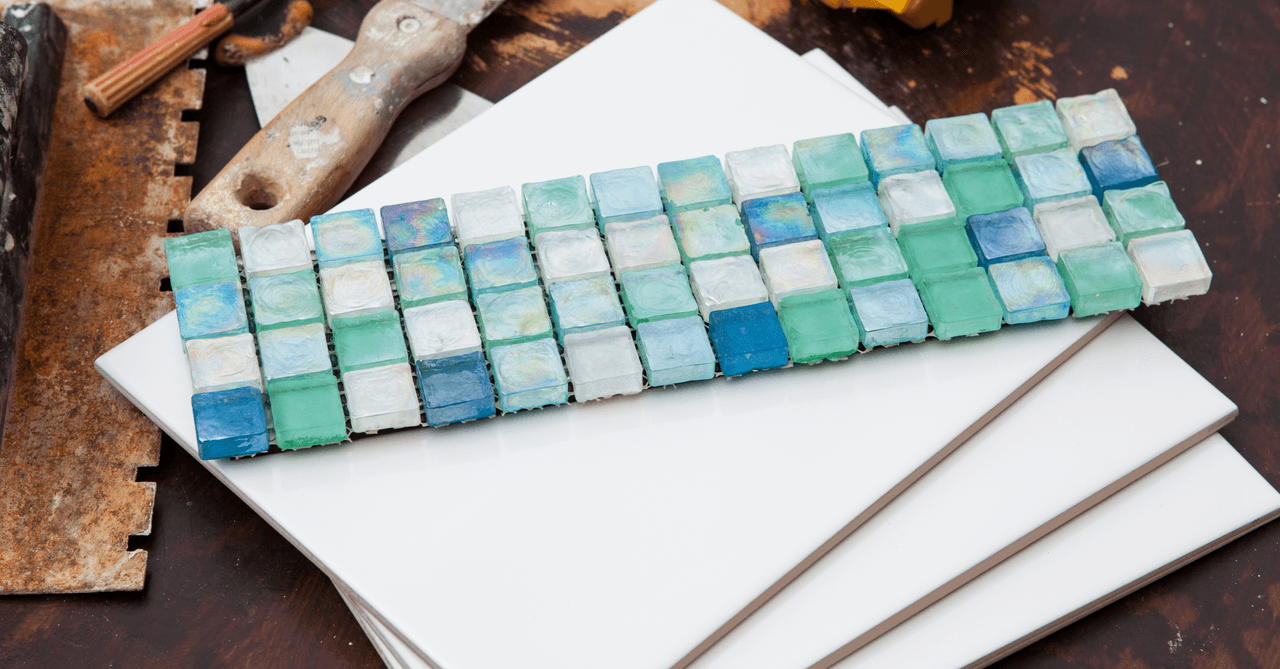
Glass tiles aren’t only a great wall tiling choice for wet areas, but they’re also an ideal flooring. Nowadays, such tiles are solid, aesthetic, and eco-friendly, and are an increasingly significant part of our interior quarters.
If you’re still on the fence about using glass, uncover the qualities that have made it so triumphant.
The Benefits of Clear Glass Tile
Source: Canva
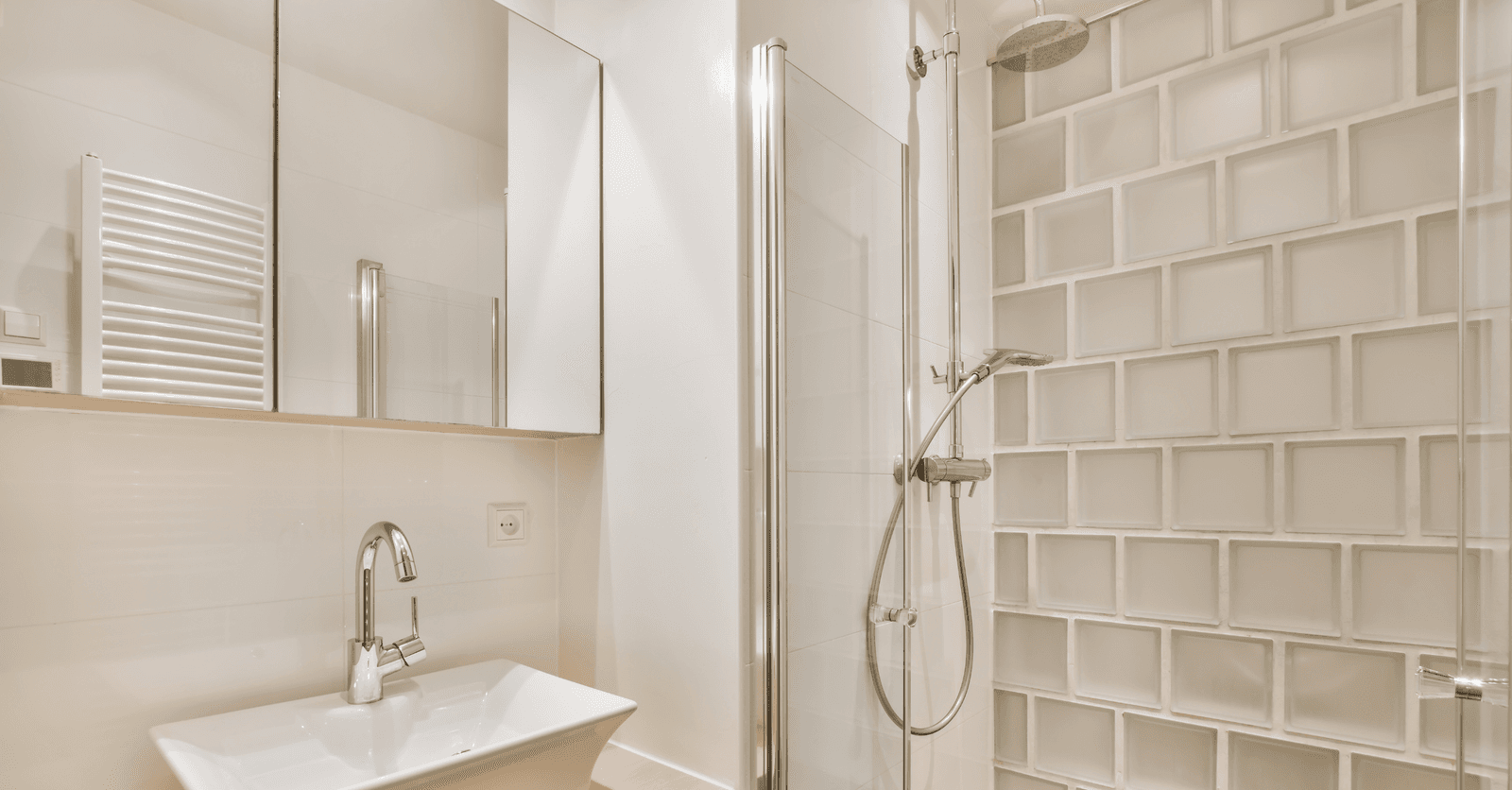
Glass tiles make for a very aesthetically pleasing wall treatment or flooring that can be used both indoors and outdoors. This type of tile is available in an array of colours and textures, meaning it can be adapted to a plethora of interior décors. On top of its wide range of colours and patterns, glass tile account for several other advantages:
Increases luminosity
Strength
Various shapes
Several finishes
Low maintenance
Eco-friendly
1. Increases luminosity
It all depends on how light is reflected. Glass mosaics reflect the sun’s rays, which in turn brightens the area in question but also gives it a feeling of spaciousness.
As such, a glass mosaic is ideal the play off the space available without having to knock down a wall.
2. Strength of glass tiles
Since 2011, glass tiles have been in compliance with ANSI A137.2 standard. This standard mandates tests ensuring that the tile in question can withstand temperatures of 38°C (100°F), with the exception of interior wall tiles.
Unlike ceramic tiles, glass mosaic tiles can’t withstand great temperature variations when installed outdoors. Therefore, such testing helps differentiate the various types of glass tiles to label where each specific type of glass tile can be installed.
3. Various shapes
There are three basic types of glass tile:
cast glass;
low-temperature coated glass;
fused glass.
Each type has its respective characteristics. We’ll detail those of fused glass in the subsequent section devoted to finishing touches.
Cast glass
Cast glass is kiln-fired glass that’s poured into a mould. It can be moulded into any shape, size, or colour.
Low-temperature coated glass
Low-temperature coated glass is achieved by transferring a decorative coating on the back side of a clear glass sheet. From there, a wide variety of colours and patterns can be pulled off.
4. Several finishes
When it comes to fused glass, a glass fusion technique is used to obtain the following finishes:
smooth;
textured;
uniform;
non-uniform.
5. Low maintenance
Cleaning glass tiles is a rather straightforward process. All you need is:
water;
vinegar;
and a soft rag.
By mixing equal parts water and vinegar, you’ll be able to remove any build-up that may have settled on your glass tiles.
6. Eco-friendly courtesy of recycled glass
Glass mosaic tiles are an eco-friendly material, provided they’re from recycled sources:
company-issued waste;
recycling centres;
curbside recycling.
ANSI A137.2 standard divides recycled glass tiles into 3 categories, based on their composition:
Category 1: at least 25%;
Category 2: at least 40%;
Category 3: at least 60%.
Glass Mosaic: Its Multiple Uses
Source: Canva
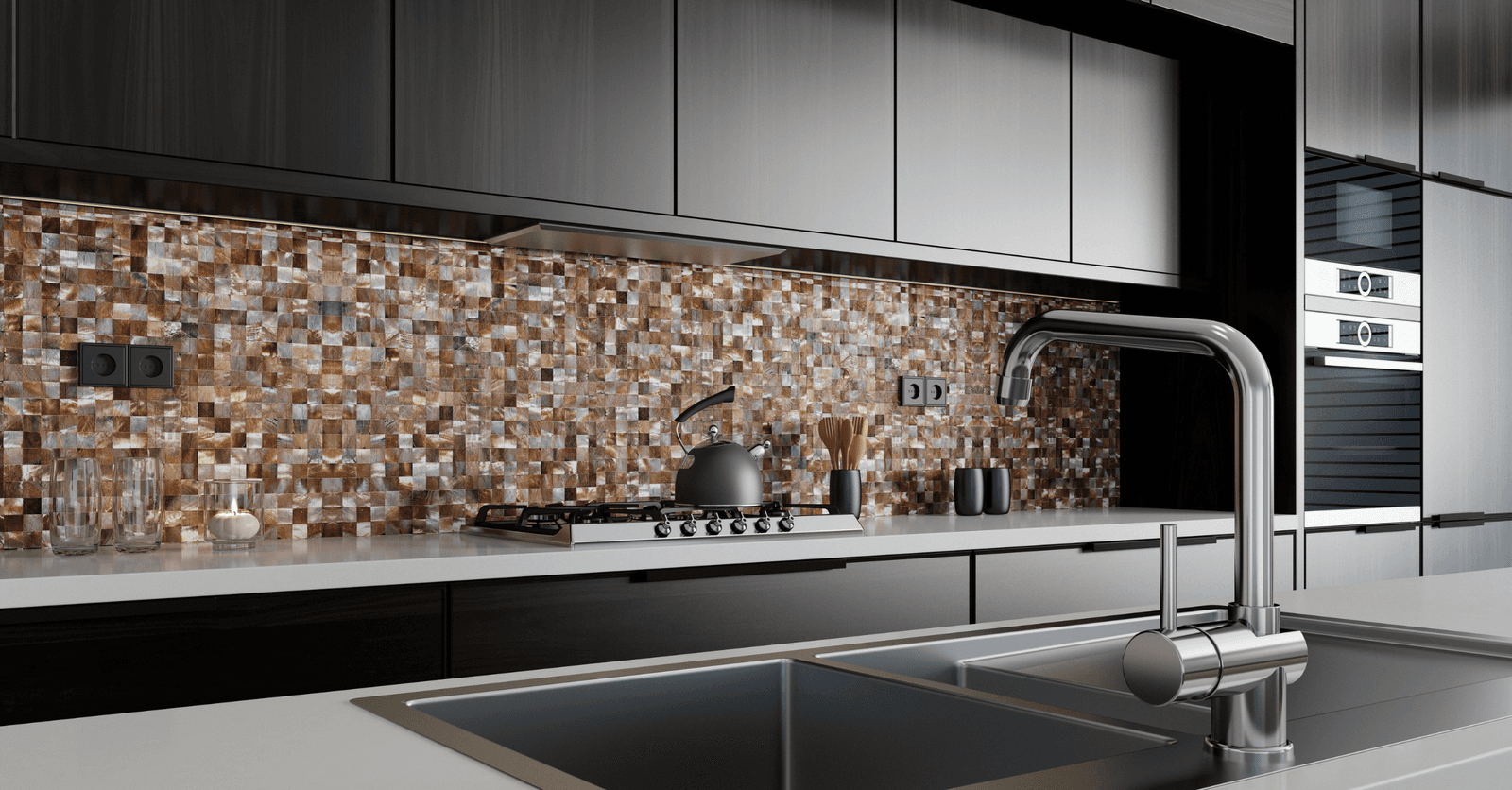
Glass mosaic is a very sought-after tiling technique that consists of assembling pieces of glass together to design colourful and complex patterns. The durable and shiny finish achieved with glass tiles allows for a variety of uses:
inside, both as flooring or as wall treatments;
outside, as a pool liner or terrace surface.
Glass Paste
Glass paste, or “pâte de verre,” is most often used to make glass mosaics. It’s a cold-casting technique that consists of moulding glass sheets.
A known technique since Ancient history and rediscovered at the end of the 1800s in France, this process gives glass mosaic a texture that’s similar to that of ceramic.
The tiles are then glued together to create a mosaic that can withstand the following:
scratches;
shocks;
heat.
All that, treatment-free.
Bathroom or Kitchen Wall Tiles
Glass mosaics are perfect for wet areas:
kitchen;
wet room;
bathroom.
The reason why is that glass tiles are super easy to clean. Whether it be grease or soap residue, simply wiping the surface with a sponge will suffice in most cases.
Glass Mosaic Flooring
Glass tiles used as indoor flooring are typically fused glass tiles. They can be laid on every type of rigid infrastructure, such as:
cured concrete slab;
cement panel (0.5-inch thick) on a plywood subfloor;
double-layer plywood;
mortar bed on a plywood subfloor.
Prior to installation, spread a crack insulation membrane over the surface to be tiled. Large glass tiles will then be laid atop this very membrane.
To prevent air bubbles from forming in the tile mortar, use as little as possible. As such, avoid following the manufacturer's recommended mortar thickness.
In fact, since the tiles are see-through, air bubbles forming beneath the tiles are clearly visible once installed.
How to Cut Glass Mosaic Tiles
Source: Canva
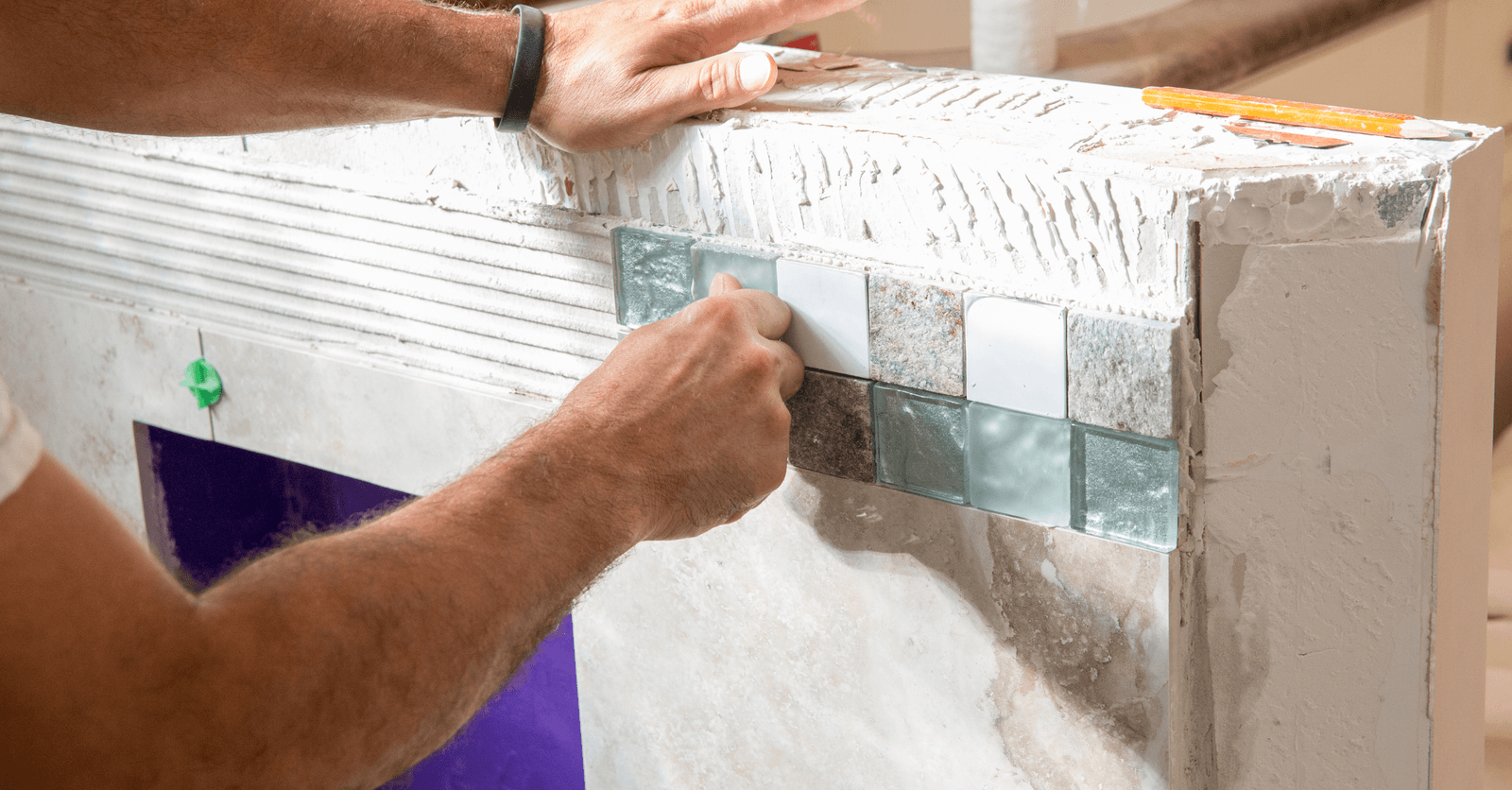
For clean and precise cuts, it’s best to use a glass-specific diamond blade mounted on a wet saw.
Naturally, not everyone can whip out a wet saw at a moment’s notice, and purchasing such a tool runs about $120 to $500.
Luckily, there’s a more artisanal method that can be used, requiring a glass-cutting knife.
This cutter-like tool isn’t equipped with a metal blade but a diamond-shaped tip. With this tool handy, follow along with the steps detailed below.
Step 1: Mark the tile
Lay your glass tile on a flat surface. Grab a second one to use as a makeshift ruler and place it where you want to make the cut. Run the glass-cutting knife’s diamond tip along the tile to mark it.
To effectively mark the tile, avoid pushing down on the tool too hard, or not pushing down hard enough.
Step 2: Snap the glass tile
To snap the glass tile, you’ll need to use something to lift up one side of the tile where it was marked. It could be a piece of cloth or neoprene foam.
The only thing left to do is to push down the glass tile’s edge to break it along the guideline.
Once the cloth or neoprene is in place, simply push down on the edge to break up the tile.
Step 3: Use running pliers
However, if you only need to cut a small section of your tile, rather than cutting it in half, you risk having a hard time doing so using the cloth or neoprene method.
To successfully cut a small section of a glass tile, you can use running pliers to snap off a small section of the tile. Some are used much like straightforward pliers, others like grip pliers, but both are easy to use.
A Few Examples of Glass Tile Prices
Source: Canva
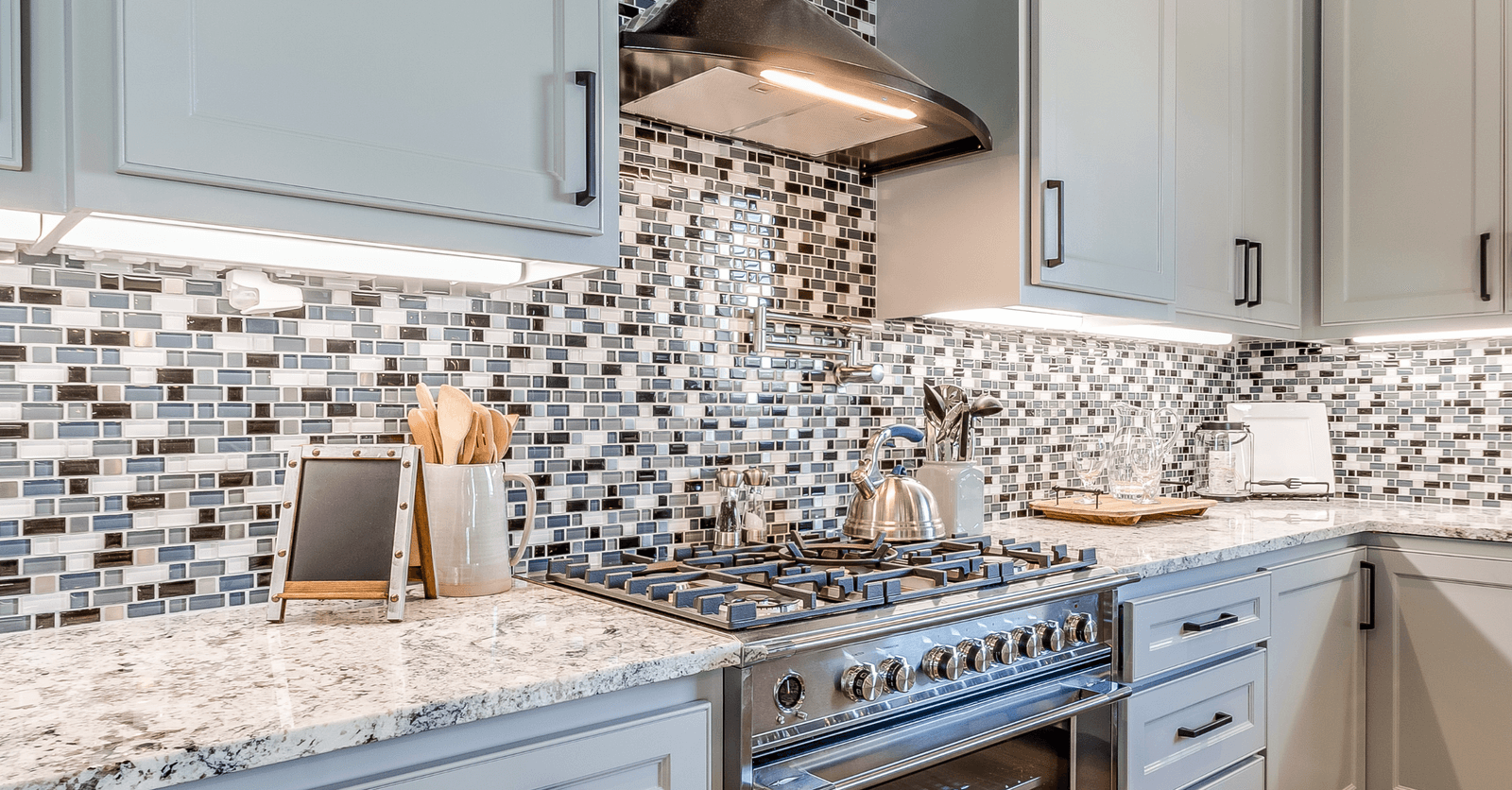
Given that glass tiles basically come in every shape and size, they can mimic pebbles, hexagons, or bricks. The cost of the following creations are as follows:
Random shape and size mosaic: $11.50/sq.ft.;
Hexagon mosaic: $16/sq.ft;
Brick tiles: $13/sq.ft.
To cover an entire wall with recycled tiles, budget about $38/sq.ft.
Get 3 quotes for your tiling project
RenoQuotes.com can help you get quotes from a general contractor. By submitting your project, we’ll put you in contact with top-rated contractors. Fill in the form on the homepage (it only takes a few minutes) and get estimates from trusted professionals.
Dial 1-844 828-1588 to speak with one of our customer service representatives.
Looking for something else?
Related articles
The latest industry news, interviews, technologies, and resources.

Editorial Team
•08 Nov 2023
On a whim, have you ever considered painting your kitchen a bright red shade? Maybe you can already imagine the spectacular effect this vibrant colour will have on your interior. Of course, you may also wonder if the end result will really live up to your expectations?
Editorial Team
•08 Nov 2023
Your kitchen is one of the most important rooms in the home, not to mention one of the biggest investments. Between appliances, decor, and accessories, it’s crucial that you focus on functionality while keeping things clean and stylish.
Editorial Team
•24 Jul 2025
Are you hoping to paint over your garage floor but unsure how to go about it? What type of paint should you buy? How should it be applied? What are the best products available on the market and their pricing? Rest assured, you’ve come to the right place! In the following section, discover all of our tips and tricks to successfully paint over your garage floor.
Editorial Team
•14 Jan 2025
Basement windows are often small and so they can easily be neglected. However, this doesn’t stop them from being the frontline barrier to keeping your home warm and protected against the outdoor conditions.
Amanda Harvey
•08 Nov 2023
Industrial style is excellent for the homeowner who is looking for a concept that lacks any sort of pretentiousness. The visual appeal and charm of industrial style lie in its ability to showcase utilitarian surfaces, stripped-back architecture and salvaged objects. If you’re looking to celebrate humble materials, then this is the home decor option worth considering!