Heating: Softwood Can Also Be Valuable
By Editorial Team
Updated on May 11, 2026
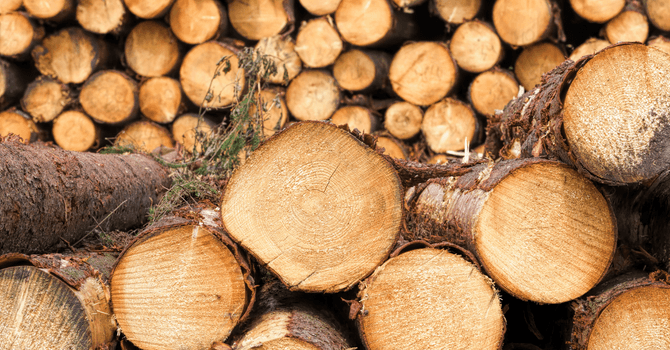
Softwood doesn’t have the same wood-burning potential as dry wood, which is much better for firewood. As such, it can’t be swapped out under any condition.
However, softwood also has its advantages as far as firewood is concerned. And that’s why it can complement dry wood very well. In fact, it can be used as alternative firewood, as long as you have a masonry heater.
Here’s everything you need to know about softwood.
Types of Softwood
Source: Canva
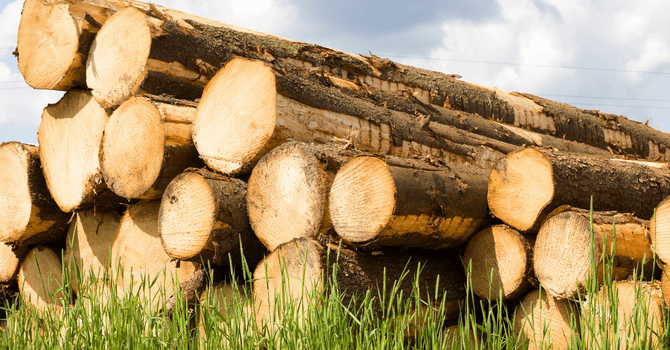
Softwoods are mostly tree species grouped under the Pinaceae family.
However, next to resinous wood, we can also find some leafy trees, which are grouped under various families (Malvaceae, Salicaceae, etc.).
Their common ground: a less dense wood, which renders it softwood.
How to Calculate the Hardness of Wood
Numerous methods allow one to calculate the hardness of wood. The three main methods used are as follows:
Monnin Scale (noted as a 1-10 hardness number);
Brinell Scale (noted as BHN or BH for Brinell Hardness Number);
Janka Test (noted as pound-force, kilogram-force, or in Newtons).
These methods of calculation are intended to establish a wood compression force or penetration force. The diameter of the indentation or the depth of the impact can be used to calculate the hardness of the wood.
Soft/Resinous Wood
When a wood professional, like Sandie Taillefer of Bois de foyer Rive-Nord Inc., mentions that, “Fir, pine, and coniferous trees are all different types of softwoods found,” she’s right. She could also have added to that list:
Larch;
Cedar;
Norway spruce;
Douglas fir;
Thuja;
Hemlock;
etc.
Besides, the name "Pinaceae" is derived from the term Pinus (pine). According to linguists, the term pinus stems from the Proto-Indo-European word meaning “to be fat, swell.”
Sandie Taillefer, of Bois de foyer Rive-Nord Inc., was able to perfectly summarize this “fat, swollen” characteristic of softwood, when she said, “Softwood can be characterized as having more resiny, sticky bark.”
Leafy Softwoods
Amongst the leafy softwoods, one can find the following trees:
Poplars;
Lindens;
American black walnut;
Silver maple;
etc.
However, density has nothing to do with phylogenetics. Environmental conditions are significant, which affect the density of the wood. As such, the following factors affect the density of wood:
The proportion of early/springwood (more porous than late/summerwood);
Growth (a faster growing process produces low-density cells);
Wood defects (e.g. rot);
Compression wood (the reaction of conifer trees against wind force).
Softwood Characteristics
Source: Canva
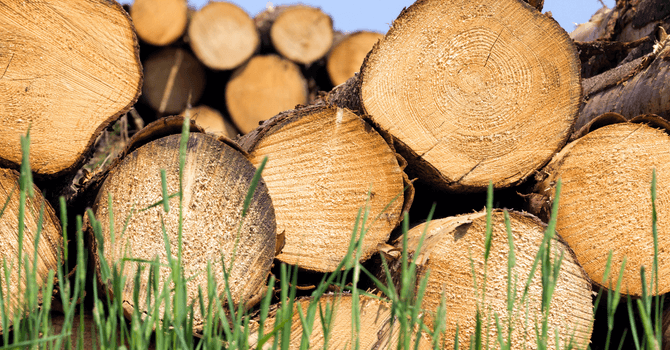
You might have already asked yourself: How does softwood differ from hardwood? For the most part, it’s a matter of early/springwood versus late/summerwood:
Larger cell cavities;
Thinner cell walls;
Lower water levels;
Anisotropic behaviour.
The wood's structure is composed of cavities found in the lumens of the wood cells. In fact, these cavities are larger in earlywood cells than in latewood cells.
And that’s not all, the earlywood cell walls are also thinner than latewood cell walls.
Latewood, which has a higher material density, also retains a more significant quantity of water compared to earlywood, based on identical volumes.
Therefore, they both have different hygromechanical behaviours, earlywood being anisotropic, and latewood transverse isotropic.
Let it be said that we’re solely talking about softwood characteristics found within the same tree. Between the various species of trees, the same principles apply, strengthened by phylogenetic differences between the groups.
Softwood Advantages
Softwood dries faster
We’ve already mentioned that water levels are higher in earlywood than in latewood. This characteristic is directly linked to the difference in density between the two types of wood.
Softwood is two to three times less dense (Occidental Thuja) than hardwood (Carya ovata) and has less significant water levels. Consequently, softwood species meant for woodburning purposes have a much shorter drying time than hardwood.
Once you’ve obtained a humidity level under 20%, you can scramble to use it to heat your home.
Softwood produces less heat
We all know the biggest hurdle when it comes to firewood: the warmth generated is hard to control. Once the fire is extinguished, you’re cold, once lit, you sweat.
Everything depends on the firewood’s heat value, which differs from one species to the next. For example, a cord of red maple, which is hardwood, produces 24,000,000 BTU per dry wood cord.
On the other hand, a cord of quaking aspen solely produces 17,700,000 BTU. The balsam fir only produces 15,500,000.
As such, in Quebec, what’s the advantage of choosing softwood over hardwood for heating purposes since it doesn’t create as much heat?
Simply because it’s perfect to fuel a fire during the first autumn cold spells, or during the last of the cold winter weather.
Softwood is fast spent
A wood that's fast spent is a wood that’s perfectly adapted to what you intend on doing: warming you up during lunch or dinner. If you put hardwood in your wood stove, it’ll burn for way too long.
Softwood is thus a necessary adjustment variable, if not more.
Softwood is perfectly adapted to masonry fireplaces. Why’s that? Because once the fireplace is warmed up, it’ll heat a house for 12 to 24 hours. On the other hand, in steel stoves, woodfires have to be nurtured.
Softwood is easily lit
One notable characteristic of softwood is that, when you light your fire, it’ll spark more. As such, it’s much easier to ignite a fire with softwood than hardwood.
This is actually why firewood suppliers offer, more and more often, a mix of softwood and hardwood.
Softwood is easily lit, whereas hardwood ensures a long-lasting and powerful fire.
Softwood is less costly
Used in a masonry fireplace, you won’t lose any heating capabilities. You might have to light one or two more fires a day, but you’ll pay way less per wood cord than you would for hardwood.
Softwood Pricing Example
For 40 ft³ (1.13 m³) of 15-inch long (38 cm) softwood logs, you’ll pay $89. On the other hand, hardwood will go for $109.
A decent compromise would be to choose mixed firewood: 50% softwood - 50% hardwood. For the same 40 ft³ (1.13 m³) of 15-inch long (38 cm) logs, you’ll pay $103.
Now, here’s how you can cut costs: by making your version of a mixed firewood bundle. Clarification:
80 ft² of mixed firewood is $206;
40 ft² of hardwood is $109 + 40 ft² of softwood is $89, for a total of $198.
Check out the following article to know more about the cost of firewood. (French only)
Get 3 renovation quotes for your heating project
RenoQuotes.com can help you get quotes for your heating project. If you submit your project, we’ll put you in contact with top-rated contractors. Fill in the form on the homepage (it only takes a few minutes), and you will get estimates from trusted professionals.
Dial 1-844 828-1588 to speak with one of our customer service representatives.
Looking for something else?
Related articles
The latest industry news, interviews, technologies, and resources.
Editorial Team
•31 Mar 2026
Recently, home renovations are occurring with sustainability, eco-friendly and alternative energy methods at the forefront. As the homeowner knows, most homes have central heating, whether that be a warm air system, radiator or a boiler. Unfortunately, these systems are not energy efficient, consuming copious amounts and making heating larger homes costly.
Cynthia Pigeon
•15 Jun 2026
The cost of a conversion varies depending on the home’s configuration, the electrical work required, and whether the selected system includes a heat pump. In many cases, the bill is higher when major electrical work or a central heat pump is added. Although the provincial Chauffez vert program ended on March 31, 2026, combining current financial assistance programs, such as Hydro-Québec’s LogisVert grant and the federal OHPA program, can help eligible households significantly reduce their out-of-pocket costs, though a residual cost should generally still be expected. Depending on the price of heating oil, the performance of the heat pump, and the characteristics of the building, heating savings can be significant, but they vary from one property to another.

Editorial Team
•12 May 2026
Choosing a heat pump for a Canadian home is not just about cooling in summer. In many parts of the country, especially Quebec and other cold regions, homeowners also need a system that can provide reliable heat during winter. Panasonic offers several types of heat pumps in Canada, including ductless wall-mounted units, multi-zone systems, central ducted systems, and hybrid heating options.

Editorial Team
•22 Jan 2026
Canada’s skilled labour shortage is a major challenge for contractors nationwide. With roughly 700,000 trades workers expected to retire by 2028 and not enough new talent entering the industry, many projects are being delayed and jobs are going unfilled. BuildForce Canada reports the construction sector needs 351,800 new hires by 2033 to replace retirees and meet demand, especially in Ontario, Alberta, and British Columbia, meaning contractors are competing harder than ever to attract and keep skilled workers.
Editorial Team
•08 Nov 2023
Reducing energy costs is one of the most important factors when choosing home insulation, as the right insulation can reduce energy bills drastically.