Oil to Electric Heating Conversion: Cost, Grants and Savings in Quebec
By Cynthia Pigeon
Updated on June 15, 2026

The cost of a conversion varies depending on the home’s configuration, the electrical work required, and whether the selected system includes a heat pump. In many cases, the bill is higher when major electrical work or a central heat pump is added. Although the provincial Chauffez vert program ended on March 31, 2026, combining current financial assistance programs, such as Hydro-Québec’s LogisVert grant and the federal OHPA program, can help eligible households significantly reduce their out-of-pocket costs, though a residual cost should generally still be expected. Depending on the price of heating oil, the performance of the heat pump, and the characteristics of the building, heating savings can be significant, but they vary from one property to another.
What Is the Real Cost of Converting in 2026?
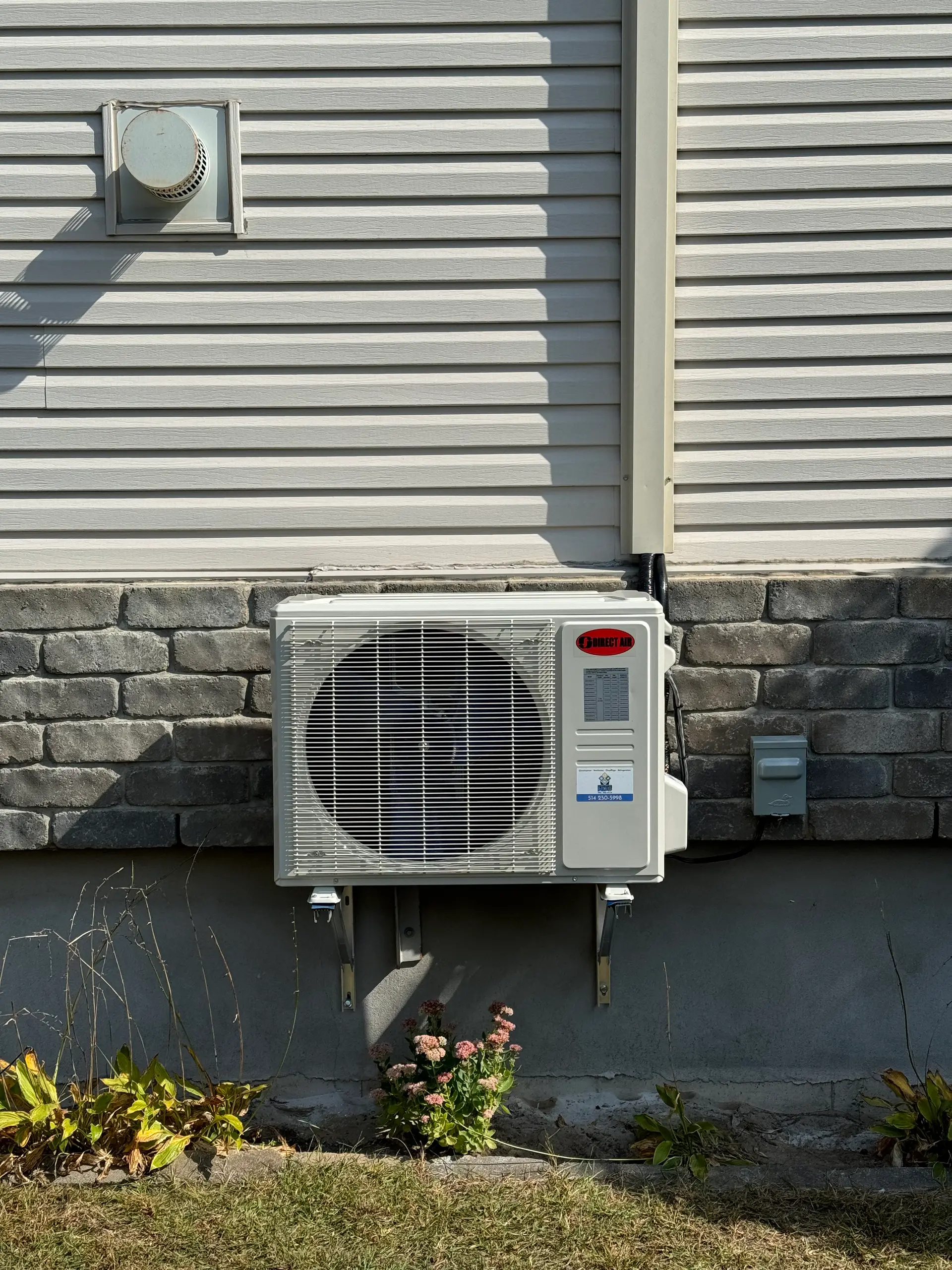
Source: Climatisation NDS-pro
Given the volatility of heating oil prices and the province’s environmental requirements, the cost of converting to electric heating is top of mind for many Quebec homeowners. Replacing an old oil heating system with a fully electric system represents a significant upfront investment, and its profitability depends on the price of oil, the efficiency of the system installed, and the work required.
The total budget varies greatly from one home to another, depending on the electrical work and the system chosen; therefore, it is more accurate to speak in terms of a price range rather than a single average. This price variation depends on several key factors: the accessibility of your basement installations, whether or not your existing ventilation ducts need to be resized, the power required for your new furnace, and the current capacity of your electrical entrance.
To give you a clearer idea of the cost breakdown, here is a summary table of market rates in 2026:
Expense Item | Estimated Price Range (Taxes Not Included) |
|---|---|
Dismantling and removal (tank, old oil furnace, eco-friendly disposal) | Cost varies depending on access, the condition of the tank, and the complexity of the work. |
Purchase and installation of an electric furnace (standard forced-air unit) | $4,000 to $8,000 |
Electrical panel upgrade when the existing capacity is insufficient | Cost varies depending on the existing capacity, the type of electrical connection, and the scope of the required work. |
Addition of a central heat pump (optional, may improve energy efficiency depending on the building) | $5,000 to $10,000 |
Estimated total (without heat pump) | Cost varies depending on whether a central heat pump is added and the scope of the required electrical work. |
Estimated total (with central heat pump) | $13,000 to $26,000 before subsidies |
It is important to understand that every property has its own structural realities. To obtain an accurate estimate tailored to your home, it remains essential to request free quotes from qualified professionals.
Cost of Dismantling the Furnace and Heating Oil Tank
The removal of an oil heating system must be entrusted to qualified professionals. The environmental and fire risks are too high. This first technical step represents a cost ranging from $1,500 to $3,500.
The expert’s work begins with the complete draining of any remaining heating oil and the pumping of sludge accumulated at the bottom of the tank. The technician then degreases and safely cuts the steel tank if it is located in a cramped basement or hard-to-access crawl space. The old furnace is then disconnected from the air ducts and chimney flue.
The price varies depending on the complexity of the extraction: a tank that is easily accessible in a garage will cost less to remove than a tank confined behind finished walls or buried underground. The contractor must provide the required supporting documents and comply with the requirements of the applicable program, as well as those of the RBQ.
Cost of the New Electric Furnace and Panel Upgrade
Once the space has been cleared, installation of the new electric system can begin. The purchase and installation of an electric furnace, or forced-air unit, ranges from $4,000 to $8,000, depending on the unit’s power, expressed in kilowatts. The required power depends on the size of the home, its insulation, and its electrical load; it must be determined during the project assessment.
However, the technological cost of the unit hides another unavoidable reality: the electrical capacity of your property. Some homes heated with oil still have a limited electrical entrance, which may require an upgrade during the conversion. An electric furnace alone consumes a significant amount of energy during winter peak periods.
An upgrade to a 200-amp panel is frequently required, but needs vary depending on the existing electrical capacity and the building’s total load. Electrical entrance upgrade work may include replacing the mast, meter, or electrical panel. The cost varies depending on the existing capacity and the extent of the required modifications. To plan all of these interventions without surprises, it is wise to learn about the overall cost of residential renovations before beginning the project.
Available Subsidies: How to Lower the Bill

Source: RenoQuotes
While the gross amounts may seem overwhelming, the 2026 market is particularly advantageous for homeowners transitioning to electricity. However, a major change recently occurred in the province’s financial assistance landscape.
Fortunately, the Government of Quebec and its partners have not abandoned households. To minimize your out-of-pocket costs, the current strategy is to combine the two major programs still active: Hydro-Québec’s LogisVert program and the targeted federal program.
Hydro-Québec’s LogisVert Program
To compensate for the end of certain traditional government assistance programs, Hydro-Québec’s official website offers the LogisVert program. This initiative aims to encourage energy efficiency by offering financial assistance based on eligible equipment and program criteria.
As part of a conversion, rather than installing a standard electric furnace, whose performance and consumption must be assessed based on the building, the program favours the installation of eligible heat pumps that meet certain energy efficiency criteria.
LogisVert offers financial assistance based on the eligible model and its efficiency features, in accordance with the program’s list. The amount of assistance depends on the eligible model and the program criteria in effect.
For a high-performance central heat pump adapted to Quebec’s climate, the assistance depends on the characteristics and certification of the chosen model.
This assistance can absorb a major portion of the additional cost associated with purchasing the heat pump, which may make the conversion more attractive from an energy-efficiency standpoint, depending on the building context.
Federal OHPA Program
At the same time, the federal government offers a program for eligible households replacing oil heating with a heat pump: the OHPA program, or Oil to Heat Pump Affordability program. The application period ends on July 31, 2026.
This program is specifically aimed at low- to median-income households that need to move away from oil. Eligibility criteria are based on the household’s net income in relation to family size in your region of Quebec. For eligible homeowners, the OHPA program can provide a direct grant of up to $10,000.
The major advantage of the OHPA program is that, in some cases, it may be combined with other forms of assistance, subject to each program’s eligibility conditions. By combining the $10,000 federal assistance with Hydro-Québec amounts for a certified heat pump, the net cost can decrease significantly, depending on the file and the work required, including the 200-amp panel and removal of the oil tank. In some cases, financial assistance can significantly reduce the cost of the project. However, most homeowners should expect a residual financial contribution that varies according to their situation and the required work. This is an ideal opportunity to make the transition without affecting family savings.
Why Does the Law Require You to Move Away From Heating Oil in Quebec?
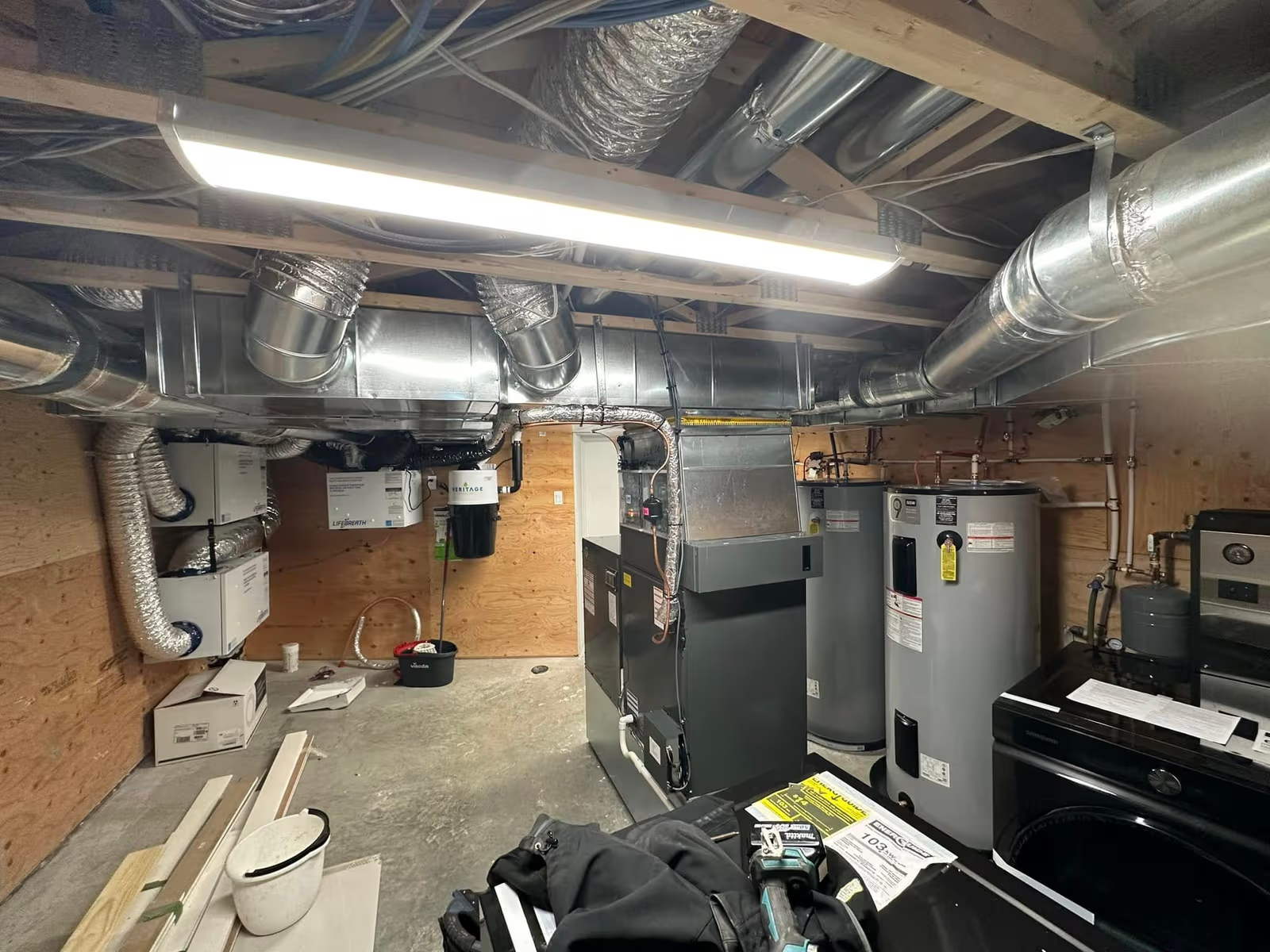
Source: Ventilation Pro-Confort Inc.
Beyond financial considerations and long-term profitability, the transition to electricity is now governed by a strict regulatory framework. According to Government of Quebec regulations, very clear legal guidelines have been put in place to gradually eliminate residential heating oil from the province.
Since December 31, 2023, it has been strictly prohibited to install an oil heating system in new residential buildings. More importantly for current homeowners, it is also prohibited to replace an existing heating appliance with an appliance that runs on oil or to install a new heating oil tank.
Major repairs are prohibited: If your old oil furnace suffers a major breakdown or if your tank shows signs of advanced corrosion, the law prohibits you from spending money to replace these components with similar oil-based equipment. Current rules limit the replacement of certain oil equipment and encourage the transition to other energy sources.
The objective of this law is twofold: to reduce Quebec’s residential carbon footprint and to eliminate the major environmental risks associated with tank leaks. A leaking oil tank in a basement can cause catastrophic environmental damage, with soil decontamination costs potentially reaching tens of thousands of dollars, depending on the extent of the contamination—costs that insurance companies are increasingly refusing to cover for old steel tanks.
Profitability and Real Savings on Your Hydro-Québec Bill
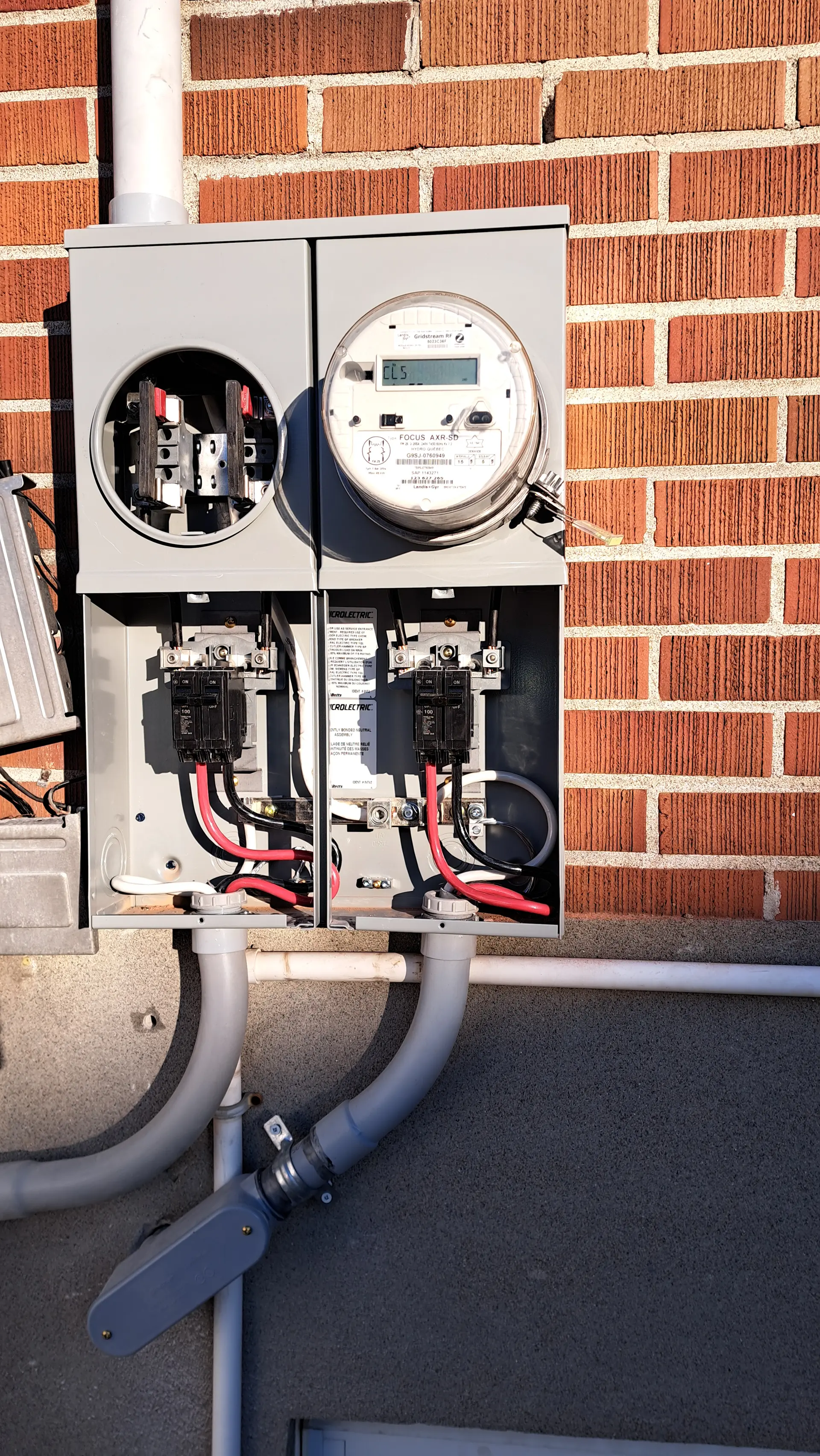
Source: BCD Électrique
Replacing oil heating with electricity can offer an attractive return on investment depending on the price of oil, the system installed, and the characteristics of the building. Heating oil is an imported fossil fuel, subject to global geopolitical fluctuations, which makes winter bills completely unpredictable for homeowners.
In Quebec, we are fortunate to benefit from Hydro-Québec’s clean electricity at regulated rates that are among the lowest in North America, including the well-known Rate D for residential customers.
Imagine an average single-family home in Quebec that consumes about 2,500 litres of heating oil per year for space heating and domestic hot water. With oil prices regularly ranging between $1.50 and $1.80 per litre, the annual heating bill can quickly exceed $4,000.
By converting this same home to an efficient electric system equipped with a central heat pump, energy consumption drops significantly thanks to the heat pump’s remarkable energy efficiency, which extracts heat from the outdoor air rather than generating heat through combustion. In many well-insulated Québec homes equipped with a high-performance heat pump, heating costs can be considerably lower than with oil. However, actual expenses depend on many building-specific factors.
Actual savings vary depending on the building’s characteristics, insulation, and consumption habits.
The payback period depends on the total cost of the work.
The financial assistance obtained can reduce the amount that needs to be recovered.
Energy savings achieved over time also influence the project’s profitability.
In addition, you completely eliminate the annual mandatory maintenance costs associated with oil burners. Some insurers may offer more favourable conditions once an oil system is removed, but the impact varies depending on the insurance policy, as insurers eliminate the surcharge related to the risk of fuel leaks.
Steps to Obtain Quotes From RBQ-Certified Contractors
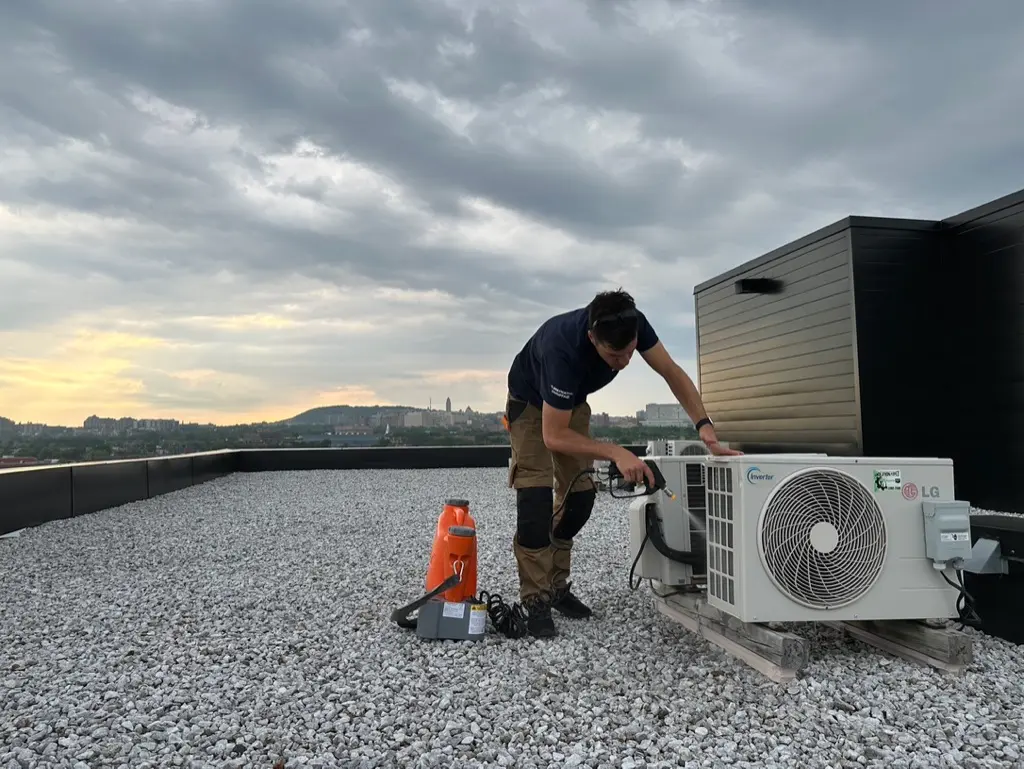
Source: HVAC MTL
To ensure your conversion project goes smoothly and that you remain eligible for the various financial assistance programs, you must follow strict steps. The golden rule in Quebec is to hire only an RBQ-certified contractor, meaning a contractor licensed by the Régie du bâtiment du Québec, who holds the appropriate subclasses for heating and electrical work.
Here is the process to follow to successfully complete your energy transition:
Check the condition of your current panel: Note the amperage listed on your main breaker, often 100 A. This will confirm the scope of electrical work to include in your price requests.
Contact several professionals: It is strongly recommended to compare at least three separate proposals. To simplify your search and ensure you work with verified companies, you can find a certified contractor in Quebec in just a few clicks through our matching platform.
Request a detailed quote: Each quote should clearly detail the cost of pumping and safely removing the oil tank, the exact model of the electric furnace and proposed central heat pump, including their AHRI model numbers for subsidies, as well as the details of the 200-amp electrical upgrade.
Verify RBQ compliance: Before signing the contract, validate the contractor’s licence number in the public registry of the Régie du bâtiment du Québec. Also, ensure that the subcontracted or main electrician is a member in good standing of the Corporation des maîtres électriciens du Québec, or CMEQ.
Submit financial assistance applications: Do not throw away any documents. Carefully keep the contractor’s detailed final invoice, the oil tank removal certificate, and the technical data sheets for the new electrical appliances to submit your reimbursement applications to LogisVert and the federal OHPA program.
By entrusting your work to certified experts, you ensure a safe, efficient installation that is perfectly adapted to Quebec’s climate, while protecting the long-term value of your real estate asset.
Looking for something else?
Related articles
The latest industry news, interviews, technologies, and resources.
Cynthia Pigeon
•29 Apr 2026
To remove a load-bearing wall in Canada, obtaining a renovation permit from your city is mandatory. This process requires submitting plans sealed by a licensed structural engineer (P.Eng.), or in some cases, an architect, depending on the scope of the project. The work must be carried out by a qualified contractor in accordance with provincial regulations. Performing this type of work without a permit can lead to fines, loss of insurance coverage, and complications when reselling your property due to non-compliance.
Cynthia Pigeon
•01 Oct 2026
Finishing or renovating a basement can be one of the most valuable residential renovation projects in Quebec. Whether you're adding a second bathroom for your family, creating a functional laundry room, or installing a kitchenette in a secondary suite, rough-in plumbing forms the hidden but essential foundation of the project.

Léa Plourde-Archer
•08 Nov 2023
Feeling like your house needs a makeover but you don't know where to start? Here is a list of 5 home improvement projects that will make your house look brand new.
Léa Plourde-Archer
•08 Nov 2023
Visible when we lift our eyes to the upper part of the exterior walls, soffits are not only there for aesthetical purposes. Their perforations also serve to ventilate the attic. Understanding the purpose of a soffit will help you realize how important they are. If you do not already have this type of material on your house, you may want to consider whether they would be a welcome addition. All the more so considering that they are quite easy to install.

Cynthia Pigeon
•06 Oct 2026
In 2026, the cost of a bathroom renovation can vary considerably between Quebec and Toronto. These differences result from labour costs, contractor availability, regulatory requirements, required permits and project complexity.