Heavy-Duty Equipment Mechanic: Ins and Outs of the Trade
By Editorial Team
Updated on November 8, 2023
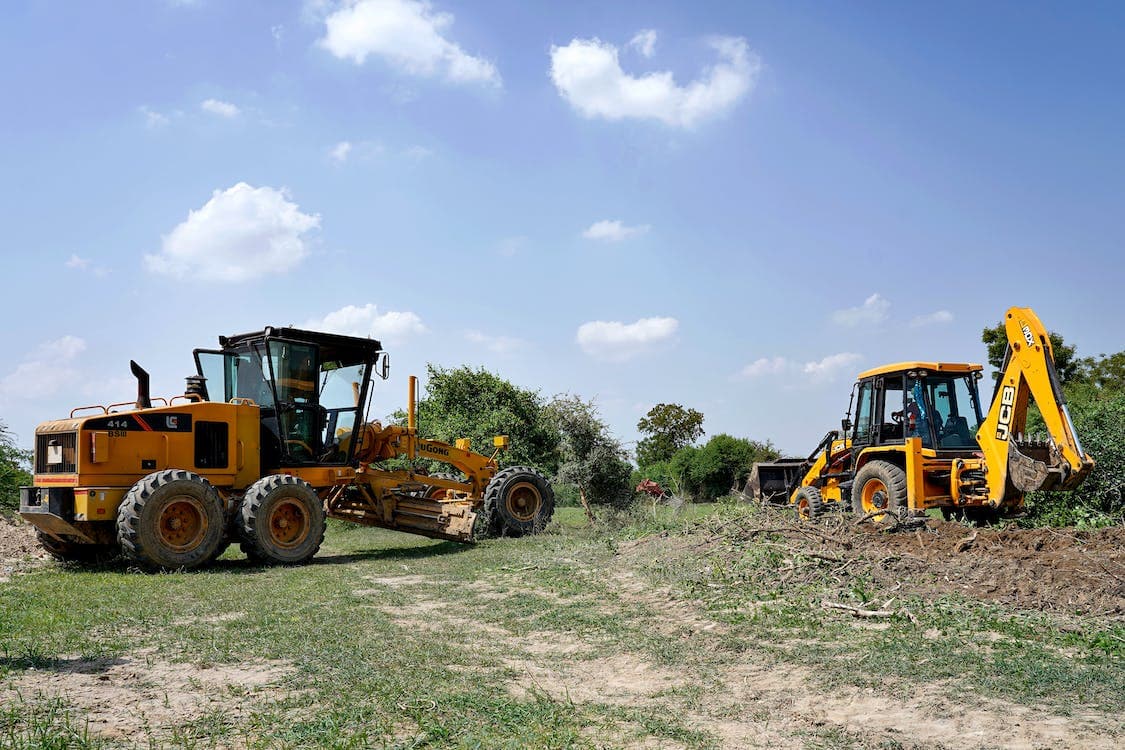
Heavy-duty equipment mechanics, under the supervision of a team lead, are tasked with maintaining and repairing heavy machinery. They’re called to acquire knowledge to work on various types of machines like cranes, excavators, graders, spreaders, drum rollers, tractors, and any other type of motorized construction equipment.
These machines are used in numerous industries like construction, transportation, natural resource exploitation, material handling, and landscaping. A heavy-duty equipment mechanic is thus entrusted to work for heavy machinery rental companies, dealerships, or directly with owners.
Heavy-Duty Equipment Mechanic
Duties performed
During the course of their workday, a heavy machinery mechanic will be asked to complete the following tasks:
Inspect machines;
Understand problems;
Maintain, clean, and lubricate;
Repair;
Ensure the repaired element(s) function properly.
Work schedules can vary in this line of work. Usually, a 40-hour workweek is spread out Monday through Friday, with a maximum 8-hour workday. However, individuals must be versatile depending on the collective agreement endorsed by the company and the constraints linked to specific job sites.
Note that this type of work is practiced under peculiar work environments. Indeed, the work conditions can be especially loud considering the numerous machines in use. The mechanic in question can also be asked to work outdoors, in harsh weather conditions, whether that be beaming sunshine, heavy rainfall, or cold.
Trade Salary
Considering that being a heavy-duty equipment mechanic is largely sought-after, the salary is rather favourable. A beginner will earn roughly $48,000 a year. With years of experience, salaries climb up to $72,000. According to Emploi-Québec, the average annual salary of a heavy-duty equipment mechanic is $54,000. When it comes to competitive wages, the heavy machinery mechanic attracts a lot of qualified and experienced workers from various professional backgrounds.
Job Opportunities
Job opportunities related to heavy-duty equipment mechanics are good. As a matter of fact, as of 2000, there has been a slight increase in job openings, and a lot of the current workforce is nearing retirement. Furthermore, it’s a physically demanding job that requires quite a labour turnover.
However, job opportunities vary greatly depending on the region of employment. For example, in British Colombia, Nova Scotia, Quebec, Saskatchewan, and Prince Edward Island, they’re fairly high. However, there’s a certain disparity in terms of wages.
The ratio between job seekers/openings is relatively weak as there are solely a few workers on unemployment compared to job openings in 2018. For the 2019-2028 period, 24,200 new job opportunities are projected for an estimated 25,900 seekers (based on graduates, immigration, and mobility).
Furthermore, various new labour forces should create new opportunities for heavy-duty equipment mechanics. This is indeed seen in the construction industry, which benefits from an infrastructure investment program from the federal government that amounts to $186 billion over 12 years. Also, the mining, transportation and wholesale industries will see prosperous years, which is encouraging for mechanics.
Note that with experience, it’s possible to rise to prominent supervisor positions such as team lead, foreman, as well as a controller.
Training & Requirements

Being a heavy-duty equipment mechanic requires one to meet certain conditions. Here are some of the conditions that are usually required to work in said profession:
A high school diploma or an equivalent (DVS) recognized by the organization.
A 3- to 5-year apprenticeship or more than 4 years of experience within the trade, as well as specialized training in heavy machinery repair, is also required to receive a certificate of qualification.
The heavy machinery technician certificate of qualification is mandatory in Quebec and Alberta and is offered, even though it’s optional, in the other provinces and territories.
The diploma of vocational studies - Construction Equipment Mechanic (5331) is a 1,800-hour training that spans two years. The program’s objectives are to gain knowledge in various heavy machinery repairs.
This training is normally offered in the following regions: Abitibi-Témiscamingue - Bas-Saint-Laurent - Québec - Chaudière-Appalaches - Côte-Nord - Estrie - Gaspésie–Îles-de-la-Madeleine - Laurentides - Mauricie - Montérégie - Montréal - Nord-du-Québec - Saguenay–Lac-Saint-Jean.
Qualified heavy machinery and agricultural equipment technicians can be endorsed by the Red Seal Program after completing the interprovincial examination by the same name. Subsequently, they can decide to narrow their work field to specific technologies, machinery, or settings, like being an engine mechanic for continuous track vehicles.
Nowadays, being a mechanic has largely evolved, namely due to new technologies and digital devices. In fact, technology is increasingly used when troubleshooting.
Skills & Knowledge
Being a heavy-duty equipment mechanic requires one to have certain skills and know-how. To repair and maintain heavy machinery, one must acquire specific knowledge related to diesel engine mechanics as well as that of a four-stroke motor, hydraulics, pneumatics, electricity, and electronics. To do so, first and foremost, one must be able to analyze, temporarily mend, and repair elements. This know-how is especially learned in training.
However, it’s especially important to have inherent skills or qualities such as:
Meticulousness;
Resourcefulness;
Critical thinking;
Ability to solve complex problems;
Capacity for teamwork;
Autonomy;
Observational skills;
Agility.
Mechanics also need an educational background. In fact, after a few years of accumulated experience, they’ll be able to partake in training an apprentice. As it goes, they’ll be tasked with lending the necessary knowledge to the trainee, by clueing them in on the knowledge and techniques they’ll need down the line.
For some businesses, having a valid Class 3 driver’s license (Trucks) can be considered an asset. However, this is rarely stated as a prerequisite and the possibility of obtaining said qualification once hired by the company is all the more likely. Lastly, in terms of physical health, one must be physically fit, as workers are often called to move heavy loads.
There’s scheduled training where workplace health and safety are concerned. The goal here is to update the technicians regarding the various rules to abide by in general, but also, at times, when it comes to specific on-site guidelines. The labourers must know the rules and standards, related to personal health and safety, and that of others present on worksites, inside and out.
Examples of the tools of the trade
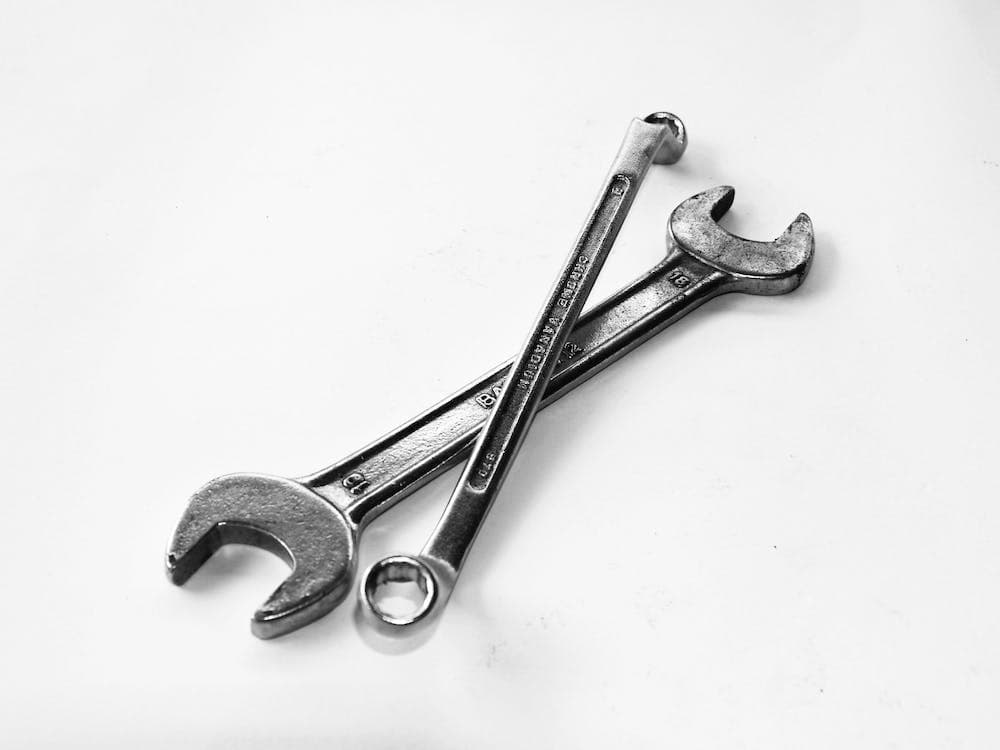
Heavy-duty equipment mechanics work with various tools, most notably wrenches, pliers, and screwdrivers. Within those three broad groups of tools, there are several specific tools that mechanics will find especially handy. They also employ measuring tools such as a try-square, a feeler gauge, and a mechanic’s ruler. Lastly, they use various hitting tools such as hammers, gouges, or even mallets.
Oftentimes, they’ll be called upon to cut objects, and to do so, they’ll need knives, saws, and snips depending on the material in question. And, of course, they’ll also need a flashlight.
Why choose this trade above all else?
Being a heavy machinery mechanic is an especially riveting trade, especially for those who are passionate about mechanics and enjoy being on construction worksites. This trade allows workers to evolve under various and diverse conditions, but also to completely switch environments, and that regularly.
Construction equipment, heavy-duty, or heavy equipment mechanics: These individuals wear many hats depending on the industry’s needs. This diversity in question mandates the development of many skills to repair motors, but also hydraulic systems, electric circuits, and even parts of a vehicle’s transmission.
Find a job in the renovation industry
RenoQuotes.com can guide you in your job search in the renovation industry. Tell us about your career prospects, and we'll help you get in touch with contractors who are likely to be interested in your skills, free of charge. Simply fill in our form (it'll only take a few minutes) and we'll take care of sending your candidate application to employers.
Dial 1-844 828-1588 to speak with one of our customer service representatives.
Looking for something else?
Related articles
The latest industry news, interviews, technologies, and resources.

Editorial Team
•08 Nov 2023
RenoQuotes.com followed home renovation contractor Ali Nazar on the job at the site of a basement renovation project in Montreal. Check out this interview to know more about the subject of basement renovations.

Editorial Team
•20 Jun 2024
Carpenter-joiners are as important as ever on construction sites, given that building and erecting wood-made structures are, to this day, an integral part of all new construction projects, whether for commercial or residential projects. If this trade has piqued your interest, you no doubt want to know more about it! Keep reading to learn everything that could be of interest about becoming a carpenter-joiner in Canada.
Editorial Team
•29 Sep 2026
A backwater valve is a one-way gate on the sewer line leaving your house, and installing one costs $1,000 to $4,800 across Canada. When the municipal sewer surcharges during a storm and wastewater tries to flow backward toward your home, the valve closes and keeps it out of your basement.

Editorial Team
•14 May 2026
Whether it’s on a floor, wall, or directly on to-be-installed ceramic tiles, painting ceramic tiles is a relatively simple task. This process can be summed up in three steps: clean, sand, and paint.

Editorial Team
•15 May 2025
There’s such a thing as a device that blows both cold and warm air—a heating and cooling heat pump. But, rest assured, there’s nothing sorcerous about it, it’s all about physics.