How to Choose the Right Portable Air Conditioner in Canada
By Editorial Team
Updated on June 26, 2026

A portable air conditioner can be a practical way to cool one room without installing central air, a ductless heat pump, or a permanent window unit. For many Canadian homeowners and renters, it is especially useful in bedrooms, home offices, apartments, condos, and older homes where permanent cooling is not simple.
This guide explains how to choose, compare, install, and maintain a portable air conditioner. It covers BTUs, SACC, hose types, energy efficiency, noise levels, drainage, smart features, and the main details to check before buying.
What is a portable air conditioner?
Source: Reno Quotes
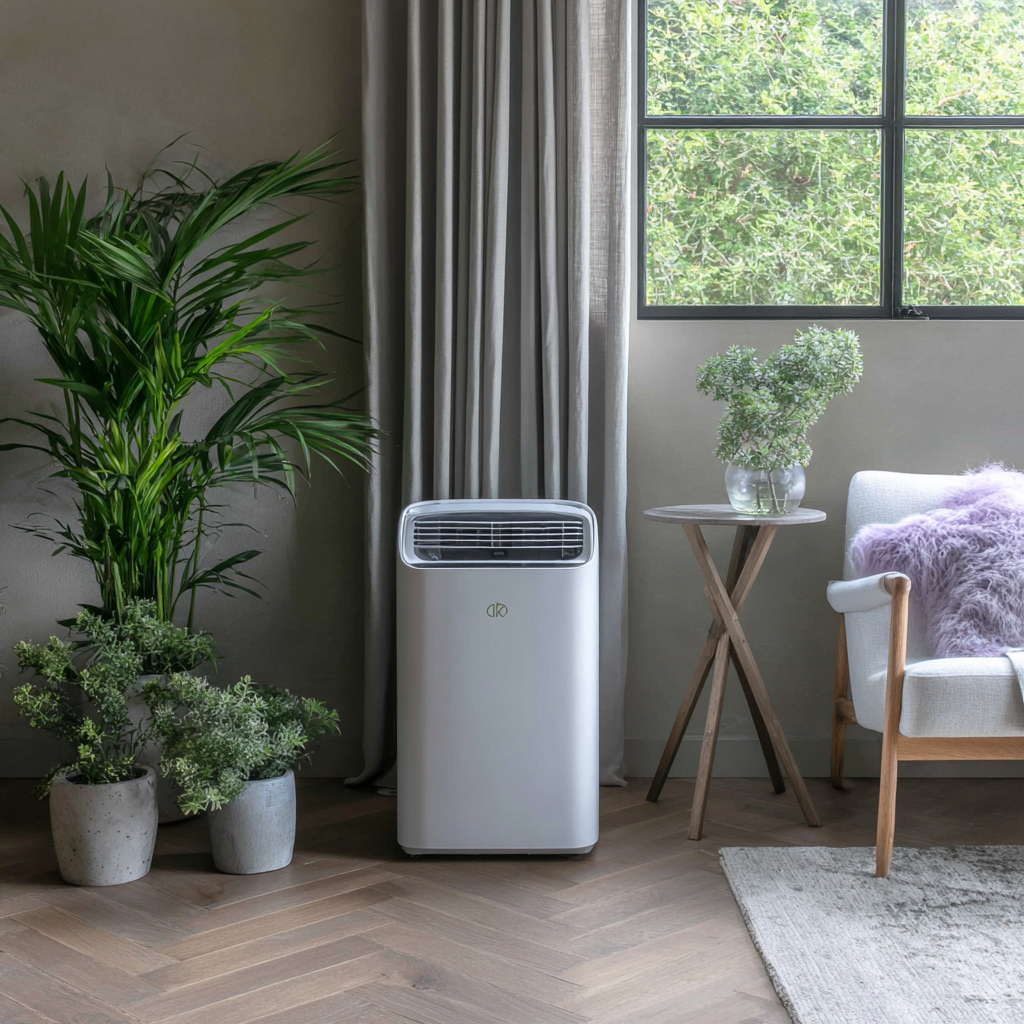
A portable air conditioner is a movable cooling unit that sits inside the room. It cools indoor air, removes some humidity, and sends warm air outside through an exhaust hose.
Most models come with a window kit, which usually includes a panel insert and hose connector. The unit is “portable” because it can be moved from room to room, but it still needs to be vented outdoors when used for cooling.
Portable air conditioners are different from fans and evaporative coolers. A fan moves air but does not lower the room temperature. An evaporative cooler uses water evaporation and is generally better suited to dry climates, not humid summer conditions in many parts of Canada.
When a Portable Air Conditioner Makes Sense
A portable AC is often a good fit when you need targeted cooling in one room and do not want a permanent installation. It can also be useful when a window air conditioner is not allowed, does not fit the window, or is too difficult to install safely.
Common situations include:
Rental apartments
Condos with window restrictions
Bedrooms that overheat at night
Home offices with computers and afternoon sun
Older homes without central air
Temporary cooling during a heat wave
For whole-home cooling, a portable unit is usually not the best long-term solution. If several rooms overheat every summer, a ductless heat pump, central air conditioner, or improved insulation may be more effective.
Single-Hose vs. Dual-Hose Portable Air Conditioners
One of the biggest differences between portable AC models is the hose design.
Single-Hose Models
A single-hose portable air conditioner uses one exhaust hose to push warm air outside. These models are common, widely available, and often less expensive.
The drawback is that they can create negative pressure inside the room. In simple terms, the unit pushes air out of the room, and replacement air may be pulled in from hallways, gaps, or outdoors. This can reduce cooling performance, especially in hot weather.
Single-hose models can still work well for smaller rooms, occasional use, or buyers looking for a lower upfront cost.
Dual-Hose Models
A dual-hose portable air conditioner uses one hose to bring in outdoor air and another hose to exhaust hot air. Some newer models use a hose-in-hose design, which looks like one large hose but still separates intake and exhaust air.
Dual-hose units generally cool more efficiently because they reduce the negative pressure problem. They are often a better choice for larger rooms, very sunny spaces, or frequent summer use.
They can cost more, and the hose setup may be bulkier, but they are usually worth comparing if performance matters.
How to Choose the Right Size
Choosing the right size is one of the most important steps. A unit that is too small may run constantly without cooling the room properly. A unit that is too powerful may cool unevenly, cycle on and off too often, or remove less humidity than expected.
Start With Room Size
Measure the room’s length and width, then multiply them to estimate the square footage. For example, a 10 ft. × 12 ft. bedroom is about 120 sq. ft.
As a simple starting point, many Canadian buyers can use this kind of guide:
Room Size | Approximate Portable AC Size to Compare |
Up to 250 sq. ft. | 5,000 to 7,000 SACC BTUs |
250 to 350 sq. ft. | 7,000 to 8,500 SACC BTUs |
350 to 450 sq. ft. | 8,500 to 10,000 SACC BTUs |
450 to 550 sq. ft. | 10,000 to 12,000 SACC BTUs |
Larger open areas | Consider a dual-hose model or another cooling option |
These ranges are only a guide. Room layout, ceiling height, insulation, window size, sun exposure, and indoor humidity all affect cooling performance.
Compare SACC More Than ASHRAE BTUs
Portable air conditioners often show two BTU ratings: ASHRAE and SACC.
The ASHRAE number is usually higher. The SACC number, or seasonally adjusted cooling capacity, is usually lower and is more useful when comparing real-world portable AC performance.
For example, a unit advertised as 14,000 BTU ASHRAE may also be listed around 10,000 BTU SACC. When comparing portable air conditioners, use the SACC rating whenever it is available.
Adjust for Real Room Conditions
You may need more cooling capacity if the room has:
Large south- or west-facing windows
Poor insulation
High ceilings
Several people using the room
Electronics that give off heat
A kitchen nearby
Strong afternoon sun
You may be able to choose a smaller unit if the room is shaded, well insulated, or used mostly in the evening.
Key Specs to Compare Before Buying
Do not choose a portable air conditioner based only on the highest BTU number. The best unit is the one that fits the room, the window, your noise tolerance, and your budget.
Cooling Capacity
Look for the SACC BTU rating and the recommended coverage area. If the product page only promotes the larger ASHRAE number, look deeper in the specifications for the SACC or DOE rating.
Energy Efficiency
Check the CEER, or combined energy-efficiency ratio, when available. A higher CEER generally means better efficiency.
Energy-efficient operation also depends on how you use the unit. Sealing window gaps, keeping the exhaust hose short, closing curtains during the day, and cooling only the room you are using can all help.
Noise Levels
Portable air conditioners make more noise than many central or ductless systems because the compressor is inside the room. Noise levels are usually listed in decibels.
For bedrooms, nurseries, or home offices, compare decibel ratings and look for sleep mode, inverter technology, or lower fan-speed options. A quiet portable AC may still be noticeable at night, so reviews can be helpful.
Window Kit Fit
Check the window kit before buying. Most kits are designed for sliding or hung windows, but fit can vary.
Before purchasing, measure:
Window opening width or height
Distance from the unit to the window
Available floor space near the outlet
Whether the window panel inserts can be sealed properly
Casement windows, crank windows, and some condo windows may need a different kit or a custom insert.
Drainage Requirements
Many portable AC units are self-evaporating in cooling mode, meaning some collected moisture is exhausted outdoors through the hose. However, drainage may still be needed in humid weather or when using dehumidifier mode.
Check whether the unit has:
A water collection tank
A full-tank shutoff
A continuous drain option
A drain hose connection
Clear reservoir drainage instructions
In humid parts of Canada, drainage is more important than buyers often expect.
Mobility
Portable air conditioners can be heavy. Wheels help, but stairs, thick carpet, narrow hallways, and hose setup can make moving the unit less convenient.
Useful mobility features include:
Grippable handles
Smooth casters
Manageable weight
Easy hose attachment
Simple cord storage
If the unit will stay in one room all summer, mobility may matter less than cooling performance and noise.
Additional Functions and Features
Source: Reno Quotes
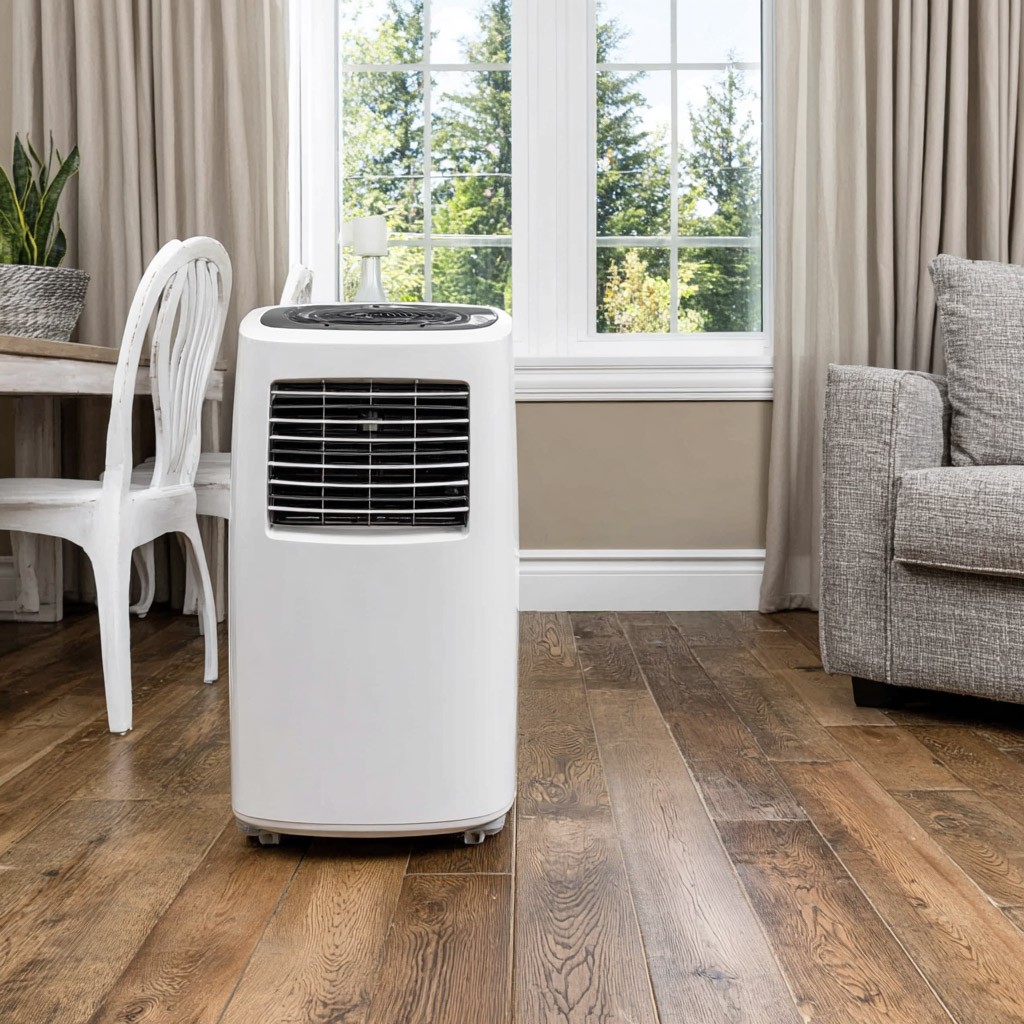
Many portable air conditioners now include extra modes and smart features. Some are useful, while others are mostly convenience features.
Dehumidifier Function
A dehumidifier function can make a room feel more comfortable on muggy days. This is especially useful in humid regions or in rooms that feel damp.
However, dehumidifier mode may require continuous drainage. It should not replace a dedicated basement dehumidifier if moisture is a year-round issue.
Heater Mode
Some portable AC units include heater mode. This can be useful as a heating supplement during mild shoulder-season weather.
Do not rely on a portable AC heater mode as your main heating system in a Canadian winter. For primary heating, use a code-compliant heating system or speak with an HVAC professional.
Smart Features
Smart portable air conditioners may offer Wi-Fi connectivity, app connectivity, remote access, programmable timers, and smart-home compatibility. These can be helpful if you want to cool a bedroom before bedtime or control the unit from another room.
Useful smart features include:
Programmable timers
App-based temperature control
Remote access
Energy-use tracking
Voice assistant compatibility
Intelligent climate control
Smart features are convenient, but they should not matter more than SACC, CEER, hose design, window fit, and noise level.
Air Filtration and Air Quality Features
Some models include removable air filters, air-quality indicator lights, or basic air filtration. These features can help catch dust and larger particles, but a portable AC is not the same as a dedicated air purifier.
Look for washable, removable filters that are easy to access. If the filter is difficult to remove, it is less likely to be cleaned regularly.
Installation and Setup Tips
Portable air conditioners are simpler to install than many cooling systems, but setup still affects performance.
Vent the Unit Outdoors
A portable air conditioner must vent hot air outside when cooling. Without venting, the unit will release heat back into the room and will not cool properly.
Use the exhaust hose and window kit that come with the unit. Follow the manufacturer’s venting instructions and avoid crushing, sharply bending, or overextending the hose.
Seal Window Gaps
Small gaps around the window panel can let hot air back inside. Use the included seals or weatherstripping where appropriate.
This is especially important in sunny rooms, high-rise apartments, and older windows with air leakage.
Keep the Hose Short and Straight
The exhaust hose can become warm during operation. A shorter, straighter hose usually helps the unit work better.
Avoid placing the unit far from the window. If the hose is stretched too far, bent behind furniture, or routed awkwardly, cooling performance can drop.
Plug It Into a Proper Outlet
A portable air conditioner should generally be plugged directly into a wall outlet. Avoid extension cords and power bars unless the manufacturer specifically allows them and the cord is properly rated.
If you do not have a safe outlet near the window, speak with a qualified electrician. Do not modify electrical wiring yourself.
Close Doors and Windows
A portable AC works best when cooling one contained space. Close doors and windows in the room you are cooling.
During the day, close curtains or blinds on sunny windows. At night, you may be able to reduce runtime if outdoor temperatures drop.
How much does a portable air conditioner cost in Canada?
Portable air conditioner prices in Canada vary by capacity, hose design, brand, smart features, and seasonal demand. Prices also change quickly during heat waves.
As a general guide:
Type of Portable AC | Typical Canadian Price Range |
Compact basic models | $300 to $450 |
Mid-range single-hose models | $450 to $700 |
Dual-hose or inverter models | $600 to $900 |
Larger premium models with heat or advanced features | $900 to $1,200+ |
The cheapest model is not always the best value. A slightly more expensive unit with better SACC, lower noise, a better window kit, or dual-hose design may be more comfortable and efficient over time.
Operating costs depend on the unit’s wattage, your electricity rate, outdoor temperature, room size, insulation, and how many hours the unit runs each day.
A Portable AC, Window AC, Fans and Heat Pumps Comparison
Source: Reno Quotes
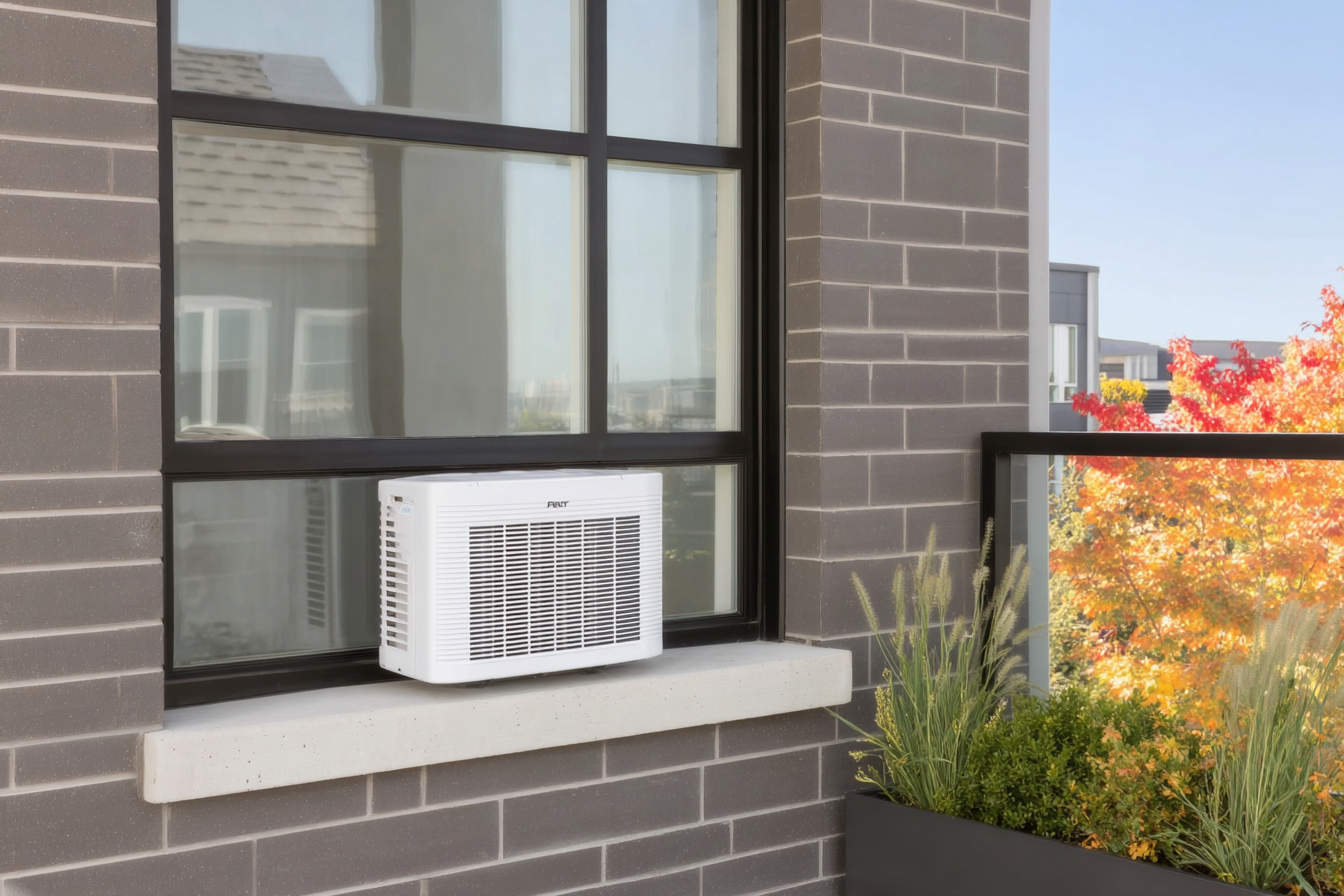
A portable air conditioner is only one cooling option. The best choice depends on your home, budget, and installation limits.
Cooling Option | Best For | Main Limitation |
Portable air conditioner | Flexible room-by-room cooling | Less efficient than many window or ductless systems |
Window air conditioner | Strong cooling for one room | Not allowed or practical in every window |
Fan | Air movement and low energy use | Does not lower room temperature |
Evaporative cooler | Dry climates | Less useful in humid weather |
Ductless heat pump | Efficient heating and cooling | Higher upfront cost and professional installation |
Central air conditioning | Whole-home cooling | Requires ductwork and professional installation |
If you only need one room cooled, a portable AC may be enough. If your whole home overheats every summer, it may be worth comparing longer-term HVAC options.
How to Read Product Recommendations and Reviews
Product recommendations can be helpful, but do not buy a unit just because it appears on a “best portable AC” list. The right model for a 120 sq. ft. bedroom may not be right for a 500 sq. ft. living room.
When reading reviews, focus on practical details:
Whether the reviewer used the SACC rating
Room size and test conditions
Noise output at different fan speeds
Drainage experience in humid weather
Ease of installing the window kit
Whether the hose became too hot
Real comments about sleep mode
Warranty and customer service experience
Popular models often include features such as dual-hose design, inverter compressors, programmable timers, remote controls, dehumidification, and Wi-Fi connectivity. Compare those features against your room and your priorities, not just the product name.
Maintenance and Care
Basic maintenance helps a portable air conditioner cool better and last longer.
Clean the Filter
Clean removable air filters as often as the manual recommends. During heavy summer use, this may be every couple of weeks.
A dirty filter can reduce airflow, make the unit work harder, and affect indoor air quality.
Drain the Unit When Needed
If the tank fills, the unit may shut off or display an alert. Follow the manufacturer’s drainage instructions and do not ignore full-tank warnings.
If you use dehumidifier mode often, consider a continuous drain setup if the unit supports it and you have a safe drain location.
Check the Hose and Window Seal
Inspect the exhaust hose and window kit throughout the season. Reconnect loose parts, seal visible gaps, and make sure the hose is not blocked.
Clean Before Storage
At the end of the season, drain remaining water, clean the filter, wipe the exterior, and let the unit dry before storage. This helps reduce odours and mould or mildew buildup.
Store the unit upright in a dry place. Keep the hose, remote control, window panel inserts, and manual together so setup is easier next summer.
Should you hire a professional?
Most portable air conditioners do not require professional installation if they are being used with the included window kit and a safe outlet.
However, get help from a qualified professional if:
The outlet is damaged, overloaded, or too far away
You need new electrical work
The window needs structural modification
You live in a condo with strict installation rules
The unit will be used by an older adult or heat-sensitive person and reliability is critical
You are considering a ductless heat pump, central air, or whole-home cooling upgrade
Electrical work, permanent window changes, and HVAC upgrades should not be treated as DIY shortcuts.
In Conclusion
A portable air conditioner can be a useful cooling solution for Canadian homes, especially when you need flexible cooling in one room. To choose the right unit, focus on SACC BTUs, hose design, CEER, noise levels, drainage, window kit fit, and the actual room conditions.
For occasional use, a basic single-hose model may be enough. For larger rooms, humid weather, or frequent summer use, a dual-hose or inverter portable AC is often worth comparing. During extreme heat, especially for older adults or heat-sensitive people, reliable cooling can be more than a comfort upgrade.
Portable Air Conditioner FAQ
Do portable air conditioners need to be vented outside?
Yes. A portable air conditioner must vent hot air outside when used for cooling. Most units use an exhaust hose connected to a window kit.
Without outdoor venting, the unit will not cool the room properly because the heat has nowhere to go.
Is a dual-hose portable air conditioner better?
A dual-hose portable air conditioner is often better for larger rooms, hotter weather, and longer daily use. It reduces the negative pressure problem that can happen with single-hose units.
Single-hose models can still be useful for smaller rooms, occasional use, and lower budgets.
Why does a portable AC have two BTU ratings?
Many portable AC units list both ASHRAE BTUs and SACC BTUs. The ASHRAE number is usually higher, while the SACC rating is usually lower and more useful for comparing real-world performance.
When shopping, use the SACC rating whenever it is available.
How often should I drain my portable AC unit?
It depends on the model, humidity level, and operating mode. Some units evaporate much of the collected water during cooling mode, but they may still need draining in humid weather.
Dehumidifier mode usually collects more water and may require continuous drainage.
Can I use a portable air conditioner in a room without a window?
You need a way to vent hot air outdoors. A window is the most common option, but some setups may use a sliding door, wall vent, or custom panel.
Do not vent the hose into an attic, hallway, closet, or another room. That only moves the heat somewhere else inside the home.
Are portable air conditioners energy efficient?
Portable air conditioners can be efficient for cooling one occupied room instead of the whole home. However, they are often less efficient than window units or ductless heat pumps.
To improve efficiency, choose the right size, compare CEER ratings, seal the window kit, keep the hose short, close blinds during the day, and clean the filter regularly.
Can a portable air conditioner also heat a room?
Some models include heater mode. This can be useful for mild weather, but it should be treated as supplemental heating.
In Canada, do not rely on a portable AC heater mode as your main winter heating system.
Looking for something else?
Related articles
The latest industry news, interviews, technologies, and resources.
Editorial Team
•20 May 2026
Are you keen on travelling aboard your recreational vehicle during the winter, heading straight for the milder temperatures of Florida or California? To make it, you’ll definitely need an effective heating system. Propane heaters made for travel trailers have all the advantages you need.
Editorial Team
•25 Jul 2025
Choosing the right heating system for your home is essential for ensuring comfort, energy efficiency, and savings, especially during the colder months. Given the wide range of heating units retailed, which should you choose when building your house or replacing a heating system?

Léa Plourde-Archer
•08 Nov 2023
Epoxy is a popular floor covering material for garages, department stores and warehouses. Although this product is known for being durable and resistant to daily wear-and-tear, epoxy must be kept clean and maintained on a regular basis in order to keep its smooth and homogenous appearance.

Léa Plourde-Archer
•28 Apr 2026
Masonry and bricklaying are more than a skill, they are a craft. When it comes to the requirements for working with concrete and brick, you’ll need to work with a person who has specific training. These materials are especially difficult to manipulate, and thus, it’s almost always best to work with a professional. Of course, working with a mason or bricklayer will leave you with lifelong structures and pieces, adding to the individuality and resale value of your home.
Editorial Team
•08 Nov 2023
The garage is a multipurpose room that has the potential to serve several functions. With lots of homeowners using this space to hold items that aren't exactly necessary for everyday use, it's important to think about how storage can be created to maximize the potential of this room.