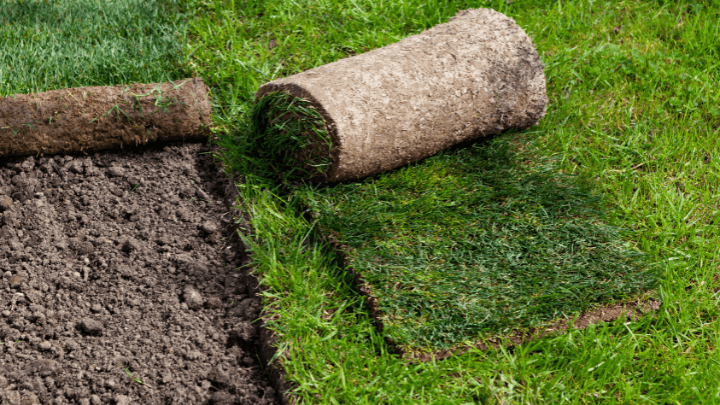
Are you tired of looking at a spent lawn and thinking of laying sod to spruce it up? Question is, how should you proceed with this little seasonal project?
How to Lay Sod
Source: Canva
When to lay sod
When it comes to laying sod, you pretty much have free reign. As a matter of fact, you can proceed with this landscaping project during the spring, summer, or even fall. Ideally, you should try to do so between mid-may and before November’s end. No matter the situation, it is preferable to do so during a period in which you will be able to water it every day, otherwise, your hard work will have been in vain, and your new sod will deteriorate in front of your very eyes.
Some highly recommend proceeding toward the end of September to ensure that you can water the grass every day without fail, all the while avoiding yard work during the sub-optimal November weather.
Prepping your yard
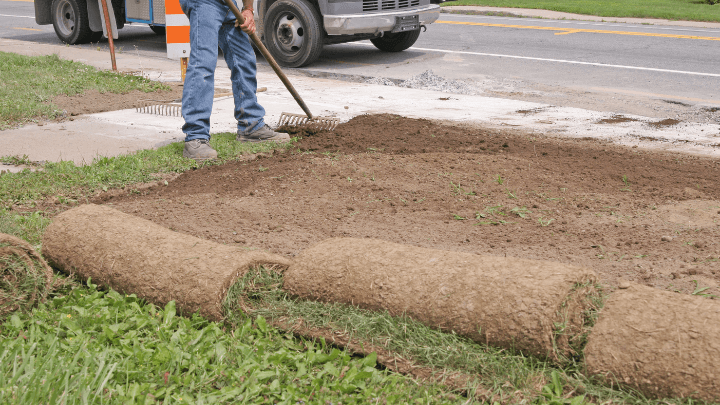
Before laying your turf, note that you must adequately prepare the ground on which it will lay and ensure it is level. To efficiently do so, start by removing any pebbles or branches that could hinder the process.
Then, you can start levelling your yard, but keep in mind that a 2% slope directed toward the street should be accounted for to avoid any water accumulation near your home during heavy rainfalls.
Should there be a lack of soil, do not be stringy, add some! Ideally, topsoil/garden soil (or lawn soil), as the components are made to facilitate the installation of sod. To put all odds in your favour and get healthy and luscious grass, add a turf builder (lawn fertilizer). However, keep in mind that if your yard needs to be levelled, it still should not be too levelled, because far too compacted soil will make grass root growth rather difficult.
Laying Sod
Source: Canva
Now comes the time to lay your sod. Unroll the sod rows evenly, all the while taking care of alternating the edges so as to promote their complete fading over time. Note that the edges must touch without overlapping. Firmly tap down the sod rows to ensure a uniform surface and avoid any weed growth in between the rows. When it comes to sections around trees or windy borders, use a small hand saw to trim the turf as you go.
Next, water the ground. Then, use a lawn roller to roll the entire surface of your new grass. This step is essential to ensure root growth. Should you not wish to purchase this tool given that you will most likely never need to use it again, head to your nearest hardware store to rent one.
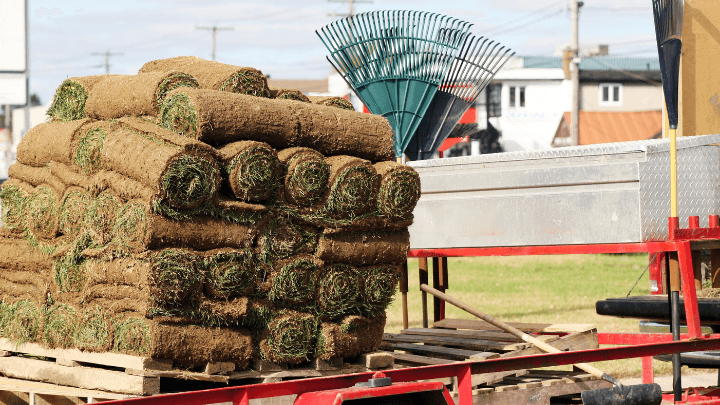
Keep in mind that sod, once delivered, must be laid as fast as humanly possible. Otherwise, the roots risk dying and you will most likely have to purchase another load. If it rains, you have a 48-hour window to lay it, a relatively longer deadline than that of 24 to 36 hours during warm temperatures. Adhering to these deadlines will also avoid the future growth of weeds.
In line with the above-mentioned, note that turf should be stored in a shaded and cool area if you plan on laying it the next day. Moreover, make sure to water it before storing it.
Turfing On a Slope
If your yard has a slight slope to it, lay the sod rows bottom to top. If the slope is steeper, proceed the same way, but make sure to anchor the turf with landscape staples to ensure the sod rows stay in place.
Post-Turfing
Post-turfing, ensure the soil is well irrigated for about 10 days. Water it twice a day for 30 minutes, except on rainy days. Once this 10-day period is up, you can settle for watering your new lawn every three days, or every two days should the temperature warrant it.
During the first few days, avoid over-watering. Since the roots have yet to take, they risk decaying in overly wet soil. And, avoid walking on the surface of your new grass for at least two weeks to allow it to properly root.
Lawn Irrigation

Source: Canva
If you are working during warm temperatures, note that it is important to water your sod rows. Otherwise, they risk drying out, which will be devastating, both aesthetically and monetarily.
Should your yard be rather vast, you absolutely need to irrigate your rows as you work so as to ensure your lawn retains moisture to promote root growth.
Maintaining Your New Grass
Since you have worked tirelessly to lay your new turf and want to avoid a white grub infestation at all costs, maintain a grass height of about 8 cm throughout the summer and of about 5 cm during the fall.
Lastly, wait between 8 to 10 days before mowing your new lawn. In the long run, remember to fertilize the surface of your grass a few times throughout the year.
Obtenir des soumissions pour vos travaux d'aménagements paysagers
SoumissionRenovation.ca peut vous aider dans vos démarches pour obtenir des soumissions pour un projet d’aménagement paysager. En nous parlant de votre projet, nous vous mettrons gratuitement en contact avec les personnes-ressources adéquates. Vous n’avez qu’à remplir notre formulaire (en quelques minutes seulement) et vous pourrez recevoir des soumissions d’entreprises spécialisées.
Composez le 1 855 239-7836 pour parler avec un de nos représentants au service à la clientèle
Looking for something else?
Related articles
The latest industry news, interviews, technologies, and resources.
Editorial Team
•24 Sep 2024
Do you live in a rural area or have a summer home that isn't connected to a local water system? If so, you probably have a functioning septic system. How can you make sure your conventional on-site disposal system is working properly? What are the best practices to uphold to extend the service life of your sanitary installation and prevent damages? The key to a system's longevity is understanding its inner workings, whether your property is equipped with a conventional or non-conventional system.
Cynthia Pigeon
•08 Nov 2023
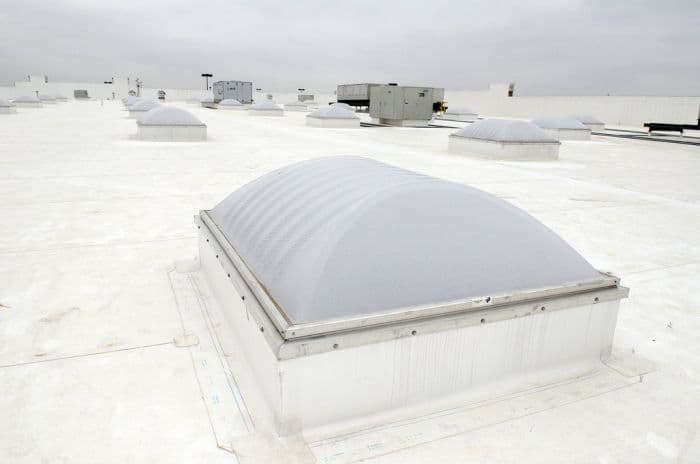
To limit the creation of urban heat islands, white roofs have become increasingly popular and are the subject of much media attention. Praised by some and questioned by others, there is much debate about the real benefits of white roofs. Here is a summary of the information reported by the two main parties involved.
Cynthia Pigeon
•14 Jul 2026
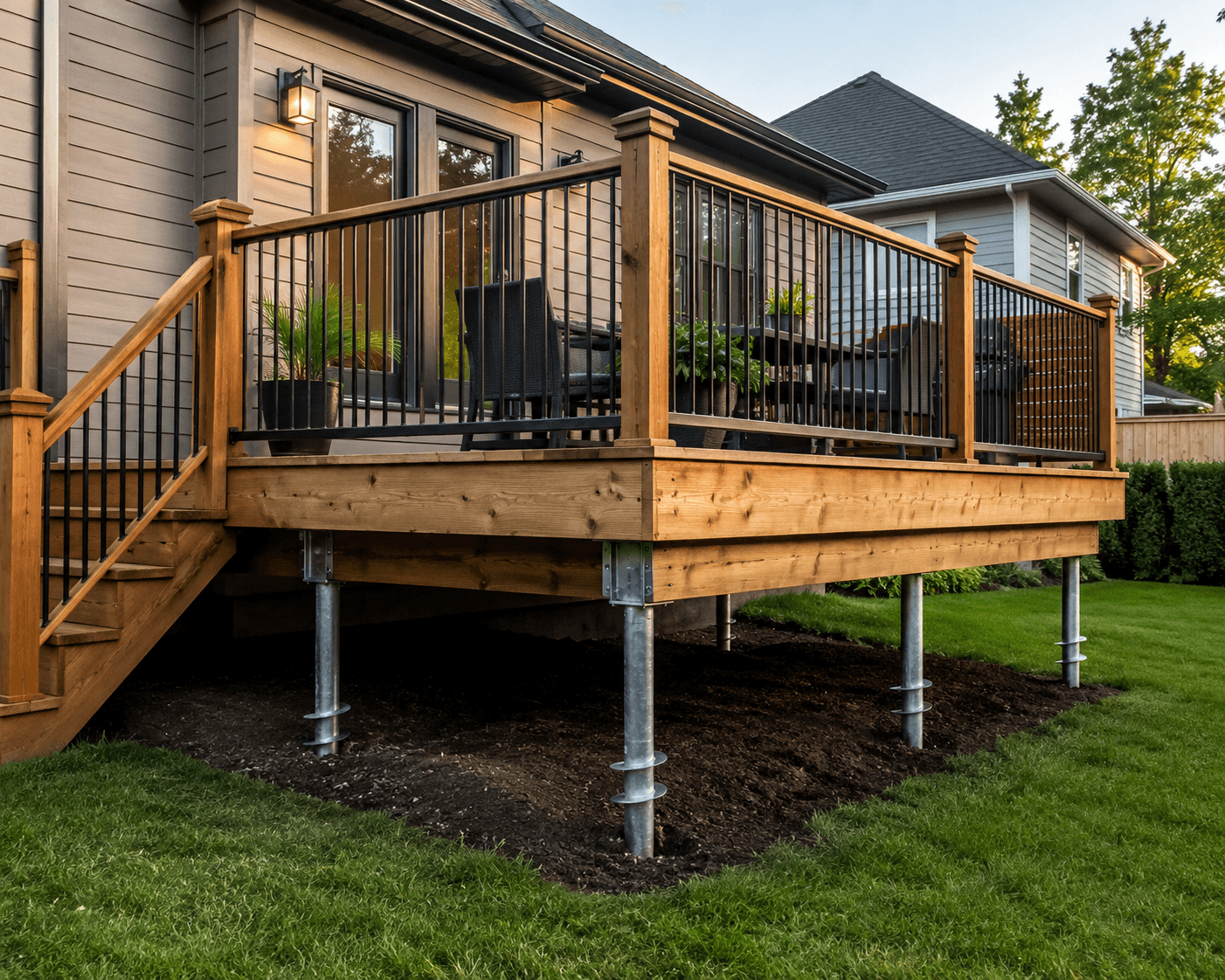
The return of warmer weather across Canada often brings a desire to make the most of the backyard. Whether you are planning to build a new patio or completely renovate an existing deck, one fundamental question should be addressed from the outset: what type of foundation will support the structure?

Léa Plourde-Archer
•12 Jun 2025
When it comes to interior transformations and renovations, walls are one of the first elements that come to mind. They are often one of the least expensive renovations, and many people decide to complete the work themselves.

Editorial Team
•08 Nov 2023
Wood siding isn't only a matter of aesthetics. Even though it's been at the forefront of many myths, it still has a lot of advantages there are yet to be known by the general public. Natural wood siding is available in different essences (cedar, spruce, pine, etc.), and it will give a unique touch to your house, chalet or store.