Mechanical Ventilation System: A Quality Option for Your Home's Air
By Cynthia Pigeon
Updated on September 30, 2026

Proper home ventilation is essential for maintaining healthy indoor air quality. While both heat recovery ventilators and energy recovery ventilators are available, understanding their advantages and disadvantages will help you make an informed decision.
If you want to ensure superior ventilation in your home, mechanical ventilation is an option worth considering. This type of ventilation includes two main systems: heat recovery ventilators (HRVs) and energy recovery ventilators (ERVs).
Generally speaking, mechanical ventilation systems use heat recovery to warm incoming outdoor air before distributing it throughout the home, while extracting stale indoor air through a network of ducts.
The Different Types of Ventilators
Heat Recovery Ventilators (HRVs)
A heat recovery ventilator (HRV) is particularly effective at removing excess moisture from your home during the heating season.
Because of how it operates, this ventilation system tends to dry out indoor air more during winter than its counterpart. For this reason, it is generally the preferred option for small to medium-sized homes with four or more occupants. These conditions typically contribute to higher indoor humidity levels.
However, using an HRV can be more challenging during summer, when high outdoor humidity levels can enter the home. As a result, your air conditioning system may need to work harder, potentially leading to higher cooling costs compared to using an energy recovery ventilator.
Although this unit is the more expensive of the two options, it can be a worthwhile long-term investment due to its durability. Its aluminum core is designed to be permanent and therefore does not normally require replacement.
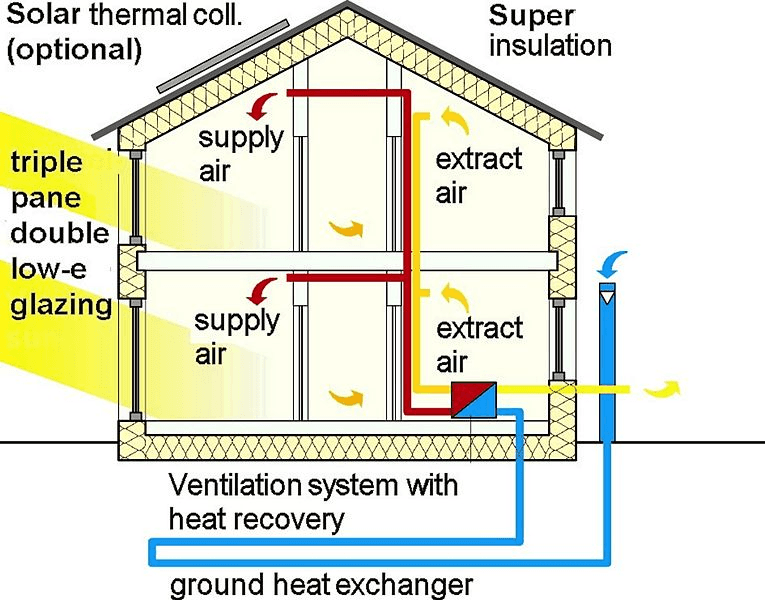
Photo: Google
Energy Recovery Ventilators (ERVs)
An energy recovery ventilator (ERV), on the other hand, is more efficient in homes where indoor humidity levels are relatively low during the colder months. During winter, this ventilation system removes less moisture from indoor air than an HRV. It is therefore particularly suitable for larger homes with three or fewer occupants, as these conditions generally result in lower indoor humidity levels.
This type of ventilation system recovers energy associated with moisture, giving it greater energy efficiency than its counterpart. During summer, it also offers the advantage of limiting the amount of outdoor humidity entering the home. This can reduce air conditioning costs by approximately 10%.
However, it is important to note that an ERV may have a shorter lifespan than an HRV, as its core may need to be replaced every 10 to 12 years.
Recommendations
Certain general recommendations apply to both types of ventilators. First, it is recommended that you operate your ventilator continuously at a low speed, as air exchange is generally more effective when the system runs consistently.
When using household cleaning products, increase the ventilation speed to help remove airborne pollutants. If your home is newly built, it is also recommended that you operate the ventilator at a higher speed during the first season after construction. New building materials can release higher concentrations of indoor air pollutants.
Similarly, homes with a large number of occupants may require higher ventilation settings to maintain adequate indoor air quality.
Finally, it is essential to ensure that your chosen ventilator's energy performance has been tested at temperatures as low as -25°C.
Essential Ventilator Maintenance
To ensure your ventilator operates efficiently, regularly check that the outdoor air intake and exhaust vents are free of obstructions. Inspect the ventilation grilles and clean the filters every two months. Filters can generally be cleaned using a mixture of water and mild soap.
Annual maintenance should include vacuuming accessible ductwork and removing dust from the fan blades. You should also thoroughly clean the compartment containing the heat recovery core using water and mild soap, following the manufacturer's maintenance instructions. Finally, pour warm water into the condensate drain to ensure it is not blocked.
Every five years, have a contractor certified by the Heating, Refrigeration and Air Conditioning Institute of Canada (HRAI) calibrate the ventilator's airflow. During the same visit, the contractor should also inspect the electrical system. Expect to pay approximately $400 to $600 for this work.
An Important Consideration
It is essential to choose a ventilator certified by the Home Ventilating Institute (HVI). This certification confirms that the selected model has undergone laboratory testing, helping ensure the manufacturer's stated performance and energy-consumption figures are accurate.
Cover photo: Google
Looking for something else?
Related articles
The latest industry news, interviews, technologies, and resources.

Karine Dutemple
•05 Dec 2025
A lot of homeowners still opt for the application of oil on their floor, whether it’s in the kitchen, the bedroom or the living room. Given its ability to bring out the grain of the wood and to let is natural charm shine trough, an oiled floor is certainly a must.
Cynthia Pigeon
•31 Jul 2026
In Canada, an installed central heat pump generally costs between $6,000 and $13,500, depending on the system size, energy efficiency, existing HVAC setup, and any related work required. This amount usually includes the equipment and specialized labour, but the final price can vary based on the unit’s capacity, SEER2/HSPF2 ratings, ductwork condition, electrical requirements, and local labour rates. Financial assistance may also be available depending on your province, municipality, income level, heating system, and the model installed. Federal programs have changed significantly in recent years, so it is important to verify active rebates before signing a contract.
Editorial Team
•16 May 2025
When renovating any bathroom, you need to recognize the high levels of moisture and account for it by installing a good ventilation system. With constant showering and bathing, vapour builds up in the bathroom. Over time, this can cause severe damage to the grout and tiles and to the cabinet finishes and wall paint.
Editorial Team
•08 Nov 2023
Natural light is an essential element for creating a healthy and pleasant living environment. Of course, windows do their part to allow this light to enter our interiors.
Editorial Team
•11 Nov 2024
Although wood as a material is very durable, it still requires tender love and care to maintain its condition. For this reason, if you have a large amount of wood in your home, it would be important for you to understand how to care for it. More specifically, if the structural elements of your home are made from wood, then it will need regular upkeep in order to stay in shape.