What Methods Are Used to Re-Level and Stabilize Foundations?
By Editorial Team
Updated on August 1, 2024
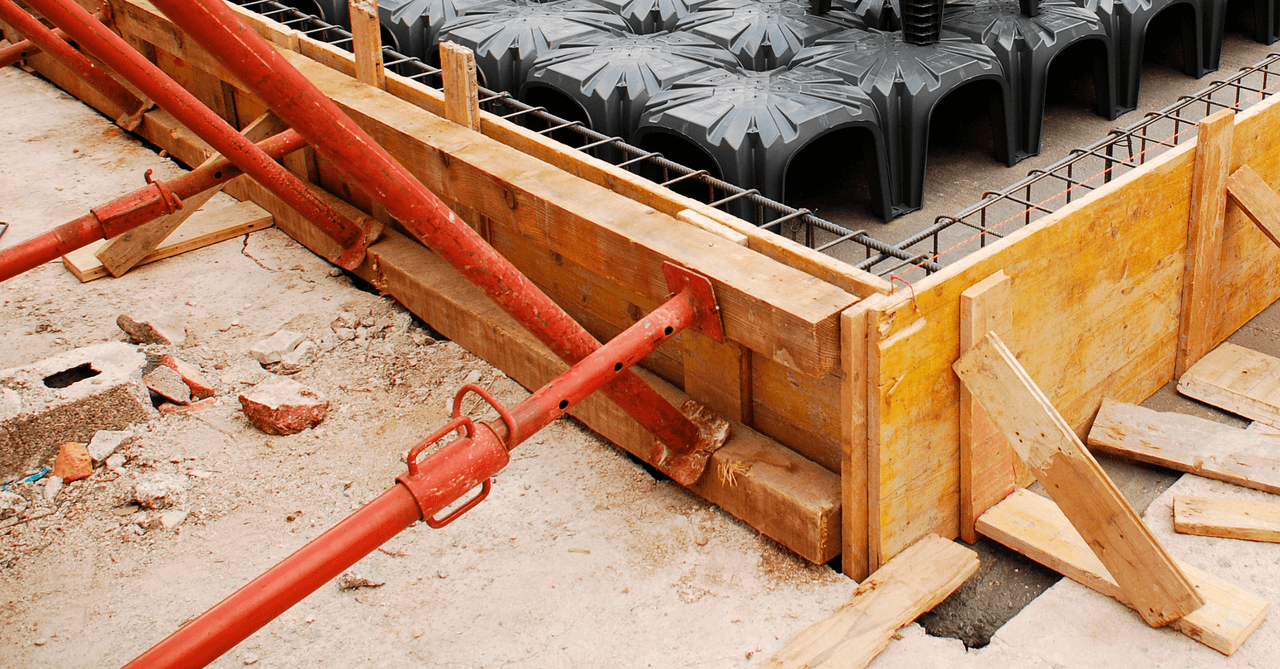
If you noticed significant changes in your house and detected a structural shift over time, the odds are that the stability of your foundation has been weakened. By that, we mean that the foundation may have collapsed. The latter may be the result of the soil, which can’t adequately bear the load of the structure, the presence of clay soil, a water table, or full-grown trees, whose roots have reached the outer walls of the foundation.
There are short-term solutions that can be used to re-level or stabilize foundations: the hired contractor can, for example, waterproof the soil with a membrane and strategically add piles. However, this solution isn’t a permanent fix-all.
In Canada, installing piles at the base of a foundation is the most commonly used, and effective, method to re-level and stabilize a foundation. It’s a complex method, and it does require excavating all around the structure’s perimeter.
The Methods Used to Re-Level and Stabilize Foundations
Source: Canva
Stabilizing Foundations with Hydraulic Piles
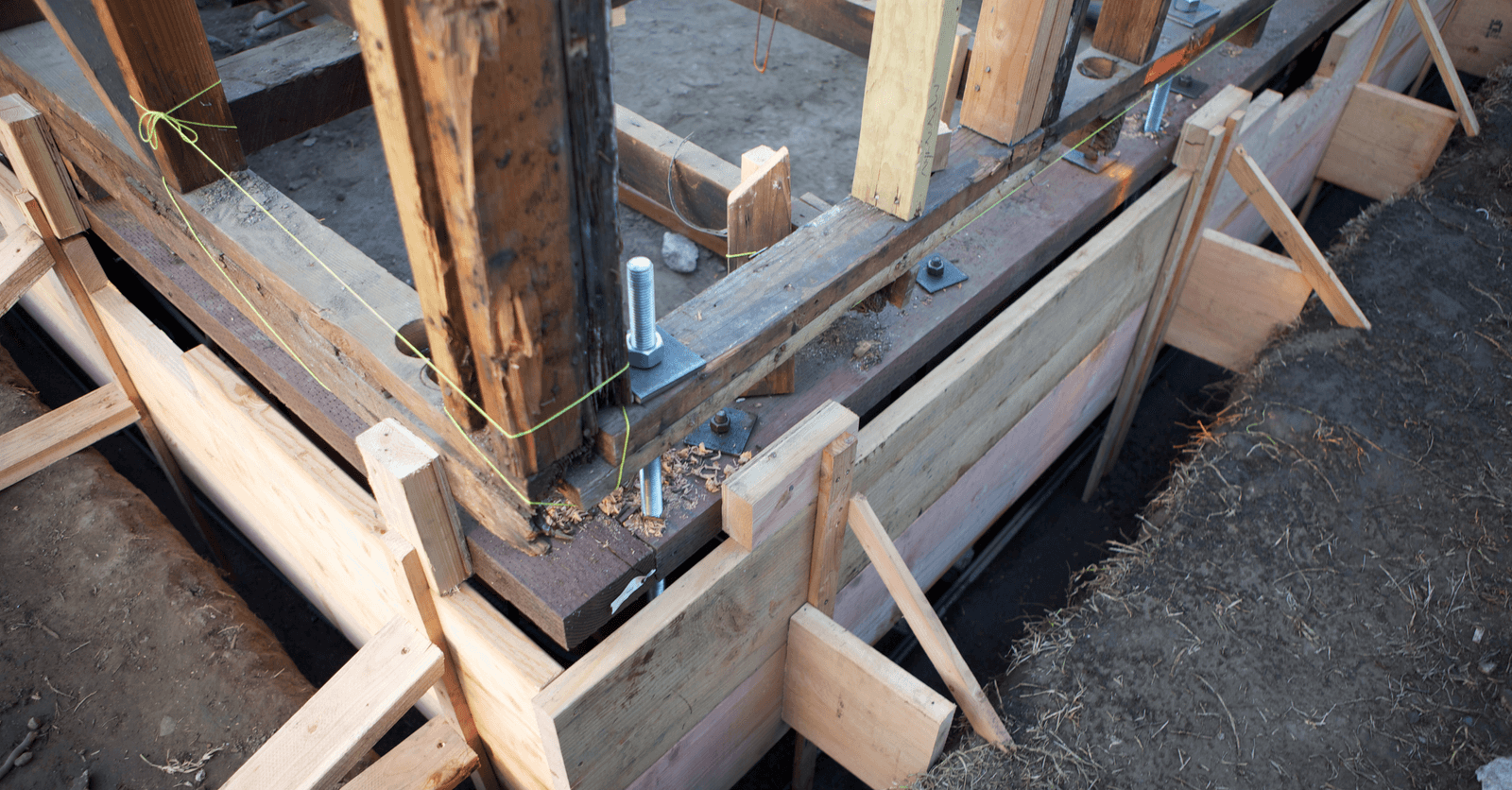
Piling is a foundation stabilizing method that’s been used in Canada—more precisely in Quebec—for almost 35 years. Stabilizing structural foundations with piles can either be done as a whole or partially and requires the expert knowledge of an experienced piling company. In accordance with plans conceived by engineers, an opening will be made at the base of the foundation’s footing to install a rock shoe. Then, steel piles are inserted into the rock shoes, to be then driven into the soil with the help of very powerful hydraulic equipment.
The piles are driven into the ground, as far as possible (up to the point where the head of the pile reaches the rock and cannot be driven any further). The rock shoe is then bolted to the foundation’s footing with galvanized steel anchors. Doing so prevents any risks of corrosion. This stabilization method is done without vibration since it’s carried out with the pure power of hydraulic cylinders.
The Screw Pile Method
A team of engineers should be tasked with determining the type of pile to use based on the structure to support and the soil’s specific characteristics. By using specially designed machinery, the steel piles will be screwed into the ground beneath the structure with the purpose of reaching a level beneath the ground that has an adequate density and the load-bearing capacity that’s needed.
The technology used also allows for measuring the depth at which each pile is driven into the ground in real time. The next step consists of bolting the steel foundation anchors to the structure’s base prior to hooking them to the screw piles. This stabilization and shoring method is used to transfer the weight of the structure onto the piles.
Based on the problem at hand, the foundation will be gradually re-levelled or raised to allow for the entire structure to be permanently stabilized and supported. The screw pile method is cheaper compared to installing hydraulic piles since it’s most often used for small-scale projects. For larger houses with concrete foundations, it’s best to opt for the use of hydraulic piles.
Installing Interior Piles to Stabilize a Foundation
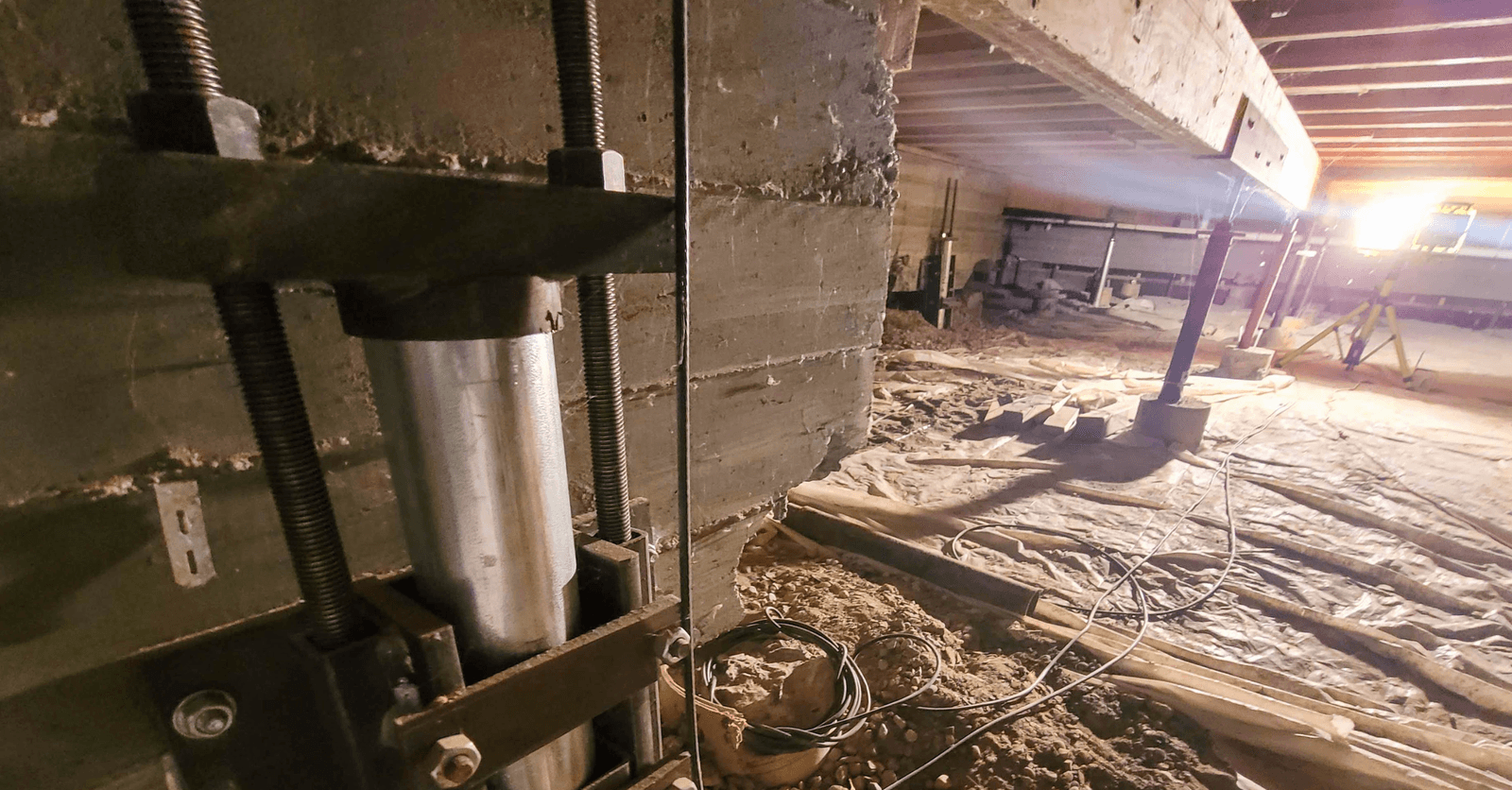
Screw and hydraulic piling are both commonly used methods to stabilize the foundation of a home from the outside. Yet, it’s worth looking into the possibility of stabilizing foundations from the inside. The piles are installed inside when the process becomes too complicated to do from outside (machinery doesn’t fit the restricted space, expensive landscaping, or a foundation footing that encroaches onto the neighbouring property).
Interior piling turns out to be cheaper compared to exterior piling since excavation isn’t required. However, the former does have some downsides, like the fact that the foundation can’t be waterproofed during the process since such a procedure is done on the exterior foundation walls.
House Raising
Albeit house raising is increasingly used to replace foundations, this method is also recommended to reinforce or stabilize a building’s foundation. As such, a structure can be stabilized by being raised. To learn more about it, check out our article (in French only) on the subject matter.
How much does it cost to re-level or stabilize a foundation?
Source: Canva
There are several factors that come into play when it comes to the cost of re-levelling foundations, like the number of storeys, the depth of the rock, the type of soil, and the general state of the foundation. To that effect, it’s best to compare contractor quotes prior to undertaking this type of renovation work. Expect to spend about $20,000 for partial foundation stabilization and at least $40,000 for full stabilization.
Besides, not all re-levelling methods are one and the same, some are more expensive, yet more durable than others. Moreover, you can also add foundation excavation, waterproofing, or drainage services after having stabilized the structure, which will, without a doubt, increase the cost of your renovation project.
Some towns and cities have made available financial aid programs for at-risk foundations, which happens to be the case with the City of Montréal. This subsidy, which is linked to the Société d’habitation du Québec and municipal services, covers a part of the costs and entails hiring an organization-recognized company. To know whether you’re eligible to receive this subsidy, check out the residential homes Programme de stabilisation des fondations webpage.
Get 3 quotes for your foundation re-levelling and stabilizing project
RenoQuotes.com can help you get quotes for a foundation re-levelling and stabilizing project. By submitting your project, we’ll put you in contact with top-rated contractors. Fill in the form on the homepage (it only takes a few minutes) and get estimates from trusted professionals.
Dial 1-844 828-1588 to speak with one of our customer service representatives.
Looking for something else?
Related articles
The latest industry news, interviews, technologies, and resources.
Editorial Team
•05 Dec 2025
If you’ve done any serious remodelling work on your home, then it’s likely you’ve been met with the signs of water infiltration in some aspect: rotting wood, soaked insulation as well as mould and mildew growth. Notably, these signs can be recognized around a poorly or improperly installed window.

Editorial Team
•05 Dec 2023
A pergola is a great alternative to a traditional patio umbrella. Not only does this sunshade provide a more aesthetic appeal compared to the latter, but it also offers a wide range of options in terms of materials and sizes. On top of that, it doubles as a permanent patio lounge area, while still shielding you from the elements. Despite being exposed to Canada's harsh East Coast climate and other elements, preserving its condition for many years to come requires meticulous care and maintenance.
Editorial Team
•25 Jun 2025
Whether you’re brushing your teeth in the morning before work or finishing your day with a quick face wash, it’s easy to overlook how much time you actually spend in the bathroom.
Cynthia Pigeon
•15 Jun 2026
The cost of a conversion varies depending on the home’s configuration, the electrical work required, and whether the selected system includes a heat pump. In many cases, the bill is higher when major electrical work or a central heat pump is added. Although the provincial Chauffez vert program ended on March 31, 2026, combining current financial assistance programs, such as Hydro-Québec’s LogisVert grant and the federal OHPA program, can help eligible households significantly reduce their out-of-pocket costs, though a residual cost should generally still be expected. Depending on the price of heating oil, the performance of the heat pump, and the characteristics of the building, heating savings can be significant, but they vary from one property to another.
Editorial Team
•08 Nov 2023
By now, we all know what goes on behind the closed doors of the bathroom. Washing, brushing, putting on makeup in the mornings, going through the steps of your bedtime routine in the evenings. There are plenty of products and devices necessary for the rituals of a bathroom.