Septic Tank Cost in Canada: Installation and Replacement Prices 2026
By Editorial Team
Updated on October 6, 2026
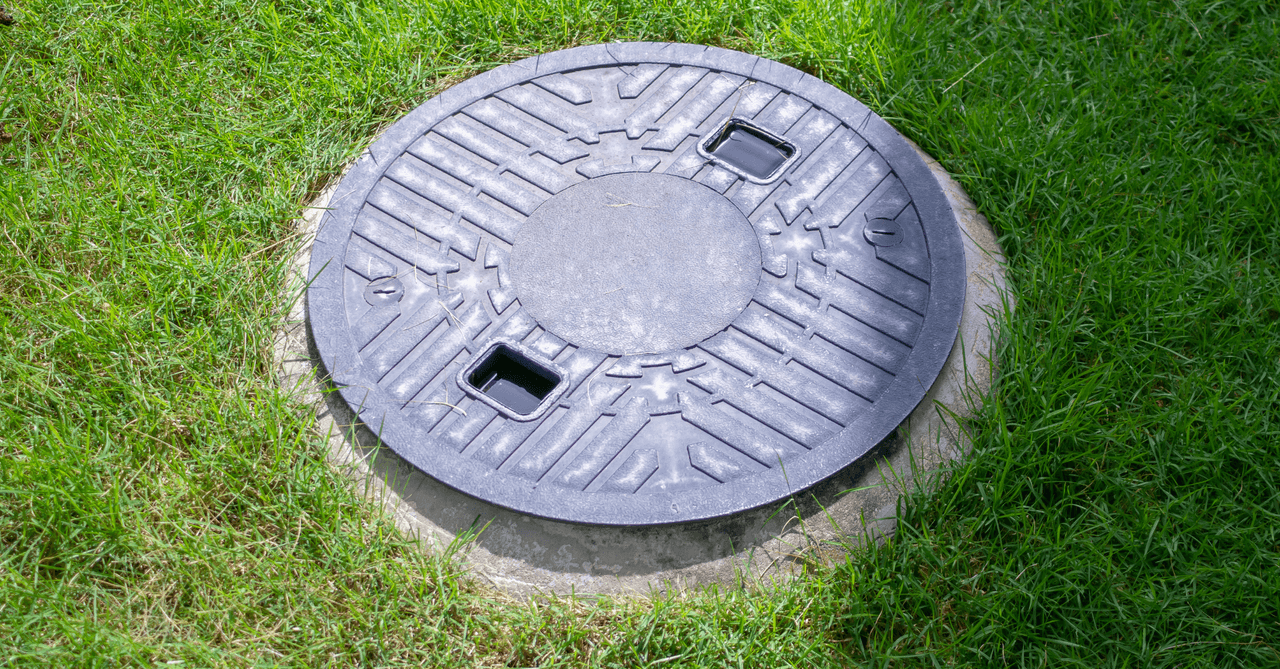
A complete septic system in Canada costs $10,000 to $45,000 installed in 2026, and can reach $60,000 on difficult sites. Most homeowners with straightforward soil conditions land between $15,000 and $30,000. Replacing an existing system costs 10% to 20% more than a comparable new install, and the tank alone runs $1,000 to $4,000.
Where you land within those ranges is decided almost entirely by two things: your soil, which determines what type of system you're permitted to install, and your province, which sets the rules governing both.
How much does a septic tank cost?
Type of service | Price range |
Soil testing | $600 to $2,000 |
Septic system installation | $10,000 to $45,000, up to $60,000 |
System installation inspection | $400 to $500 |
Septic tank pumping | $150 to $700 |
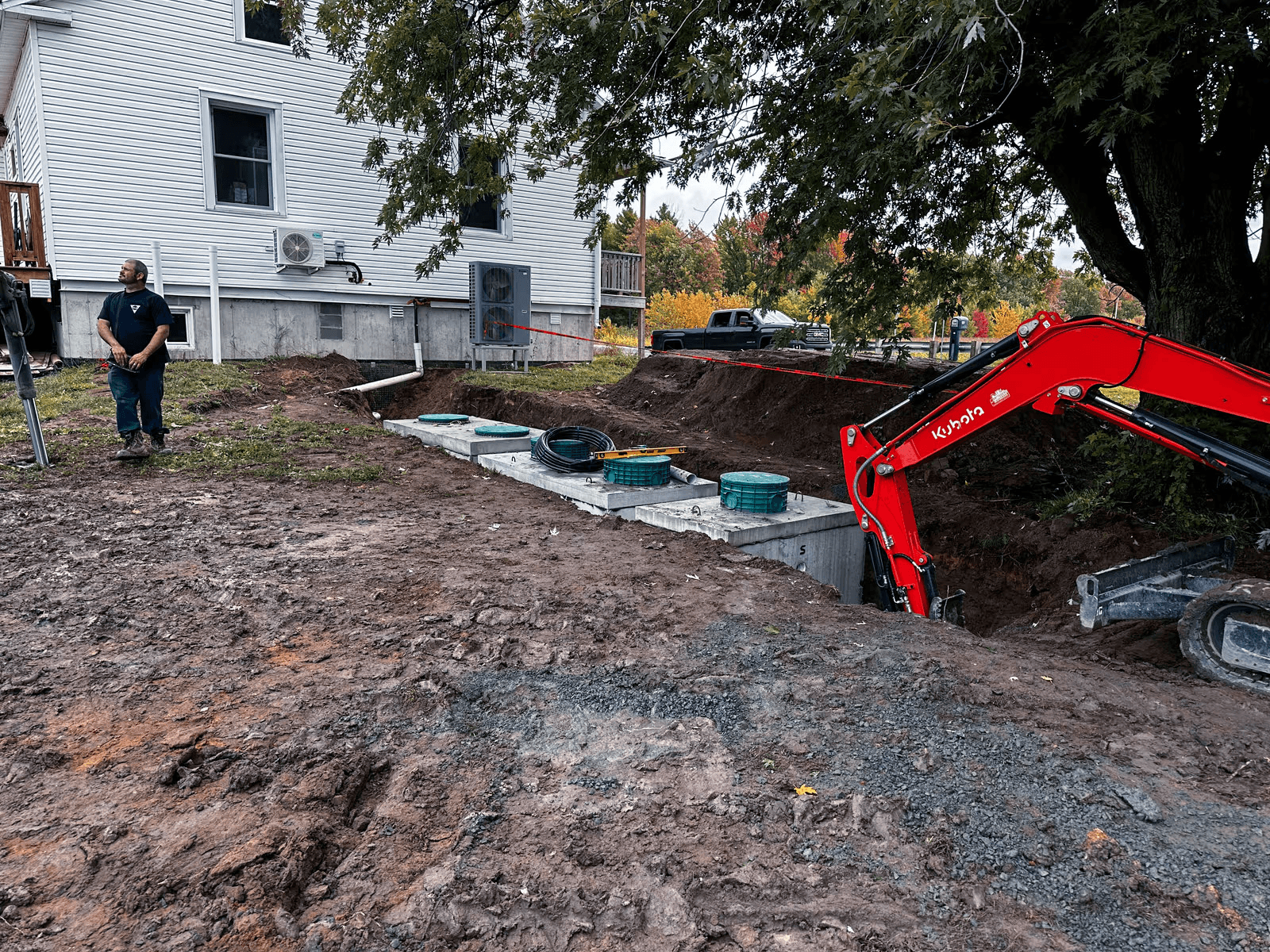
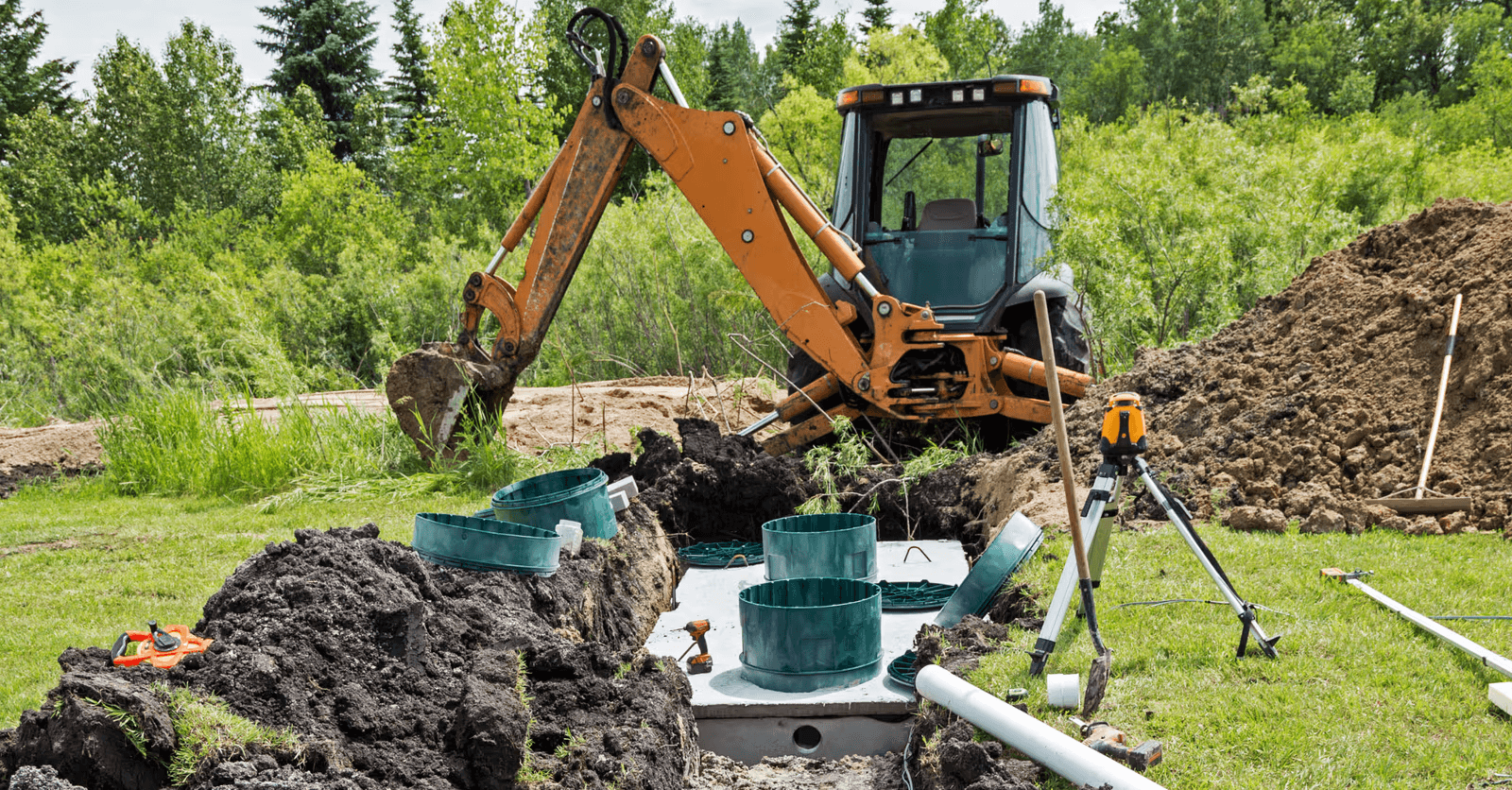
The installation figure covers everything from excavation to final inspection.
Cost by System Type
System type | Installed cost | When it's used |
Conventional gravity system (leaching bed) | $10,000 to $25,000 | Good soil drainage, adequate land, no high water table |
Chamber system | $12,000 to $25,000 | Similar sites to conventional, uses chambers instead of stone and pipe |
Raised bed or mound system | $18,000 to $35,000 | Shallow bedrock, clay soil, or a high water table |
Secondary treatment (biofilter) | $20,000 to $35,000 | Small lots, or proximity to a waterway requiring higher purification |
Tertiary treatment (with UV disinfection) | $30,000 to $60,000 | Land with limited or no permeability, environmentally sensitive sites |
Raised beds cost more because the contractor must truck in engineered fill, often hundreds of cubic metres of sand and gravel, and build a leaching bed above natural grade.
Tertiary systems carry ongoing costs as well, since they require electrical service, media replacement, and usually an annual maintenance contract.
Septic Tank Cost by Material
These are prices for the tank alone, which typically represents 10% to 20% of a complete system cost.
Material | Tank price (unit only) |
Concrete | $1,000 to $3,500 |
Polyethylene (plastic) | $1,700 to $3,500 |
Fibreglass | $1,500 to $4,000 |
Larger CSA-certified tanks for four-bedroom homes and up can reach $7,000. In provinces with high water tables, concrete is often specified because it resists buoyancy.
Septic System Cost by Province
Source: Excavation Collins
Septic regulations are provincially administered, and the rules drive the cost as much as the soil does. What is permitted in one province may not be in another, and permit regimes vary by municipality within each.
Province | Conventional system | Advanced treatment | Governing regulation |
Ontario | $15,000 to $35,000 | $35,000 to $65,000 | Ontario Building Code, Part 8 |
Quebec | $8,000 to $25,000 | $25,000 to $40,000 | Regulation Q-2, r. 22 |
Alberta | $12,000 to $22,000 | $22,000 to $28,000 | Private Sewage Systems Standard of Practice |
British Columbia | $15,000 to $28,000 | $28,000 to $40,000 | Sewerage System Regulation |
Manitoba and Saskatchewan | $10,000 to $18,000 | $18,000 to $25,000 | Provincial onsite wastewater regulations |
New Brunswick | $10,000 to $18,000 | $18,000 to $25,000 | Department of Health approval |
Nova Scotia and PEI | $12,000 to $22,000 | $22,000 to $30,000 | Provincial onsite sewage regulations |
Newfoundland | $12,000 to $20,000 | $20,000 to $28,000 | Department of Environment approval |
Experienced installers recommend budgeting 15% to 25% above your initial estimate, because rock excavation, unexpected shallow bedrock, and access problems discovered mid-dig are common everywhere.
Ontario
Ontario septic systems are governed by Part 8 of the Ontario Building Code, and most residential installations are Class 4 systems, meaning a septic tank with a leaching bed. Permits are issued by the municipality or, in many rural areas, by the local health unit or conservation authority. Budget $600 to $1,500 for the permit and $1,500 to $3,500 for soil evaluation and design on top of the system itself.
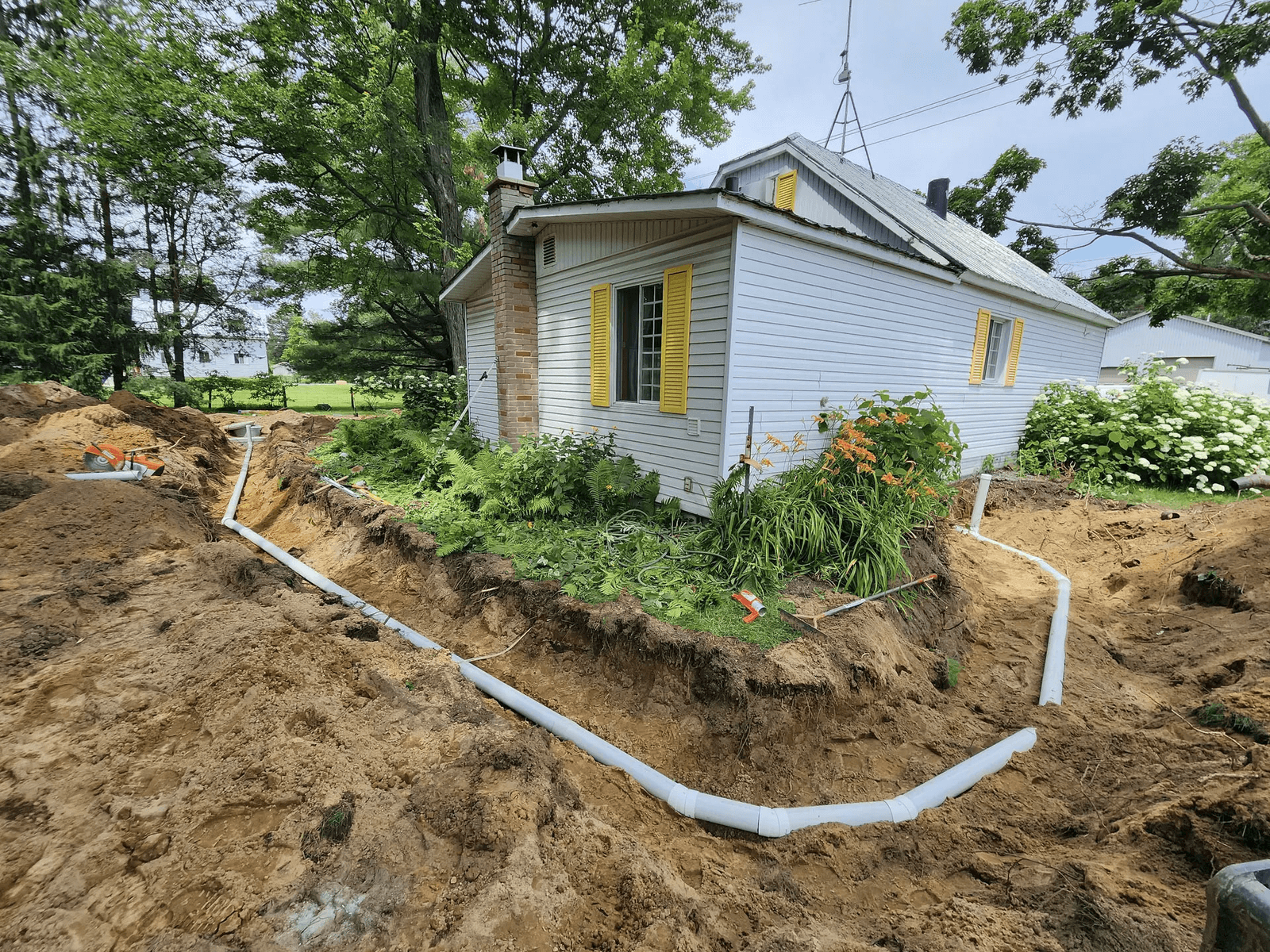
Within Ontario, the swing is as large as the national one. In Renfrew County, a conventional gravity system on deep, well-draining soil can be installed for $5,000 to $12,000. A property with shallow soil over granite bedrock in the same county needs a raised bed at $12,000 to $25,000.
Roughly 40% of properties in Southern Ontario's headwaters region require a raised or modified system because of clay soils and seasonal water table conditions.
Filter bed systems are common where soil permeability is marginal. They use imported filter sand within a contained bed, cost $18,000 to $30,000, and sit between a conventional leaching bed and a full raised bed in both complexity and cost.
Installers must be licensed under the Ontario Building Code, and conservation authority approval is an additional step on properties near a waterway or within a regulated area.
Quebec
Quebec systems are governed by Regulation Q-2, r. 22, administered by the MELCCFP and enforced municipally.
Quebec is the only province with meaningful province-wide financial support. A refundable tax credit of up to $5,500 is available to homeowners who sign a contract before April 1, 2027, covered in detail below.
Contractors must hold the RBQ subcategory licence for autonomous wastewater treatment systems, and a certificate of conformity is required at completion. That certificate is also what makes the tax credit claimable, so it matters twice.
Quebec's soils vary widely, from well-draining sand in parts of the Laurentians to heavy clay across the St. Lawrence lowlands, which explains the wide provincial range.
Alberta
A private sewage system permit is required, issued by your county, with fees running $500 to $1,200.
Alberta's drier conditions and generally better-draining soils mean a higher proportion of properties qualify for conventional systems than in Ontario or Quebec. A typical three-bedroom system lands at $15,000 to $22,000.
Work must be performed by a certified installer holding a Private Sewage Installer certificate, and the system must meet the Alberta Private Sewage Systems Standard of Practice.
Other Provinces
British Columbia requires the design to be filed by an Authorized Person, either a Registered Onsite Wastewater Practitioner or a professional engineer. Coastal and mountainous sites frequently push toward advanced treatment.
Manitoba and Saskatchewan generally have favourable soils and lower permit costs, which keeps conventional systems viable on most rural properties.
Atlantic Canada faces two recurring site challenges: coastal setbacks that restrict where a bed can go, and high water tables that force it above grade. Newfoundland adds shallow bedrock, which frequently makes a raised bed the only option.
Replacing an Existing Septic System
Source: Canva
Replacement is a different project from a new installation, and it usually costs more for the same system.
Scope | Cost |
Septic tank replacement only | $5,000 to $12,000 |
Full system replacement | $20,000 to $50,000 |
Expect a replacement to run 10% to 20% above a comparable new install. The reasons are practical rather than technical:
Decommissioning: The old tank and bed must be pumped, decommissioned, and often removed.
Working around the house: Crews navigate an existing driveway, well, and mature landscaping.
Restricted access: A finished property offers less room to manoeuvre than an open building lot.
Landscaping restoration: A larger job on an established property than on bare ground.
Code upgrades: Bringing an older system up to current standards can trigger requirements the original install never faced.
Whether the new system can reuse the existing leaching bed area is the biggest single variable. If it can, you're at the lower end. If the site needs a full redesign, you're effectively paying for a new installation plus demolition.
What a Complete Septic Quote Should Include
Quotes vary enormously in what they cover, which is the main reason two estimates for the same property can differ by $15,000. A complete quote should itemize:
Site assessment and soil percolation test.
System design and engineered drawings.
Permit application and fees.
The septic tank, plus lids, risers, and accessories.
Piping, fittings, and any pump or pressure distribution equipment.
The drain field or leaching bed, including imported fill if required.
Excavation and site preparation.
Decommissioning and removal of the old system, on a replacement.
Backfill and landscaping restoration.
Final inspection and certificate of conformity.
If a quote gives you a single number with no breakdown, you cannot compare it to anything.
What's Included in a Septic Installation
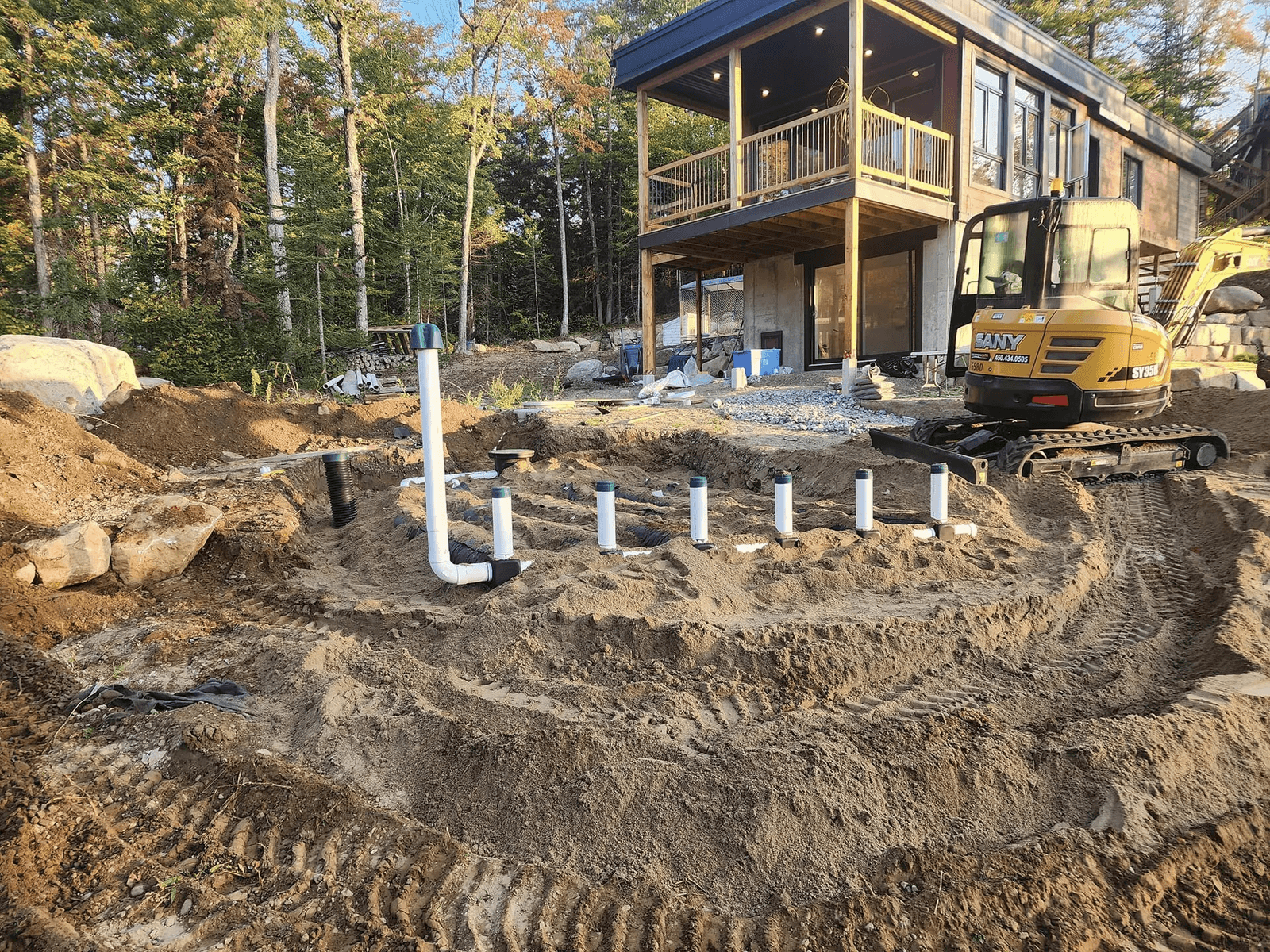
Source: Les excavations Michaud et fils inc
Soil Analysis and Percolation Testing
Before proceeding, a soil test, meaning a percolation test or hydraulic conductivity test, determines the soil's permeability. The test assesses drainage capacity in the designated septic zone, and a failed result indicates soil unsuitable for a conventional system.
In that case, homeowners can consider alternative septic solutions or test in different areas within their property limits.
Soil testing costs $600 to $2,000, varying by region.
System Inspection and Certification
An inspection confirms that your system complies with current standards, at $400 to $500.
Some municipalities require the construction process to be supervised by a system designer from start to finish, with the contractor submitting a certificate of conformity at the end. Those additional fees drive up the final invoice.
Maintenance and Pumping
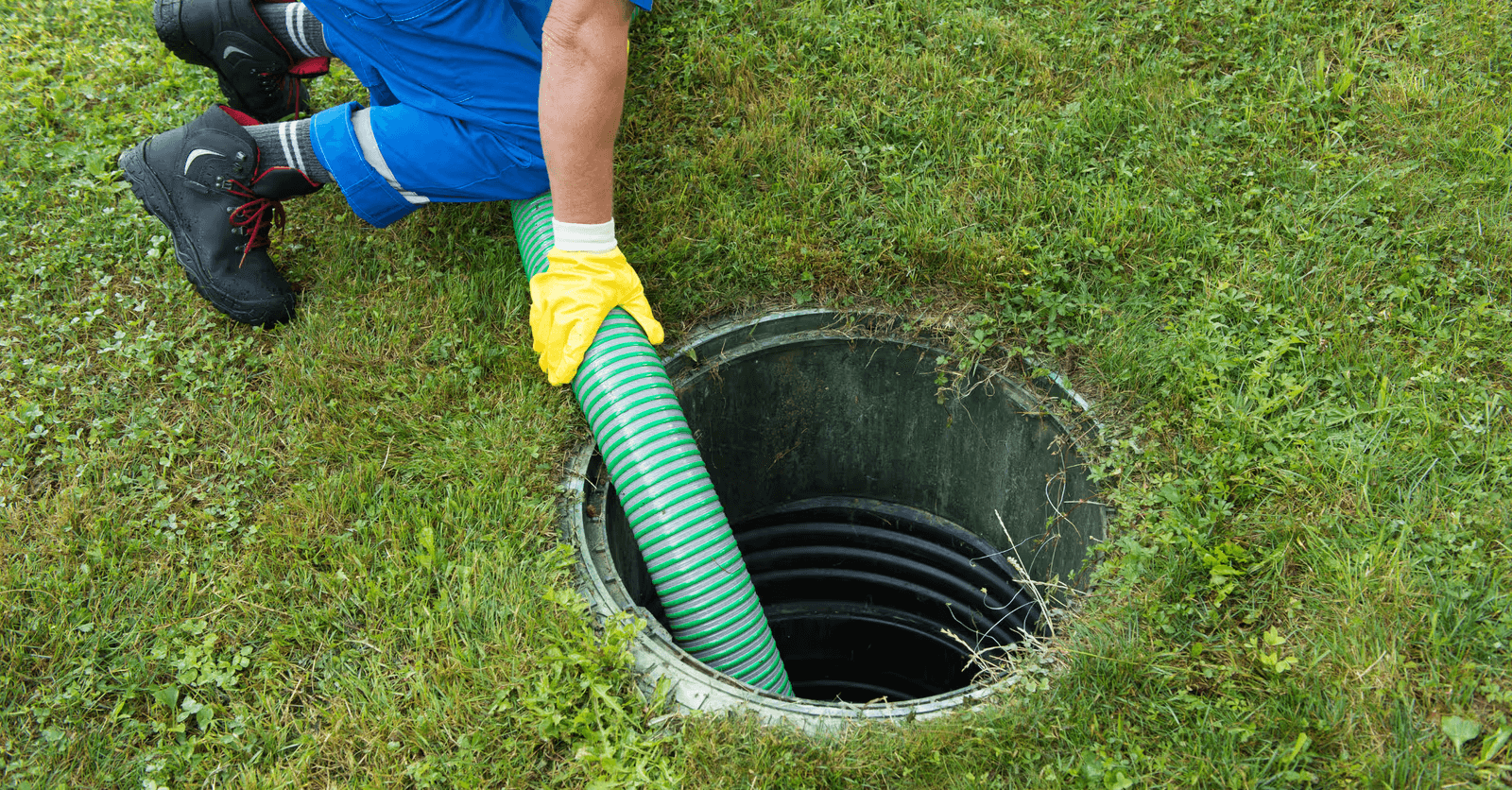
Pumping costs $150 to $700, the upper figure being typical for a three-bedroom house.
Additional costs apply during holidays and weekends, for volumes exceeding a certain number of cubic metres, for unnecessary travel, and for deploying hose beyond a certain distance. These fees differ by region and provider, so research before committing.
A primary residence needs pumping roughly every two years, or more frequently depending on occupancy. A vacation property may only require it every four years.
What Affects Septic System Cost
Type of System
Systems fall into three categories: basic, secondary treatment, and tertiary treatment. Chamber systems are basic and the most affordable. Biofilters are secondary. UV disinfection systems are tertiary.
Costs rise with each treatment level, and tertiary systems cost several times what a conventional installation does.
Soil Conditions and Groundwater
Clay drains too slowly for a conventional leaching bed. Dense glacial till presents the same problem across much of Ontario and the Prairies. Shallow granite bedrock on the Canadian Shield and limestone bedrock in parts of Ontario and Manitoba require a hydraulic hammer to excavate, which increases labour costs substantially.
A high water table forces the leaching bed above natural grade, which means imported fill, additional trucking, and grading work. It can also require a heavier tank to resist buoyancy.
This single site condition is often the difference between a $15,000 project and a $30,000 one.
Property Accessibility and Excavation
Remote and difficult-to-access locations require additional resources and time.
Excavation is where budgets break. Heavy clay slows digging, shallow bedrock requires a hydraulic hammer, and frozen ground in winter does the same. Remote properties with long access routes increase machine time before any digging starts.
Excavation alone commonly runs $3,000 to $12,000 depending on soil, depth, and access.
Size of Septic Tank
The bigger the tank, the more installation material and labour required.
Tank size is set by bedroom count rather than square footage, since bedrooms are the accepted proxy for daily wastewater flow.
Tank Material
Concrete tanks are the most common and resist buoyancy well in high water tables, though they're prone to cracking over decades. They carry the lowest unit price but the highest installation cost, since the weight requires a crane or heavy equipment to set.
Polyethylene tanks cost more to buy but less to install, because their light weight eliminates the need for heavy lifting equipment and allows access to sites a crane can't reach. The trade-off is greater vulnerability to breakage and a tendency to float in saturated soil unless properly anchored.
Fibreglass tanks sit between the two. They're lightweight like polyethylene and handle shifting soils better than concrete, which limits damage risk over time.
On total installed cost, the three are closer than the unit prices suggest. Site access is usually what decides between them.
Cottage and Seasonal Properties
Seasonal use means lower daily design flow, which can allow a smaller tank and bed and reduce the cost. Pumping intervals stretch to roughly four years instead of two.
Against that, cottage properties are frequently the hardest sites to work on. Waterfront setbacks are strict, lots are small, access roads are narrow, and shallow bedrock is common on the Canadian Shield. Those conditions often force a raised bed or advanced treatment system that a comparable inland lot wouldn't require.
One thing worth planning for in advance: converting a seasonal cottage to year-round occupancy requires a permit revision and usually a larger tank and field. If four-season use is anywhere in your plans, size the system for it now rather than rebuilding later.
Additional and Ongoing Costs
Source: Canva
Permits and regulations: Fees vary by region and typically run $500 to $1,200 depending on the municipality.
Landscaping restoration: Restoring grade, topsoil, and lawn is a separate line item that some contractors include and others don't. On a replacement at an established home, this can be substantial.
Environmental assessments: Waterfront properties, environmentally sensitive areas, and lots near a well or water body may require additional assessments or conservation authority approval.
Code compliance upgrades: Older systems being brought up to current standards can trigger requirements the original installation never had to meet.
Component replacement: Pumps, effluent filters, risers, and lids all wear out over the system's life.
Annual service contracts: Advanced secondary and tertiary systems typically require a contract with the manufacturer, plus periodic media replacement.
Grants and Rebates
The Quebec Tax Credit
Quebec offers a refundable tax credit for upgrading stand-alone wastewater treatment systems, and it's the only meaningful province-wide program in Canada.
The credit is up to $5,500 per eligible household, calculated as 20% of eligible expenses above $2,500, covering up to $30,000 of eligible work. Eligible expenses include permits, goods, services, and site restoration.
To qualify:
Sign before the deadline: You must sign an agreement with a qualified contractor before April 1, 2027.
Use a licensed contractor: They must hold the RBQ subcategory licence for autonomous wastewater treatment systems.
Obtain the certificate: The contractor must provide written confirmation the work meets Regulation Q-2, r. 22. Without it, you cannot claim the credit.
Meet the property criteria: The residence must have been built before January 1, 2017, and be either your primary residence or a four-season cottage you occupy.
Outside Quebec
There is no equivalent province-wide program, though some municipalities and conservation authorities offer local grants or low-interest loans for septic upgrades in environmentally sensitive areas.
Check with your municipality before assuming nothing is available, particularly if your property sits within a conservation authority's jurisdiction or near a protected waterway.
How to Save on Septic Installation

Source: Reno Quotes
Do the soil work first: A percolation test costs a few hundred dollars and determines whether you need a $15,000 system or a $40,000 one. Knowing this before you commit to a lot, a house design, or a budget is the single most valuable thing you can do.
Get three itemized quotes: Comparing licensed installers is the only reliable way to know whether a price is fair, and itemization is what makes comparison possible.
Combine excavation with other work: If you're already excavating for a foundation, addition, or driveway, having one crew mobilize once rather than twice can save thousands in setup costs.
Schedule off-season: Demand for installers drops outside the peak building months, which can mean discounts or more flexible pricing.
Keep a contingency: Budget 15% to 25% above your quote. Rock, bedrock, and access surprises are discovered during excavation, not before it.
Supply some materials yourself: If your installer allows it, this can lower markup costs on certain components.
What should you budget for a septic system?
For most Canadian properties the realistic planning range is $10,000 to $45,000 installed, with a conventional gravity system on good soil at the low end and a tertiary treatment system on a difficult site at the top.
Your soil conditions decide which of those you're looking at, which is why the percolation test comes before the budget rather than after it.
Replacement costs 10% to 20% more than a comparable new install, provincial rules shift the number considerably, and excavation surprises are common enough that a 15% to 25% contingency is standard practice rather than pessimism.
Frequently Asked Questions
How much does it cost to install a septic system in Canada?
$10,000 to $45,000 for a complete system, and up to $60,000 on difficult sites. Most homeowners with good soil conditions pay $15,000 to $30,000. A conventional gravity system runs $10,000 to $25,000, while a tertiary treatment system reaches $30,000 to $60,000.
How much is a new septic tank?
The tank alone costs $1,000 to $3,500 for concrete, $1,700 to $3,500 for polyethylene, and $1,500 to $4,000 for fibreglass. Larger CSA-certified tanks for four-bedroom homes and up can reach $7,000. The tank is typically 10% to 20% of a complete system cost.
What is the average cost of a septic system?
The Canadian average falls between $15,000 and $30,000 for a conventional system on reasonable soil. Soil conditions are the main variable, since they determine whether you're permitted a conventional leaching bed or need a raised bed or advanced treatment.
How much does it cost to replace a septic system?
$20,000 to $50,000 for a full system replacement, or $5,000 to $12,000 for the tank alone. Replacement costs 10% to 20% more than a comparable new install because of decommissioning, restricted access, and landscaping restoration on an established property.
How much does a septic system cost in Ontario?
$15,000 to $35,000 for a conventional Class 4 system under the Ontario Building Code, and $35,000 to $65,000 for advanced treatment. Permit and design costs add $2,100 to $5,000. Roughly 40% of properties in Southern Ontario's headwaters region require a raised bed because of clay soil and water table conditions.
What size septic tank do I need?
Tank size is determined by bedroom count, not square footage, because bedrooms are the accepted proxy for daily wastewater flow.
A two or three-bedroom home typically requires a 1,000-gallon tank (about 3,800 litres), four bedrooms a 1,250-gallon tank (about 4,700 litres), and five or more a 1,500-gallon tank (about 5,700 litres).
Note that Canadian codes work in metric. The Ontario Building Code sets a minimum working capacity of 3,600 litres for a Class 4 system, so confirm the litre rating rather than the gallon figure when comparing tanks. Adding a bedroom can render your current system non-compliant.
What is the cheapest septic system to install?
A conventional gravity system with a leaching bed, at $10,000 to $25,000, provided your soil drains well, you have adequate land, and there's no high water table. If your soil fails the percolation test, the cheapest permitted option becomes a raised bed or chamber system instead.
What is the most expensive part of a septic system?
The drain field, also called the leach field. The bigger the tank, the larger the drain field required. A 1,000-gallon septic tank typically needs a 600-square-foot drain field, which can cost upwards of $10,000 on its own.
Do I need a certified septic installer?
Yes. Every province requires septic work to be performed by a licensed installer, and using an unlicensed one voids your permit, your warranty, and any rebate eligibility. In Quebec the contractor must hold the RBQ subcategory licence for autonomous wastewater treatment systems, and in Ontario installers must be licensed under the Ontario Building Code.
Can I install a septic system on clay soil or sloped terrain?
Usually yes, but not with a conventional system. Clay drains too slowly for a standard leaching bed, which typically means a raised bed with imported fill or an advanced treatment system. Sloped terrain may require a pump and pressure distribution system to move effluent uphill, adding both equipment cost and ongoing electrical draw.
When should I replace my septic system?
Septic tanks are designed for a specific number of occupants, so a change in bedroom count can render your system non-compliant and trigger a required update. Replacement is also required when the tank sits near a water table, on unsuitable land such as certain clay soils, or when the system is undersized for current use.
What's the difference between secondary and tertiary treatment?
Secondary treatment is recommended when land is close to a waterway or size-restricted, and it meets higher purification standards than a conventional system. Tertiary treatment suits land with limited to no permeability. Both typically require an annual maintenance contract with the manufacturer, plus sludge pumping on top of regular maintenance fees.
Does a septic system affect property value?
A compliant, well-maintained system is essentially neutral, since buyers expect it on a rural property. A failing or non-compliant system is a significant deduction, because the buyer inherits the replacement cost and often cannot close financing without an inspection certificate. Keep your pumping records and certificate of conformity.
How long does a septic system last?
A concrete tank typically lasts 30 to 40 years in stable soil, with polyethylene and fibreglass comparable. The drain field is usually the first component to fail, often at 20 to 30 years, and earlier if the system has been overloaded or the tank hasn't been pumped on schedule.
How long does septic installation take?
A conventional system on an accessible site typically takes two to five days of on-site work. Advanced systems take longer. The larger part of the timeline is the approval process ahead of it, since soil testing, design, and permit issuance commonly add several weeks, and longer in busy season.
Looking for something else?
Related articles
The latest industry news, interviews, technologies, and resources.
Editorial Team
•08 Nov 2023
Buying an above-ground pool means enjoying the best of what the summer season has to offer, and that, on a daily basis. Although such an installation has many advantages, it may seem challenging at first to set up and blend in with your current landscape. However, with a little planning and the right material selection, you can create a design that'll complement your overall décor. As such, your pool is sure to please all generations for years to come.
Editorial Team
•01 Apr 2025
Exterior parging is an above-grade coating commonly used on houses and buildings with exposed concrete foundations. Renowned for its durability and aesthetic, parging has many benefits. Learn about the different kinds of parging and how to use it for flawless results.
Editorial Team
•27 Mar 2026
Summer construction season moves fast. Whether you’re gearing up for a busy stretch of renovations, concrete work, framing, or finish carpentry, having the right tools for construction (and a team that’s ready to use them safely) is what keeps schedules tight and clients happy. Below is a practical, detailed list of common construction tools—traditional and modern—plus how to choose, maintain, and deploy them for peak summer demand.
Editorial Team
•08 Nov 2023
Do you remember that famous old folktale your grandparents would tell you about, the one that probably made it hard for you to comfortably use the toilet without first looking in the bowl, on the off chance that a sewer rat was just wading in there, ready to nip your behind?
Christine Simard
•08 Nov 2023
Nowadays, more and more people leave their comfort zone to tackle the adventure of remodelling or renovating their living spaces to convert them into open spaces or loft-style apartments. Also, for fans of the authentic loft lifestyle, it's always possible to buy a space in an old industrial building and transform it in order to have a beautiful and trendy loft as a final result.